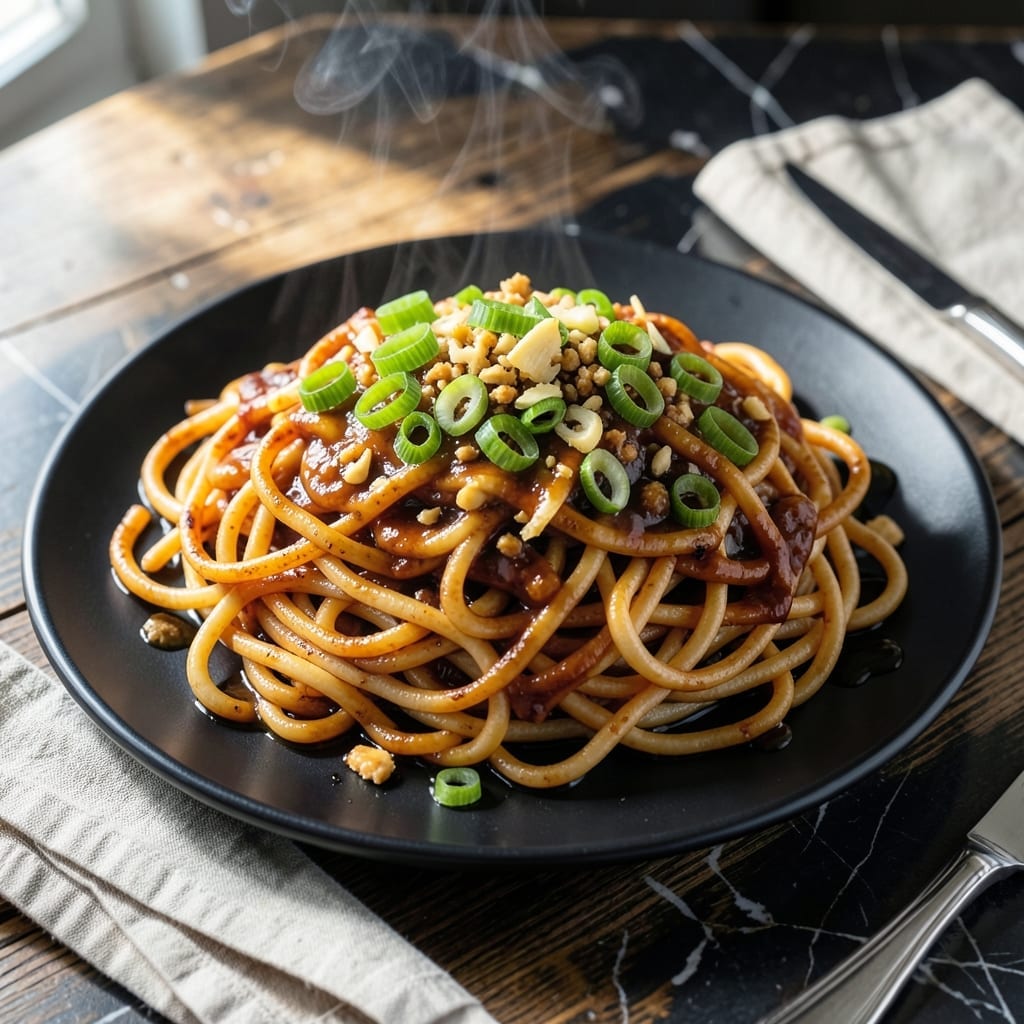
These savory stir-fried noodles deliver restaurant-quality flavor with minimal effort. The soy sauce base creates a rich umami depth that transforms simple ingredients into something extraordinary.
I developed this method to achieve perfectly cooked noodles with just the right amount of char and sauce clinging to every strand. The key is high heat and quick cooking to maintain texture while building layers of flavor.
What you’ll get are tender noodles with a slightly crispy edge, coated in a glossy soy sauce glaze that’s both salty and subtly sweet. It’s a dish that comes together faster than takeout.
Customize with your favorite proteins or vegetables for a meal that’s as versatile as it is delicious.
Ingredients for Fried Noodles Recipe with Soy Sauce
Simple ingredients transform into restaurant-quality stir-fried noodles with rich umami depth and glossy soy sauce glaze.
| Ingredient | Amount | Notes |
|---|---|---|
| Dried Egg Noodles 🍜 | 12 oz | Or fresh noodles if available |
| Soy Sauce 🫒 | ½ cup | Low-sodium preferred for balance |
| Vegetable Oil 🛢️ | 3 tbsp | High smoke point for stir-frying |
| Garlic Cloves 🧄 | 4 cloves | Minced for maximum flavor |
| Fresh Ginger 🌿 | 1 tbsp | Peeled and grated |
| Green Onions 🧅 | 4 whole | Thinly sliced, white and green parts separated |
| Carrots 🥕 | 2 whole | Julienned for quick cooking |
| Bell Pepper 🌶️ | 1 whole | Thinly sliced, any color |
| Chicken Breast 🍗 | 1 lb | Boneless, skinless, thinly sliced |
| Brown Sugar 🍚 | 2 tbsp | For subtle sweetness |
| Sesame Oil 🫒 | 1 tsp | Toasted, for finishing |
| Sesame Seeds 🌾 | 2 tbsp | Toasted, for garnish |
| Salt 🧂 | ½ tsp | Adjust to taste |
| Black Pepper 🌶️ | ¼ tsp | Freshly ground |
| Red Pepper Flakes 🔥 | ½ tsp | Optional for heat |
[recipe_ingredient_scaler]
The noodles are the foundation—dried egg noodles work great, but fresh ones (from the refrigerated section at Whole Foods or H-Mart) take this to the next level. For the soy sauce, low-sodium lets you control the saltiness. I always grab my ginger and garlic fresh from the produce section, not the jarred stuff. The chicken should be sliced thinly so it cooks fast and stays tender. Look for boneless, skinless breasts for ease.
No chicken? Shrimp, tofu, or thinly sliced beef all work beautifully—just adjust cooking time. Swap bell peppers for snap peas or broccoli if that’s what you’ve got. Out of brown sugar? White sugar or honey (just a touch) can substitute. The sesame oil is non-negotiable for that authentic finish, but if you’re in a pinch, skip it—just don’t use it for cooking (it burns easily). Toasted sesame seeds add crunch, but omit if you’re nut-free.
Leftovers keep 3-4 days in the fridge (they soak up the sauce, which is delicious). Reheat in a skillet with a splash of water to loosen. For meal prep, store components separately and combine when reheating. Freezing isn’t ideal—the noodles get mushy, but it’ll last 1 month if needed.
Why You’ll Love This Recipe
- One Pan Wonder: I just toss the noodles, garlic, and ginger in with the oil and soy sauce—no extra bowls, no fuss.
- Addictive Umami: The soy sauce caramelizes in the pan, while the garlic and ginger give it that deep, savory punch I crave.
- Feeds a Crowd: Honestly, I double the batch and it’s just as good reheated the next day for lunch.
- Pantry Staples: Between us, I always have dried noodles and soy sauce on hand, so this is my go-to when the fridge looks bare.
Step-by-Step Instructions for Stir-Fried Noodles With Soy Sauce
Here’s how I get perfectly saucy, restaurant-style noodles every single time without fail.
Step 1: Cook and Prep the Noodles
Bring a large pot of water to a rolling boil and cook the 12 oz dried egg noodles according to package directions until just al dente—about 1 minute less than the suggested time. You want them slightly underdone because they’ll finish cooking in the wok.
Drain immediately and rinse under cold water to stop the cooking process. Toss with 1 tsp sesame oil to prevent sticking. I like to spread them out on a baking sheet while I prep the rest—this keeps them from clumping together as they cool.
Step 2: Stir-Fry the Chicken and Aromatics
Heat 2 tbsp vegetable oil in a wok or large skillet over high heat until it shimmers. Add the 1 lb chicken breast and stir-fry for 4-5 minutes until no longer pink and starting to brown. Remove the chicken and set aside.
In the same pan, add the remaining 1 tbsp vegetable oil, then toss in the 4 cloves garlic cloves and 1 tbsp fresh ginger. Stir-fry for 30 seconds until fragrant but not browned—garlic burns easily, so keep it moving.
Step 3: Combine Vegetables and Sauce
Add the 2 whole carrots, 1 whole bell pepper, and the white parts of the 4 whole green onions to the pan. Stir-fry for 3-4 minutes until the vegetables soften slightly but retain their crispness.
Return the chicken to the pan. Pour in the 0.5 cup soy sauce, 2 tbsp brown sugar, 0.5 tsp salt, 0.25 tsp black pepper, and 0.5 tsp red pepper flakes. Stir everything together and let it simmer for 1-2 minutes until the sauce thickens slightly.
Step 4: Finish with Noodles and Garnish
Add the cooked noodles to the pan, tossing gently to coat them evenly in the sauce. Cook for an additional 2-3 minutes until the noodles are heated through and have absorbed some of the sauce. You’ll notice the noodles turn a rich, glossy brown when they’re ready.
Remove from heat and stir in the green parts of the green onions. Transfer to a serving dish and sprinkle with the 2 tbsp sesame seeds. Serve immediately while hot—the noodles are best fresh out of the pan when they’re still slightly crisp at the edges.
Pro Tips For Making Fried Noodles Recipe With Soy Sauce
- Pre-cook the noodles: Parboil the dried egg noodles for 2 minutes less than package instructions, then drain and toss with a little oil. This keeps them from turning mushy when you fry them later.
- High heat only: Crank your wok or pan to smoking hot before adding the oil and noodles. I learned this the hard way—medium heat just gives you soggy, sad noodles instead of that perfect char.
- Mince the aromatics: Finely chop the garlic and ginger so they distribute evenly and cook through in seconds. After burning three batches, I finally figured out that big chunks just turn bitter.
- Soy sauce last: Add the soy sauce at the very end of cooking, just to coat the noodles. Sounds weird, but it works: this prevents the noodles from absorbing too much liquid and getting gummy.
Essential Equipment for fried noodles recipe with soy sauce
Wok or Skillet
A carbon steel wok is my go-to for stir-frying because its high, sloped sides make tossing ingredients effortless. I use a 14-inch wok from Joyce Chen—it heats evenly and lasts forever. If you don’t have a wok, a large cast iron skillet works too, though you’ll need to stir more carefully. 🔥
High Heat Source
You need serious heat for this dish. A gas range with a BTU output of 12,000+ is ideal, but most home stoves work fine. If using electric, preheat your pan for 5 minutes to compensate for slower heat response. Avoid nonstick pans—they can’t handle the high heat needed.
Long-Tongued Tongs
Invest in a pair of 12-inch stainless steel tongs for safe, precise stirring. I prefer OXO’s spring-loaded design—it’s comfortable and gives me better control. Wooden or silicone tongs won’t handle the heat as well and can melt.
Sharp Chef’s Knife
For slicing chicken and veggies thinly and evenly, a 8-inch chef’s knife is essential. I swear by my Wüsthof Classic—it holds an edge beautifully. Keep it sharp; a dull knife crushes ingredients instead of cutting them cleanly.
Large Mixing Bowls
Have 2-3 large bowls ready for prepping ingredients. I use stainless steel because they’re lightweight and nest for storage. Separate bowls for chicken, veggies, and sauce keep everything organized and prevent cross-contamination.
Fine-Mesh Strainer
After boiling noodles, you’ll need to drain and rinse them quickly. A fine-mesh strainer prevents small noodles from slipping through. I also use mine to rinse veggies. Look for one with a long handle to protect your hands from steam.
Nutrition Facts
Frequently Asked Questions
Can I use different noodles?
Yes! While egg noodles work best, you can use ramen, udon, or even spaghetti. Cook them al dente and rinse with cold water to stop cooking.
How do I prevent soggy noodles?
Undercook noodles slightly and stir-fry over high heat for 2-3 minutes. This keeps them firm and prevents sauce absorption.
Can I make this vegetarian?
Swap chicken for tofu, tempeh, or extra veggies. Add mushrooms for a meaty texture and boost umami flavor.
What if my sauce is too salty?
Balance it with a pinch of brown sugar or a splash of water. Taste as you go to avoid over-seasoning.

Trained in classic French technique but raised on slow-cooked ribs and spicy rubs, she blends culinary skill with smoke and soul.
- Recipe for Boneless Pork Chops in Cast Iron Skillet: Sear and Baste to Juicy Perfection - October 3, 2026
- Recipe for Boneless Cross Rib Roast: Slow-Roasted Beef with Herb Crust - October 3, 2026
- Hamburgers in Sauce Recipe Crock Pot: Slow-Cooked Savory Delight - October 3, 2026