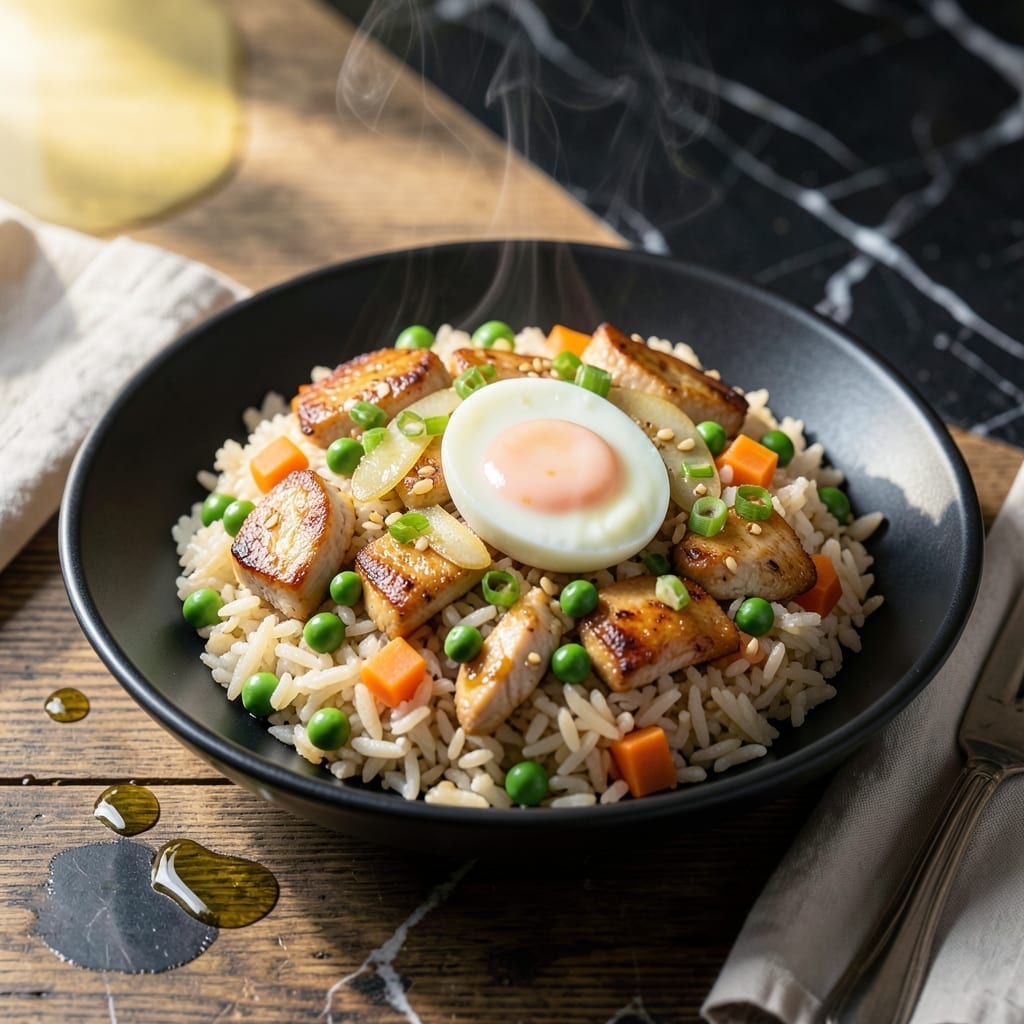
This is the secret non-negotiable for authentic fried rice: cold rice from yesterday’s dinner. I learned this the hard way after too many soggy attempts with fresh grains. Day-old rice has dried out just enough to absorb flavors without turning mushy.
The wok toss technique matters just as much as the rice itself. High heat and constant motion create those signature charred bits and separate grains that define great fried rice. It’s about patience and precision, not speed.
What you’ll achieve is restaurant-quality fried rice with distinct texture and balanced flavor. Each grain stays intact while carrying the essence of your chosen seasonings. The cold rice base ensures consistent results every time.
Customize with proteins or vegetables, but never compromise on the cold rice foundation. This method delivers on the promise of authenticity.
Ingredients for Fried Rice Recipe Cold Rice
Day-old rice is king. The rest are pantry staples and fridge regulars.
| Ingredient | Amount | Notes |
|---|---|---|
| Day-Old Cooked Rice 🍚 | 4 cups | Cold, preferably overnight, long-grain |
| Large Eggs 🥚 | 3 whole | Beaten, room temperature |
| Vegetable Oil 🫒 | 3 tbsp | High smoke point, divided |
| Garlic Cloves 🧄 | 3 cloves | Minced finely |
| Fresh Ginger 🌿 | 1 tbsp | Peeled, grated |
| Green Onions 🧅 | 4 whole | Thinly sliced, whites and greens separated |
| Frozen Peas 🌱 | ¾ cup | Thawed, no need to cook |
| Carrots 🥕 | 1 whole | Diced small, about 1 cup |
| Soy Sauce 💧 | 3 tbsp | Low-sodium preferred |
| Oyster Sauce 🐚 | 1 tbsp | Optional for depth |
| Sesame Oil 🫒 | 1 tsp | Toasted, for finishing |
| Salt 🧂 | ½ tsp | Kosher or sea salt |
| White Pepper 🌶️ | ¼ tsp | Freshly ground if possible |
| Boneless Chicken Thighs 🍗 | ¾ lb | Cut into small pieces |
[recipe_ingredient_scaler]
The rice is everything here—cold, dry, day-old long-grain is non-negotiable. Fresh rice turns gummy, no exceptions. I usually cook extra jasmine or basmati the night before (leftover takeout rice works too). For the soy sauce, Pearl River Bridge or Kikkoman are my go-tos. Oyster sauce adds that restaurant depth, but vegetarian oyster sauce works if you’re avoiding seafood.
No oyster sauce? Hoisin or fish sauce at half the amount gets you close. Swap chicken for shrimp, tofu, or just skip it—this still shines as a veggie-only dish. Frozen peas work straight from the bag (no thawing needed). Green onions? Scallions or chives in a pinch. The sesame oil is for finishing, so don’t cook with it—just drizzle at the end.
Leftover rice keeps 5 days in the fridge. The cooked dish reheats well but loses that wok char—best eaten fresh. Store leftovers airtight for 3-4 days, or freeze for 1 month (though texture softens).
Why You’ll Love This Recipe
- One Pan Wonder: I toss everything in my wok and have dinner ready before the kids finish arguing over who gets the last fork.
- Garlic-Ginger Magic: That sizzle of fresh ginger and garlic in hot oil makes the whole kitchen smell like my favorite takeout spot.
- Weeknight Hero: Honestly, it’s my secret for turning leftover rice and a couple eggs into something we all fight over.
- Pennywise Classic: Between us, this costs less than delivery and tastes better—plus I’m using up that rice from yesterday.
Step-by-Step Instructions for Authentic Fried Rice
Here’s the method that delivers that classic wok hei flavor every single time.
Step 1: Prep the Protein and Vegetables
Cut the 0.75 lb boneless chicken thighs into ¼-inch pieces so they cook quickly and evenly. I keep them small because they’ll continue cooking when you add the rice back in. Dice the 1 whole carrots into tiny cubes—about the size of the 0.75 cup frozen peas—so everything cooks at the same rate.
Thinly slice the 4 whole green onions, keeping the white and green parts separate. The whites go in with the aromatics, while the greens get added at the end for freshness. Mince the 3 cloves garlic cloves and grate the 1 tbsp fresh ginger—these are your flavor powerhouses.
Step 2: Veloute the Eggs and Aromatics
Heat 1 tbsp of the 3 tbsp vegetable oil in a wok or large skillet over high heat until it shimmers. Pour in the beaten 3 whole large eggs and scramble quickly until just set but still slightly runny. Remove the eggs and set aside—they’ll finish cooking when you combine everything at the end.
Add another 1 tbsp vegetable oil to the wok. When hot, add the white parts of the green onions, garlic, and ginger. Stir-fry for 30 seconds until fragrant but not browned. The moment you smell that incredible aroma, you’re ready for the next step.
Step 3: Cook the Chicken and Vegetables
Add the remaining 1 tbsp vegetable oil to the wok, then toss in the diced chicken thighs. Spread them out in a single layer and let them sear undisturbed for 1 minute before stirring. Cook for 3-4 minutes total until the chicken is no longer pink and the edges are just starting to brown.
Push the chicken to one side and add the diced carrots and frozen peas. Stir-fry for 2 minutes until the carrots begin to soften slightly. The peas just need to heat through since they’re already thawed. This layered approach prevents overcrowding and ensures everything gets proper heat contact.
Step 4: Combine and Season
Add the 4 cups day-old cooked rice, breaking up any clumps with your hands or the back of a spoon. The rice should be cold—this is crucial for that authentic texture. Drizzle the 3 tbsp soy sauce and 1 tbsp oyster sauce evenly over the rice.
Stir-fry everything together for 2-3 minutes until the rice is heated through and starting to develop a slight crust on the bottom of the wok. Add the 0.5 tsp salt and 0.25 tsp white pepper, then return the scrambled eggs to the wok. Toss everything together until the eggs are distributed throughout.
Step 5: Finish and Serve
Turn off the heat and stir in the green parts of the green onions. Drizzle with the 1 tsp sesame oil and toss one final time. The sesame oil adds that distinctive nutty aroma that signals you’re done.
Taste and adjust seasoning if needed, though the soy and oyster sauces should provide plenty of saltiness. Serve immediately while hot—the texture changes dramatically as it cools. Each bite should have distinct pieces of chicken, vegetables, and egg with rice that’s separate and slightly chewy, never mushy.
Pro Tips For Making Fried Rice Recipe Cold Rice
- Crank the Heat: Use the highest heat your stove can handle—this is what gives fried rice that classic wok hei flavor. I learned this the hard way after too many batches of soggy rice.
- Break Up the Rice: Spend 2 minutes breaking up the cold rice with your hands before cooking—clumps turn to mushy disappointment in the pan.
- Cook Eggs First: Push the scrambled eggs to one side of the pan after cooking, then add the rice. Sounds weird, but it keeps them from disappearing into the dish.
- Ginger-Garlic Quick Prep: Mince the ginger and garlic together—it saves time and the flavors meld beautifully in the hot oil. About 1 tablespoon of each for a standard batch.
Regional Styles of These Flavors
Chinese Classic
This is the foundation I learned from my Boston Chinatown neighbors. Use jasmine rice for authentic fragrance, and always cook it a day ahead. The key is high heat in a well-seasoned wok—my 14-inch carbon steel gets the job done perfectly. 🌟
Thai Inspired
Swap soy sauce for fish sauce and add 1 tbsp lime juice at the end. Include Thai basil and red bell pepper for color. I discovered this version at a street food stall in Bangkok during a layover.
Indonesian Nasi Goreng
Add 1 tbsp sweet soy sauce (kecap manis) and 1 tsp shrimp paste with the aromatics. Top with a fried egg and serve with krupuk crackers. The sweet-savory balance is what makes this version special.
Korean Kimchi
Stir in 1 cup chopped kimchi with the vegetables and add 1 tbsp gochujang to the sauce. The fermented spice gives it that signature Korean kick. I use Mother-in-Law’s Kimchi from the local Korean market.
Japanese Yakimeshi
Use short-grain rice and add 1 tbsp mirin with the soy sauce. Include shredded nori and bonito flakes as garnish. The slightly sticky texture is what sets this apart.
American Diner Style
This is the version I grew up with in New England. Use long-grain white rice, add diced ham instead of chicken, and finish with a drizzle of ketchup. It’s comfort food at its finest.
Nutrition Facts
Frequently Asked Questions
Why must the rice be cold for fried rice?
Cold rice has dried out, preventing it from turning mushy when stir-fried. Fresh rice contains too much moisture, leading to clumpy results. Using day-old rice ensures each grain stays separate and absorbs flavors better.
Can I use freshly cooked rice in a pinch?
Spread freshly cooked rice on a baking sheet and refrigerate for 1-2 hours to dry it out. This mimics the texture of day-old rice. Avoid using warm rice—it will steam rather than fry.
What’s the best way to break up clumps in cold rice?
Use your hands to gently separate the grains before adding to the wok. For stubborn clumps, pulse briefly in a food processor. Avoid overworking it—you want distinct grains, not rice paste.
How do I prevent soggy fried rice?
Cook over high heat and avoid overcrowding the pan. Use 1-2 tbsp oil per batch and stir-fry in small portions if needed. The wok should be hot enough to sizzle when rice hits it.

Trained in classic French technique but raised on slow-cooked ribs and spicy rubs, she blends culinary skill with smoke and soul.
- Recipe for Boneless Pork Chops in Cast Iron Skillet: Sear and Baste to Juicy Perfection - October 3, 2026
- Recipe for Boneless Cross Rib Roast: Slow-Roasted Beef with Herb Crust - October 3, 2026
- Hamburgers in Sauce Recipe Crock Pot: Slow-Cooked Savory Delight - October 3, 2026