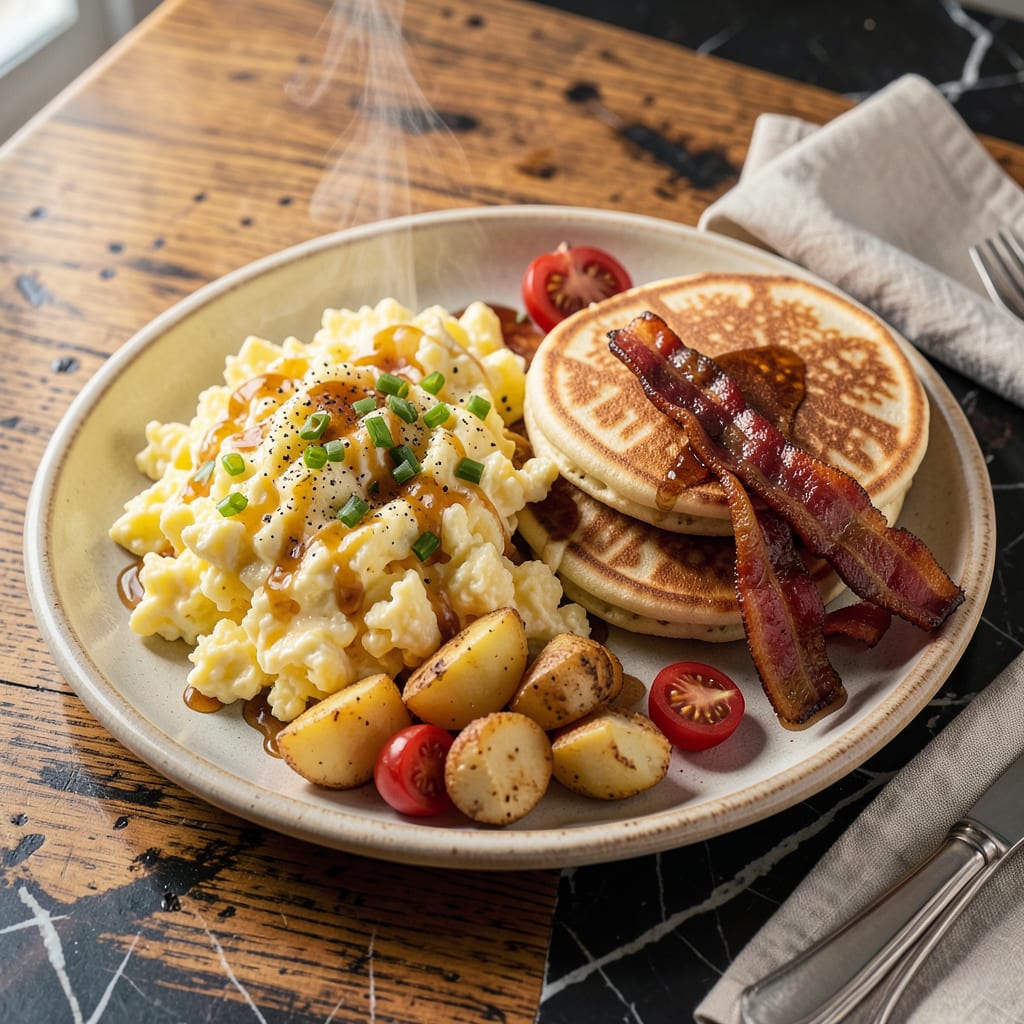
IHOP’s scrambled eggs are made with a special blend of whole eggs, a touch of pancake batter for fluffiness, and cooked slowly on a griddle at medium-low heat. Butter and a pinch of salt are added for rich flavor and creamy texture.
This technique transforms ordinary eggs into something extraordinary by leveraging the chemistry of pancake batter. The batter’s leavening agents create micro-bubbles during cooking, giving the eggs their signature cloud-like texture. Meanwhile, the griddle’s even heat distribution ensures gentle cooking that prevents rubberiness. 🔥
I’ve noticed that the butter plays a dual role here—it adds richness while helping to create a velvety emulsion with the egg proteins. The slow cooking process allows the proteins to set gradually, resulting in curds that are tender rather than tough. This method is what separates IHOP’s eggs from typical diner-style scrambles.
💡 In This Article
- The Science Behind IHOP’s Fluffy Scrambled Eggs
- How to Recreate IHOP Scrambled Eggs at Home
The Science Behind IHOP’s Fluffy Scrambled Eggs
The secret to IHOP’s signature texture lies in the pancake batter addition—typically about 1-2 tablespoons per 3 eggs. This isn’t just for flavor; the batter contains baking powder that releases carbon dioxide when heated, creating thousands of tiny air pockets. These micro-bubbles expand during cooking, transforming dense egg proteins into a light, almost soufflé-like structure.
The result is eggs that are 30-40% more voluminous than traditional scrambles.
Heat control is everything on IHOP’s commercial griddles, which maintain a precise 275-300°F surface temperature. This medium-low heat allows the egg proteins to coagulate slowly, forming tender curds rather than rubbery ones. The griddle’s even heat distribution prevents hot spots that could cause overcooking.
🔥 Compare this to home stovetops where heat fluctuates—professional griddles maintain consistency within ±5°F, crucial for perfect eggs every time.
The butter isn’t just for richness—it’s a chemical game-changer. When melted butter (about 1 tablespoon per 3 eggs) is whisked into the egg mixture, it creates an emulsion where fat molecules surround water molecules. This prevents the eggs from becoming watery while adding that signature velvety mouthfeel.
The salt (typically 1/8 teaspoon per 3 eggs) doesn’t just season—it helps break down proteins for a smoother texture.
What most people miss is the role of time in protein structure. IHOP’s slow cooking process (about 4-5 minutes total) allows the egg proteins to unfold and bond gradually. Rapid cooking causes proteins to tighten quickly, squeezing out moisture and creating that dreaded rubbery texture.
The griddle’s large surface area also means eggs cook in a single layer, ensuring even doneness without stirring that could break up those precious air pockets.
Here’s a pro observation: The pancake batter does more than fluff—its sugar content (about 2-3% of the batter) contributes to Maillard browning. This creates those golden highlights you see in IHOP’s eggs, adding subtle caramelized notes that complement the buttery richness.
The sugar also helps stabilize the foam structure, preventing the eggs from collapsing as they cool.
The final touch comes from resting the eggs for 30-60 seconds after plating. This allows the starched from the batter to fully absorb any residual moisture, ensuring that first bite is perfectly creamy rather than wet. It’s this combination of chemical reactions and precise timing that makes their eggs consistently superior to home versions. ✨

Trained in classic French technique but raised on slow-cooked ribs and spicy rubs, she blends culinary skill with smoke and soul.
- Recipe for Boneless Pork Chops in Cast Iron Skillet: Sear and Baste to Juicy Perfection - October 3, 2026
- Recipe for Boneless Cross Rib Roast: Slow-Roasted Beef with Herb Crust - October 3, 2026
- Hamburgers in Sauce Recipe Crock Pot: Slow-Cooked Savory Delight - October 3, 2026