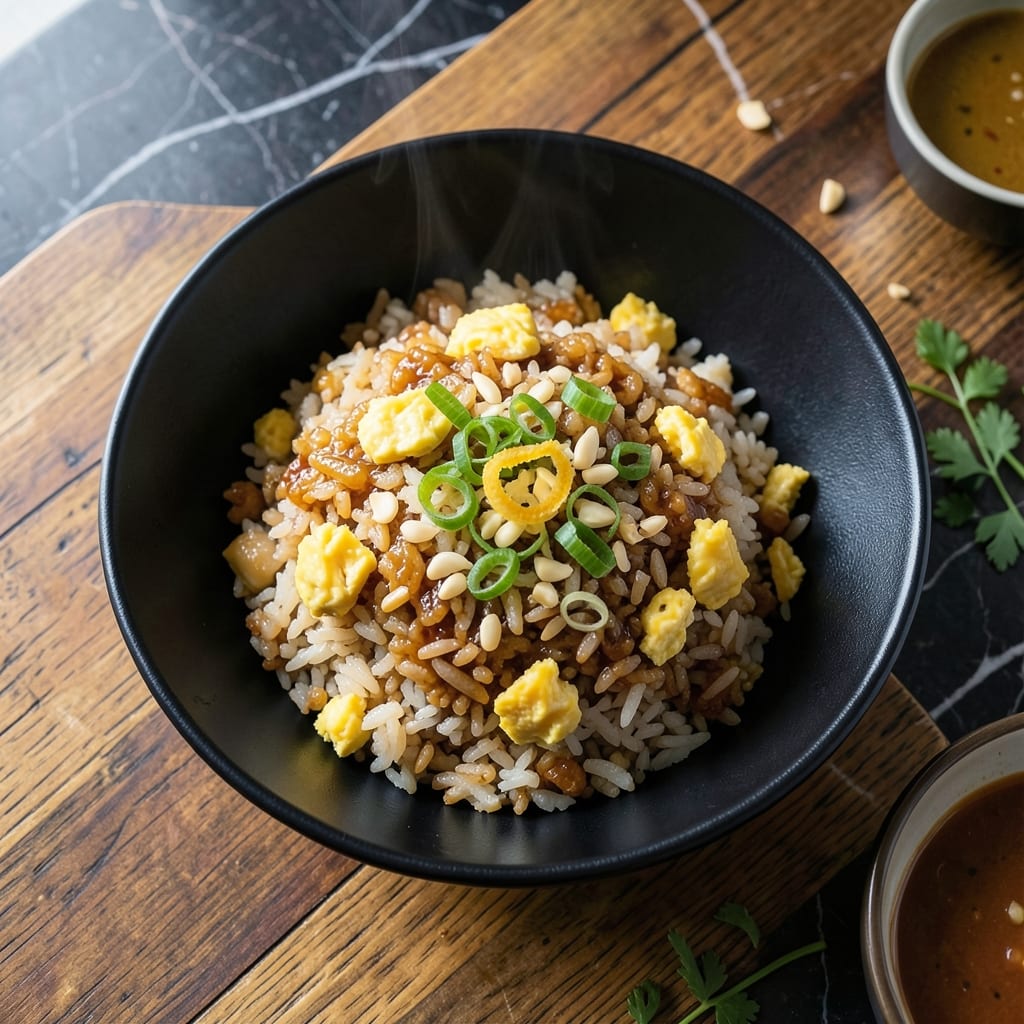
This no-veggie fried rice proves that simple ingredients can create extraordinary flavor. I developed this recipe after realizing many home cooks want the classic taste without chopping vegetables.
The foundation is day-old rice, scrambled eggs, and soy sauce—each playing a crucial role. Cooking the eggs first ensures they stay soft and distinct, while the rice gets a quick fry to restore texture.
What emerges is a dish with perfectly seasoned grains, tender egg pieces, and that signature wok hay aroma. The soy sauce adds depth without overpowering.
Ready in 20 minutes with pantry staples. This delivers classic flavor with minimal effort.
Ingredients for Fried Rice Recipe No Veggies
Pantry staples and a few fresh touches deliver classic fried rice flavor with zero chopping.
| Ingredient | Amount | Notes |
|---|---|---|
| Day-Old Cooked White Rice 🍚 | 4 cups | Cold, preferably overnight, separated |
| Large Eggs 🥚 | 4 whole | Beaten until uniform color |
| Soy Sauce 🫒 | 3 tbsp | Low-sodium or regular variety |
| Neutral Cooking Oil 🛢️ | 2 tbsp | Vegetable, canola, or peanut oil |
| Garlic Cloves 🧄 | 2 cloves | Finely minced for aroma |
| Green Onions 🧅 | 2 whole | Thinly sliced, green parts only |
| Sesame Oil 🫒 | 1 tsp | Toasted variety for finishing |
| Diamond Crystal Kosher Salt 🧂 | ½ tsp | Adjust to taste after cooking |
| Ground White Pepper 🌶️ | ¼ tsp | Optional for classic flavor |
| Granulated Sugar 🍚 | ½ tsp | Balances soy sauce saltiness |
[recipe_ingredient_scaler]
The rice quality is non-negotiable here. Day-old jasmine or long-grain white rice from your last takeout works perfectly—fresh rice turns mushy. Koshihikari or Nishiki brands at Asian markets give the best texture. The eggs should be fresh and large; farm-raised if available. For oil, peanut oil provides the most authentic wok hay aroma, though any neutral oil will suffice.
No green onions? Skip them entirely—they’re garnish, not essential. Substitute regular soy sauce at half the amount if using tamari or coconut aminos. Missing sesame oil? Toasted sesame seeds sprinkled on top add similar flavor. The garlic can be pre-minced in a pinch (from a jar), but fresh cloves offer superior aroma. White pepper isn’t traditional but adds authentic restaurant depth.
Cooked rice keeps in the fridge for 4-5 days—perfect for meal prep. The finished dish reheats well on a skillet with a splash of water. Leftovers stay fresh for 3 days refrigerated, though best eaten immediately. Freezing isn’t recommended as it alters the rice texture significantly.
Why You’ll Love This Recipe
- One Pan Wonder: I toss everything in the same skillet—rice, eggs, garlic—no extra bowls, no fuss.
- Garlic Soy Magic: The soy sauce and garlic turn plain rice into something crave-worthy, with that savory depth I can’t get enough of.
- Weeknight Savior: Honestly, this is my go-to when I need dinner fast and the fridge is almost empty.
- Budget Stretcher: Day-old rice and pantry staples mean I spend almost nothing to feed the whole family.
Step-by-Step Instructions for Egg Fried Rice
Master the technique for perfectly textured fried rice with these essential steps.
Step 1: Prepare the Base Ingredients
Begin by separating the 4 cups day-old cooked white rice with your fingers to break up any clumps. The rice must be completely cold and dry—fresh rice will turn mushy when stir-fried. Meanwhile, beat the 4 whole large eggs in a small bowl until the yolks and whites are fully combined and uniform in color.
Finely mince the 2 cloves garlic cloves and thinly slice the 2 whole green onions, using only the green parts as specified. Have all ingredients measured and within reach before you start cooking—this dish comes together quickly once the heat is on.
Step 2: Cook the Eggs for Silky Texture
Heat a wok or large skillet over medium-high heat until a drop of water sizzles and evaporates immediately. Add 1 tablespoon neutral cooking oil and swirl to coat the pan. Pour in the beaten eggs and let them sit undisturbed for 10 seconds to set slightly at the edges.
Using a spatula, gently scramble the eggs until just set but still slightly runny in spots. This takes about 30-45 seconds. Remove the eggs to a plate while they’re still soft—they’ll finish cooking when combined with the hot rice later. Wipe the pan clean with a paper towel to prevent burning.
Step 3: Stir-Fry the Rice and Aromatics
Return the pan to medium-high heat and add the remaining 1 tablespoon neutral cooking oil. Add the minced garlic and stir for 15-20 seconds until fragrant but not browned. Immediately add the separated rice, breaking up any remaining clumps with your spatula.
Stir-fry for 2-3 minutes, pressing the rice against the hot pan to create slight browning in spots. This step is crucial for achieving that signature slightly crispy texture in each grain. The rice should be hot throughout before moving to the next step.
Step 4: Combine and Season
Return the cooked eggs to the pan with the rice. Drizzle the 3 tbsp soy sauce evenly over the mixture, then add the 0.5 tsp granulated sugar, 0.5 tsp Diamond Crystal kosher salt, and 0.25 tsp ground white pepper. Stir-fry for another 1-2 minutes until everything is evenly distributed and the rice takes on a uniform color.
The soy sauce should coat each grain without making the mixture soggy. Taste and adjust the seasoning if needed, though the full flavor will develop after the final step. The sugar balances the saltiness of the soy sauce, creating that classic savory-sweet profile.
Step 5: Finish and Serve
Remove the pan from heat and stir in the sliced green onions. Drizzle the 1 tsp sesame oil over the top and toss gently to incorporate. The sesame oil adds a nutty aroma that completes the dish—add it off heat to preserve its delicate flavor.
Serve immediately while hot. The finished fried rice should have distinct, separate grains with a slight sheen from the soy sauce, flecked with bits of silky egg and the vibrant green of the onions. Each bite delivers the perfect balance of savory, umami, and subtle sweetness.
Pro Tips For Making Fried Rice Recipe No Veggies
- Use Cold Rice: Day-old rice from the fridge works best—it’s drier and fries up fluffier. I learned this the hard way after making mushy fried rice with fresh rice more times than I’d like to admit.
- Crank the Heat: Get your wok or pan screaming hot before adding oil. About 2 tablespoons of neutral oil should shimmer but not smoke when it’s ready.
- Scramble Eggs First: Push the rice to one side, add a little extra oil, then scramble the eggs until just set before mixing everything together. This prevents rubbery egg bits.
- Sauce Last: Add soy sauce at the very end—about 3-4 tablespoons for 4 cups of rice—so the rice fries properly instead of steaming in the liquid.
Storing and Reheating Leftovers
Refrigerator Storage
Let your fried rice cool for no more than 2 hours before transferring to airtight containers. I use glass containers from Pyrex—they’re stackable and last forever. Store in the fridge at 40°F or below for up to 3 days. The rice actually tastes better the next day as flavors meld. ❄️
Freezer Storage
Fried rice freezes well for up to 1 month without texture issues. Portion into quart-size freezer bags, flatten to save space, and squeeze out excess air. Label with the date—I always forget! Thaw overnight in the fridge before reheating.
Stovetop Reheating
This is my go-to method for best texture. Heat a skillet over medium heat, add the fried rice, and sprinkle with 1-2 tbsp water to prevent drying. Stir-fry for 3-4 minutes until hot throughout. The steam revives the grains beautifully. 🔥
Microwave Reheating
For quick meals, spread fried rice on a microwave-safe plate, sprinkle with 1 tbsp water, and cover with a damp paper towel. Heat on 70% power for 1-2 minutes, stir, then repeat until reaching 165°F. Avoid full power to prevent rubbery eggs.
Nutrition Facts
Frequently Asked Questions
Can I use fresh rice instead of day-old?
No, fresh rice contains too much moisture and will turn mushy. Always use cold, day-old rice that’s been separated into individual grains. Spread it on a tray to dry out slightly if needed.
Why cook the eggs separately?
Cooking eggs first ensures they stay soft and distinct. If added raw to the rice, they’d overcook and turn rubbery. This method gives that classic silky texture in every bite.
Can I skip the sesame oil?
Yes, but it adds authentic flavor. For a substitute, try a sprinkle of toasted sesame seeds on top. The oil is added off heat to preserve its delicate aroma.
How do I prevent soggy fried rice?
Use high heat and avoid overcrowding the pan. Cook in batches if needed, and let the rice crisp slightly before adding sauces. The key is quick cooking at the right temperature.

Trained in classic French technique but raised on slow-cooked ribs and spicy rubs, she blends culinary skill with smoke and soul.
- Recipe for Curried Tofu: Aromatic Spices With Crispy Edges - October 3, 2026
- Recipe for Dumplings in Crock Pot: Fluffy Pillows with Minimal Effort - October 3, 2026
- Recipe For Diced Pork In Slow Cooker: Melt-In-Your-Mouth Tenderness All Day - October 3, 2026