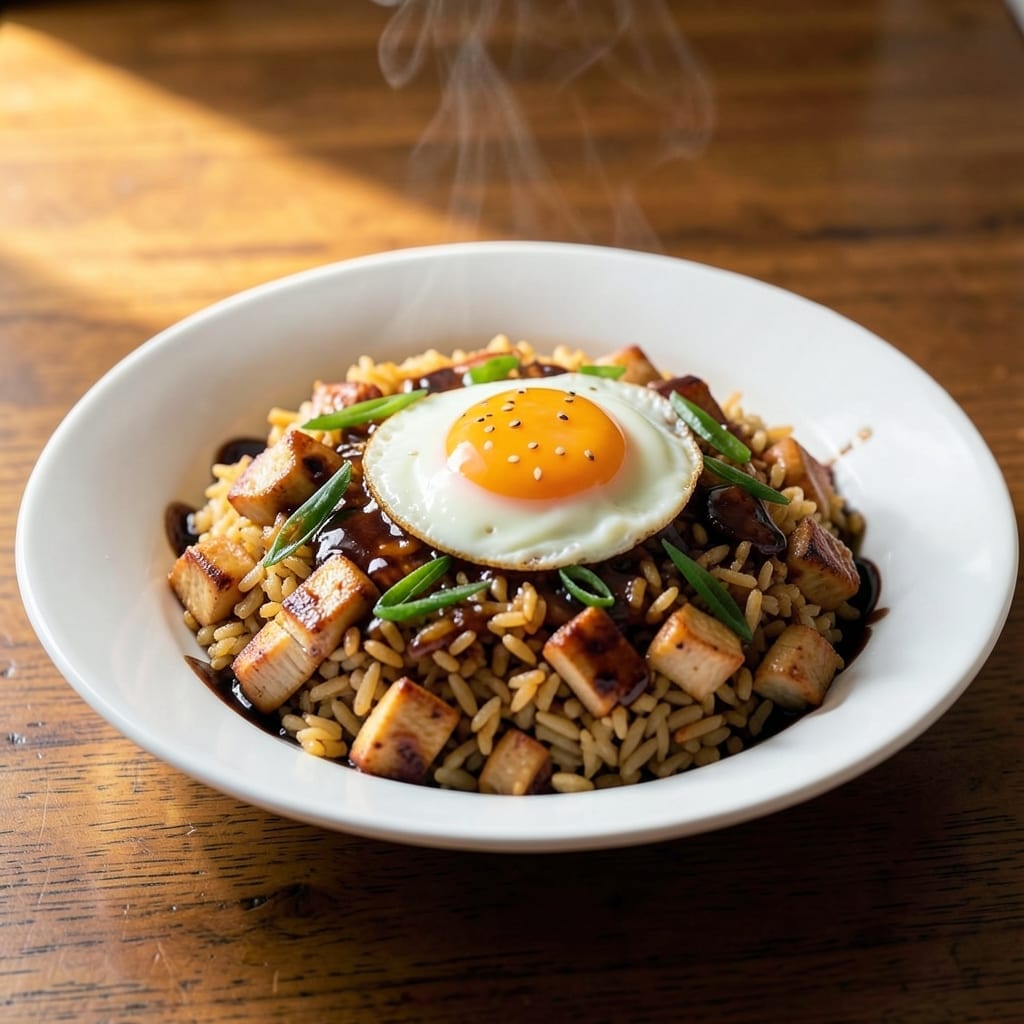
This fried rice delivers wok-charred flavor with every bite, thanks to a perfect balance of savory oyster sauce and high-heat cooking.
Simple ingredients transform into a restaurant-quality dish using traditional techniques for texture and depth of flavor.
Ingredients for Fried Rice Recipe Oyster Sauce
Transform day-old rice and simple proteins into restaurant-quality wok-charred savory bites with these ingredients.
| Ingredient | Amount | Notes |
|---|---|---|
| Jasmine Rice 🍚 | 3 cups | Day-old, cooked and chilled |
| Oyster Sauce 💧 | 3 tbsp | High-quality for depth of flavor |
| Soy Sauce 🫒 | 2 tbsp | Low-sodium preferred |
| Sesame Oil 🫒 | 1 tbsp | Toasted for aroma |
| Vegetable Oil 🫒 | 3 tbsp | High smoke point for frying |
| Large Eggs 🥚 | 3 whole | Beaten for scrambling |
| Green Onions 🧅 | 4 whole | Thinly sliced, white and green parts separated |
| Garlic Cloves 🧄 | 3 cloves | Minced for maximum flavor |
| Carrot 🥕 | 1 whole | Small dice for even cooking |
| Frozen Peas 🌱 | ¾ cup | Thawed before cooking |
| Chicken Breast 🍗 | ½ lb | Boneless, skinless, small dice |
| Kosher Salt 🧂 | ½ tsp | Adjust to taste |
| Ground White Pepper 🌶️ | ¼ tsp | Authentic wok flavor |
[recipe_ingredient_scaler]
The rice is critical here. Jasmine rice provides the ideal texture—fluffy yet firm enough to char. Day-old, chilled rice prevents mushiness. For oyster sauce, Lee Kum Kee Premium is the gold standard. The wok must be carbon steel for proper heat retention. All ingredients should be prepped and measured before cooking begins (mise en place).
No oyster sauce? Vegetarian oyster sauce works as a substitute, though the flavor profile differs slightly. Soy sauce plus a pinch of sugar can mimic some depth. For a vegetarian version, swap chicken for extra-firm tofu or mushrooms. The sesame oil is non-negotiable for authentic aroma—Kadokawa brand is excellent. Frozen peas can be replaced with diced bell peppers if desired.
Cooked rice stores well in the fridge for 3-4 days. The finished dish keeps for 2-3 days refrigerated but is best consumed immediately. For longer storage, freeze portions for up to 1 month. Always reheat in a skillet to restore texture—microwaving makes it soggy.
Why You’ll Love This Recipe
- One Pan Wonder: I toss everything in my wok and it’s done in 15 minutes—no extra pots, no fuss.
- Umami Bomb: The oyster sauce and soy sauce mix hits that salty-sweet spot I crave every time.
- Fridge Cleaner: Honestly, I throw in whatever veggies or leftovers I have, and it still tastes spot-on.
- Budget Hero: A handful of rice, a splash of sauce, and dinner for four costs less than takeout.
Step-by-Step Instructions for Wok-Charred Savory Bites
Master the technique for perfectly charred rice with authentic wok hei flavor.
Step 1: Prepare and Velouté the Aromatics
Heat 2 tbsp Vegetable Oil in a wok over high heat until it shimmers. Add the minced Garlic Cloves and the white parts of the Green Onions, stirring constantly for 30 seconds until fragrant but not browned.
This base layer builds the foundation of flavor for your dish. The garlic should sizzle aggressively but not burn—if it darkens too quickly, reduce the heat slightly. The green onion whites will soften and release their pungent aroma, creating the first layer of complexity in your fried rice.
Step 2: Cook the Protein and Vegetables
Increase heat to maximum and add the remaining 1 tbsp Vegetable Oil. Add the small dice Chicken Breast in a single layer, allowing it to sear undisturbed for 1 minute before stirring. Cook until the chicken is just opaque, about 2-3 minutes total.
Push the chicken to one side and add the small dice Carrot and thawed Frozen Peas. Stir-fry for 1-2 minutes until the carrots begin to soften slightly but retain a slight bite. The peas should brighten in color and heat through completely.
Step 3: Incorporate the Rice and Seasonings
Add the 3 cups Jasmine Rice, breaking up any clumps with your spatula. Distribute it evenly across the wok surface, pressing down firmly to ensure maximum contact with the hot metal. This creates the coveted wok hei, or “breath of the wok.”
Drizzle the 3 tbsp Oyster Sauce, 2 tbsp Soy Sauce, and 0.5 tsp Kosher Salt evenly over the rice. Sprinkle with the 0.25 tsp Ground White Pepper. Stir-fry for 2-3 minutes until the rice is uniformly coated and beginning to char in spots.
Step 4: Finish with Eggs and Final Touches
Create a well in the center of the wok and add the 3 whole Large Eggs. Scramble quickly with your spatula, then incorporate into the rice mixture. The eggs should be just set, with soft curds distributed throughout.
Drizzle the 1 tbsp Sesame Oil over the entire mixture and add the green parts of the Green Onions. Toss everything together for 1 final minute of cooking. The sesame oil adds its distinctive aroma, while the green onions provide a fresh, oniony finish.
Remove from heat when the rice has developed a smoky char in places and all ingredients are thoroughly combined. The texture should be slightly crisp in spots, with each grain of rice distinct and coated in the savory sauce.
Pro Tips For Making Fried Rice Recipe Oyster Sauce
- Use Day-Old Rice: Fresh rice turns to mush—I learned this the hard way. Cook your jasmine rice the day before and refrigerate it overnight to dry it out and get that perfect fried rice texture.
- High Heat Only: Crank your wok or pan to smoking hot before adding oil. After burning three batches, I finally figured out that anything less gives you soggy, sad rice instead of that crucial wok hei flavor.
- Sauce Last: Add the oyster sauce and soy sauce at the very end of cooking. I used to pour it in early and wondered why my fried rice tasted bland—turns out the sauces reduce too much if added too soon.
- Finish with Sesame Oil: Drizzle the sesame oil off the heat just before serving. Sounds weird, but it works: adding it earlier can make the dish bitter, but this way it keeps its nutty aroma.
Dietary Considerations for fried rice recipe oyster sauce
Keto-Friendly Options
For a keto-friendly version, replace rice with cauliflower rice and use a sugar-free oyster sauce or coconut aminos. This reduces carbs while keeping the dish flavorful. Add extra vegetables like bell peppers or zucchini for texture.
Gluten-Free Modifications
Oyster sauce often contains wheat, so opt for a gluten-free oyster sauce or tamari. Ensure all other ingredients, like soy sauce, are labeled gluten-free. Double-check seasonings to avoid hidden gluten.
Allergen Awareness
Common allergens in fried rice include shellfish (oyster sauce), eggs, and soy. For shellfish allergies, swap oyster sauce with mushroom sauce. For egg allergies, simply omit or use a binder like tofu.
Vegetarian Adaptations
Replace oyster sauce with vegetarian oyster sauce (made from mushrooms) or hoisin sauce. Use tofu, tempeh, or extra veggies for protein. This keeps the dish hearty and delicious without meat.
Low-Sodium Alternatives
To reduce sodium, use low-sodium oyster sauce or dilute regular sauce with water. Limit added soy sauce and season with herbs like garlic or ginger instead. Fresh ingredients enhance flavor naturally.
Nutrition Facts

Trained in classic French technique but raised on slow-cooked ribs and spicy rubs, she blends culinary skill with smoke and soul.
- Recipe for Boneless Pork Chops in Cast Iron Skillet: Sear and Baste to Juicy Perfection - October 3, 2026
- Recipe for Boneless Cross Rib Roast: Slow-Roasted Beef with Herb Crust - October 3, 2026
- Hamburgers in Sauce Recipe Crock Pot: Slow-Cooked Savory Delight - October 3, 2026