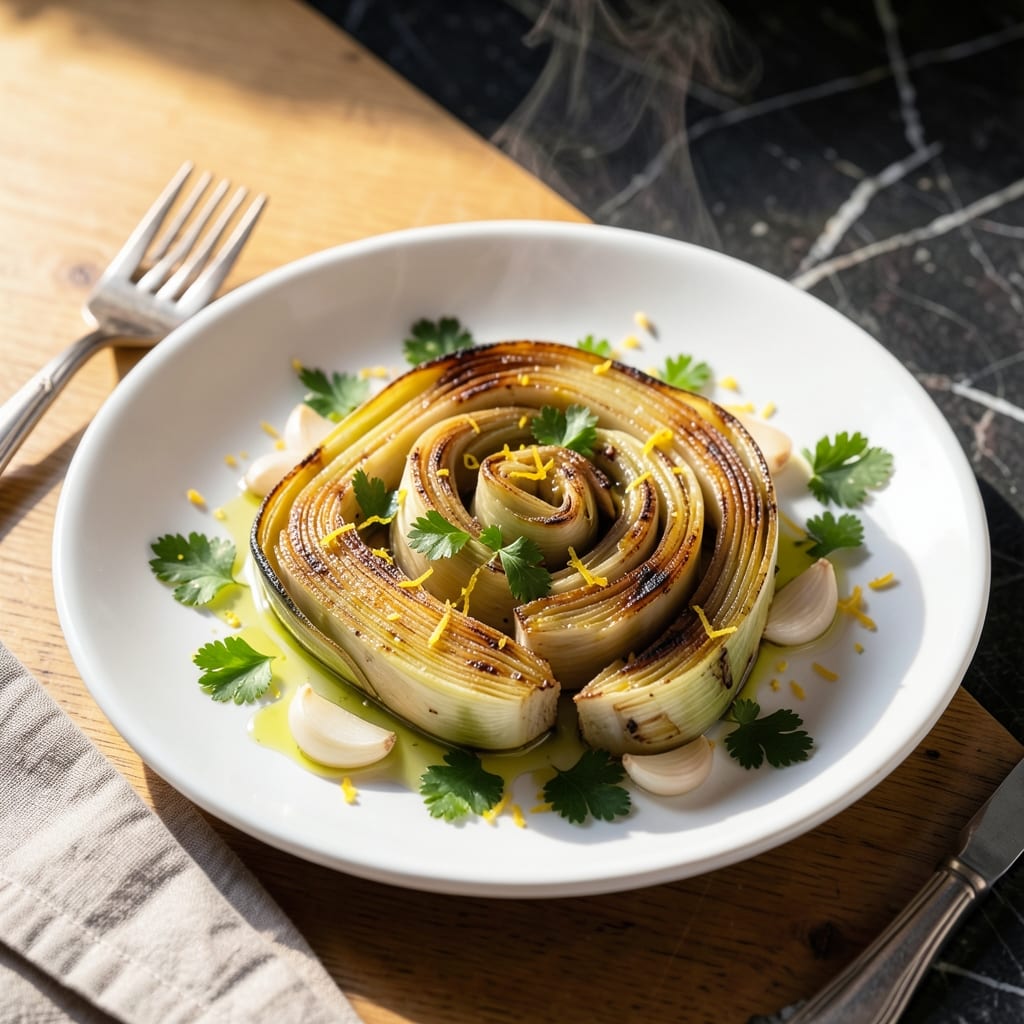
This quick sauté transforms frozen artichokes into a restaurant-quality side dish in under 20 minutes. The secret lies in proper thawing and high heat to achieve that perfect tender-crisp texture.
I developed this method to create a vegan dish that doesn’t sacrifice flavor. Garlic and lemon brighten the artichokes’ natural sweetness, while a touch of olive oil adds richness without dairy.
The result is a vibrant, aromatic dish with golden edges and a zesty finish. It pairs beautifully with pasta, grains, or as a standalone appetizer.
This technique works with any frozen artichoke variety, making it a reliable go-to for busy weeknights.
Ingredients for Frozen Artichokes
Frozen artichokes meet garlic, lemon, and olive oil for a vibrant side dish.
| Ingredient | Amount | Notes |
|---|---|---|
| Frozen Artichoke Hearts 🌰 | 24 oz | Thawed and drained well |
| Extra-Virgin Olive Oil 🫒 | 3 tbsp | Divided for sautéing and finishing |
| Garlic Cloves 🧄 | 4 cloves | Thinly sliced for even cooking |
| Fresh Lemon Juice 🍋 | 2 tbsp | About 1 large lemon |
| Lemon Zest 🍋 | 1 tsp | Finely grated from lemon |
| Fresh Parsley 🌿 | ¼ cup | Chopped, for garnish and brightness |
| Sea Salt 🧂 | ½ tsp | Or to taste for seasoning |
| Freshly Ground Black Pepper 🌶️ | ¼ tsp | Or to taste for finish |
| Red Pepper Flakes 🌶️ | ¼ tsp | Optional for subtle heat |
| Vegetable Broth 🥣 | ¼ cup | Low-sodium preferred for control |
| Nutritional Yeast 🧀 | 1 tbsp | Optional for cheesy depth |
[recipe_ingredient_scaler]
The artichokes are the foundation—look for frozen hearts in water or brine (not oil) from Trader Joe’s or Whole Foods. Thawing is critical: do it overnight in the fridge or use the microwave’s defrost setting, then press out all moisture with a towel. This prevents steaming instead of crisping. The garlic should be fresh, thinly sliced so it sweetens without burning. Avoid pre-minced garlic in jars—it lacks the punch.
No fresh lemon? Bottled lemon juice at half the amount works in a pinch, but you’ll miss the zest’s aroma. Swap parsley for fresh dill or cilantro if that’s what’s on hand. For extra richness, add 1 tbsp of vegan butter at the end. Skip the vegetable broth if you prefer a more concentrated flavor—just add a splash of water to deglaze the pan if needed.
Best served immediately while the edges are still golden and crisp. Leftovers keep in the fridge for 3-4 days but lose some texture. Reheat gently in a skillet with a splash of water to refresh. Freezing isn’t recommended—the artichokes turn mushy upon thawing.
Why You’ll Love This Recipe
- No-Thaw Needed: I just toss the frozen artichokes straight into the pan—no waiting, no fuss.
- Garlic-Lemon Magic: The garlic sizzling in olive oil with that bright pop of lemon zest? Pure flavor gold.
- Weeknight Hero: It’s my go-to for busy evenings when I need something fast but still feel fancy.
Step-by-Step Instructions for Sautéed Artichokes with Garlic and Lemon
This streamlined method delivers vibrant, tender artichokes with minimal effort and maximum flavor.
Step 1: Prepare and Drain the Artichoke Hearts
Begin by thoroughly thawing the 24 oz Frozen Artichoke Hearts under cold running water or in the refrigerator overnight. Drain them extremely well in a colander, pressing gently with paper towels to remove all excess moisture.
Proper drainage prevents steaming instead of sautéing, which would compromise the dish’s texture. These hearts should look plump and dry before hitting the pan.
Step 2: Sauté Aromatics in Olive Oil
Heat 2 tbsp Extra-Virgin Olive Oil in a large skillet over medium heat. Add the 4 cloves Garlic Cloves, thinly sliced, and the 0.25 tsp Red Pepper Flakes.
Cook for 1-2 minutes until the garlic becomes fragrant and golden at the edges, stirring constantly to prevent burning. The red pepper flakes should release their subtle heat into the oil, creating a flavorful base.
Step 3: Cook Artichokes with Broth and Seasonings
Add the drained 24 oz Frozen Artichoke Hearts to the skillet along with the 0.25 cup Vegetable Broth, 0.5 tsp Sea Salt, and 0.25 tsp Freshly Ground Black Pepper. Stir to combine.
Increase heat to medium-high and cook for 8-10 minutes, stirring occasionally, until the artichokes are tender and the liquid has reduced by half. The broth helps steam the hearts while the direct heat creates caramelized edges.
Step 4: Finish with Lemon and Herbs
Reduce heat to low. Stir in the 2 tbsp Fresh Lemon Juice, 1 tsp Lemon Zest, and 1 tbsp Nutritional Yeast. Cook for 1-2 minutes until the sauce thickens slightly.
The lemon juice should brighten the dish immediately, while the zest adds a fragrant depth. The nutritional yeast contributes a subtle cheesy note that complements the vegetables perfectly.
Step 5: Garnish and Serve
Remove from heat and stir in the 0.25 cup Fresh Parsley and the remaining 1 tbsp Extra-Virgin Olive Oil. The parsley should wilt slightly from the residual heat while retaining its vibrant green color.
Taste and adjust seasoning if needed. Serve immediately while warm, ensuring each portion has a good balance of artichokes, sauce, and fresh herbs. The dish should have a glossy, lightly thickened sauce clinging to the tender artichoke hearts.
Pro Tips For Making Frozen Artichokes
- Thaw and Pat Dry: I learned this the hard way—skip thawing and your artichokes will steam instead of sear. Pat them very dry with a towel after thawing to get that golden crust in the olive oil.
- Slice Thin for Flavor: Cut the frozen hearts into quarters or sixths before cooking. Smaller pieces soak up more garlic and lemon, and they cook through faster without turning mushy.
- Low Heat for Garlic: After burning three batches, I finally figured out: add the minced garlic to the olive oil after the artichokes have sautéed for 2-3 minutes. This keeps it from turning bitter.
- Zest First, Juice Last: Grate the lemon zest directly into the pan at the start—it blooms in the hot oil. Add the juice at the very end to preserve its bright, fresh kick.
Wine and Beer Pairings for This Recipe
Crisp White Wines
A dry Sauvignon Blanc from New Zealand cuts through the dish’s richness with its citrusy acidity. The lemon notes in the wine mirror the recipe’s bright finish beautifully. I love how the wine’s herbal undertones complement the garlic. 🍷
Light Red Options
For red wine lovers, a chilled Pinot Noir from Oregon offers earthy notes that pair well with the artichokes’ natural sweetness. The wine’s lighter body won’t overpower the dish’s delicate flavors. Serve at 55°F for best results.
Italian Classics
A crisp Vermentino from Sardinia brings a Mediterranean flair that feels right at home with this dish. Its saline minerality enhances the artichokes’ briny undertones. I’ve also enjoyed it with a Soave Classico from Veneto.
Beer Pairings
A Belgian witbier like Hoegaarden offers citrus and spice notes that harmonize with the lemon and garlic. The beer’s effervescence refreshes your palate between bites. For a non-alcoholic option, try a sparkling lemonade with mint. 🍺
Rosés to Consider
A dry Provence rosé provides a versatile pairing with its subtle berry notes and crisp finish. The wine’s pale color and light body make it a perfect match for this vibrant, vegan dish. I reach for one from Château d’Esclans.
Non-Alcoholic Sparkling
For a festive touch, serve with a sparkling water infused with cucumber and lime. The bubbles cleanse your palate, while the citrus echoes the dish’s flavors. Add a sprig of rosemary for an elegant garnish.
Nutrition Facts
Frequently Asked Questions
Do I need to thaw them first?
Yes, always thaw and drain well. Press out excess moisture with towels to prevent steaming. This ensures proper browning and texture.
Can I use whole frozen artichokes?
Whole ones work but require trimming. For quicker prep, hearts are best. If using whole, halve and remove chokes before cooking.
How do I prevent soggy artichokes?
Use medium-high heat and don’t overcrowd the pan. Cook in batches if needed for that perfect crisp texture.
What can I substitute for lemon?
Try lime juice or white wine vinegar for acidity. Use half the amount and adjust to taste for similar brightness.

Trained in classic French technique but raised on slow-cooked ribs and spicy rubs, she blends culinary skill with smoke and soul.
- Recipe for Boneless Pork Chops in Cast Iron Skillet: Sear and Baste to Juicy Perfection - October 3, 2026
- Recipe for Boneless Cross Rib Roast: Slow-Roasted Beef with Herb Crust - October 3, 2026
- Hamburgers in Sauce Recipe Crock Pot: Slow-Cooked Savory Delight - October 3, 2026