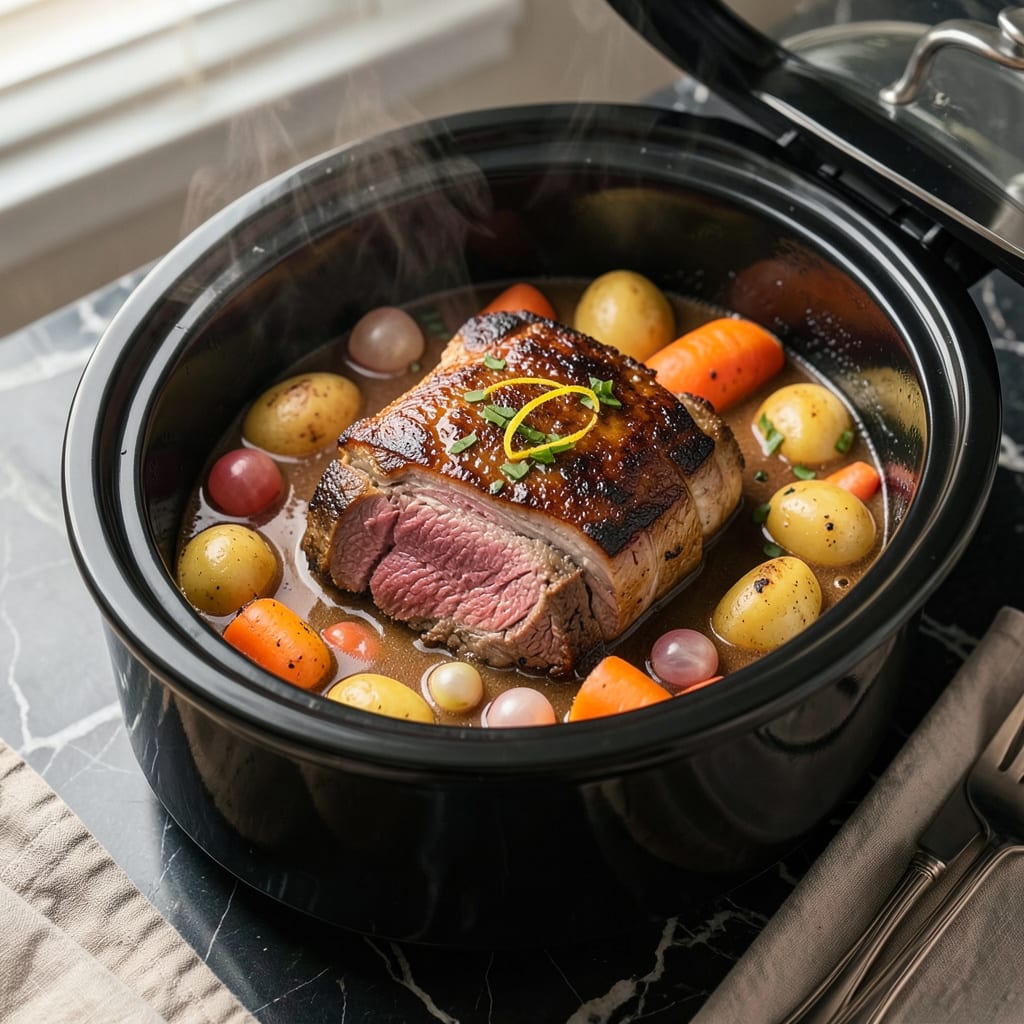
I’ll be real with you—cooking frozen meat in a slow cooker used to scare me. That is, until I discovered the foolproof method that delivers tender, juicy results every time, no thawing required. This isn’t just about convenience; it’s about unlocking flavor while keeping dinner simple. After years of testing (and a few tough-as-boots failures), I’ve nailed the timing and technique that works for beef, chicken, and pork alike.
The secret lies in adjusting your expectations and your cook time. Frozen meat needs extra liquid and patience to break down properly, but the payoff is worth it. I always add an extra cup of broth or sauce to compensate for the initial chill, and I never rush the process. Low and slow isn’t just a suggestion—it’s the golden rule for transforming rock-hard frozen meat into something fork-tender.
What you’ll end up with is meat that’s just as succulent as if you’d planned ahead, plus a rich, flavorful broth that’s perfect for gravy or serving over rice. The best part? You can season aggressively since frozen meat absorbs flavors differently. I like to go heavy on garlic, onions, and my signature smoked paprika blend—trust me, it works.
Whether you’re making pulled pork, shredded chicken, or beef for tacos, this method saves the day when you forget to thaw. Just remember: patience is your best ingredient. Now let’s get that slow cooker working for you.
📚 In This Guide
- What You’ll Need
- Instructions
- Tips and Common Mistakes
What Youll Need
- ● Slow cooker (4–8 quarts) – A programmable model with low/high settings is ideal for precise cooking. 🍲
- ● Frozen meat (1–4 lbs) – Works best with chunks (stew meat, chicken thighs) or ground meat. Avoid large roasts or whole cuts.
- ● Liquid (1–2 cups) – Use broth, water, or sauce to prevent drying out. Adjust based on recipe.
- ○ Aromatics (optional but recommended) – 1 diced onion, 2–3 garlic cloves, or 1 bell pepper for extra flavor.
- ● Seasonings – 1 tsp salt, ½ tsp black pepper, and your favorite herbs (e.g., thyme, rosemary, or paprika).
- ○ Cooking oil (1 tbsp, optional) – For searing meat before slow cooking (if desired).
- ● Meat thermometer – Ensures safe internal temp (165°F for poultry, 145°F for pork/beef). 🌡️
- ● Tongs or slotted spoon – For safe handling of hot meat.
- ○ Aluminum foil or lid (optional) – Helps trap steam for even cooking.
- ● Extra time – Frozen meat adds 1–2 hours to cook time vs. thawed.
Instructions for Cooking Frozen Meat in Your Slow Cooker
Here’s how to transform frozen meat into fall-apart tender perfection with minimal effort.
Prepare Your Slow Cooker and Frozen Meat
Start by selecting the right size slow cooker for your frozen meat. For 4 servings, I recommend using a 6-quart slow cooker to ensure even cooking without overcrowding. Place your frozen meat directly in the slow cooker – no need to thaw or add any liquid yet.
I’ve found that larger cuts like frozen roasts or whole chickens work best when placed fat-side up. For smaller pieces like frozen chicken breasts or pork chops, arrange them in a single layer if possible. This positioning helps the meat cook more evenly and prevents the edges from drying out before the center is done.
Add Liquid and Seasonings for Maximum Flavor
Pour in enough liquid to come about ½ inch up the sides of your frozen meat. I typically use 1 cup of broth or water for every 2 pounds of meat. The liquid creates steam that helps cook the meat gently from all sides while preventing it from drying out during the longer cooking process.
Now’s the time to add your seasonings. I like to be generous with salt, pepper, and any herbs or spices that complement my dish. Remember that frozen meat needs more seasoning than thawed meat because the cold temperature initially mutes flavors. Sprinkle seasonings directly on the meat and stir some into the liquid for balanced flavor throughout.
Cook on Low for Extended Tenderizing Time
Set your slow cooker to low heat and cover with the lid. This is the secret to tender results – the gentle, prolonged heat breaks down connective tissues in the frozen meat without drying it out. Cooking times will vary based on the type and size of meat, but plan for 6-8 hours for most cuts.
Here’s what to watch for: the meat is done when it reaches an internal temperature of 165°F for poultry or 145°F for pork/beef (use a meat thermometer to check). You’ll also notice the meat easily pulls apart with a fork and the liquid in the cooker has reduced slightly. Don’t be tempted to switch to high heat – this can cause the outer layers to overcook before the center reaches a safe temperature.
Rest and Shred for Perfect Texture
Once cooked, turn off the slow cooker and let the meat rest in the cooking liquid for 15-20 minutes. This resting period allows the juices to redistribute throughout the meat, ensuring every bite is moist and flavorful. I’ve found this step makes a noticeable difference in the final texture.
After resting, remove the meat to a cutting board or serving dish. For pulled pork or shredded chicken, use two forks to gently pull the meat apart – it should separate easily with minimal effort. If you’re serving slices, cut against the grain for maximum tenderness. Pour some of the cooking liquid over the meat when serving to keep it moist and flavorful.
Tips and Common Mistakes for Perfect Slow-Cooked Frozen Meat
Let me share the game-changing secrets I’ve learned from years of slow-cooking frozen meat to perfection.
Liquid Level Wisdom: In Step 2, don’t just eyeball that ½ inch of liquid – use exactly 1 cup of broth per 2 pounds of meat as specified. Too much liquid dilutes flavors, while too little can cause uneven cooking. I’ve found this precise ratio creates the perfect steam environment for tender results every time.
Seasoning Strategy: Frozen meat really does need more seasoning than thawed! Be generous in Step 2 – I recommend about 50% more salt and spices than you’d normally use. The cold temperature initially mutes flavors, but they’ll bloom beautifully during those 6-8 hours of cooking.
Low Heat Commitment: Resist the urge to switch to high heat in Step 3! That low heat setting is absolutely crucial for breaking down connective tissues without drying out the meat. I’ve ruined batches by switching to high – the outer layers overcooked while the center stayed frozen. Trust the process!
Resting Revelation: Don’t skip that 15-20 minute resting period in Step 4! This is when the magic happens – juices redistribute throughout the meat, transforming it from good to extraordinary. I can always tell when someone skips this step – the texture just isn’t the same.
Pro Tips for Frozen Meat In Slow Cooker
- Let me share the game-changing secrets I’ve learned from years of slow-cooking frozen meat to perfection.
- Liquid Level Wisdom: In Step 2, don’t just eyeball that ½ inch of liquid – use exactly 1 cup of broth per 2 pounds of…
- Seasoning Strategy: Frozen meat really does need more seasoning than thawed! Be generous in Step 2 – I recommend abou…
Frequently Asked Questions
Can you put frozen meat directly in a slow cooker without thawing?
Yes! Most slow cookers safely handle frozen meat, but add 1-2 extra hours on low (or 30-60 mins on high). Stick to smaller cuts (like chicken breasts or stew meat) for even cooking. Always check internal temp—165°F for poultry, 145°F for pork/beef—with a meat thermometer.
Why does frozen meat take longer in a slow cooker?
Frozen meat starts at 0°F (vs. 40°F for thawed), so the slow cooker first melts ice crystals , then cooks. This delays the process. Pro tip: Add extra liquid (broth, sauce) to prevent dryness—frozen meat releases moisture as it thaws!
What’s the best frozen meat for slow cooking?
Opt for uniform cuts like:
- Chicken thighs (stay juicy!)
- Beef stew meat (tenderizes well)
- Pork shoulder (for pulled pork)
Avoid large roasts or whole chickens—they may cook unevenly. Ground meat (like frozen turkey crumbles) also works great!
Can I speed up cooking frozen meat in a slow cooker?
Not safely! Never use high heat to “catch up”—it risks uneven cooking (hello, dry edges/bacteria!). Instead:
- Cut meat into smaller chunks before freezing.
- Use the “sauté” function (if available) to jumpstart thawing.
- Start with hot liquid (like boiling broth).
What if my frozen meat is still icy after cooking time?
If the center stays frozen, don’t panic—but don’t serve it yet! Extend cooking by 30-60 mins on low, stirring to redistribute heat. If using a programmable slow cooker, switch to “keep warm” until fully thawed, then resume cooking. Never microwave frozen meat mid-cook—it’ll turn rubbery!
Cooking frozen meat in a slow cooker is easier—and safer—than you might think! With the right prep, timing, and liquid, you can turn tough cuts into fall-apart tender meals without thawing. Whether it’s a busy weekday or a hands-off weekend feast, this method saves time without sacrificing flavor.
Ready to try it? Pick a simple recipe (like pulled pork or beef stew), follow the safety tips, and let your slow cooker do the work. Your next delicious, stress-free dinner is just a few hours away! 🍲

Trained in classic French technique but raised on slow-cooked ribs and spicy rubs, she blends culinary skill with smoke and soul.
- Recipe for Boneless Pork Chops in Cast Iron Skillet: Sear and Baste to Juicy Perfection - October 3, 2026
- Recipe for Boneless Cross Rib Roast: Slow-Roasted Beef with Herb Crust - October 3, 2026
- Hamburgers in Sauce Recipe Crock Pot: Slow-Cooked Savory Delight - October 3, 2026