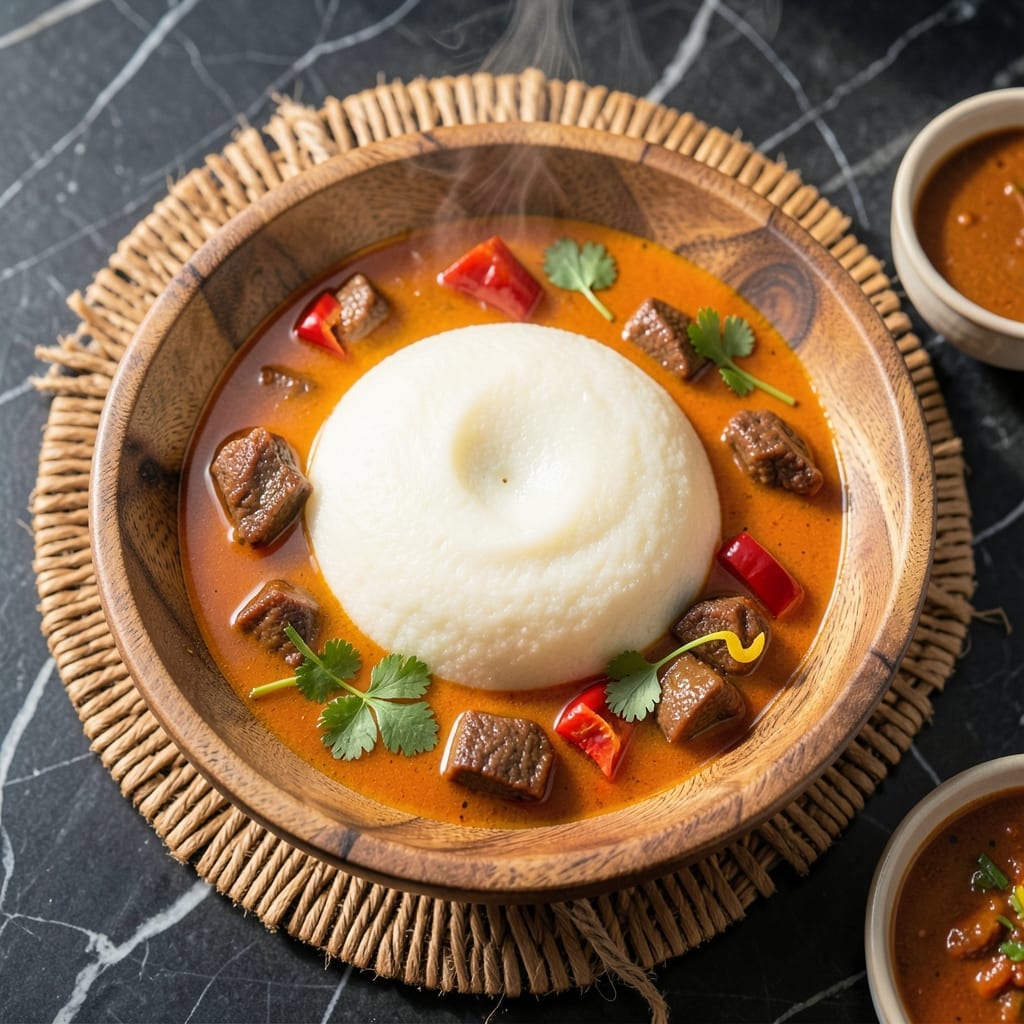
This flour-based fufu brings the classic West African staple to your kitchen with a smooth, stretchy texture that pairs perfectly with soups and stews.
I developed this method to recreate the traditional cassava version using accessible ingredients. The key is achieving the right consistency through precise mixing and cooking techniques.
What you get is a Versatile, vegan-friendly side that absorbs flavors beautifully. The dough should be soft and pliable, ready to soak up your favorite sauces.
Master this technique and you’ll have a staple that transforms any meal into an authentic African dining experience.
Ingredients for Fufu Recipe with Flour
Accessible ingredients recreate this West African classic with perfect stretchy texture every time.
| Ingredient | Amount | Notes |
|---|---|---|
| All-Purpose Flour 🌾 | 2 cups | Plus extra for dusting |
| Water 💧 | 1 ½ cups | Room temperature preferred |
| Salt 🧂 | ½ tsp | Fine sea salt recommended |
| Vegetable Oil 🫒 | 1 tbsp | Neutral flavor, for dough |
| Cassava Flour 🌾 | ½ cup | Optional for authenticity |
| Cornstarch 🌾 | 2 tbsp | For stretchy texture |
| Baking Powder 🧂 | ¼ tsp | Helps achieve lightness |
| Plant-Based Milk 🥛 | ¼ cup | Unsweetened variety |
| Olive Oil 🫒 | 1 tsp | For brushing finished fufu |
| Garlic Powder 🧄 | ¼ tsp | Optional for flavor boost |
| Onion Powder 🧅 | ¼ tsp | Enhances savory depth |
[recipe_ingredient_scaler]
The flour is the foundation here. King Arthur or Gold Medal all-purpose deliver consistent results—avoid self-rising as it throws off the texture. Cassava flour adds authenticity (find it at Whole Foods or online), but the dish works beautifully without it. Room temperature water blends more smoothly into the dough, so don’t skip that step (worth the extra minute).
No cassava flour? Just add an extra 2 tbsp cornstarch for that signature stretch. Out of plant-based milk? Water plus 1 tsp oil per quarter cup works fine. The baking powder isn’t traditional but gives a lighter texture—omit if you prefer the classic dense version. Garlic and onion powders are optional but add depth (trust me on this).
Store dry ingredients in airtight containers for 6 months. The dough keeps 2 days refrigerated (reheat by steaming). For best results, use immediately after making—fresh fufu absorbs sauces like a dream (the good stuff, not the pre-shredded kind).
Why You’ll Love This Recipe
- No-Fuss Mixing: I just stir flour, water, and a pinch of salt—no fancy tools or techniques needed.
- Soft & Smooth: The cassava flour gives it that authentic stretchy texture I crave with my soups.
- Pairs with Anything: Honestly, it’s my blank canvas for stews, sauces, or even just a side with grilled meats.
Step-by-Step Instructions for Fufu With Flour
Here’s the method. Straightforward, tested, works every time.
Step 1: Combine Dry Ingredients for the Base
In a large mixing bowl, whisk together the 2 cups All-Purpose Flour, 0.5 cup Cassava Flour, 2 tbsp Cornstarch, 0.25 tsp Baking Powder, 0.5 tsp Salt, 0.25 tsp Garlic Powder, and 0.25 tsp Onion Powder. I like to sift these first to prevent any lumps in the final dough.
The cassava flour adds authenticity and a subtle earthy flavor, while the cornstarch gives it that signature stretchiness. Don’t skip the baking powder—it helps create a lighter texture that makes this version more approachable for flour-based fufu.
Step 2: Incorporate Wet Ingredients Gradually
Create a well in the center of your dry ingredients. Pour in the 1.5 cups Water and 1 tbsp Vegetable Oil, then add the 0.25 cup Plant-Based Milk. I use room temperature liquids to help the dough come together more smoothly.
Using a wooden spoon or silicone spatula, stir the mixture until it forms a shaggy dough. It will look rough at first—that’s normal. The key is to add the liquids gradually so you can control the consistency. You want a soft, slightly sticky dough that pulls away from the bowl.
Step 3: Knead to Develop the Perfect Texture
Turn the dough out onto a lightly floured surface (use some of the extra all-purpose flour for dusting). Knead for 8-10 minutes until smooth and elastic. I press the dough with the heels of my hands, fold it over, and rotate it as I work.
You’ll know it’s ready when the surface becomes silky and the dough springs back when you press it with your finger. If it’s too sticky, add a little more flour, but be sparing—too much will make your fufu dense instead of light and stretchy.
Step 4: Rest and Shape the Dough
Place the kneaded dough back in the bowl and cover with a clean kitchen towel. Let it rest for 20-30 minutes at room temperature. This relaxation period makes the dough easier to shape and improves the final texture.
After resting, divide the dough into 4 equal portions (for serving size). Roll each portion between your palms into a smooth ball, then flatten slightly into a disc about 1-inch thick. The dough should feel supple and slightly tacky but not stick to your hands.
Step 5: Cook and Finish for Serving
Heat a large non-stick skillet over medium heat. Add the fufu discs and cook for 3-4 minutes per side until lightly golden in spots. You’re not fully cooking them here—just setting the exterior to help them hold their shape.
Transfer to a serving plate and brush the tops lightly with the 1 tsp Olive Oil. This adds a subtle richness and gives the fufu a beautiful sheen. Serve warm with your favorite soup or stew, and watch how the dough pulls apart in satisfying, stretchy strands.
Pro Tips For Making Fufu Recipe With Flour
- Mix Gradually: Add the water to the flour mixture slowly—about a quarter cup at a time—while stirring. I learned this the hard way after ending up with a lumpy, unworkable dough that refused to smooth out.
- Use Warm Water: Warm water, around 100-110°F, blends better with the flour and cassava flour, creating a smoother, more elastic fufu. Cold water just doesn’t cut it, and you’ll spend forever kneading.
- Skip the Over-Kneading: Once the dough forms a smooth ball, stop kneading. Overworking it makes fufu dense and tough—my grandmother swore by this, and she was right.
- Oil Your Hands: Rub a little vegetable oil on your hands before shaping the fufu. It prevents sticking and makes the dough easier to handle, especially if it’s a bit tacky.
Flavor Customization for This Recipe
Herb Infusions
Add 1 tbsp dried thyme or 1 tbsp rosemary to the dry mix for earthy depth. Fresh herbs work too—use 2 tbsp finely chopped. I love thyme with peanut soup. It adds complexity without overpowering. 🌿
Spicy Kick
Mix in ½ tsp cayenne or 1 tsp smoked paprika for heat. For authentic West African flavor, add 1 tbsp ground nutmeg. The warmth pairs beautifully with tomato-based stews.
Cheesy Variation
Skip the vegan route and add ½ cup grated Parmesan to the dough. Replace plant-based milk with regular milk. This creates a richer version that still maintains the stretchy texture.
Sweet Twist
Add 2 tbsp sugar and 1 tsp cinnamon for a dessert-style fufu. Serve with fruit compote or honey drizzle. Kids love this version—it’s like a soft, stretchy cookie. 💛
Citrus Zest
Incorporate 1 tbsp lemon zest or 1 tbsp orange zest for brightness. This works especially well with seafood stews. The citrus oils perfume the dough subtly.
Umami Boost
Add 1 tbsp nutritional yeast or 1 tsp mushroom powder for savory depth. These ingredients enhance the natural flavors of the fufu without adding moisture.
Nutrition Facts
Frequently Asked Questions
Can I use self-rising flour?
Avoid it—it contains leavening agents that will alter the texture. Stick to all-purpose flour for the classic dense, stretchy result.
What if my dough is too sticky?
Add 1-2 tbsp more flour while kneading, but do so sparingly. Too much makes the fufu heavy instead of light and pliable.
Do I need a special pot for cooking?
A non-stick skillet works perfectly for stovetop cooking. Just maintain medium heat to prevent burning while setting the shape.
How do I store leftovers?
Keep in an airtight container in the fridge for up to 2 days. Reheat by steaming to restore softness.

Trained in classic French technique but raised on slow-cooked ribs and spicy rubs, she blends culinary skill with smoke and soul.
- Recipe for Boneless Pork Chops in Cast Iron Skillet: Sear and Baste to Juicy Perfection - October 3, 2026
- Recipe for Boneless Cross Rib Roast: Slow-Roasted Beef with Herb Crust - October 3, 2026
- Hamburgers in Sauce Recipe Crock Pot: Slow-Cooked Savory Delight - October 3, 2026