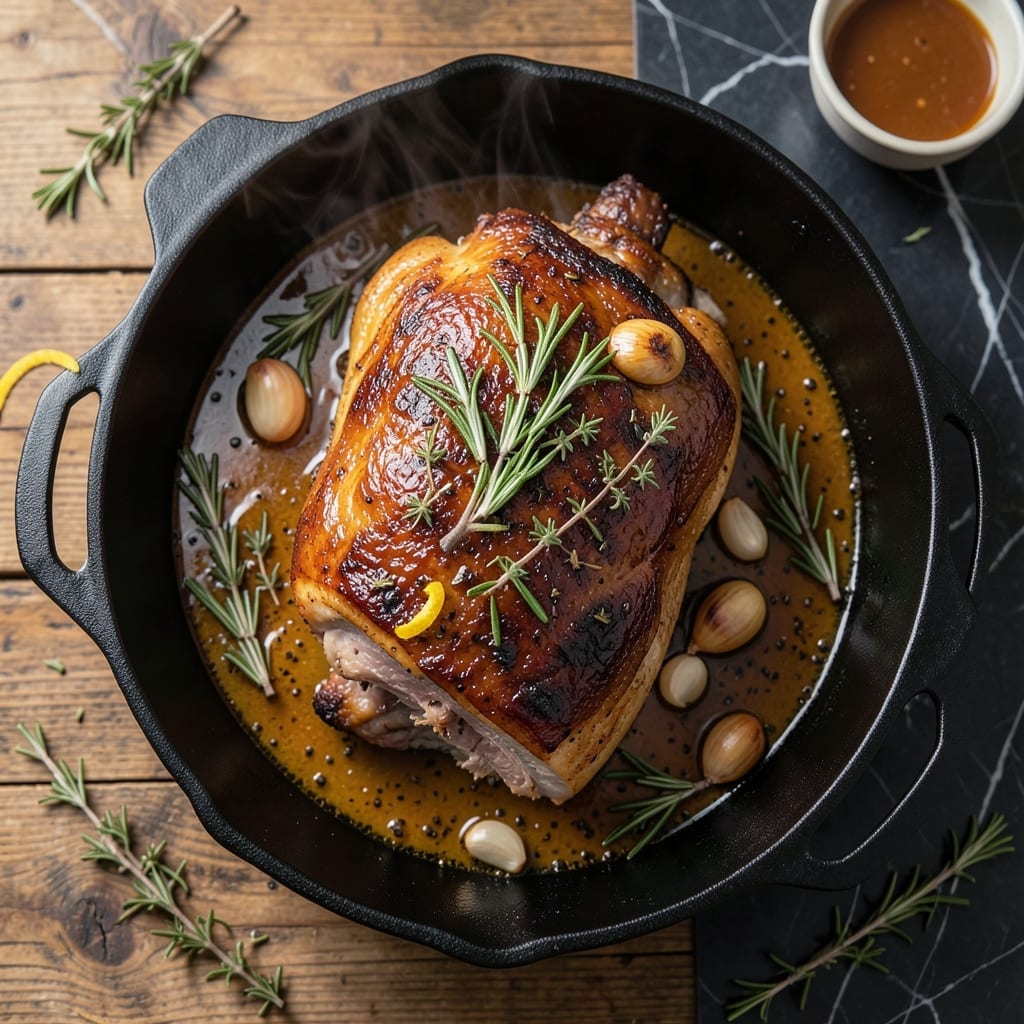
This pork roast recipe transforms a simple cut into a centerpiece worthy of any dinner table. The slow-roasting method ensures tender, juicy meat with a golden herb crust.
I’ve refined this technique to highlight the pork’s natural richness while adding depth with aromatic herbs. The oven does most of the work, leaving you with a dish that’s impressive yet effortless.
By the time it’s done, the roast will be fall-apart tender, with a crust that crackles under the fork. Every bite delivers rich, savory flavor with a hint of herbaceous brightness.
Serve with roasted vegetables or mashed potatoes to complete the meal. Here’s how to achieve perfect results every time.
Ingredients for Pork Roast Recipe Oven
A few quality ingredients and a slow oven yield fall-apart tender pork with golden herb crust.
| Ingredient | Amount | Notes |
|---|---|---|
| Pork Shoulder Roast 🥩 | 3 lb | Bone-in, skin-on preferred |
| Kosher Salt 🧂 | 2 tbsp | Diamond Crystal preferred |
| Freshly Ground Black Pepper 🌶️ | 1 tbsp | Coarse grind ideal |
| Fresh Rosemary 🌿 | 3 tbsp | Chopped, stems removed |
| Fresh Thyme 🍃 | 2 tbsp | Leaves stripped from stems |
| Garlic Cloves 🧄 | 6 cloves | Minced for herb crust |
| Extra-Virgin Olive Oil 🫒 | ¼ cup | For searing and moisture |
| Dijon Mustard 🟡 | 2 tbsp | For binding herb crust |
| Dry White Wine 🍷 | 1 cup | For deglazing pan |
| Chicken Stock 🥣 | 1 cup | Low-sodium preferred |
| Unsalted Butter 🧈 | 2 tbsp | For basting crust |
| Yellow Onion 🧅 | 1 whole | Roughly chopped for base |
| Carrots 🥕 | 3 whole | Peeled, cut into chunks |
| Celery Stalks 🌿 | 2 pieces | Cut into large pieces |
[recipe_ingredient_scaler]
The pork shoulder is non-negotiable here. Bone-in, skin-on delivers the moistest, most flavorful result—Costco or Whole Foods typically carry excellent options. Look for even marbling throughout the cut. For the herbs, fresh rosemary and thyme are essential (dried simply won’t provide the same aromatic impact). Buy them in bunches from the produce section, not those sad little plastic clamshells.
No white wine? Substitute with apple cider vinegar diluted in water (1:3 ratio). If you can’t find Dijon mustard, whole-grain mustard works equally well. The chicken stock can be homemade or high-quality store-bought (I prefer Better Than Bouillon for depth). For a richer crust, swap the butter for duck fat—it’s a game-changer (find it at Specialty grocers).
This roast reheats beautifully. Store leftovers wrapped tightly in foil for up to 4 days in the fridge or freeze for 3 months. Slice against the grain before serving for maximum tenderness. The pan juices make an incredible base for gravy—don’t discard them!
Why You’ll Love This Recipe
- Set and Forget: Honestly, you just rub the pork shoulder with salt, pepper, rosemary, and thyme, then let the oven do all the work.
- Herb-Crusted Magic: That rosemary and thyme crust forms this ridiculous golden-brown layer that makes every bite taste like a Sunday dinner.
- Feeds the Week: I make this on Sunday and we’re eating pulled pork sandwiches, tacos, and fried rice straight through Thursday.
- Wallet-Friendly Feast: A pork shoulder costs pennies per pound but tastes like a million bucks after a slow roast.
Step-by-Step Instructions for Pork Roast Oven
This method ensures tender meat with a fragrant herb crust every time.
Step 1: Prepare the Herb Crust and Season the Roast
Finely chop the 3 tbsp fresh rosemary and 2 tbsp fresh thyme, then mince the 6 cloves garlic cloves. In a small bowl, combine these with 2 tbsp kosher salt, 1 tbsp freshly ground black pepper, 0.25 cup extra-virgin olive oil, and 2 tbsp Dijon mustard.
This paste will form a flavorful crust that locks in moisture. Pat the 3 lb pork shoulder roast dry with paper towels, then rub the herb mixture evenly over all surfaces, pressing it into the meat. Allow it to sit at room temperature for 30 minutes to let the flavors penetrate.
Step 2: Sear the Roast for Maximum Flavor
Preheat your oven to 325°F. Heat a large Dutch oven or heavy oven-safe pot over medium-high heat. Add the 2 tbsp unsalted butter and once melted, sear the pork shoulder on all sides until deeply browned, about 3-4 minutes per side.
Searing develops a rich fond in the pan, which will enhance the braising liquid. Transfer the roast to a plate temporarily while you prepare the vegetables in the same pot.
Step 3: Build the Braising Base
In the same pot, add the roughly chopped 1 whole yellow onion, peeled and chunked 3 whole carrots, and 2 pieces celery stalks. Cook for 3-4 minutes until the vegetables begin to soften and develop color.
Pour in the 1 cup dry white wine and scrape up any browned bits from the bottom of the pot. Let it simmer for 2 minutes to reduce slightly, then add the 1 cup chicken stock.
Step 4: Slow-Roast to Perfection
Return the pork shoulder to the pot, nestling it among the vegetables. Cover tightly with a lid and transfer to the preheated oven. Roast for 3 to 3.5 hours, turning the roast every 45 minutes to ensure even cooking and basting.
You’ll know it’s done when the meat is fork-tender and the internal temperature reaches 195-200°F. The herb crust should be deeply browned, and the collagen in the pork shoulder will have melted into succulent juices.
Step 5: Rest and Serve
Carefully transfer the pork shoulder to a cutting board and tent loosely with foil. Let it rest for 20-30 minutes to allow the juices to redistribute. This step is crucial for maintaining moisture.
Shred or slice the pork, discarding any large fat pieces if desired. Spoon the braising liquid and vegetables over the top, and serve immediately. The meat should be fall-apart tender with a rich, aromatic sauce.
Pro Tips For Making Pork Roast Recipe Oven
- Dry the Pork First: Pat the shoulder roast completely dry with paper towels before seasoning—this guarantees a better sear and helps the salt and herbs stick where they belong.
- Start Hot, Finish Low: Sear the roast at 450°F for 20 minutes first, then drop to 325°F to finish cooking. I learned this the hard way after ending up with tough meat from low-and-slow the whole time.
- Don’t Skip the Rest: Let the roast rest under foil for at least 15 minutes after pulling it from the oven—it keeps all the juices inside instead of on your cutting board.
- Bruise the Herbs: Lightly crush the rosemary and thyme sprigs with your palm before rubbing them on the meat. Sounds weird, but it releases way more flavor into the pork.
Dietary Considerations for pork roast recipe oven
Gluten-Free Adaptation
This recipe is naturally gluten-free as written since all ingredients are inherently free of gluten. Just ensure your Dijon mustard and chicken stock are certified gluten-free brands—I trust Annie’s for mustard and Pacific Foods for stock. 💪
Low-Carb Version
For a keto-friendly approach, skip the vegetables and use 1 cup water instead of wine. The pork itself has 0g net carbs, and the herb crust adds minimal carbohydrates. Serve with roasted Brussels sprouts or cauliflower mash.
Dairy-Free Option
Simply swap the 2 tbsp unsalted butter for olive oil or coconut oil. The Dijon mustard in the herb crust helps maintain moisture without dairy. I’ve made it this way for lactose-intolerant friends with great results.
Sodium Considerations
To reduce sodium, use 1 tbsp kosher salt instead of 2 tbsp and opt for low-sodium chicken stock. The natural richness of pork shoulder means you won’t miss the extra salt. Taste and adjust seasoning at the end.
Remember that Diamond Crystal kosher salt is less dense than table salt, so volume measurements are more forgiving. 🧂
Allergen Notes
This dish contains no common allergens, but check your Dijon mustard for egg or soy if those are concerns. The recipe is nut-free, egg-free, and soy-free as written with standard ingredients.
Nutrition Facts
Frequently Asked Questions
What oven temperature works best?
Use 325°F for slow-roasting. This lower temperature ensures even cooking and prevents the outside from drying out before the inside is done.
How do I know when it’s done?
Check with a meat thermometer—the internal temperature should reach 195-200°F. The meat should pull apart easily with a fork.
Can I use a different cut of pork?
Pork shoulder is ideal, but pork butt works too. Avoid lean cuts like tenderloin, as they dry out during long cooking.
Do I need to sear the roast first?
Searing adds depth of flavor and creates a beautiful crust. It only takes 3-4 minutes per side over medium-high heat.

Trained in classic French technique but raised on slow-cooked ribs and spicy rubs, she blends culinary skill with smoke and soul.
- Recipe for Boneless Pork Chops in Cast Iron Skillet: Sear and Baste to Juicy Perfection - October 3, 2026
- Recipe for Boneless Cross Rib Roast: Slow-Roasted Beef with Herb Crust - October 3, 2026
- Hamburgers in Sauce Recipe Crock Pot: Slow-Cooked Savory Delight - October 3, 2026