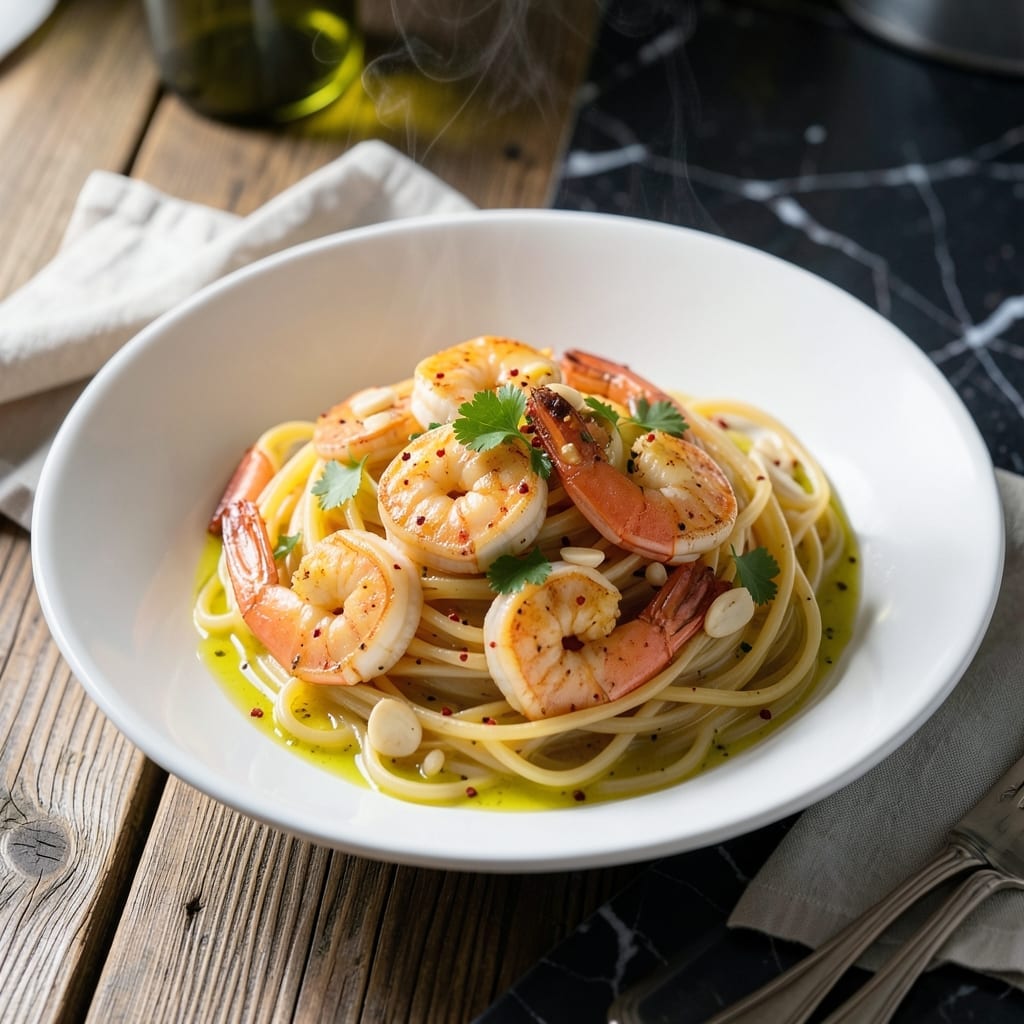
Some of my best kitchen moments started at Nana Mae’s diner, where I learned how to build flavor with simple ingredients. This dish captures that philosophy perfectly.
Quality olive oil and fresh garlic form the foundation, while bright citrus and herbs elevate the shrimp and pasta to restaurant-quality status. The technique is straightforward but precise.
You’ll achieve perfectly cooked shrimp with a golden sear, al dente pasta, and a sauce that clings beautifully to every strand. David always requests seconds.
Ready in about 30 minutes, this is the kind of meal that feels special but fits effortlessly into your weeknight rotation.
Ingredients for Garlic Shrimp Pasta Recipe with Olive Oil
Quality olive oil, fresh garlic, and bright citrus make this a restaurant-quality dish every time.
| Ingredient | Amount | Notes |
|---|---|---|
| Linguine Pasta 🍝 | 12 oz | Or sub spaghetti or fettuccine |
| Large Shrimp 🍤 | 1 ½ lb | Peeled, deveined, tails on |
| Extra-Virgin Olive Oil 🫒 | ½ cup | Divided for cooking and finishing |
| Garlic Cloves 🧄 | 6 cloves | Thinly sliced for even cooking |
| Red Pepper Flakes 🌶️ | ½ tsp | Adjust for heat preference |
| Fresh Lemon Juice 🍋 | 3 tbsp | About 1 large lemon |
| Lemon Zest 🍋 | 1 tbsp | From 1 large lemon |
| Fresh Parsley 🌿 | ½ cup | Chopped, for garnish and sauce |
| Fresh Basil Leaves 🌿 | ¼ cup | Torn, for finishing touch |
| Dry White Wine 🍷 | ½ cup | Sauvignon Blanc or Pinot Grigio |
| Unsalted Butter 🧈 | 4 tbsp | For richness in sauce |
| Kosher Salt 🧂 | 1 tsp | Plus more to taste |
| Freshly Ground Black Pepper 🌶️ | ½ tsp | Plus more to taste |
[recipe_ingredient_scaler]
The shrimp is the star here. Look for large, wild-caught shrimp (16/20 count or smaller) at Whole Foods or a trusted seafood counter—they hold up better to quick cooking and taste sweeter. Fresh garlic is non-negotiable (the pre-minced stuff lacks punch). For the olive oil, California Olive Ranch or Cobram Estate are reliable grocery store brands that won’t break the bank.
No white wine? Sub chicken or vegetable broth with a splash of lemon juice. Out of parsley? Cilantro or chives work in a pinch, though the flavor shifts slightly. For heat, cayenne or a dash of hot sauce can replace the red pepper flakes. If you’re avoiding butter, extra olive oil keeps it rich. The citrus is key—don’t skip the zest (it’s packed with flavor).
Leftovers keep surprisingly well. Store in an airtight container for up to 3 days in the fridge. The pasta absorbs the sauce over time, so add a splash of water or broth when reheating to loosen it up. Doesn’t freeze well—the shrimp gets rubbery.
Why You’ll Love This Recipe
- One Pot Wonder: I toss the shrimp, garlic, and red pepper flakes into the pan while the linguine cooks—no juggling multiple pots.
- Garlic Lovers’ Dream: The olive oil carries that deep, punchy garlic flavor straight into every bite of pasta and shrimp.
- Weeknight Hero: Honestly, it’s my go-to for busy evenings when I need something fast but still impressive.
- Budget Stretcher: Large shrimp feel luxurious, but a little goes a long way with the hearty pasta and bold seasoning.
Step-by-Step Instructions for Garlic Shrimp Pasta
Here’s how to create this vibrant dish with bright citrus and herb flavors.
Step 1: Cook Pasta and Prep Shrimp
Bring a large pot of salted water to a rolling boil. Add the 12 oz Linguine Pasta and cook according to package instructions until al dente. Reserve 1 cup of pasta water before draining. I like to undercook the pasta by 1 minute since it’ll finish in the sauce.
While the pasta cooks, pat the 1.5 lb Large Shrimp completely dry with paper towels. Season both sides with 1 tsp Kosher Salt and 0.5 tsp Freshly Ground Black Pepper. This ensures even browning and prevents the shrimp from releasing excess moisture into the pan.
Step 2: Infuse Olive Oil with Garlic and Spices
In a large skillet, heat 0.5 cup Extra-Virgin Olive Oil over medium heat until it shimmers. Add the 6 cloves Garlic Cloves (thinly sliced) and 0.5 tsp Red Pepper Flakes. Cook for 2-3 minutes, stirring frequently, until the garlic turns light golden.
Here’s the thing—watch the garlic closely. It can go from golden to burnt in seconds. You want it fragrant and just starting to crisp at the edges. Remove the skillet from heat if it starts to brown too quickly.
Step 3: Sear Shrimp and Deglaze with Wine
Increase heat to medium-high and add the seasoned shrimp in a single layer. Sear for 1-2 minutes per side until opaque and pink. Don’t overcrowd the pan—work in batches if needed. Transfer shrimp to a plate and set aside.
With the pan still hot, pour in the 0.5 cup Dry White Wine and scrape up all the browned bits from the bottom. Let it simmer for 2 minutes until the liquid reduces by half. This deglazing step captures all that concentrated flavor.
Step 4: Create the Sauce and Combine
Reduce heat to medium-low and add the 4 tbsp Unsalted Butter, 3 tbsp Fresh Lemon Juice, and 1 tbsp Lemon Zest. Stir until the butter melts completely. The sauce should look glossy and slightly emulsified.
Add the drained pasta and 0.5 cup Fresh Parsley to the skillet. Toss to coat evenly, adding reserved pasta water 1 tablespoon at a time until the sauce clings beautifully to the noodles. This should take about 1-2 minutes.
Step 5: Finish with Shrimp and Herbs
Return the shrimp to the skillet along with any accumulated juices. Gently toss everything together for 30 seconds to heat through. Remove from heat and stir in the 0.25 cup Fresh Basil Leaves.
Taste and adjust seasoning if needed. The basil should stay bright green and fresh-tasting. Serve immediately in warm bowls, with extra parsley and lemon zest on top if desired. The pasta should glisten with sauce, and each bite should burst with garlic, citrus, and herb flavors.
Pro Tips For Making Garlic Shrimp Pasta Recipe With Olive Oil
- Pat Shrimp Dry: I learned this the hard way—wet shrimp steams instead of searing. Give them a quick pat with paper towels before they hit the hot olive oil for that golden crust.
- Slice Garlic Thin: After burning three batches, I finally figured out thinly sliced garlic cooks evenly and infuses the oil faster than minced. About 1/8-inch thick does the trick.
- Reserve Pasta Water: Sounds weird, but it works: stash a cup of that starchy pasta water before draining. It’s the glue that brings the sauce together when you toss everything at the end.
- High Heat Only: Shrimp cook in 2-3 minutes max—anything lower and they turn rubbery. Crank the heat to medium-high and resist the urge to stir constantly.
Flavor Customization for garlic shrimp pasta recipe with olive oil
Spice It Up
For a bolder kick, increase the red pepper flakes to 1 tsp or add ½ tsp cayenne with the garlic. David loves this spicier version with an extra pinch of chili flakes on top. The heat pairs perfectly with the citrus. 🌶️
Herb Variations
Swap the parsley for ½ cup fresh dill for a Mediterranean twist. Or mix in 2 tbsp chopped tarragon with the basil for a French-inspired take. I tested both at our Austin farmers market stall—they were huge hits.
Citrus Swaps
Replace lemon juice with lime juice and zest for a brighter, more tropical flavor. Or use orange zest with the lemon for a sweeter profile. The 3 tbsp citrus juice keeps the acidity balanced.
Rich and Creamy
Stir in ¼ cup heavy cream with the butter for a velvety sauce. Or add 2 tbsp cream cheese for tangy richness. This version reminds me of Nana Mae’s diner specials—comforting but still elegant.
Protein Swaps
Substitute 1.5 lb scallops or chicken breast (cut into strips) for the shrimp. Sear scallops 2 minutes per side; cook chicken until it reaches 165°F. The garlic-olive oil base works beautifully with both.
Extra Garlicky
Double the garlic cloves to 12 for serious garlic lovers. Add 1 tbsp minced garlic with the sliced cloves for layered flavor. I’ve made this for David’s poker nights—it disappears fast. 💪
Nutrition Facts
Frequently Asked Questions
Can I use frozen shrimp instead of fresh?
Thaw frozen shrimp in cold water for 10-15 minutes before using. Pat them very dry to prevent excess moisture in the pan.
Why does my garlic burn so easily?
Garlic burns fast at high heat. Cook it over medium (not high) and remove the pan from heat if it browns too quickly. Thin slices cook more evenly than minced.
What if I don’t have white wine?
Substitute ½ cup chicken broth plus 1 tbsp lemon juice for similar acidity. The depth of flavor will differ slightly but still taste great.
How do I prevent rubbery shrimp?
Sear just until opaque (1-2 minutes per side), then remove immediately. Overcooking is the #1 cause of rubbery texture. Don’t crowd the pan!

Trained in classic French technique but raised on slow-cooked ribs and spicy rubs, she blends culinary skill with smoke and soul.
- Recipe for Boneless Pork Chops in Cast Iron Skillet: Sear and Baste to Juicy Perfection - October 3, 2026
- Recipe for Boneless Cross Rib Roast: Slow-Roasted Beef with Herb Crust - October 3, 2026
- Hamburgers in Sauce Recipe Crock Pot: Slow-Cooked Savory Delight - October 3, 2026