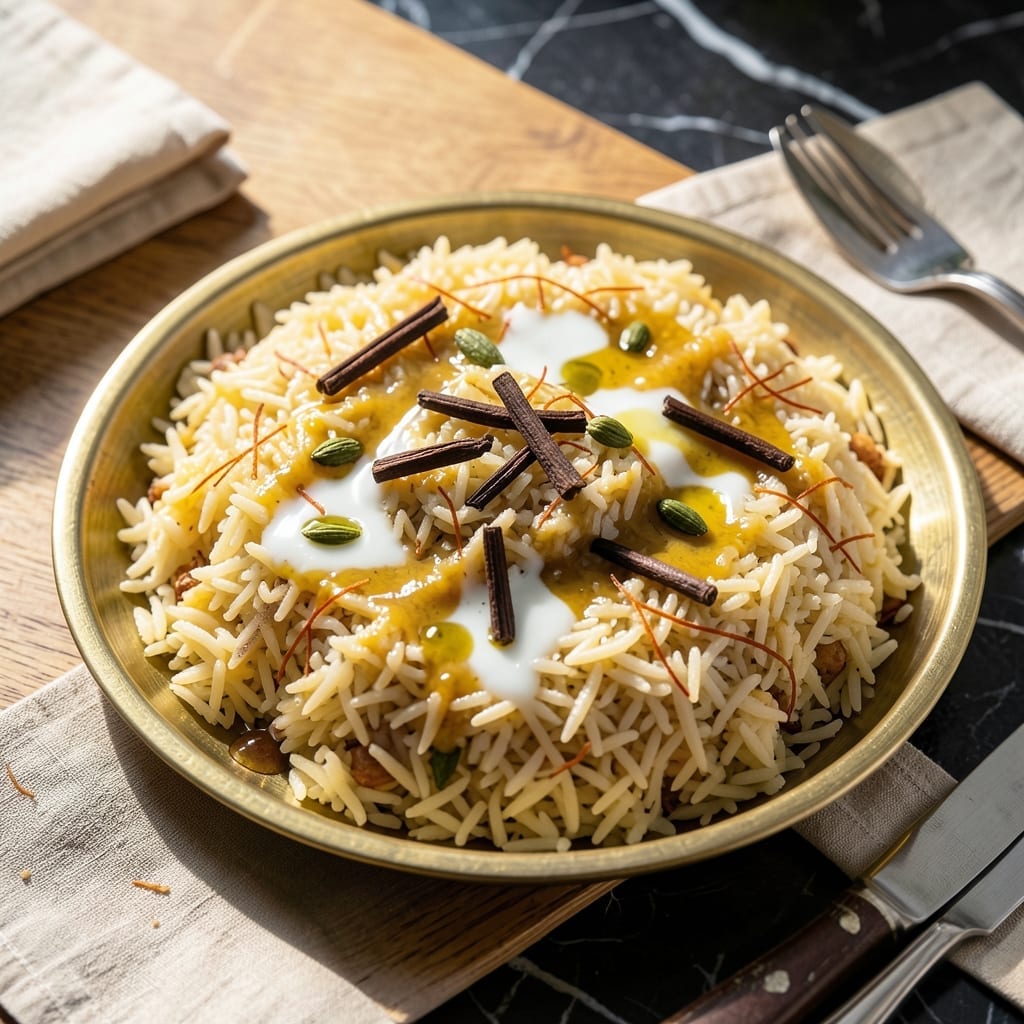
This Kerala-style ghee rice transforms simple basmati into an aromatic masterpiece with golden ghee and delicate coconut undertones. The traditional method brings out the rice’s natural fragrance while maintaining perfect grain separation.
Using just a handful of pantry staples, this recipe delivers restaurant-quality results with minimal effort. The coconut milk adds subtle sweetness that perfectly complements the rich ghee aroma.
Ingredients for Ghee Rice Recipe Kerala
A handful of pantry staples transforms into fragrant Kerala-style rice with rich ghee and coconut undertones.
| Ingredient | Amount | Notes |
|---|---|---|
| Basmati Rice 🍚 | 2 cups | Rinsed until water runs clear |
| Ghee 🧈 | ½ cup | Clarified butter, golden brown |
| Coconut Milk 🥥 | 1 cup | Full-fat for richness |
| Water 💧 | 3 cups | Or substitute vegetable broth |
| Whole Cloves 🌿 | 4 whole | Lightly crushed for aroma |
| Green Cardamom Pods 🌿 | 4 whole | Lightly crushed to release seeds |
| Cinnamon Stick 🌿 | 1 whole | 2-inch piece for infusion |
| Bay Leaves 🍃 | 2 whole | Dried, whole leaves |
| Cashew Halves 🌰 | ½ cup | Lightly toasted for garnish |
| Golden Raisins 🍇 | ¼ cup | Optional for sweetness |
| Salt 🧂 | 1 ½ tsp | Adjust to taste |
| Fresh Cilantro 🌿 | ¼ cup | Chopped for garnish |
[recipe_ingredient_scaler]
The ghee is non-negotiable for authentic flavor. Patel Brothers or any Indian grocery carries high-quality options—avoid substitutes as they won’t deliver the same aroma. Basmati rice must be aged and rinsed thoroughly to remove excess starch. Look for brands like Daawat or Tilda for consistent grain separation. Whole spices should be fresh; old cloves lose their potency quickly.
No coconut milk? Coconut cream thinned with water works at a 1:1 ratio. Out of cashews? Slivered almonds or pine nuts add similar crunch. For a nut-free version, omit entirely and double the raisins. The cardamom can be substituted with a pinch of ground cardamom at one-eighth the amount, but whole pods infuse better. Skip the cinnamon stick if unavailable—it’s traditional but not essential.
Store uncooked rice in an airtight container for up to 6 months. Cooked rice keeps in the fridge for 3-4 days and reheats well with a splash of water. Toast extra cashews and raisins—they keep at room temperature for 2 weeks in sealed containers.
Why You’ll Love This Recipe
- One Pot Wonder: I just dump everything in, let the basmati soak up the coconut milk, and the ghee does the rest—no stirring, no fuss.
- Rich & Fragrant: The cloves release this warm aroma while the ghee gives it that deep, nutty richness Kerala is famous for.
- Feeds a Crowd: I make a big batch for Sunday lunch and it disappears—great with curries or even plain yogurt.
- Leftovers? Better: Honestly, it tastes even richer the next day when the flavors meld overnight.
Step-by-Step Instructions for Fragrant Basmati With Coconut Aroma
This traditional method ensures perfectly fluffy rice with rich, aromatic depth every time.
Step 1: Rinse and Soak the Basmati Rice
Place the 2 cups Basmati Rice in a fine-mesh strainer and rinse under cold water until the water runs completely clear. This removes excess starch and prevents the grains from clumping together during cooking.
Transfer the rinsed rice to a large bowl and cover with 3 cups Water. Let it soak for 20-30 minutes—this hydrates the grains and ensures even cooking. Drain thoroughly before proceeding; wet rice will dilute the cooking liquid and affect texture.
Step 2: Infuse the Cooking Liquid with Whole Spices
In a heavy-bottomed pot, combine the 3 cups Water, 1 cup Coconut Milk, 4 whole Whole Cloves, 4 whole Green Cardamom Pods, 1 whole Cinnamon Stick, 2 whole Bay Leaves, and 1.5 tsp Salt. Bring to a gentle boil over medium-high heat.
Once boiling, reduce to medium-low heat and let the spices infuse for 5 minutes. The liquid should become fragrant with visible swirls of coconut milk. This step builds the aromatic foundation that defines Kerala-style ghee rice.
Step 3: Toast the Cashews and Raisins in Ghee
In a separate small pan, heat the 0.5 cup Ghee over medium heat until it shimmers. Add the 0.5 cup Cashew Halves and toast for 2-3 minutes until they turn light golden brown and release a nutty aroma.
Add the 0.25 cup Golden Raisins and cook for another 30-60 seconds until they plump slightly. Remove from heat immediately to prevent burning—they’ll continue cooking in the residual heat. Set aside for garnishing.
Step 4: Cook the Rice to Fluffy Perfection
Add the drained 2 cups Basmati Rice to the infused coconut liquid and stir once to distribute the grains. Bring to a rolling boil over high heat.
Once boiling, reduce to low heat, cover tightly with a lid, and simmer for 12-15 minutes until the liquid is absorbed and the rice is tender. Avoid lifting the lid during cooking—steam is essential for even doneness.
Step 5: Fluff and Garnish for Serving
Turn off the heat and let the rice rest, covered, for 10 minutes. This allows the grains to firm up and absorb any remaining moisture.
Gently fluff the rice with a fork to separate the grains. Drizzle the reserved ghee with toasted cashew halves and golden raisins over the top, then sprinkle with 0.25 cup Fresh Cilantro. Serve warm, ensuring each portion captures the aromatic spices and creamy coconut notes.
Pro Tips For Making Ghee Rice Recipe Kerala
- Soak the Basmati: Give the rice a 20-minute soak in cold water before cooking—I learned this the hard way after ending up with dry, uneven grains more times than I care to admit.
- Toast the Cloves: Lightly fry the whole cloves in hot ghee for 15-20 seconds until fragrant before adding anything else, or they’ll taste harsh and underdeveloped.
- Use Full-Fat Coconut Milk: Skip the light version; the rich, full-fat coconut milk is what gives Kerala ghee rice its signature creamy texture and depth.
- Low Heat for Ghee: After adding the ghee, keep the flame low to prevent it from browning or burning—this keeps the rice grains separate and perfectly coated.
Regional Styles of This Dish
Malabar Coast Style
In Northern Kerala, they often add 1 tsp fennel seeds to the spice infusion for a subtle licorice note. The rice takes on a lighter color but packs incredible depth. I discovered this variation at a small thattukada (roadside eatery) near Kozhikode. 🌊
Travancore Tradition
Southern Kerala versions sometimes use fresh coconut milk extracted from 1 grated coconut instead of canned. The texture becomes creamier, and the aroma is more pronounced. This method requires soaking the rice for only 15 minutes to prevent over-softening.
Thalassery Special
The Thalassery region adds 2 crushed black peppercorns and 1 star anise pod to the spice mix. This creates a bolder flavor profile that pairs exceptionally well with spicy Kerala chicken curry. I always keep these whole spices on hand for this variation.
Kottayam Variation
Here, they incorporate ½ cup grated coconut into the rice during the final 5 minutes of cooking. The result has a delightful chewiness and extra coconut richness. Use fresh, not desiccated, coconut for the best texture. 💛
Palakkad Method
This eastern Kerala approach uses 2 tbsp coconut oil mixed with the ghee for toasting cashews. The oil adds a distinct nuttiness that complements the ghee beautifully. I find this version particularly aromatic when served with vegetable stew.
Nutrition Facts
Frequently Asked Questions
Can I use regular butter instead of ghee?
No, ghee has a higher smoke point and distinct nutty flavor that butter can’t replicate. For best results, use pure clarified butter or store-bought ghee.
How long should I soak the basmati rice?
Soak for 20-30 minutes in cold water. This ensures even cooking and prevents clumping. Drain well before adding to the pot.
What if my rice turns out sticky?
Sticky rice usually means too much water or not rinsing enough. Always rinse until water runs clear and use exactly 3 cups liquid per 2 cups rice.
Can I make this without coconut milk?
Yes! Substitute with 1 cup water plus ½ cup coconut cream. The flavor will be slightly richer but equally aromatic.

Trained in classic French technique but raised on slow-cooked ribs and spicy rubs, she blends culinary skill with smoke and soul.
- Recipe for Boneless Pork Chops in Cast Iron Skillet: Sear and Baste to Juicy Perfection - October 3, 2026
- Recipe for Boneless Cross Rib Roast: Slow-Roasted Beef with Herb Crust - October 3, 2026
- Hamburgers in Sauce Recipe Crock Pot: Slow-Cooked Savory Delight - October 3, 2026