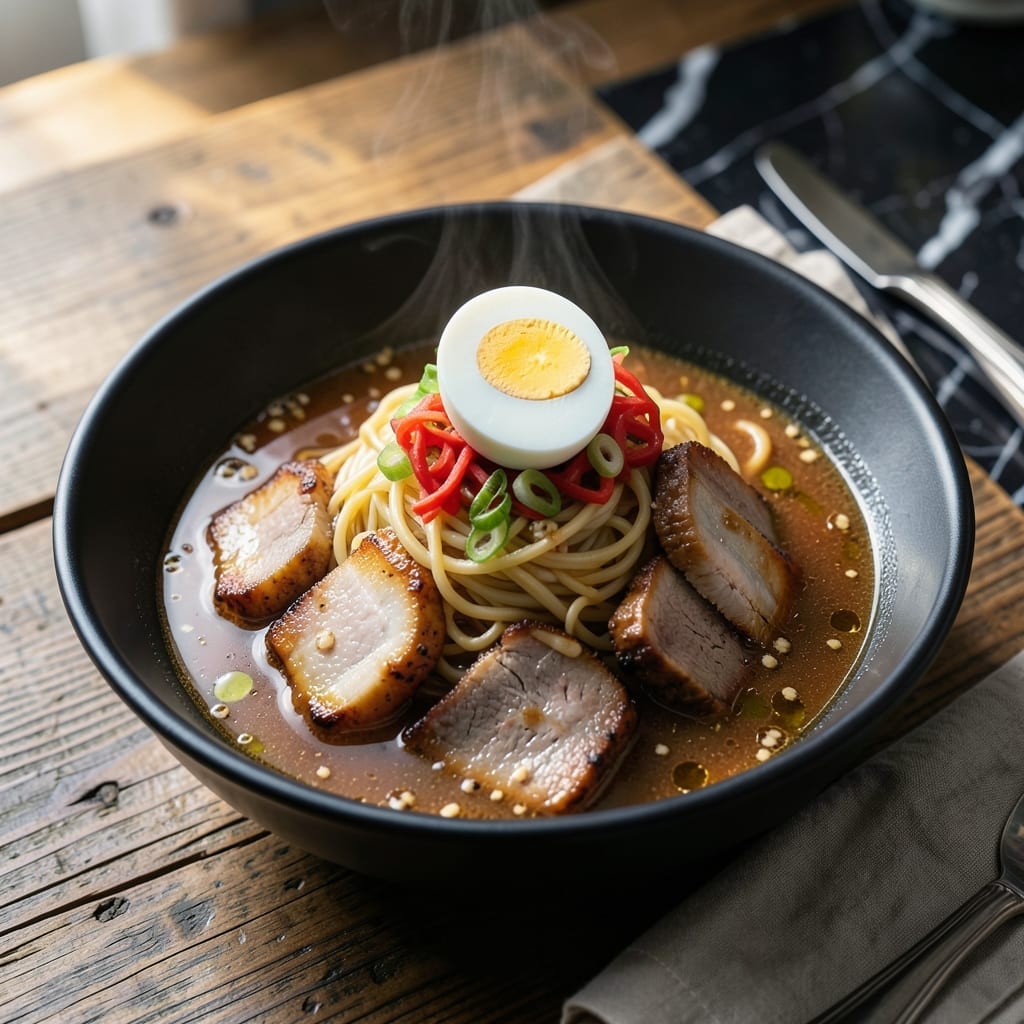
I’ve spent years perfecting my noodle technique, and this Momofuku-inspired version delivers the bold, complex flavors that made David Chang famous.
This recipe transforms simple ingredients into a restaurant-quality dish with rich, umami-packed broth and perfectly cooked noodles. The secret is layering flavors through careful preparation and timing.
You’ll achieve chewy noodles bathed in a savory sauce that clings to every strand, with toppings that add texture and depth. It’s the kind of dish that makes weeknight dinners feel special.
Best of all, it comes together with ingredients from your regular grocery store. The results speak for themselves.
Ingredients for Momofuku Noodles Recipe Ideas
Fresh noodles, rich broth, and bold toppings create an authentic Momofuku-inspired bowl at home.
| Ingredient | Amount | Notes |
|---|---|---|
| Ramen Noodles 🍜 | 1 lb | Fresh or dried, not instant |
| Pork Belly 🥓 | ¾ lb | Sliced thin, skin-on preferred |
| Chashu Pork 🍖 | ½ lb | Pre-cooked or homemade |
| Soft-Boiled Eggs 🥚 | 4 whole | Marinated in soy sauce |
| Tare Sauce 🥢 | ½ cup | Momofuku-style, shoyu base |
| Pork Broth 🍲 | 4 cups | Rich, collagen-heavy tonkotsu |
| Nori Sheets 🌿 | 4 sheets | Toasted, cut in half |
| Menma 🎍 | ½ cup | Bamboo shoots, fermented |
| Green Onions 🧅 | ½ cup | Thinly sliced, white and green parts |
| Sesame Seeds 🌰 | 2 tbsp | Toasted for nutty aroma |
| Chili Oil 🔥 | 2 tbsp | Spicy, with sediment |
| Garlic Cloves 🧄 | 4 cloves | Minced for aromatic base |
| Fresh Ginger 🫚 | 1 tbsp | Grated, peel first |
| Soy Sauce 🫒 | ¼ cup | Low-sodium preferred |
| Mirin 🍶 | 2 tbsp | Sweet rice wine for balance |
[recipe_ingredient_scaler]
The pork belly and chashu are non-negotiable for that signature David Chang richness. Source from a trusted butcher or Asian specialty market—look for good marbling and freshness. For the tare, Japanese grocery stores like Mitsuwa or Nijiya carry authentic bases. Fresh ramen noodles (found in the refrigerated section) outperform dried, but either works in a pinch. The eggs should be soft-boiled just until the whites set, then marinated in soy-mirin mixture overnight.
No pork belly? Thick-cut bacon is a decent stand-in, though the texture differs. Swap chashu for char siu (Chinese BBQ pork) or even tofu for a vegetarian twist. Menma not available? Shiitake mushrooms add similar umami depth. The tare can be approximated with equal parts soy sauce and mirin plus a dash of sesame oil. For the broth, store-bought tonkotsu works, but homemade is worth the effort.
Store fresh noodles in the fridge for up to 3 days, or freeze for 1 month. The pork belly keeps cooked for 5 days refrigerated. Tare and chashu freeze beautifully for 3 months. Assemble bowls fresh—noodles lose texture if dressed too early (worth the extra minute).
Why You’ll Love This Recipe
- Weeknight Hero: The pork belly cooks low and slow while I handle everything else in 15 minutes flat.
- Umami Bomb: That tare sauce soaks into every noodle, and the soft egg yolk turns the broth into silk.
- Feeds the Crowd: I make a big batch on Sunday and reheat portions all week—tastes just as good.
- Budget Luxe: Pork belly stretches further than you’d think, and ramen noodles keep it cheap for a restaurant-worthy bowl.
Step-by-Step Instructions for Momofuku Noodles
Master the art of bold Asian flavors with this precise method for building the perfect bowl.
Step 1: Cook the Ramen Noodles to Al Dente Perfection
Bring a large pot of water to a rolling boil. Add the 1 lb Ramen Noodles and cook for 2-3 minutes if fresh, or according to package instructions for dried. The noodles should be slightly underdone—they’ll finish cooking in the hot broth.
Drain immediately and rinse under cold water to stop the cooking process. This prevents them from becoming mushy. Toss the noodles with a splash of the pork broth to keep them from sticking while you prepare the other components.
Step 2: Sear and Slice the Pork Belly
Heat a skillet over medium-high heat and add the 0.75 lb Pork Belly slices. Sear for 2-3 minutes per side until the skin is crispy and golden brown. The fat should render slightly, creating a glossy sheen on the surface.
Transfer the pork belly to a cutting board and slice into thin strips. The meat should be tender with a crisp exterior. Set aside to add to your bowls later—this ensures each serving gets that signature rich, textural contrast.
Step 3: Warm the Broth and Infuse with Aromatics
In a saucepan, gently heat the 4 cups Pork Broth over medium-low heat. Add the 4 cloves Garlic Cloves and 1 tbsp Fresh Ginger, simmering for 5 minutes to infuse the broth with their aromatic essence.
Avoid boiling, as this can make the broth cloudy. You’ll know it’s ready when the broth takes on a subtle depth and the garlic and ginger have softened. Strain the broth if you prefer a smoother texture, or leave the aromatics in for a rustic touch.
Step 4: Assemble the Bowls with Precision
Divide the cooked noodles among four bowls. Ladle the warm pork broth over the noodles, ensuring each bowl has enough to submerge them slightly. Add 0.5 lb Chashu Pork, the seared pork belly, and 4 whole Soft-Boiled Eggs (halved lengthwise).
Arrange the 4 sheets Nori Sheets (torn in half), 0.5 cup Menma, and 0.5 cup Green Onions artfully on top. The visual contrast should be as striking as the flavor profile, with vibrant greens and deep umami tones.
Step 5: Finish with Signature Garnishes
Drizzle each bowl with 0.5 cup Tare Sauce, ensuring the noodles are well-coated. Sprinkle with 2 tbsp Sesame Seeds and 2 tbsp Chili Oil for a nutty, spicy finish. For extra depth, add a splash of 0.25 cup Soy Sauce and 2 tbsp Mirin to balance the flavors.
Serve immediately while the broth is steaming and the noodles are at their peak texture. Each slurp should deliver a harmonious blend of rich, savory, and slightly sweet notes, with the pork belly and chashu adding luxurious depth.
Pro Tips For Making Momofuku Noodles Recipe Ideas
- Parboil the Noodles: Rinse your ramen noodles under cold water after boiling to wash off excess starch—I learned this the hard way after my first few bowls turned into a gummy mess.
- Sear Pork Belly Hot: Crank the pan to medium-high and don’t move the pork belly for at least 3-4 minutes to get that crispy edge. After burning two batches, I finally figured out patience pays off.
- Marinate Eggs Longer: Let your soft-boiled eggs soak in the tare sauce for at least 2 hours—sounds tedious, but it’s the only way to get that deep, savory flavor into the yolk.
- Slice Pork Thin: Chashu pork tastes best when sliced against the grain into paper-thin pieces. My grandmother swore by this, and she was right: it makes every bite melt in your mouth.
Troubleshooting Perfect Results
Noodles Too Soft
If your noodles turn mushy, you likely overcooked them initially. Remember, fresh noodles only need 2-3 minutes in boiling water. I always set a timer and test for al dente texture by biting a strand. Rinsing under cold water immediately after draining helps stop the cooking process. 💡
Broth Lacks Depth
Your broth might need more infusion time. Simmer the pork broth with 4 cloves garlic and 1 tbsp ginger for at least 10 minutes instead of 5. I also add a splash of soy sauce and mirin directly to the broth for extra umami punch.
Pork Belly Not Crispy
Pat the pork belly slices completely dry before searing. Use medium-high heat and don’t crowd the pan—this prevents steaming. I sear for 3-4 minutes per side until the skin develops a deep golden-brown crust. A cast iron skillet works best for even heat distribution.
Eggs Overcooked
For perfect soft-boiled eggs, use room temperature eggs and boil for exactly 6-7 minutes. Immediately transfer to an ice bath to stop cooking. I find that older eggs peel more easily. The yolks should be runny but the whites fully set for that signature Momofuku presentation.
Sauce Too Thin
If your tare sauce seems watery, reduce it in a small saucepan over low heat for 5-7 minutes. Stir frequently to prevent burning. I often add a cornstarch slurry (1 tsp cornstarch mixed with 1 tbsp water) to thicken it slightly while maintaining the glossy consistency. ✨
Flavors Not Balanced
Taste your broth before assembling. If it’s missing something, add a pinch of salt or a splash of mirin for sweetness. I often adjust with 1 tsp soy sauce at a time until the flavors harmonize. The chili oil should add heat without overpowering the delicate pork flavors.
Nutrition Facts
Frequently Asked Questions
Can I make this with store-bought broth?
Yes! Use 4 cups high-quality tonkotsu or chicken broth. Simmer with 4 cloves garlic and 1 tbsp ginger for 10 minutes to boost flavor. Add 1 tsp soy sauce for depth.
What if I can’t find fresh ramen?
Dried ramen works in a pinch. Cook for 1 minute less than package instructions, then rinse. Look for 1 lb in Asian markets or the refrigerated section of well-stocked grocers.
How do I keep noodles from sticking?
Toss cooked noodles with 1 tbsp oil or a splash of broth immediately after draining. Work quickly—fresh noodles are best assembled within 5 minutes of cooking.
Can I prep components ahead?
Cook pork and eggs up to 2 days ahead. Store broth separately. Assemble bowls just before serving to maintain texture. Reheat broth gently over medium-low heat.

Trained in classic French technique but raised on slow-cooked ribs and spicy rubs, she blends culinary skill with smoke and soul.
- Recipe for Boneless Pork Chops in Cast Iron Skillet: Sear and Baste to Juicy Perfection - October 3, 2026
- Recipe for Boneless Cross Rib Roast: Slow-Roasted Beef with Herb Crust - October 3, 2026
- Hamburgers in Sauce Recipe Crock Pot: Slow-Cooked Savory Delight - October 3, 2026