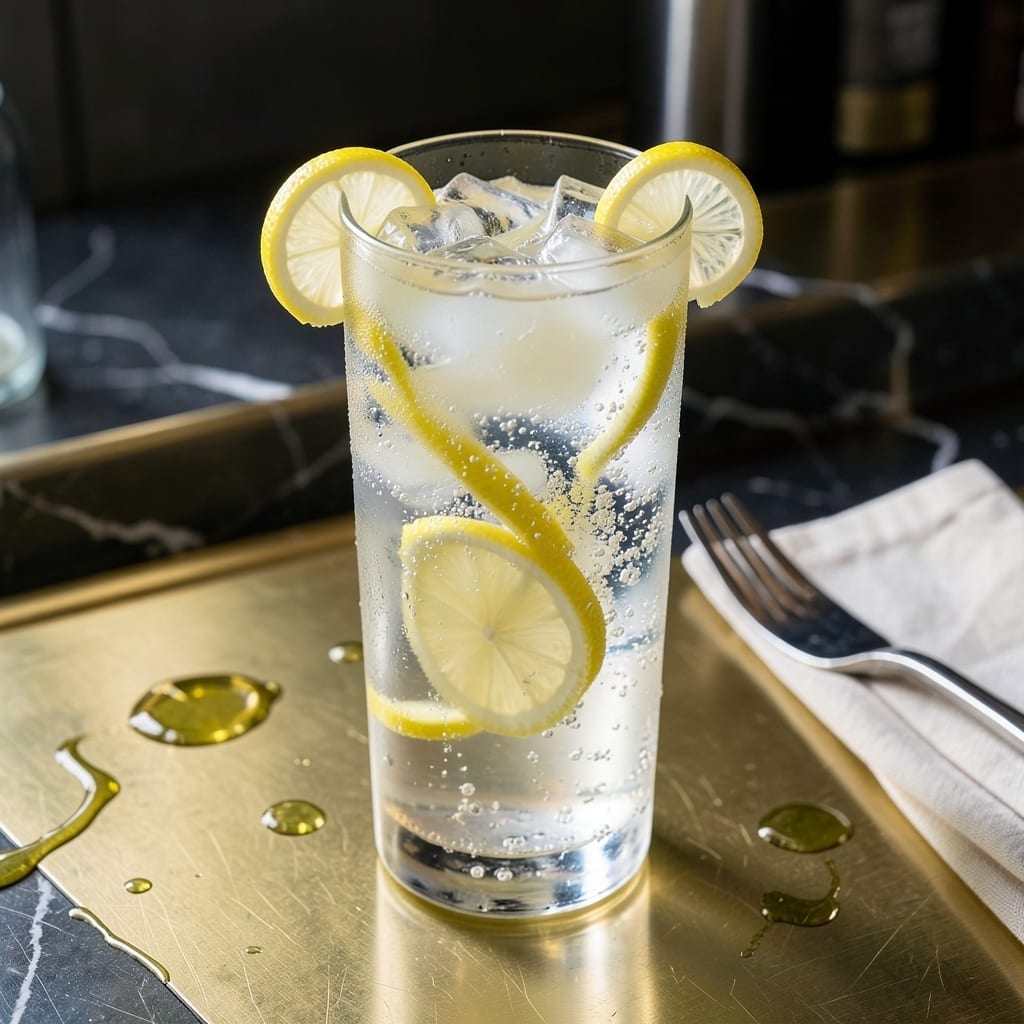
This classic cocktail gets a bright upgrade with fresh lemon that enhances rather than overpowers the gin’s botanicals. I’ve refined this method through countless summer gatherings, always returning to this precise balance.
The key lies in using cold ingredients and a gentle hand with the lemon—just enough to brighten without masking the gin’s complexity. Quality tonic water with natural quinine makes a noticeable difference.
What results is a crisp, aromatic drink with layered citrus notes and the signature gin junction. The lemon’s acidity cuts through the sweetness, creating a refreshment that’s both sophisticated and approachable.
Serve over plenty of ice with a lemon twist for visual appeal and an extra aromatic touch. This is the drink that proves simplicity often delivers the most elegant results.
Ingredients for Gin and Tonic Recipe Lemon
Eight essentials for a crisp, citrus-forward cocktail experience with depth and balance.
| Ingredient | Amount | Notes |
|---|---|---|
| London Dry Gin 🍸 | 4 oz | High-quality botanical-forward brand |
| Premium Tonic Water 💧 | 8 oz | Natural quinine preferred |
| Fresh Lemon Juice 🍋 | ½ oz | Newly squeezed for brightness |
| Lemon Slices 🍋 | 2 slices | Thin, for garnish and infusion |
| Ice Cubes ❄️ | 1 cup | Large cubes preferred |
| Lemon Twist 🍋 | 1 piece | For aromatic garnish |
| Cold Filtered Water 💧 | 2 oz | For chilling glassware |
| Granulated Sugar 🍬 | ¼ tsp | Optional for rim sweetness |
[recipe_ingredient_scaler]
The gin is non-negotiable here. Opt for London Dry with prominent botanicals—Bombay Sapphire or Tanqueray deliver consistent quality. Tonic water must contain natural quinine; avoid diet versions as they lack the necessary bitterness. Fever-Tree is the gold standard, but Q Tonic works well too. Chill all components thoroughly—warm gin ruins the crispness.
No fresh lemon? Bottled juice at half the amount (but fresh is vastly superior). Short on tonic? Soda water plus a pinch of quinine powder approximates the flavor. For a sweeter profile, simple syrup can replace the optional sugar rim. The lemon twist isn’t just decorative—express the oils over the drink for maximum aromatic impact.
Pre-chill your glasses in the freezer for 10 minutes. The drink stays optimal for 15-20 minutes before dilution alters the balance. Store gin in a cool, dark place—it keeps indefinitely, but tonic loses carbonation after 1-2 days once opened.
Why You’ll Love This Recipe
- 5-Minute Mix: I just dump gin, tonic, fresh lemon juice, and ice in a glass—no shaker, no fuss, and it’s ready before the ice melts.
- Zesty Bright Bite: The tart pop of fresh lemon juice cuts through the gin’s botanicals like a knife, making every sip dangerously refreshing.
- Backyard or Balcony: It’s my go-to for solo evenings on the porch or last-minute get-togethers with friends, no extra prep.
- Pantry Hero: London Dry Gin and tonic keep forever, and lemons last a week—so I’m always one squeeze away from a proper drink.
Step-by-Step Instructions for Gin and Tonic with Lemon
Master the classic cocktail with this refined method and precise technique.
Step 1: Chill the Glassware and Prepare Garnishes
Fill a highball glass with the 2 oz cold filtered water and swirl to chill the entire vessel. Discard the water and add the 1 cup ice cubes—large cubes melt slower, preventing dilution. I always use filtered water to avoid any off-flavors that tap water might introduce.
Prepare your garnishes: slice the lemon slices thinly for both visual appeal and maximum oil release. The lemon twist should be cut from a separate section of peel, using a vegetable peeler for a long, continuous strip. If using the 0.25 tsp granulated sugar for rim sweetness, rub it on the glass rim now.
Step 2: Pour and Settle the Gin
Measure the 4 oz London Dry Gin precisely—this isn’t the time for estimation. Pour it directly over the ice in your chilled glass. The cold temperature shock helps open the gin’s botanicals, releasing those complex juniper and citrus notes that define London Dry style.
Let the gin sit undisturbed for 30 seconds while you prepare the remaining components. This brief pause allows the spirit to begin mingling with the ice, subtly chilling without immediate dilution. Watch as the gin’s viscosity creates beautiful legs trailing down the glass.
Step 3: Add Fresh Citrus and Tonic
Pour in the 0.5 oz fresh lemon juice—newly squeezed is non-negotiable for that bright, vibrant acidity that cuts through the gin’s richness. Stir gently once to distribute the citrus without prematurely melting the ice. The fresh juice should have a slight pulp to it, visible in the glass.
Top with the 8 oz premium tonic water, pouring it slowly down the side of the glass to preserve carbonation. Natural quinine tonics have a more complex, less cloying sweetness that complements the gin’s botanicals beautifully. Stop pouring when you’re about ½ inch from the rim to prevent spillage.
Step 4: Garnish and Finish with Precision
Add the 2 slices lemon slices to the drink, pressing one gently against the glass wall so it’s visible from the outside. This isn’t just aesthetic—each slice will continue infusing the drink with citrus oils as you sip. The oils should create a subtle sheen on the surface.
Express the lemon twist over the glass by holding it peel-side down and giving it a firm twist—this releases a spray of aromatic oils onto the drink’s surface. Then drop the twist in. Give the drink one final gentle stir, just enough to combine the layers without losing all carbonation. The ideal drink should have a pale straw color with effervescent bubbles rising steadily.
Serve immediately while the ice is still solid and the carbonation is active. The first sip should deliver a crisp, slightly sweet effervescence followed by the gin’s botanical complexity and that bright lemon finish. The ice should crackle audibly when the glass is lifted.
Pro Tips For Making Gin And Tonic Recipe Lemon
- Chill Your Glass: Pop your glass in the freezer for 10 minutes before building the drink—cold glass keeps the ice from melting too fast and diluting the gin and tonic before you finish it.
- Squeeze Just Before: Cut and juice your lemon right as you’re making the drink, not earlier; fresh lemon juice oxidizes quickly and loses its bright punch if it sits.
- Skip the Lime: I learned this the hard way—stick to lemon here; lime can clash with the botanicals in London Dry Gin, but lemon complements them without overpowering.
- Use One Big Cube: Swap the ice cubes for one large ice sphere or cube—it melts slower, so your gin and tonic stays crisp and carbonated longer without getting watery.
Troubleshooting gin and tonic recipe lemon
Overly Diluted Drink
If your cocktail tastes watery, you likely used small ice cubes or let it sit too long. Large cubes melt slower—I always keep 1-inch cubes on hand. Stirring too much accelerates melting. Serve within 15 minutes of mixing for optimal flavor. 💧
Flat Carbonation
Pour the 8 oz premium tonic water last, and do it slowly down the glass side. Using warm tonic or pre-mixing it with gin kills bubbles. I chill my tonic for 2 hours before use. If it’s still flat, your tonic may be old—check the expiration date.
Too Bitter Taste
This usually means your lemon juice is overpowering or your tonic has artificial quinine. Stick to 0.5 oz fresh lemon juice and switch to Fever-Tree tonic. The natural quinine provides balanced bitterness that complements rather than dominates.
Gin Flavors Lost
If the gin taste disappears, you might have used too much tonic or low-quality gin. Measure precisely: 4 oz gin to 8 oz tonic. I recommend Bombay Sapphire or Tanqueray for their bold botanicals. Also, ensure your gin is cold—warm gin tastes harsh and muted.
Cloudy Appearance
Cloudiness often comes from over-stirring or using crushed ice. Gently layer the ingredients without mixing vigorously. If using the 0.25 tsp granulated sugar for the rim, make sure it’s fully dissolved in water first to prevent grainy residue in your drink.
Weak Lemon Presence
For more lemon impact, express the lemon twist oils over the drink before adding it. Also, use the lemon slices to stir once before serving. I find that pressing a slice against the glass wall releases more aromatic oils into the cocktail. 🍋
Nutrition Facts
Frequently Asked Questions
What type of glass works best?
A chilled highball glass is ideal. Its tall shape preserves carbonation and showcases the drink’s layers.
Can I use lime instead of lemon?
Yes, but the flavor profile changes. Lime adds a sharper acidity, while lemon offers a brighter, more floral note. Stick to 0.5 oz for either.
How do I prevent the ice from melting too fast?
Use large ice cubes and avoid over-stirring. Serve immediately after mixing to keep it crisp.
Why express the lemon twist?
Expressing releases aromatic oils that enhance the drink’s citrus notes. It’s a simple step that elevates the flavor significantly.

Trained in classic French technique but raised on slow-cooked ribs and spicy rubs, she blends culinary skill with smoke and soul.
- Recipe for Boneless Pork Chops in Cast Iron Skillet: Sear and Baste to Juicy Perfection - October 3, 2026
- Recipe for Boneless Cross Rib Roast: Slow-Roasted Beef with Herb Crust - October 3, 2026
- Hamburgers in Sauce Recipe Crock Pot: Slow-Cooked Savory Delight - October 3, 2026