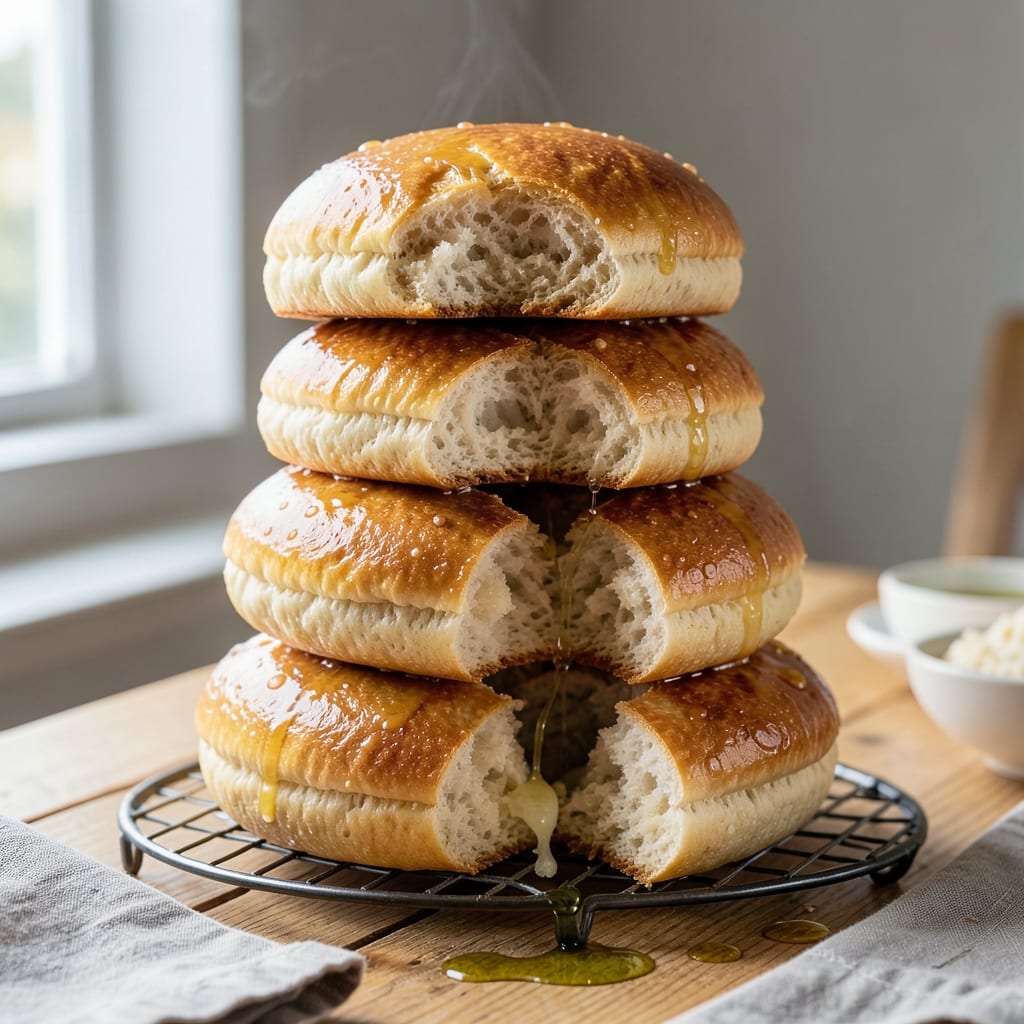
Nothing elevates a burger like a homemade bun, soft yet sturdy enough to hold up to juicy patties and toppings. This recipe delivers bakery-quality results with bread flour for the ideal texture.
I developed this method after years of testing, focusing on the perfect balance of tenderness and structure. The dough comes together quickly with simple ingredients, requiring just 2 hours of rising time.
The result is golden buns with a slightly sweet flavor and a pillowy interior that complements any burger. Their sturdy construction prevents sogginess, even with the juiciest fillings.
These buns will transform your next cookout, offering a homemade touch that store-bought versions simply can’t match.
Ingredients for Hamburger Bun Recipe with Bread Flour
Nine ingredients transform into bakery-quality buns with pillowy texture and golden crust.
| Ingredient | Amount | Notes |
|---|---|---|
| Bread Flour 🌾 | 4 cups | Plus extra for dusting |
| Warm Whole Milk 🥛 | 1 cup | 110°F to 115°F |
| Granulated Sugar 🍚 | 2 tbsp | For slight sweetness |
| Active Dry Yeast 🍞 | 2 ¼ tsp | 1 packet, proofed in warm milk |
| Large Egg 🥚 | 1 whole | Room temperature, beaten |
| Unsalted Butter 🧈 | 4 tbsp | Melted and cooled |
| Kosher Salt 🧂 | 1 ½ tsp | Fine grain preferred |
| Egg Yolk 🥚 | 1 whole | For egg wash finish |
| Water 💧 | 1 tbsp | For egg wash thinning |
| Sesame Seeds 🌰 | 2 tbsp | Optional, for topping |
[recipe_ingredient_scaler]
The bread flour is non-negotiable here—its higher protein content creates the sturdy yet soft structure that defines these buns. King Arthur or Bob’s Red Mill are reliable brands. For the yeast, check the expiration date; old yeast is the most common reason for dough that won’t rise. The milk should be warm but not hot (think bathwater temperature) to avoid killing the yeast.
No bread flour? All-purpose flour plus 1 tbsp vital wheat gluten per cup works in a pinch, though the texture won’t be identical. For a dairy-free version, unsweetened almond milk with a teaspoon of vinegar substitutes well. The egg wash can be replaced with melted butter for a richer, though less shiny, finish. Skip the sesame seeds if you prefer plain buns.
The dough rises best in a warm, draft-free spot—an oven with the light on works perfectly. Baked buns keep at room temperature for 2 days or freeze for up to 3 months. Reheat frozen buns wrapped in foil at 350°F for 10 minutes to restore that fresh-baked feel.
Why You’ll Love This Recipe
- One Bowl Wonder: I mix everything in a single bowl—no fancy tools, just bread flour, warm milk, and a little patience while the yeast does its thing.
- Buttery Softness: The egg and whole milk give these buns a rich, tender crumb that’s way better than store-bought.
- Freezer Friendly: I double the batch and freeze half—fresh buns in minutes whenever I need them.
- Budget Stretcher: Bread flour and basic pantry staples make a dozen buns for pennies. Honestly, it’s cheaper than the bakery section.
Step-by-Step Instructions for Hamburger Buns with Bread Flour
Master the technique for bakery-style buns with a tender crumb and golden crust.
Step 1: Activate the Yeast and Prepare the Dough
In a stand mixer bowl, whisk together the 1 cup Warm Whole Milk (at 110°F to 115°F) with the 2 tbsp Granulated Sugar and 2.25 tsp Active Dry Yeast. Let the mixture sit for 5-7 minutes until it becomes foamy—this confirms the yeast is active and ready to work.
Add the 1 whole Large Egg, 4 tbsp Unsalted Butter (melted and cooled), and 1.5 tsp Kosher Salt to the yeast mixture. Using the dough hook attachment, mix on low speed until just combined. Gradually incorporate the 4 cups Bread Flour, increasing speed to medium once fully added. Knead for 6-8 minutes until the dough is smooth, elastic, and pulls away from the bowl sides.
Step 2: First Rise for Maximum Fluffiness
Transfer the dough to a lightly greased bowl, turning once to coat all sides. Cover with a damp kitchen towel or plastic wrap. Allow it to rise in a warm, draft-free environment for 1 to 1.5 hours, or until it has doubled in volume.
Pro tip: I place my bowl in a turned-off oven with a pan of hot water on the lower rack. This creates the ideal 80-85°F environment for consistent rising. The dough should spring back slowly when pressed gently with a finger—if it springs back quickly, it needs more time.
Step 3: Shape and Second Rise for Perfect Form
Punch down the risen dough to release air, then turn it out onto a lightly floured surface. Divide the dough into 8 equal portions (about 4 ounces each for standard buns). Roll each piece into a tight ball by pinching the bottom seam and rolling it against the counter with cupped hands.
Arrange the balls on a parchment-lined baking sheet, spacing them 2-3 inches apart. Lightly dust the tops with Bread Flour to prevent sticking. Cover loosely and let rise for another 45-60 minutes until puffy and nearly doubled in size. The buns should look slightly domed and feel airy when gently pressed.
Step 4: Bake to Golden Perfection
Preheat your oven to 375°F. In a small bowl, whisk together the 1 whole Egg Yolk with the 1 tbsp Water to create an egg wash. Gently brush the tops of the risen buns with this mixture, being careful not to deflate them. Sprinkle with 2 tbsp Sesame Seeds if desired.
Bake for 15-18 minutes until the buns are deep golden brown and the internal temperature reaches 190°F. Rotate the pan halfway through for even browning. The buns should sound hollow when tapped on the bottom and have a firm, golden crust that resists light pressure.
Transfer to a wire rack to cool completely before slicing. This cooling step is crucial—slicing warm buns can make them gummy. Once cooled, they’ll have that perfect, pillowy texture ideal for burgers.
Pro Tips For Making Hamburger Bun Recipe With Bread Flour
- Proof the Yeast: Always activate your yeast in the warm milk with a pinch of sugar first—if it doesn’t foam within 5-10 minutes, your buns won’t rise. I learned this the hard way after a few flat, sad batches.
- Use Room-Temp Egg: Take the egg out of the fridge 30 minutes before mixing. Cold egg can shock the yeast and slow down the rise, and nobody wants dense buns.
- Don’t Over-Flour: Resist the urge to dump in extra bread flour while kneading. The dough should be slightly sticky—too much flour makes buns tough and dry.
- Brush with Milk: Before baking, brush the tops with a little whole milk for that golden, soft finish. Sounds simple, but it actually changes the outcome—no more pale, dull buns.
Make-Ahead Tips for This hamburger bun recipe with bread flour
Overnight Dough Prep
After kneading, place the dough in the fridge instead of rising at room temperature. This slow fermentation develops deeper flavor and works perfectly with my busy schedule. Let it cold-proof for 8-12 hours before shaping and second rise. 💡
Shaping Ahead
You can shape the dough into balls and refrigerate them on the baking sheet for up to 24 hours. Cover tightly with plastic wrap. Remove 1 hour before baking to complete the second rise at room temperature.
Freeze Before Baking
Shape and place unbaked buns on a parchment-lined tray, then freeze solid for 1 hour. Transfer to a zip-top bag and store for up to 1 month. Bake directly from frozen, adding 5-7 minutes to the baking time.
Baked Bun Storage
Completely cooled buns keep at room temperature in an airtight container for 2 days. For longer storage, freeze in a zip-top bag for up to 3 months. I always use my grandmother’s tip of wrapping each bun individually. ❄️
Reheating Methods
For fresh-baked taste, warm room-temperature buns at 350°F for 5 minutes. Frozen buns need 10-12 minutes at the same temperature. Spritz with water before reheating to prevent drying out.
Day-Of Assembly
Prepare the dough through the first rise the night before. In the morning, shape, second rise, and bake as usual. This splits the work into manageable steps, which is how I handle Sunday family dinners without stress.
Nutrition Facts
Frequently Asked Questions
Why use bread flour instead of all-purpose?
Bread flour’s higher protein creates stronger gluten, giving buns a sturdy yet soft structure. All-purpose works in a pinch but yields a less chewy texture.
How do I know when the dough has risen enough?
It should double in size and spring back slowly when pressed gently with a finger. If it springs back quickly, it needs more time.
Can I make these buns ahead of time?
Yes! Shape and refrigerate for up to 24 hours or freeze unbaked buns for 1 month. Bake from frozen, adding 5-7 minutes.
Why did my buns turn out dense?
Common causes include old yeast, insufficient rising time, or overworking the dough. Ensure yeast is fresh and dough doubles in size before shaping.

Trained in classic French technique but raised on slow-cooked ribs and spicy rubs, she blends culinary skill with smoke and soul.
- Recipe for Boneless Pork Chops in Cast Iron Skillet: Sear and Baste to Juicy Perfection - October 3, 2026
- Recipe for Boneless Cross Rib Roast: Slow-Roasted Beef with Herb Crust - October 3, 2026
- Hamburgers in Sauce Recipe Crock Pot: Slow-Cooked Savory Delight - October 3, 2026