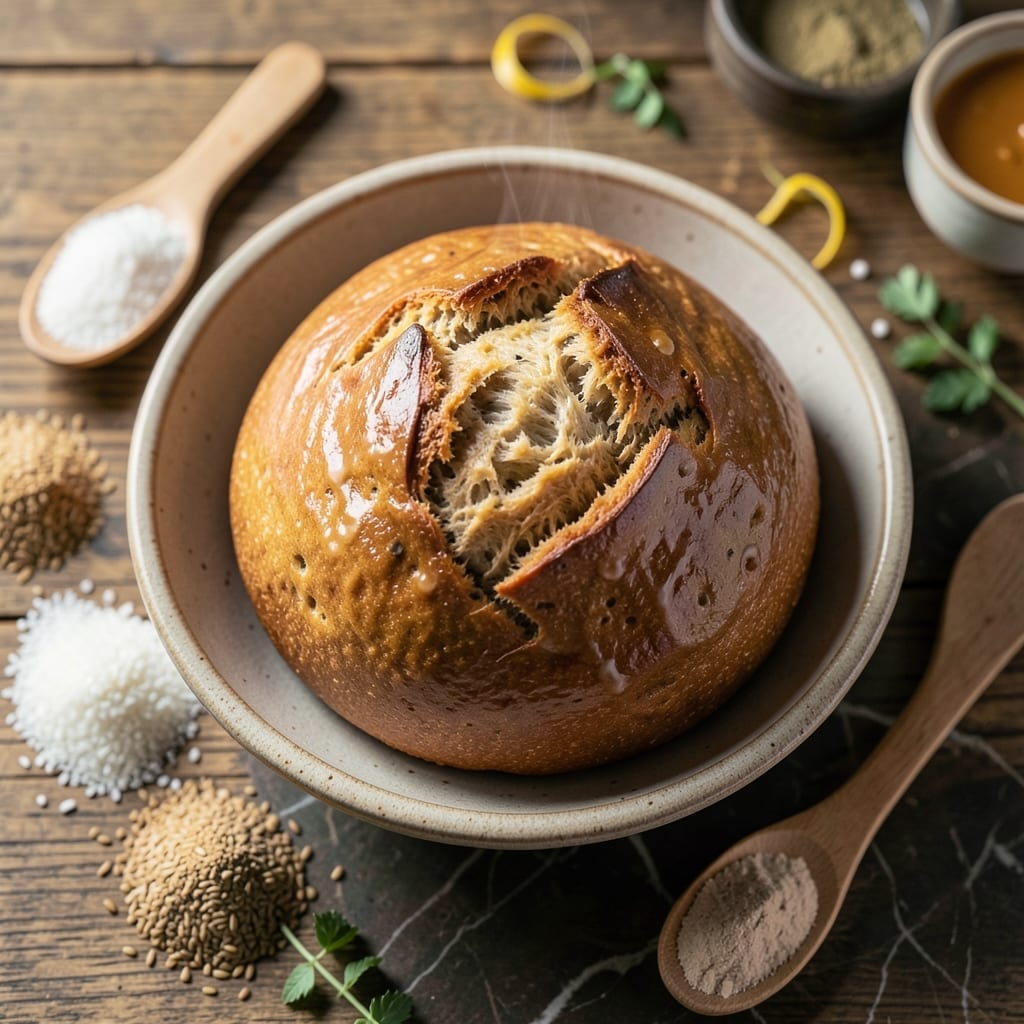
Crafting gluten-free bread that rivals traditional loaves is an art I’ve perfected through years of testing and refinement. This recipe delivers a light, airy loaf with a crust that cracks just like the real thing.
Using a blend of gluten-free flours and xanthan gum creates structure, while precise hydration and proofing times ensure the right texture. The method mimics artisan techniques, adapted for gluten-free needs without compromising quality.
What results is a loaf with an open crumb and satisfying chew, never dense or crumbly. It toasts beautifully and holds up to sandwiches, delivering the authentic bread experience many miss on a gluten-free diet.
David, my official taste-tester, couldn’t believe this was gluten-free. The proof is in every slice.
Ingredients for Gluten Free Bread Recipe Paul Hollywood
Artisan-quality gluten-free loaf requires precise flour blend and careful proofing for authentic texture.
| Ingredient | Amount | Notes |
|---|---|---|
| White Rice Flour 🌾 | 2 cups | Fine, super-fine preferred |
| Brown Rice Flour 🌾 | 1 cup | For nutty depth |
| Tapioca Starch 🌾 | ½ cup | Adds stretch and chew |
| Potato Starch 🥔 | ½ cup | Keeps loaf moist |
| Xanthan Gum 🧪 | 2 tsp | Bind and structure |
| Active Dry Yeast 🍞 | 2 ¼ tsp | One packet, proofed |
| Granulated Sugar 🍚 | 2 tbsp | Feeds the yeast |
| Salt 🧂 | 1 ½ tsp | Fine sea salt preferred |
| Large Eggs 🥚 | 3 whole | Room temperature, beaten |
| Unsalted Butter 🧈 | ¼ cup | Melted and cooled |
| Warm Water 💧 | 1 ½ cups | 110°F, not hot |
| Apple Cider Vinegar 🍎 | 1 tbsp | Enhances rise and flavor |
| Psyllium Husk Powder 🌿 | 2 tbsp | Crucial for structure |
[recipe_ingredient_scaler]
The flour blend is non-negotiable for structure. Bob’s Red Mill produces reliable rice flours, while Anthony’s Goods offers superior tapioca and potato starches. Psyllium husk powder (not whole husks) is essential—NOW Foods or Nature’s Way brands are widely available. Yeast freshness matters; check expiration dates meticulously. Store flours in airtight containers to prevent clumping from humidity.
No xanthan gum? One tablespoon psyllium husk powder plus one teaspoon chia seeds can substitute, though texture may vary. For egg-free versions, three tablespoons aquafaba replaces each egg. Butter may be swapped with coconut oil at a 1:1 ratio. Rice flour blends are not interchangeable with all-purpose GF flour mixes—formulate your own for optimal crumb.
Proofed dough must be baked immediately for best rise. Cool completely before slicing to prevent gumminess. Loaf keeps 3 days at room temperature in airtight wrap, 1 week refrigerated. Slices toast beautifully from frozen—3 months maximum storage for peak quality.
Why You’ll Love This Recipe
- One Bowl Wonder: I mix all the dry ingredients—white rice flour, brown rice flour, tapioca starch, potato starch, and xanthan gum—in a single bowl. No fuss, no multiple dishes to wash.
- Crusty Perfection: The combo of rice flours and starches gives it that bakery-style crust with a soft, chewy inside. Honestly, it’s the closest gluten-free bread I’ve had to the real deal.
- Sandwich Ready: This loaf holds up to slicing thin for sandwiches or toasting thick for brunch. Between us, my kids pack it for lunch and never complain.
- Stays Fresh: One batch lasts us the whole week. I’ll be real: it actually gets better the next day, especially toasted with a slather of butter.
Step-by-Step Instructions for Gluten Free Bread
Master the technique for a perfectly textured artisan loaf with these precise steps.
Step 1: Activate the Yeast and Hydrate the Psyllium
In a small bowl, combine the 1.5 cups Warm Water, 2 tbsp Granulated Sugar, and 2.25 tsp Active Dry Yeast. Stir gently and let sit for 5-7 minutes until the mixture becomes frothy—this confirms the yeast is alive and active.
In a separate bowl, whisk together the 2 tbsp Psyllium Husk Powder with ½ cup of the yeast-water mixture. Let it thicken for 2-3 minutes until it reaches a gel-like consistency. This step is crucial for structure in gluten-free baking.
Step 2: Combine Dry Ingredients for the Base
In a large mixing bowl, whisk together the 2 cups White Rice Flour, 1 cup Brown Rice Flour, 0.5 cup Tapioca Starch, 0.5 cup Potato Starch, 2 tsp Xanthan Gum, and 1.5 tsp Salt until fully integrated. The xanthan gum acts as a binder to replace gluten’s elasticity.
Make a well in the center of the dry ingredients. This preparation ensures even distribution of leavening agents and starches when the wet ingredients are added.
Step 3: Incorporate Wet Ingredients and Knead
Add the remaining yeast-water mixture, the psyllium gel, 3 whole Large Eggs, 0.25 cup Unsalted Butter, and 1 tbsp Apple Cider Vinegar to the well. Using a stand mixer with a paddle attachment, mix on medium speed for 4-5 minutes until the dough is smooth and slightly sticky.
The dough will be thicker than traditional bread dough but should still be pliable. If it feels too dry, add 1-2 tablespoons of additional warm water. The apple cider vinegar enhances both rise and flavor complexity.
Step 4: Proof and Shape the Loaf
Cover the bowl with a damp towel and let the dough proof in a warm place for 1 to 1.5 hours, or until it has nearly doubled in volume. Gluten-free dough rises more slowly, so patience is key here.
Once proofed, transfer the dough to a greased loaf pan. Smooth the top with wet hands to prevent sticking. The dough should fill about two-thirds of the pan to allow for final rise during baking.
Step 5: Bake to Golden Perfection
Preheat the oven to 375°F. Bake the loaf on the middle rack for 45-50 minutes, or until the top is deep golden brown and the internal temperature reaches 205°F.
Remove from the oven and let cool in the pan for 10 minutes, then transfer to a wire rack. Cool completely before slicing—this prevents a gummy texture. The result should be a well-structured loaf with a tender crumb and crisp crust.
Pro Tips For Making Gluten Free Bread Recipe Paul Hollywood
- Preheat the Oven: Crank it to 200°C (400°F) at least 20 minutes before baking—I learned this the hard way after pulling out dense loaves from a lukewarm oven.
- Weigh Your Flours: Scooping with a cup gives inconsistent results; use a scale for the rice flours and starches—200g of white rice flour isn’t the same as 200g of tapioca starch by volume.
- Don’t Overmix: Once the xanthan gum hydrates, stop mixing. Overworking the batter makes the bread gummy, and after ruining two loaves, I now count to 30 after the gum disappears into the wet ingredients.
- Add Vinegar: Sounds weird, but it works: a teaspoon of apple cider vinegar in the wet mix helps the bread rise better and keeps it from tasting flat.
Wine and Beer Pairings for These Flavors
Light White Wines
A crisp Sauvignon Blanc from New Zealand pairs beautifully with the subtle nuttiness of this loaf. The bright acidity cuts through the richness while complementing the crust’s texture. I love Kim Crawford for its consistent quality. 🍷
Sparkling Options
For a celebratory touch, try a dry Prosecco or Cava. The effervescence refreshes your palate between bites, and the light fruit notes won’t overpower the bread’s delicate flavor. La Marca Prosecco is my go-to for under $20.
Craft Beer Choices
A light Belgian ale like St. Bernardus Wit offers citrus and spice notes that enhance the loaf’s complexity. The wheat undertones in the beer echo the bread’s texture beautifully. Serve chilled at 45°F.
Non-Alcoholic Pairings
For a zero-proof option, sparkling apple cider from Martinelli’s provides the same effervescence as champagne. The natural sweetness balances the bread’s earthy notes without being cloying. 💛
Red Wine Alternative
If you prefer red, choose a light-bodied Pinot Noir from Oregon’s Willamette Valley. The bright acidity and red fruit notes work surprisingly well. Eyrie Vineyards produces an excellent $25 bottle.
Nutrition Facts
Frequently Asked Questions
Why does my loaf come out dense?
Overmixing or insufficient proofing often causes this. Ensure your yeast is fresh and let the dough rise until nearly doubled. The psyllium gel must thicken fully before mixing.
Can I use a different flour blend?
Stick to the recipe’s rice flour base. Substitutions like almond flour will alter texture significantly. Each starch serves a purpose for structure and moisture.
How do I store leftovers?
Wrap cooled slices in airtight containers for 3 days at room temp or freeze for 3 months. Toast directly from frozen for best results.
What if I don’t have xanthan gum?
Use 1 tbsp psyllium husk powder + 1 tsp chia seeds per egg. Texture may vary slightly but will still hold together. Test small batches first.

Trained in classic French technique but raised on slow-cooked ribs and spicy rubs, she blends culinary skill with smoke and soul.
- Recipe for Boneless Pork Chops in Cast Iron Skillet: Sear and Baste to Juicy Perfection - October 3, 2026
- Recipe for Boneless Cross Rib Roast: Slow-Roasted Beef with Herb Crust - October 3, 2026
- Hamburgers in Sauce Recipe Crock Pot: Slow-Cooked Savory Delight - October 3, 2026