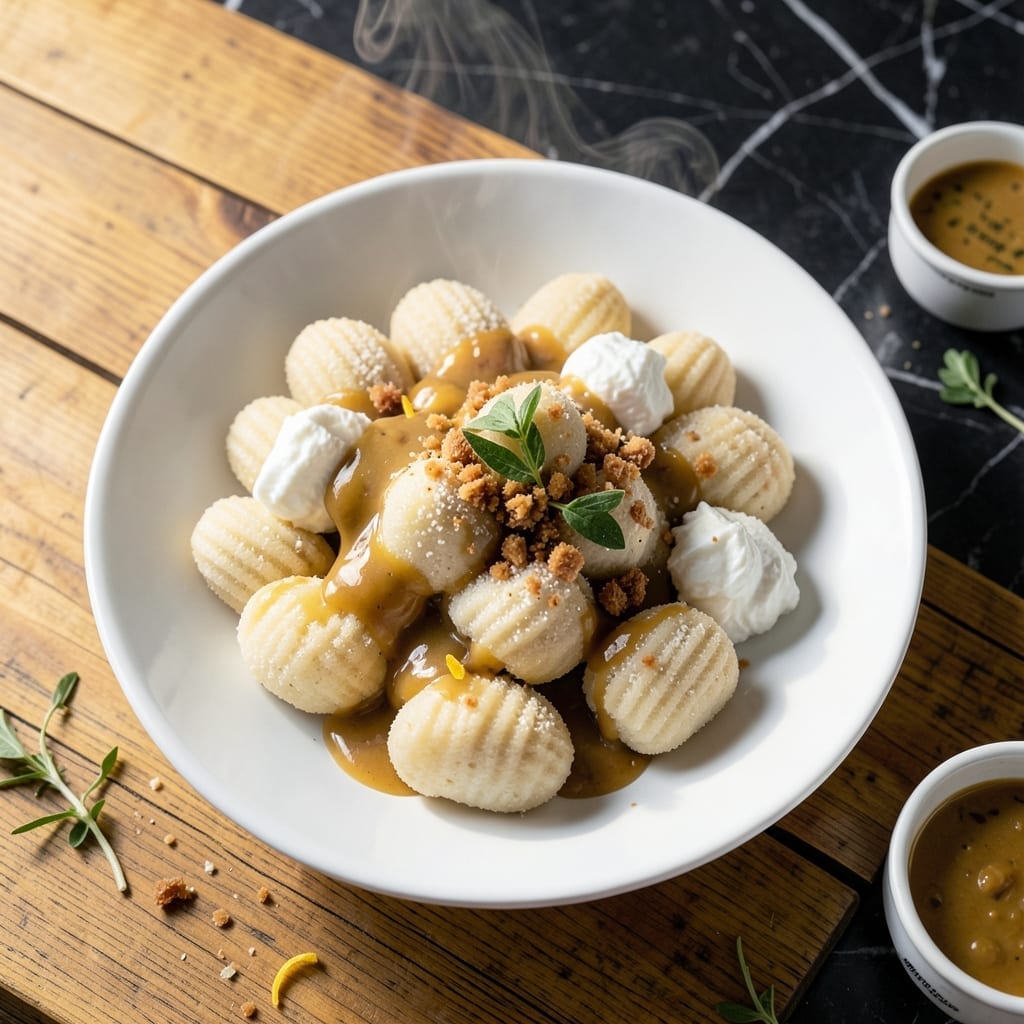
Creating gluten-free gnocchi with potato flakes delivers the same pillowy texture you love without traditional flour. This method transforms a simple pantry staple into a dish worthy of any Italian restaurant.
After years of testing in my Atlanta kitchen, I discovered that instant potato flakes create the perfect base. The key is using the right ratio of liquid to flakes, ensuring the dough holds together without becoming dense or gummy.
You’ll shape these into classic dumplings that hold their form during cooking. When boiled, they float to the surface with a light, airy consistency that absorbs sauces beautifully.
This approach makes gnocchi accessible to everyone. The process is straightforward, with results that rival any traditional version.
Ingredients for Gluten Free Gnocchi Recipe Potato Flakes
Pantry staples plus a few fresh items create pillowy gluten-free gnocchi at home.
| Ingredient | Amount | Notes |
|---|---|---|
| Instant Potato Flakes 🥔 | 4 cups | Unseasoned, plain variety only |
| Gluten-Free All-Purpose Flour 🌾 | 1 ½ cups | Plus extra for dusting surface |
| Large Eggs 🥚 | 2 whole | Room temperature preferred |
| Parmesan Cheese 🧀 | ½ cup | Freshly grated, vegetarian rennet |
| Ricotta Cheese 🧀 | ½ cup | Whole milk for creaminess |
| Salt 🧂 | 1 tsp | Diamond Crystal kosher salt |
| Ground Nutmeg 🌰 | ¼ tsp | Freshly grated preferred |
| Black Pepper 🌶️ | ¼ tsp | Freshly ground for best flavor |
| Water 💧 | ¾ cup | Warm, for activating flakes |
| Olive Oil 🫒 | 1 tbsp | Extra-virgin for richness |
[recipe_ingredient_scaler]
The potato flakes are doing the heavy lifting here. Idahoan brand is my go-to—find it near the mashed potatoes at Kroger or Walmart. Look for plain, unseasoned flakes (no butter or milk added). The gluten-free flour blend matters too. King Arthur Measure for Measure or Bob’s Red Mill 1-to-1 give the best texture. Skip the almond flour here—it’ll turn gummy. Freshly grated Parmesan melts beautifully into the dough.
No ricotta? Cottage cheese blended smooth works in a pinch. Egg-free version? Try flax eggs at a 1:3 ratio (1 tbsp ground flax + 3 tbsp water per egg), though the texture will be slightly denser. Out of nutmeg? Mace at half the amount gives a similar warmth. The water must be warm—cold won’t activate the flakes properly. For extra fluffiness, some cooks add 1/4 tsp xanthan gum to the flour.
Dough can rest covered at room temperature for 1 hour before shaping. Uncooked gnocchi freeze beautifully on a tray before boiling—store in bags for 3 months. Cooked gnocchi keep in the fridge for 3 days (reheat in sauce). Always dust your surface with extra gluten-free flour to prevent sticking while shaping.
Why You’ll Love This Recipe
- No Fuss Dough: I just dump potato flakes, gluten-free flour, and eggs in a bowl—no boiling potatoes or messy grating required.
- Cheesy Clouds: The ricotta and parmesan make them pillowy soft with a rich, savory bite that’s way more interesting than plain gnocchi.
- Freezer Friendly: I double the batch and freeze half for lazy nights when I want homemade pasta without the effort.
- Pantry Hero: Between us, potato flakes are cheap and last forever, so I can make these anytime without a special grocery trip.
Step-by-Step Instructions for Gluten Free Gnocchi
Here’s the method. Straightforward, tested, works every time.
Step 1: Activate the Potato Flakes and Combine Wet Ingredients
In a large mixing bowl, pour the 0.75 cup Water over the 4 cups Instant Potato Flakes. Stir immediately with a fork until the flakes fully absorb the water and the mixture resembles coarse mashed potatoes. You want to see no dry flakes remaining—this ensures uniform texture in your final gnocchi.
Add the 0.5 cup Ricotta Cheese, 2 whole Large Eggs, 1 tbsp Olive Oil, 1 tsp Salt, 0.25 tsp Ground Nutmeg, and 0.25 tsp Black Pepper. Mix with a wooden spoon until just combined. The dough will look shaggy, but don’t overmix—this prevents toughness.
Step 2: Incorporate the Dry Ingredients
Gradually add the 1.5 cups Gluten-Free All-Purpose Flour and 0.5 cup Parmesan Cheese to the potato mixture, about ½ cup at a time. Use a spatula to fold the ingredients together until a soft dough forms. The dough should hold together when pressed but not be sticky to the touch.
Here’s the thing—gluten-free flours absorb moisture differently than wheat flour. If the dough feels too wet after adding all the flour, let it rest for 5 minutes. The flakes will continue to hydrate and the dough will firm up. If it’s still too sticky, add a dusting of additional gluten-free flour to your work surface.
Step 3: Shape and Cut the Dough
Turn the dough onto a surface lightly dusted with gluten-free flour. Divide it into 4 equal portions for easier handling. Roll each portion into a ¾-inch thick rope, using your palms to gently shape it. Don’t apply too much pressure—you want to maintain the air pockets that create pillowy texture.
Using a sharp knife, cut each rope into 1-inch pieces. For classic gnocchi ridges, press each piece against the tines of a fork or a gnocchi board. This creates grooves that hold sauce beautifully. Work quickly but gently—over-handling the dough can make it dense.
Step 4: Cook the Gnocchi to Perfection
Bring a large pot of salted water to a gentle boil. The water should be actively bubbling but not at a rolling boil—this prevents the gnocchi from breaking apart. Drop in about 20 pieces at a time, being careful not to overcrowd the pot.
The gnocchi are done when they float to the surface after about 2-3 minutes and the edges look slightly translucent. Let them cook for an additional 30-60 seconds after floating to ensure they’re fully cooked through. Remove with a slotted spoon and transfer to a colander to drain.
Step 5: Finish and Serve
To serve, toss the cooked gnocchi with your favorite sauce while they’re still hot. I like to use a simple brown butter and sage sauce that complements the nutmeg in the dough. The gnocchi should be tender but hold their shape, with a slight bounce when bitten into.
If you’re not serving immediately, spread the cooked gnocchi on a baking sheet in a single layer to prevent sticking. You can reheat them by sautéing in a pan with a little olive oil until warmed through, or by dropping them back into boiling water for 30 seconds. This dish is best enjoyed fresh, but it reheats surprisingly well.
Pro Tips For Making Gluten Free Gnocchi Recipe Potato Flakes
- Drain the ricotta: I learned this the hard way—line your ricotta in a strainer for 10 minutes to remove excess moisture, or your gnocchi will turn into dense little pillows instead of light, fluffy dumplings.
- Chill the dough: After mixing, let the dough rest in the fridge for at least 30 minutes; it firms up the potato flakes and makes rolling way easier.
- Skip the extra flour: Gluten-free flour absorbs differently, so resist the urge to add more if the dough feels sticky—it should be soft, not dry.
- Boil gently: Drop the gnocchi into simmering, not rolling, water to prevent them from breaking apart before they cook through.
Troubleshooting Perfect Results
Dough Too Sticky
If your dough feels too wet, don’t panic. Let it rest for 5 minutes—the potato flakes will absorb more moisture. If it’s still sticky, dust your surface with extra gluten-free flour rather than adding it directly to the dough. David always reminds me that less is more here. 💡
Dough Too Dry
When the mixture feels crumbly, add warm water 1 tbsp at a time until it holds together. The goal is a soft dough that’s not sticky. Remember, Idahoan potato flakes hydrate differently than other brands, so adjust as needed.
Gnocchi Fall Apart
This usually means the dough wasn’t rested enough before shaping. Let it sit covered for 10-15 minutes after mixing. Also, avoid overcrowding the pot—cook in batches of 20 pieces max. The water should be at a gentle boil, not a rolling one. 🌡️
Dense Texture
Overworking the dough is the culprit here. Handle it gently when shaping, and don’t press too hard when creating ridges. The nutmeg adds warmth, but too much can make the gnocchi bitter—stick to ¼ tsp.
Gnocchi Don’t Float
If they sink, they likely need more time. Wait until they rise to the surface, then cook an additional 30-60 seconds. If they still don’t float, your dough may have been too wet—next time, reduce the water slightly.
Sauce Doesn’t Stick
Pressing ridges into each piece helps sauce cling. Use a fork or gnocchi board for those classic grooves. Toss them in sauce immediately after cooking while they’re still hot—they’ll absorb flavors better.
Nutrition Facts
Frequently Asked Questions
Can I use regular potatoes instead of flakes?
Yes, but the texture differs. Fresh potatoes contain more moisture, requiring extra gluten-free flour to achieve the right consistency. Potato flakes provide a consistent base that’s easier to work with for beginners.
Why did my gnocchi turn out dense?
Overworking the dough is the most common cause. Handle it gently when shaping, and avoid pressing too hard. Also, ensure you’re using the correct ratio of potato flakes to liquid—too much water can make them heavy.
Can I bake or pan-fry instead of boiling?
For a crispier texture, pan-fry cooked gnocchi in olive oil over medium heat for 2-3 minutes per side. Baking at 400°F for 15-20 minutes works too, but boiling first ensures they’re fully cooked inside.

Trained in classic French technique but raised on slow-cooked ribs and spicy rubs, she blends culinary skill with smoke and soul.
- Recipe for Boneless Pork Chops in Cast Iron Skillet: Sear and Baste to Juicy Perfection - October 3, 2026
- Recipe for Boneless Cross Rib Roast: Slow-Roasted Beef with Herb Crust - October 3, 2026
- Hamburgers in Sauce Recipe Crock Pot: Slow-Cooked Savory Delight - October 3, 2026