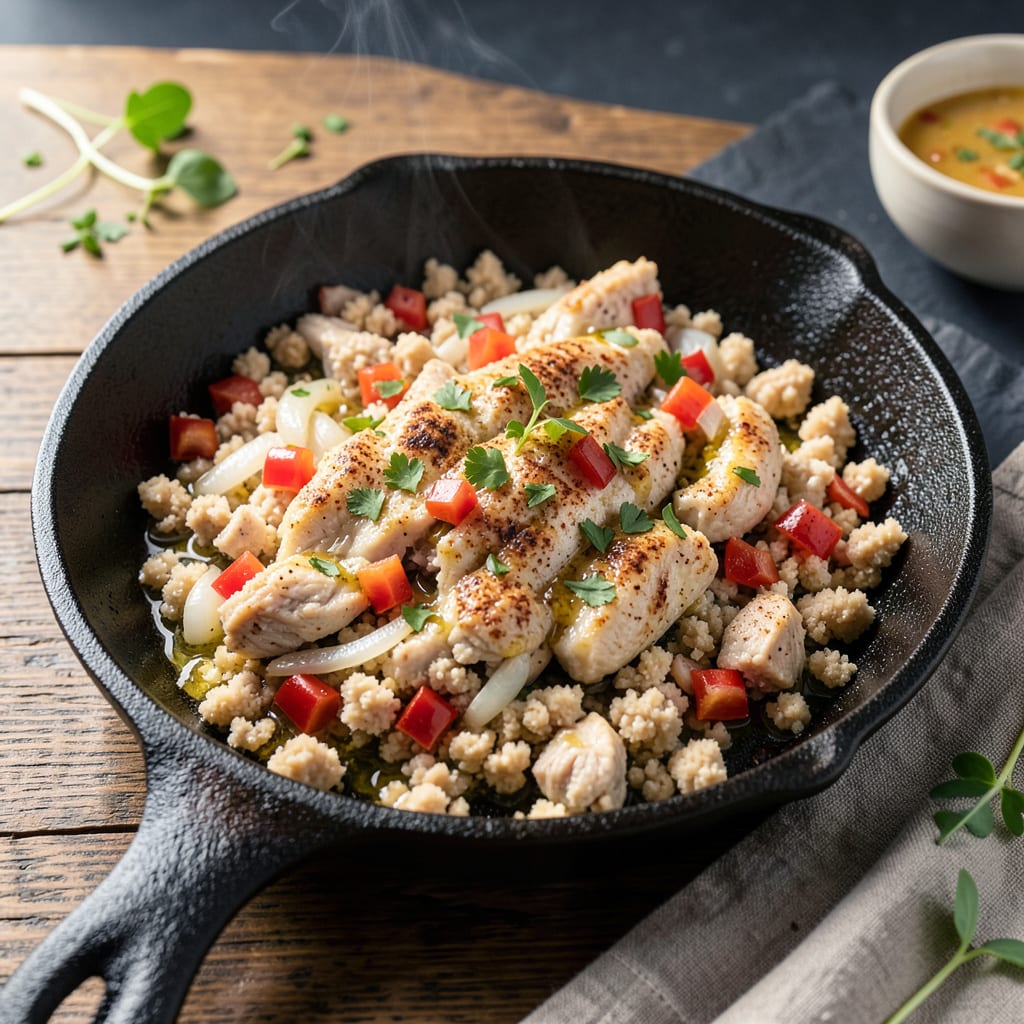
Fully cooked ground turkey is uniformly light brown or tan with no pink spots, crumbly yet moist texture, and clear juices when pressed. Internal temperature must reach 165°F for safety.
I’ve found that ground turkey transforms dramatically as it cooks—starting pink and rubbery, then developing that signature golden hue as proteins denature. 🔥 The juices are your best indicator: if they run cloudy or pink, it needs more time. What many miss is that even slight pinkness near bones or in thicker patties can signal undercooking, which is why I always double-check with a thermometer in multiple spots.
This matters more than you might think, especially when comparing to beef or pork. Turkey’s lean nature means it cooks faster but dries out quickly if overdone. I like to pull it off heat just as it hits 160°F—the residual heat will carry it to safety without sacrificing moisture. ✨
💡 In This Article
- Visual and Textural Signs of Perfectly Cooked Ground Turkey
- Safe Cooking Temperatures and Handling Tips for Ground Turkey
Visual and Textural Signs of Perfectly Cooked Ground Turkey
When ground turkey cooks, its proteins undergo dramatic structural changes. Raw turkey appears pinkish-red with a slightly translucent quality, but as heat breaks down the myoglobin (the protein responsible for color), it transforms to a uniform light brown or tan.
This isn’t just surface-level—you should see this color throughout when you break apart the meat, with absolutely no lingering pink or reddish areas. The change happens because myoglobin’s iron atom oxidizes when exposed to heat, shifting from red to brown.
The texture tells an equally important story. Raw ground turkey feels soft and slightly sticky, but proper cooking creates a crumbly yet moist consistency. This happens as muscle fibers contract and release moisture at around 150-160°F, then reabsorb some liquid as they cool.
🔥 Press a spoon into the cooked meat—it should hold its shape briefly before breaking apart cleanly, not mushy like undercooked meat or dry like overcooked. The juices that pool when pressed should appear completely clear, not cloudy or pink-tinged.
Here’s where turkey differs from beef or pork: its lower fat content (typically 7-10% compared to beef’s 15-20%) means it transitions from raw to done more quickly. I’ve noticed turkey patties often develop a slightly drier exterior first, while the interior catches up.
That’s why I recommend forming thinner patties (½-inch thick) for even cooking—this prevents the outside from overcooking before the center reaches safe temperature. ✨
Pay special attention to the edges where meat contacts the pan. These areas cook fastest and can give false doneness signals. I always check multiple spots with my thermometer, especially in thicker preparations like meatloaf or stuffed peppers.
The USDA’s 165°F recommendation accounts for potential salmonella in poultry, but remember that carryover cooking can add 5-10°F after removal from heat—so pulling at 160°F often yields perfect doneness.
Compare this to ground beef, which can be safely eaten at 160°F (medium) and still shows pink. Turkey’s complete color change makes it easier to visually confirm doneness, but also means there’s less margin for error.
The absence of marbling means you’ll see fewer “juicy” visual cues—relying on color uniformity and juice clarity becomes even more critical. 💫
Pro tip: If you’re cooking with added ingredients like onions or breadcrumbs, these can mask color changes. In these cases, I always verify with a thermometer and look for that characteristic crumbly-but-moist texture. The meat should separate easily when pressed with a fork, with individual granules visible rather than a pasty consistency.
The aroma shifts noticeably too—raw turkey has a mild, almost metallic scent, while properly cooked turkey develops a richer, slightly nutty fragrance. This olfactory change happens as Maillard reactions occur at the surface, creating new flavor compounds. When you combine these visual, textural, and aromatic cues, you’ll never question turkey’s doneness again. ⚡

Trained in classic French technique but raised on slow-cooked ribs and spicy rubs, she blends culinary skill with smoke and soul.
- Recipe for Boneless Pork Chops in Cast Iron Skillet: Sear and Baste to Juicy Perfection - October 3, 2026
- Recipe for Boneless Cross Rib Roast: Slow-Roasted Beef with Herb Crust - October 3, 2026
- Hamburgers in Sauce Recipe Crock Pot: Slow-Cooked Savory Delight - October 3, 2026