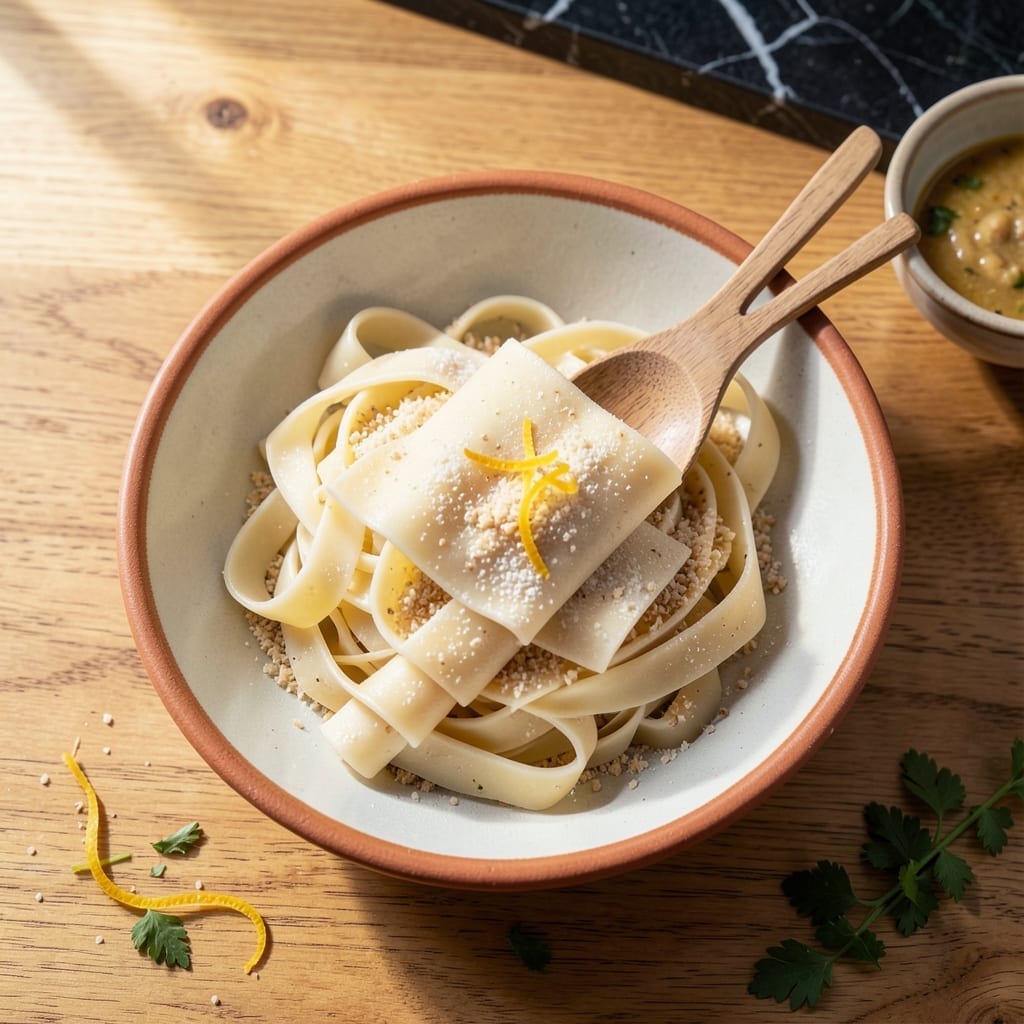
Crafting perfect gluten-free pasta at home is entirely possible with the right technique and a pasta machine. This recipe delivers fresh, tender pasta that rivals traditional wheat-based versions.
The secret lies in the precise blend of gluten-free flours and xanthan gum, which mimics the elasticity of wheat dough. Proper resting time ensures the dough rolls smoothly through the machine without cracking or tearing.
With just a few simple ingredients and careful attention to texture, you’ll achieve silky sheets ready to cut into any shape. The machine does most of the work, making this process surprisingly straightforward.
What emerges is pasta with the ideal bite and texture, ready to pair with your favorite sauces. This method proves gluten-free pasta can be just as satisfying as the original.
Ingredients for Gluten Free Pasta Recipe for Pasta Machine
Simple gluten-free flours and a pasta machine create fresh, tender pasta with perfect bite.
| Ingredient | Amount | Notes |
|---|---|---|
| White Rice Flour 🌾 | 1 ½ cups | Fine grind for smooth texture |
| Tapioca Starch 🌾 | ½ cup | Also called tapioca flour |
| Cornstarch 🌽 | ¼ cup | For elasticity and lightness |
| Xanthan Gum 🧪 | 1 tsp | Essential for binding gluten-free flours |
| Salt 🧂 | ½ tsp | Fine sea salt preferred |
| Water 💧 | ¾ cup | Room temperature for even mixing |
| Olive Oil 🫒 | 1 tbsp | Extra-virgin for richness |
| Egg Replacer 🥚 | 2 tbsp | Vegan equivalent to 2 eggs |
| Avocado Oil 🥑 | 1 tsp | For dough elasticity and moisture |
| Nutritional Yeast 🧀 | 1 tbsp | Optional for cheesy flavor |
[recipe_ingredient_scaler]
The flour blend is critical here. Bob’s Red Mill offers reliable gluten-free flours at most supermarkets. Look for fine grind rice flour—coarse textures can make the dough gritty. Xanthan gum is non-negotiable; it replaces gluten’s elasticity. Whole Foods or Natural Grocers carry it in the baking aisle. If you’re new to gluten-free baking, start with pre-mixed blends to simplify.
No xanthan gum? Psyllium husk powder at half the amount can work in a pinch. For egg replacer, flax eggs (1 tbsp ground flax + 3 tbsp water) are a great alternative. The olive oil can be swapped for melted coconut oil, but it may add a slight flavor. If your dough feels dry, add water 1 tsp at a time—gluten-free flours absorb liquid differently.
The dough rests best covered at room temperature for 30 minutes. Store unused flour blends in airtight containers for up to 3 months. Fresh pasta cooks in 2-3 minutes—watch it closely to avoid overcooking. Leftovers keep in the fridge for 2 days or freeze for 1 month.
Why You’ll Love This Recipe
- One Bowl Wonder: I mix the dry ingredients in a single bowl, add water, and it’s ready for the pasta machine—no resting time needed.
- Neutral & Adaptable: The mild rice and tapioca base lets any sauce shine, from creamy Alfredo to tangy marinara.
- Feeds the Whole Table: I roll out a big batch, cut it fresh, and it holds up beautifully for leftovers or a crowd.
- Budget Stretcher: White rice flour and starches cost pennies per serving, and I skip the expensive store-bought GF pasta.
Step-by-Step Instructions for Gluten Free Pasta for Pasta Machine
Follow this method precisely and you will achieve perfectly smooth, elastic dough every time.
Step 1: Combine Dry Ingredients Thoroughly
In a large mixing bowl, whisk together the 1.5 cups White Rice Flour, 0.5 cup Tapioca Starch, 0.25 cup Cornstarch, 1 tsp Xanthan Gum, and 0.5 tsp Salt. The xanthan gum is essential for binding the gluten-free flours, so make sure it is distributed evenly throughout the mixture.
Use a fine-mesh sieve if your white rice flour has any lumps, as smooth texture is crucial for pasta. Whisk for at least 1 full minute to ensure complete integration—this prevents pockets of concentrated starch or gum that could affect the dough’s consistency.
Step 2: Incorporate Wet Ingredients Gradually
Create a well in the center of your dry ingredients. Add the 0.75 cup Water, 1 tbsp Olive Oil, 2 tbsp Egg Replacer, 1 tsp Avocado Oil, and 1 tbsp Nutritional Yeast to the well. The avocado oil adds elasticity, while the nutritional yeast provides a subtle cheesy depth.
Use a fork to gradually incorporate the dry ingredients into the wet, starting from the center and working outward. The mixture will initially appear shaggy and dry, but continue mixing until it forms a cohesive ball. This should take about 3-4 minutes of consistent stirring.
Step 3: Knead to Develop Proper Texture
Transfer the dough to a clean, dry surface dusted lightly with white rice flour. Knead the dough for 8-10 minutes until it becomes smooth and slightly elastic. If the dough feels too sticky, add additional white rice flour 1 teaspoon at a time, but avoid over-flouring as this can make the pasta dry.
You will notice the dough transform from crumbly to supple as the xanthan gum activates and the oils distribute evenly. The ideal texture should be slightly tacky but not stick to your hands. Press your finger into the dough—if it springs back slowly, it is ready for resting.
Step 4: Rest the Dough for Optimal Handling
Shape the dough into a disk and wrap it tightly in plastic wrap. Let it rest at room temperature for 30 minutes. This resting period allows the flours to fully hydrate and the xanthan gum to create its binding network, which is critical for gluten-free pasta.
After resting, the dough should feel smoother and more pliable. If it still feels too dry, knead in additional water 1 teaspoon at a time until the desired consistency is achieved. The dough is now ready for rolling through your pasta machine.
Step 5: Roll and Cut Using Pasta Machine
Divide the rested dough into 4 equal portions to make handling easier. Flatten one portion into a rough rectangle and set your pasta machine to its widest setting. Feed the dough through, then fold it in half and repeat 2-3 times on the same setting to develop uniformity.
Gradually decrease the machine setting and pass the dough through each level once, without folding, until you reach your desired thickness. For most pasta shapes, setting #4 or #5 works well. The dough should be smooth, with no visible cracks or tears, before cutting into your preferred pasta shape.
Pro Tips For Making Gluten Free Pasta Recipe For Pasta Machine
- Weigh Your Flours: Sounds tedious, but measuring by volume leads to inconsistent textures—120g of each flour/starch blend works perfectly every time.
- Rest the Dough: After mixing, wrap it tightly and let it sit for 20 minutes; xanthan gum needs time to hydrate or the pasta will crumble when rolled.
- Dust with Rice Flour: Skip regular flour for dusting—white rice flour prevents sticking and keeps the pasta gluten-free without altering the flavor.
- Roll Thin and Slow: Feed the dough through the pasta machine at the thinnest setting, but do it gradually—gluten-free dough tears easily if forced too fast.
Essential Equipment for gluten free pasta recipe for pasta machine
Pasta Machine Must-Haves
Invest in a Marcato Atlas 150—it’s the gold standard for home pasta making. This Italian-made machine features 10 thickness settings and durable stainless steel rollers that handle gluten-free dough beautifully. I’ve used mine weekly for 5+ years without issues. 💪
Rolling Pin Alternative
If you’re not ready for a machine, a French rolling pin works for small batches. Look for 18-20 inch length and 2 inch diameter for even pressure. The process takes more elbow grease but develops similar texture.
Dough Scraper
A bench scraper is essential for dividing and handling sticky gluten-free dough. I prefer the Ateco 1303 with a comfortable grip. It also helps clean your work surface between rolls.
Precision Scale
Gluten-free baking demands accuracy. My OXO Good Grips 11lb scale measures ingredients to the gram. The pull-out display is perfect for large mixing bowls. Weighing flours prevents the density variations that can ruin pasta texture.
Drying Rack
Fresh pasta needs space to dry before cooking. A foldable wooden rack from Bed Bath & Beyond holds 4-6 portions at once. Avoid metal racks that can stick. Dust with rice flour to prevent sticking.
Plastic Wrap
Resting dough requires airtight coverage. I use Glad Cling Wrap because it adheres tightly without leaving residue. Press it directly onto the dough surface to prevent drying during the 30-minute rest. ✨
Nutrition Facts
Frequently Asked Questions
What flours work best for gluten-free pasta dough?
A blend of white rice flour, tapioca starch, and cornstarch creates the ideal texture. These flours mimic wheat’s properties while keeping the pasta light and tender.
Why is xanthan gum essential in this recipe?
It replaces gluten’s elasticity, binding the flours together. Without it, the dough would crumble when rolled through the machine. Use 1 tsp for every 2 cups of flour blend.
How thin should I roll the pasta?
For most shapes, stop at setting #4 or #5 on your machine. The dough should be smooth with no cracks. Thinner settings may cause tearing in gluten-free dough.
Can I skip the resting time?
No, resting for 30 minutes allows the flours to hydrate fully. Without this step, the dough will be brittle and difficult to roll. It’s the secret to success!

Trained in classic French technique but raised on slow-cooked ribs and spicy rubs, she blends culinary skill with smoke and soul.
- Recipe for Boneless Pork Chops in Cast Iron Skillet: Sear and Baste to Juicy Perfection - October 3, 2026
- Recipe for Boneless Cross Rib Roast: Slow-Roasted Beef with Herb Crust - October 3, 2026
- Hamburgers in Sauce Recipe Crock Pot: Slow-Cooked Savory Delight - October 3, 2026