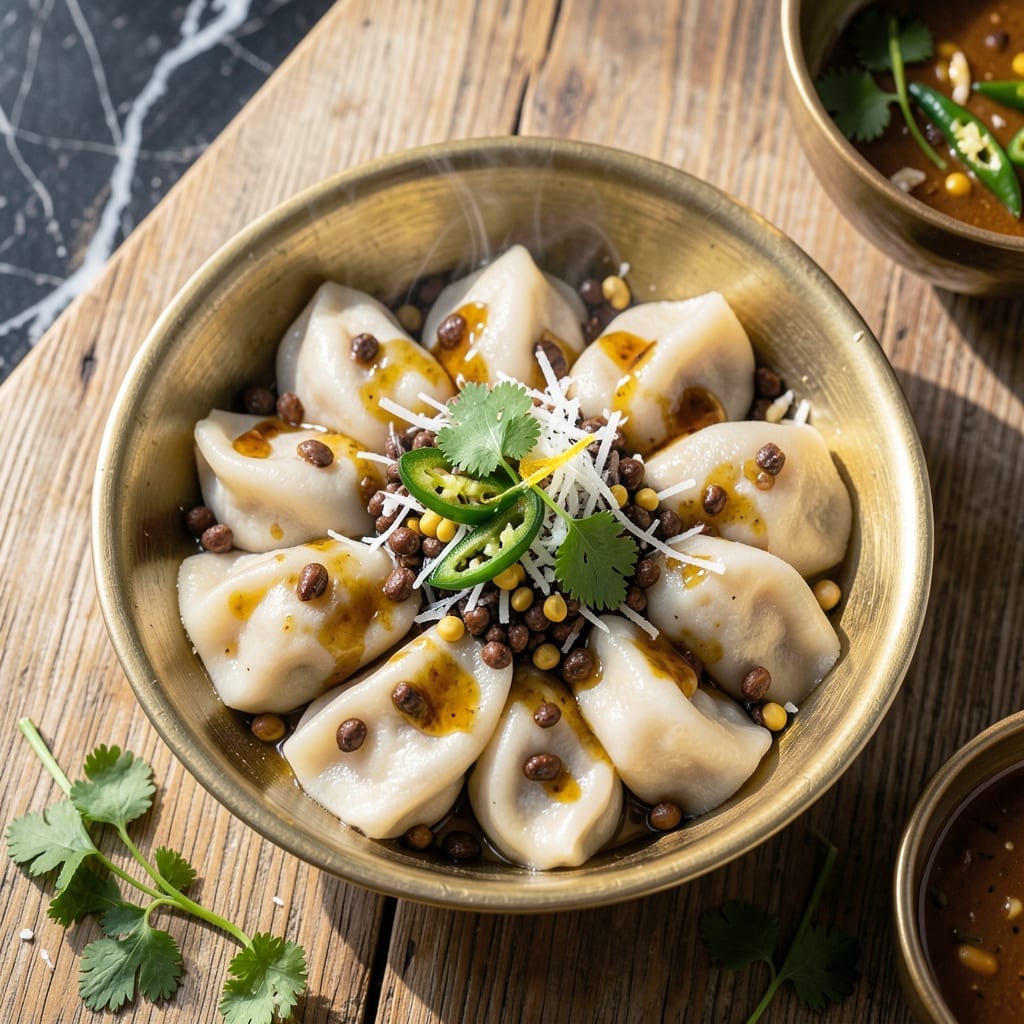
This traditional South Indian dish transforms simple rice flour into soft, pillowy steamed dumplings with a satisfyingly chewy texture.
I developed this recipe to capture the authentic method while using readily available ingredients, making it accessible for home kitchens. The key lies in the perfect ratio of rice flour to water, creating a dough that steams into tender perfection.
The dumplings are lightly spiced with traditional seasonings that complement without overpowering. Steaming preserves their delicate texture and allows the natural flavor of the rice flour to shine through.
This foolproof method delivers consistent results every time, whether you’re making them for a special occasion or a comforting weeknight meal.
Ingredients for Kara Kozhukattai Recipe with Rice Flour
Rice flour, spices, and coconut come together for these authentic steamed dumplings with perfect texture.
| Ingredient | Amount | Notes |
|---|---|---|
| Rice Flour 🌾 | 2 cups | Fine, unroasted variety preferred |
| Water 💧 | 1 ½ cups | Hot, for dough formation |
| Salt 🧂 | 1 tsp | Fine grain preferred |
| Urad Dal 🫘 | 2 tbsp | Split black gram, for tempering |
| Chana Dal 🫘 | 1 tbsp | Split chickpeas, for tempering |
| Mustard Seeds 🌿 | 1 tsp | Black or yellow variety |
| Cumin Seeds 🌿 | 1 tsp | Whole, for tempering |
| Dried Red Chilies 🌶️ | 3 whole | Split, seeds removed |
| Curry Leaves 🍃 | 10 pieces | Fresh preferred, optional |
| Asafoetida 🌿 | ¼ tsp | Hing powder, for flavor |
| Coconut Oil 🥥 | 2 tbsp | For tempering and greasing |
| Grated Coconut 🥥 | ½ cup | Fresh or desiccated, for filling |
| Green Chilies 🌶️ | 2 whole | Finely chopped, for filling |
| Fresh Ginger 🌿 | 1 tbsp | Grated, for filling |
[recipe_ingredient_scaler]
The rice flour is the foundation here. Use fine, unroasted flour for the smoothest texture—coarse or roasted varieties can make the dumplings dense. Indian grocery stores typically stock the right kind, often labeled as ‘idli rice flour.’ Urad dal and chana dal add authentic crunch to the tempering; look for them in the lentil aisle of any Asian market or online.
No curry leaves? Skip them entirely—they add aroma but aren’t essential. Asafoetida (hing) is traditional but can be omitted if unavailable; a pinch of onion powder won’t replicate the flavor but adds depth. For the filling, frozen grated coconut works in a pinch (thaw and drain first). The green chilies can be adjusted for heat preference—remove seeds for milder flavor.
The dough can rest for up to 30 minutes before shaping. Prepared dumplings freeze well for 1 month—steam from frozen, adding 5 extra minutes. Store tempering spices in airtight containers away from light to maintain freshness for 6 months.
Why You’ll Love This Recipe
- One Pot Wonder: I mix the rice flour, water, and salt in a single vessel—no fancy gadgets, just my hands and a stove.
- Crunchy Surprise: The tempered urad dal and chana dal add this nutty bite that makes every soft kozhukattai irresistible.
- Festival Ready: I make a big batch for Ganesha Chaturthi, and it’s always the first to disappear from the prasadam spread.
- Pantry Hero: Rice flour, dal, and a few spices—nothing fancy, and it stretches to feed a crowd without breaking the bank.
Step-by-Step Instructions for Kara Kozhukattai With Rice Flour
Master these techniques for perfectly soft, pillowy dumplings with a flavorful tempered coconut filling.
Step 1: Prepare the Dough to Ideal Consistency
Bring the 1.5 cups Water to a rolling boil in a saucepan. In a large bowl, combine the 2 cups Rice Flour with the 1 tsp Salt. I always use fine, unroasted rice flour for the smoothest texture.
Gradually pour the hot water into the rice flour mixture, stirring continuously with a wooden spoon to prevent lumps. The dough will be extremely hot—use caution. Continue mixing until the water is fully incorporated and the dough comes together into a cohesive ball.
Cover the bowl with a damp cloth and let it rest for 10 minutes. This resting period allows the flour to fully hydrate, resulting in softer, more pliable dumplings. The dough should be smooth, slightly sticky, but not wet.
Step 2: Craft the Spiced Coconut Filling
In a small bowl, combine the 0.5 cup Grated Coconut, 2 whole Green Chilies (finely chopped), and 1 tbsp Fresh Ginger (grated). Mix these ingredients thoroughly so the flavors are evenly distributed throughout the filling.
I prefer fresh coconut for the best texture and flavor, but desiccated coconut works in a pinch. The green chilies and ginger add a fresh, spicy kick that balances the sweetness of the coconut beautifully. Set this mixture aside while you prepare the tempering.
Step 3: Temper the Lentils and Spices
Heat the 2 tbsp Coconut Oil in a small pan over medium heat. Add the 1 tsp Mustard Seeds and allow them to pop for 10-15 seconds. Immediately add the 1 tsp Cumin Seeds, 2 tbsp Urad Dal, and 1 tbsp Chana Dal.
Stir constantly until the dals turn light golden brown, about 2-3 minutes. Then add the 3 whole Dried Red Chilies, 10 pieces Curry Leaves, and 0.25 tsp Asafoetida. Cook for another 30 seconds until the curry leaves become crisp and the asafoetida releases its aroma.
Remove from heat and mix this tempering into the coconut filling. The hot oil will help release all the spices’ flavors into the coconut mixture.
Step 4: Shape and Steam the Dumplings
Divide the dough into small portions (about golf-ball size) and roll each into a smooth ball. Flatten each ball in your palm to create a small cup. Place 1 teaspoon of the tempered coconut filling in the center and seal the edges to form a smooth, enclosed dumpling.
Grease a steamer plate or idli mold with a little coconut oil to prevent sticking. Arrange the dumplings with some space between them, as they’ll expand slightly during cooking. Bring water to a boil in the steamer, then place the plate inside, cover with a lid, and steam for 15-18 minutes.
The dumplings are done when they appear slightly translucent and feel firm to the touch. Remove them carefully—they’ll be hot and delicate. Let them cool for 5 minutes before serving to allow them to set fully.
Pro Tips For Making Kara Kozhukattai Recipe With Rice Flour
- Toast the dals first: Dry roast the urad dal and chana dal until golden and fragrant—this brings out their nutty depth and prevents a raw taste in the filling.
- Use hot water: Pour boiling water over the rice flour for the dough; it binds better and gives the kozhukattai that perfect chewy texture.
- Don’t over-knead: I learned this the hard way—mix the rice flour dough just until it comes together, or the dumplings turn out dense and tough.
- Steam evenly: Arrange the kozhukattai in a single layer with space between each piece, so steam circulates properly and they cook through without sticking.
Storing and Reheating This Dish
Refrigerator Storage
Let the dumplings cool completely before storing in an airtight container. They’ll keep in the fridge for up to 3 days without losing texture. I line the container with parchment to prevent sticking. ❄️
Freezer Method
For longer storage, freeze steamed dumplings flat on a tray first, then transfer to a freezer bag. They’ll maintain quality for 1 month. This prevents them from sticking together during freezing.
Steaming from Frozen
No need to thaw! Steam frozen dumplings directly for 20-25 minutes. Add 5 extra minutes compared to fresh. The texture stays remarkably good this way.
Reheating Steamed Dumplings
Place in a steamer basket over boiling water for 5-7 minutes until hot throughout. This revives their soft texture better than microwaving. I always add a damp paper towel to the basket.
Microwave Option
Arrange dumplings on a microwave-safe plate with a damp paper towel cover. Heat on 70% power for 1-2 minutes, checking frequently. Add a splash of water if they seem dry.
Tempering Storage
Keep leftover tempering in a separate container in the fridge for up to 5 days. I stir it into soups or rice for extra flavor. The coconut oil may solidify—just warm gently before using.
Nutrition Facts
Frequently Asked Questions
Can I use store-bought rice flour?
Yes, fine unroasted rice flour works perfectly. Look for idli rice flour at Indian stores for best results. Avoid coarse or roasted varieties.
Why did my dumplings turn out hard?
Over-kneading or insufficient water causes density. The dough should be soft but not sticky. Steam for the full 15-18 minutes for proper texture.
Can I make them without coconut?
Substitute with finely chopped vegetables like carrots or cabbage. Adjust salt to taste. The tempering spices will still add great flavor.
How do I prevent dumplings from sticking?
Grease the steamer plate well with coconut oil. Leave space between dumplings as they expand. Use parchment paper for extra insurance.

Trained in classic French technique but raised on slow-cooked ribs and spicy rubs, she blends culinary skill with smoke and soul.
- Recipe for Boneless Pork Chops in Cast Iron Skillet: Sear and Baste to Juicy Perfection - October 3, 2026
- Recipe for Boneless Cross Rib Roast: Slow-Roasted Beef with Herb Crust - October 3, 2026
- Hamburgers in Sauce Recipe Crock Pot: Slow-Cooked Savory Delight - October 3, 2026