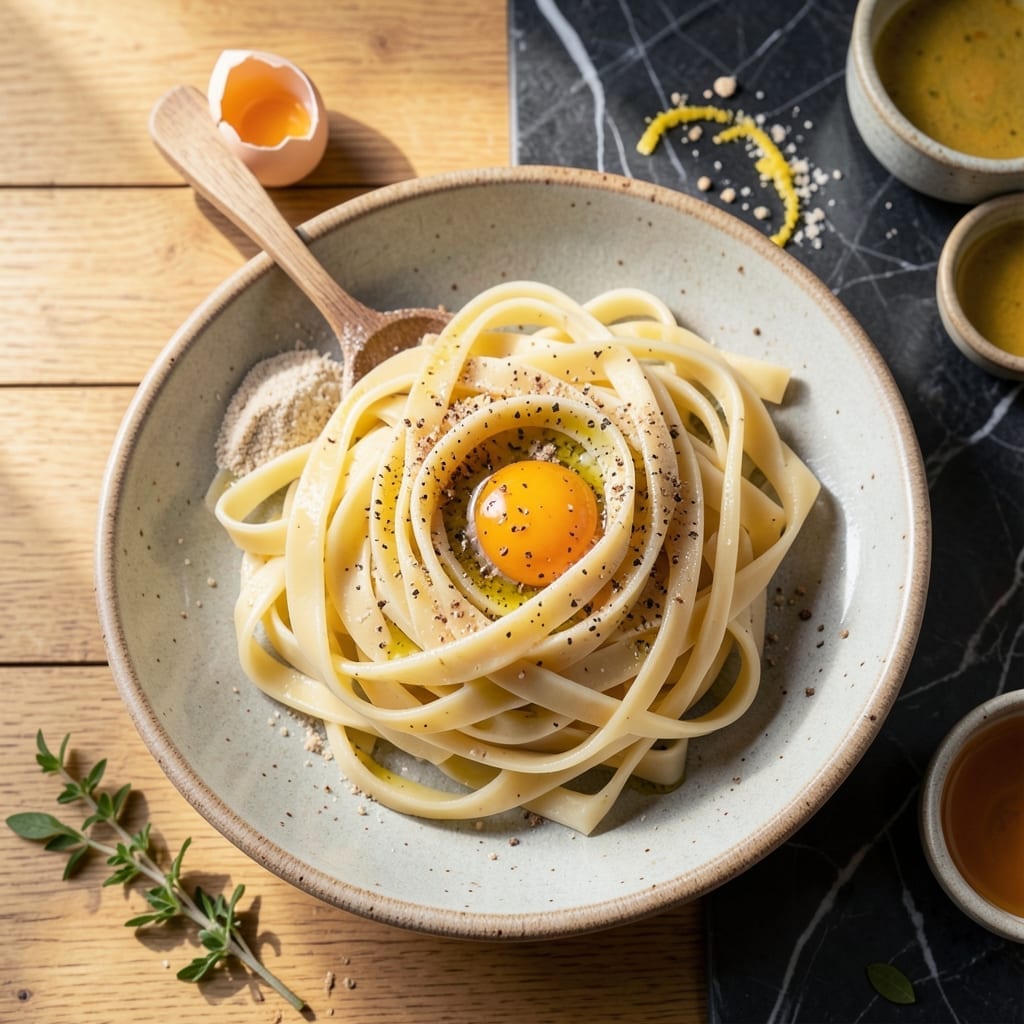
There’s nothing quite like the satisfaction of rolling fresh pasta through your own machine. This gluten free pasta recipe delivers homemade noodles with the perfect texture and bite, without the traditional wheat flour.
Using a pasta maker simplifies the process, ensuring consistent thickness and professional results. The key is finding the right gluten free flour blend that mimics the elasticity of traditional pasta dough.
You’ll create tender, flexible noodles that hold their shape during cooking. The dough comes together quickly with just a few simple ingredients, making fresh pasta accessible to everyone.
Once you try this method, you’ll never go back to store-bought gluten free pasta. The difference in taste and texture is undeniable.
Ingredients for Gluten Free Pasta Recipe for Pasta Maker
Just a handful of specialty flours and eggs stand between you and perfect homemade noodles.
| Ingredient | Amount | Notes |
|---|---|---|
| Gluten-Free All-Purpose Flour Blend 🌾 | 2 ½ cups | Plus extra for dusting |
| Xanthan Gum 🧪 | 1 tsp | Omit if blend already contains it |
| Large Eggs 🥚 | 4 whole | Room temperature preferred |
| Extra-Virgin Olive Oil 🫒 | 1 tbsp | For elasticity and flavor |
| Fine Sea Salt 🧂 | ½ tsp | Dissolved in warm water |
| Warm Water 💧 | 2 tbsp | As needed for consistency |
| Almond Flour 🌰 | ½ cup | For tender texture |
| Tapioca Starch 🌾 | ½ cup | Adds chewiness to noodles |
| Egg Yolks 🥚 | 2 whole | Enriches color and flavor |
| White Rice Flour 🌾 | ¼ cup | Balances other flours |
[recipe_ingredient_scaler]
The flour blend is everything here. King Arthur and Bob’s Red Mill 1-to-1 work best—they already include xanthan gum, so skip adding extra. I grab mine at Whole Foods or order online when I’m doing a big batch. For the almond flour, Costco’s Kirkland brand is a steal and gives great texture. Fresh eggs matter too—older eggs don’t bind as well.
No xanthan gum? Psyllium husk powder at half the amount works as a binder. Out of almond flour? Fine cornmeal can substitute, but the texture will be denser. The olive oil can be swapped for avocado oil, but don’t skip the fat entirely—it keeps the dough from crumbling. For a vegan version, flax eggs work, but the texture changes significantly.
The dough rests best covered at room temp for 30 minutes before rolling. Fresh pasta cooks in 2-3 minutes—watch it closely. Store uncooked dough wrapped tightly in the fridge for 24 hours, or freeze for 1 month.
Why You’ll Love This Recipe
- One Bowl Mix: I just dump the flour blend, xanthan gum, eggs, olive oil, and salt in a bowl—no fancy prep, no mess.
- Rich, Toothy Bite: The eggs and olive oil give it that authentic pasta texture, and the xanthan gum keeps it from crumbling like some store-bought versions.
- Pasta Maker Magic: It feeds through my machine just like regular dough—no special tricks, just smooth, consistent sheets every time.
Step-by-Step Instructions for Gluten Free Pasta for Pasta Maker
Here’s the method I use to make perfect fresh noodles every time.
Step 1: Combine the Dry Ingredients
In a large mixing bowl, whisk together the 2.5 cups Gluten-Free All-Purpose Flour Blend, 0.5 cup Almond Flour, 0.5 cup Tapioca Starch, 0.25 cup White Rice Flour, and 1 tsp Xanthan Gum until fully combined. I like to sift these together first to eliminate any lumps.
This blend of flours creates the perfect texture for gluten-free pasta. The almond flour adds tenderness, while the tapioca starch provides that essential chewiness you expect from traditional pasta. The xanthan gum acts as a binder to hold everything together.
Step 2: Prepare the Wet Ingredients
In a separate bowl, beat the 4 whole Large Eggs and 2 whole Egg Yolks lightly. Stir in the 1 tbsp Extra-Virgin Olive Oil. In a small cup, dissolve the 0.5 tsp Fine Sea Salt in the 2 tbsp Warm Water and add this to the egg mixture.
The extra yolks enrich the color and flavor, while the olive oil adds elasticity to the dough. Using room temperature eggs helps create a smooth, uniform mixture that incorporates better with the dry ingredients.
Step 3: Form and Knead the Dough
Create a well in the center of your dry ingredients and pour in the wet mixture. Using a fork, gradually incorporate the dry ingredients into the wet until a shaggy dough forms. Then, turn it out onto a lightly floured surface dusted with additional Gluten-Free All-Purpose Flour Blend.
Knead the dough for 5-7 minutes until smooth and elastic. If it feels too dry, add warm water 1 teaspoon at a time. If it’s too sticky, incorporate a bit more flour. The dough should be firm but pliable, not cracking when you press it.
Step 4: Rest the Dough
Wrap the dough tightly in plastic wrap and let it rest at room temperature for 30 minutes. This resting period allows the flours to fully hydrate and the xanthan gum to work its binding magic.
You’ll notice the dough becomes more supple after resting. Don’t skip this step—it makes the dough much easier to roll out and prevents it from springing back when you run it through the pasta maker.
Step 5: Roll and Cut the Pasta
Divide the rested dough into 4 equal portions. Flatten one portion into a rectangle about ½-inch thick. Set your pasta maker to its widest setting and run the dough through once. Fold the dough in thirds like a letter, turn it 90 degrees, and run it through again.
Repeat this process, narrowing the setting by one notch each time, until you reach your desired thickness (usually about ⅛-inch for most pasta shapes). Then, run the sheet through your pasta cutter attachment. Dust the cut noodles with additional flour to prevent sticking, and cook immediately or dry for later use.
Pro Tips For Making Gluten Free Pasta Recipe For Pasta Maker
- Rest the Dough: After kneading, wrap the dough in plastic and let it rest for 20-30 minutes—this gives the gluten-free flour time to hydrate fully and makes it way easier to roll through the pasta maker.
- Weigh Your Flour: I learned this the hard way: scooping gluten-free flour can pack it down, so use a scale for the 200g measurement (or whatever your recipe calls for) to avoid dense, gummy pasta.
- Skip the Thin Settings: Gluten-free pasta tears easily, so resist the urge to go thinner than the 3rd or 4th setting on your pasta maker—any thinner and it’ll fall apart in the water.
- Dust with Cornstarch: Sounds weird, but it works: dust your pasta sheets with cornstarch instead of flour before cutting to prevent sticking, especially since gluten-free dough is naturally stickier.
Troubleshooting Perfect Results
Dough Too Crumbly
If your dough falls apart when kneading, it likely needs more moisture. Add warm water 1 tsp at a time until the dough holds together. I’ve found 2-3 extra teaspoons often does the trick. The xanthan gum needs adequate hydration to work its binding magic. 💧
Dough Too Sticky
When the dough sticks to your hands or the counter, dust with additional Gluten-Free All-Purpose Flour Blend. Add 1 tbsp at a time until it reaches the right consistency. Too much flour can make the final pasta dry, so go slowly.
Dough Springs Back
If the dough shrinks when rolling, it hasn’t rested long enough. Let it rest for a full 30 minutes wrapped tightly. This allows the flours to hydrate fully. If it still resists, your machine settings might be too aggressive—try widening the gap.
Pasta Tears When Rolling
Thin sheets tearing often means the dough is too dry. Lightly brush the sheet with olive oil before the next pass. Also, ensure your machine is clean and well-floured. I use a pastry brush for even oil distribution.
Noodles Stick Together
Fresh noodles love to cling. Dust them generously with Gluten-Free All-Purpose Flour Blend after cutting. Spread them on a floured baking sheet in a single layer. For long storage, freeze flat before transferring to bags. ❄️
Pasta Cooks Unevenly
If some noodles are mushy while others are firm, they weren’t uniform thickness. Use your pasta maker’s thinnest setting for consistency. Also, stir the noodles gently during the first 30 seconds of boiling to prevent clumping.
Nutrition Facts
Frequently Asked Questions
Can I use a different flour blend?
Yes, but stick to blends with xanthan gum included. King Arthur or Bob’s Red Mill 1-to-1 work best for elasticity. Avoid single flours like almond flour alone, as they lack binding properties.
How long does fresh pasta need to cook?
Fresh gluten-free pasta cooks in just 2-3 minutes in boiling water. Watch closely—it’s done when it floats to the surface. Overcooking turns it mushy quickly.
Why does my dough crack when rolling?
Cracking usually means the dough is too dry. Add warm water 1 tsp at a time and knead until smooth. Resting for 30 minutes also helps prevent this.
Can I make this without a pasta maker?
Yes, roll the dough thinly by hand with a rolling pin. Aim for ⅛-inch thickness and cut into shapes. It’s more labor-intensive but works in a pinch.

Trained in classic French technique but raised on slow-cooked ribs and spicy rubs, she blends culinary skill with smoke and soul.
- Recipe for Boneless Pork Chops in Cast Iron Skillet: Sear and Baste to Juicy Perfection - October 3, 2026
- Recipe for Boneless Cross Rib Roast: Slow-Roasted Beef with Herb Crust - October 3, 2026
- Hamburgers in Sauce Recipe Crock Pot: Slow-Cooked Savory Delight - October 3, 2026