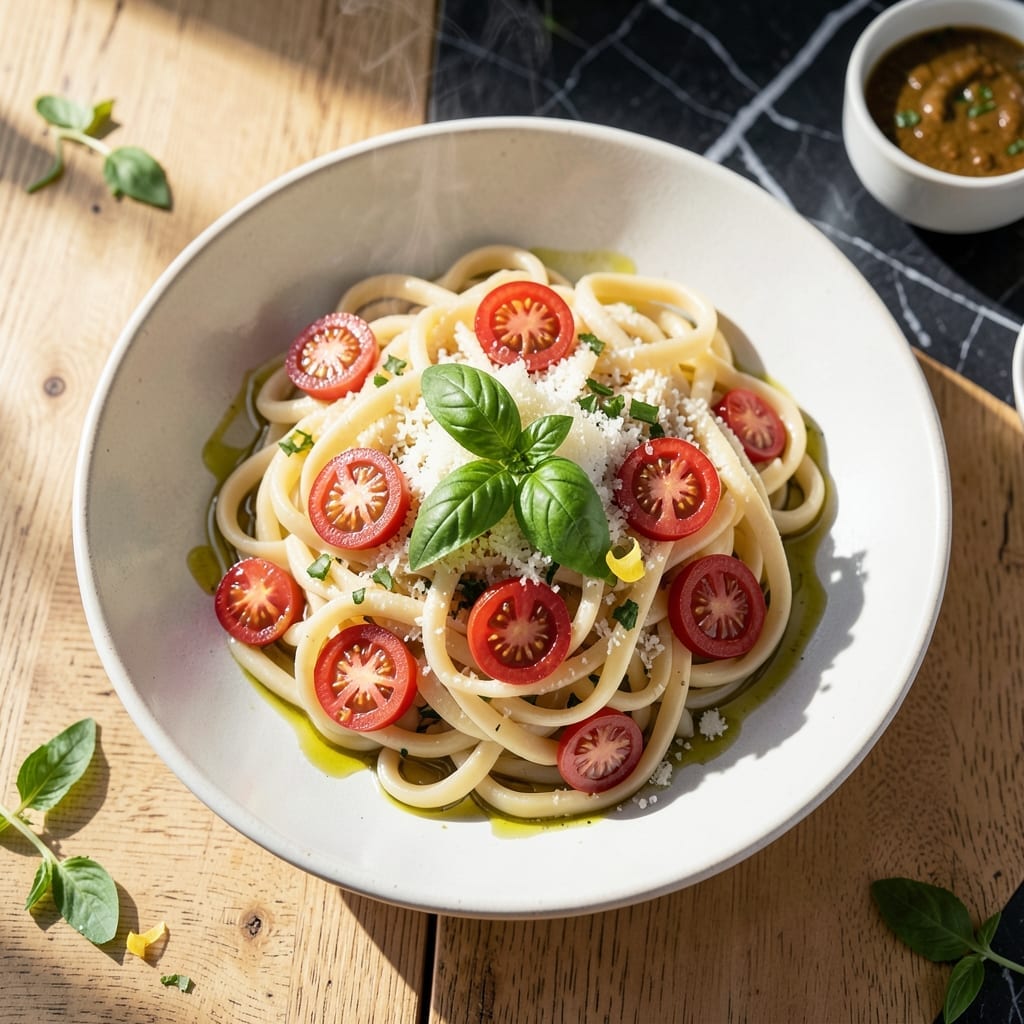
Achieving perfect al dente texture in gluten free pasta requires the right flour blend and precise technique. This recipe eliminates eggs while maintaining the structure and bite you expect from traditional pasta.
Using a combination of rice flour and tapioca starch creates the ideal base for gluten free pasta dough. The dough comes together quickly with just a few simple ingredients, making it accessible for any home cook.
The rolling and cutting process mirrors traditional pasta making, ensuring consistent thickness and even cooking. You’ll find the result is surprisingly close to wheat-based pasta in both texture and flavor.
This method delivers perfect results every time, proving that gluten free pasta can be just as satisfying as the original.
Ingredients for Gluten Free Pasta Recipe No Egg
A precise blend of gluten-free flours and starches creates pasta with authentic al dente bite.
| Ingredient | Amount | Notes |
|---|---|---|
| White Rice Flour 🌾 | 2 cups | Fine mill for smooth texture |
| Tapioca Starch 🌾 | ¾ cup | Also called tapioca flour |
| Xanthan Gum 🧪 | 1 tsp | Essential for elasticity |
| Sea Salt 🧂 | ½ tsp | Fine grain preferred |
| Water 💧 | ¾ cup | Lukewarm for dough |
| Olive Oil 🫒 | 1 tbsp | Extra-virgin for richness |
| Potato Starch 🥔 | ¼ cup | Improves chewiness |
| Almond Flour 🌰 | ¼ cup | Adds subtle nutty flavor |
| Apple Cider Vinegar 🍎 | 1 tsp | Enhances dough workability |
| Garlic Powder 🧄 | ½ tsp | Optional for flavor variation |
| Dried Oregano 🌿 | ½ tsp | Optional for flavor variation |
[recipe_ingredient_scaler]
The rice flour is non-negotiable here. Bob’s Red Mill offers the finest grind, which is critical for smooth dough. Tapioca starch (often labeled as flour) must be pure—check for 100% tapioca on the label. Xanthan gum, while pricey, is essential for binding; Whole Foods or Amazon carry it reliably. The potato starch adds chew, but cornstarch can work in a pinch (though texture suffers slightly).
No xanthan gum? Psyllium husk powder at one-quarter the amount works, but expect slightly gummier dough. Swap almond flour for sorghum flour if nut allergies are a concern. Apple cider vinegar can be replaced with white vinegar—the acidity matters more than the flavor. For extra protein, add 1 tbsp vital wheat gluten (though this is not gluten-free, so only for non-sensitive cooks).
Store flours in airtight containers in a cool, dark place for up to 6 months. The dough itself doesn’t freeze well, but cooked pasta holds in the fridge for 3-4 days. Always bring ingredients to room temperature before mixing for best results.
Why You’ll Love This Recipe
- No-Fuss Mixing: I just stir the rice flour, tapioca starch, and xanthan gum with water—no eggs, no mess.
- Clean Slate Flavor: The sea salt lets any sauce shine, but the pasta itself has a mild, pleasant taste that’s never overpowering.
- Meal Prep Hero: Honestly, it holds up in the fridge for days, so I make a big batch for quick lunches.
- Pantry Staples: Between us, I always have these ingredients on hand, so it’s my go-to when I’m out of eggs.
Step-by-Step Instructions for Gluten Free Pasta No Egg
Master the technique for consistently perfect texture and flavor with this method.
Step 1: Combine Dry Ingredients for Structure
In a large mixing bowl, whisk together the 2 cups White Rice Flour, 0.75 cup Tapioca Starch, 0.25 cup Potato Starch, and 0.25 cup Almond Flour until fully blended. These starches create the base structure that mimics wheat flour’s elasticity.
Add the 1 tsp Xanthan Gum and 0.5 tsp Sea Salt, whisking again to distribute evenly. The xanthan gum acts as a binder, compensating for the lack of gluten to hold the dough together. If using the optional flavors, stir in the 0.5 tsp Garlic Powder and 0.5 tsp Dried Oregano at this stage.
Step 2: Incorporate Wet Ingredients Gradually
Create a well in the center of your dry mixture. Pour in the 0.75 cup Water (ensure it’s lukewarm) and 1 tbsp Olive Oil. Add the 1 tsp Apple Cider Vinegar, which tenderizes the dough and improves workability.
Using a wooden spoon or dough whisk, begin mixing from the center outward. The dough will initially appear crumbly but should come together into a shaggy mass after 2-3 minutes of mixing. If it feels too dry, add water 1 teaspoon at a time until it just holds together.
Step 3: Knead to Develop Proper Texture
Turn the dough onto a clean surface dusted lightly with White Rice Flour. Knead for 5-7 minutes until smooth and elastic. The dough should be slightly tacky but not sticky. If it adheres to your hands, dust them with flour as needed.
Proper kneading develops the xanthan gum’s binding properties, creating a dough that can be rolled thin without tearing. You’ll notice the texture transform from rough to silky as the starches hydrate fully. The dough should spring back slightly when pressed with a finger.
Step 4: Rest and Roll for Optimal Thickness
Wrap the dough in plastic and let it rest at room temperature for 20-30 minutes. This resting period allows the flours to fully absorb moisture, preventing cracking during rolling. The dough will relax, making it easier to roll thinly.
Divide the rested dough into 4 portions for easier handling. Using a pasta machine or rolling pin, roll each portion to about 1/16-inch thickness for perfect al dente texture. Cut into your desired pasta shapes immediately after rolling.
Step 5: Cook and Test for Al Dente Perfection
Bring a large pot of salted water to a rolling boil. Add the fresh pasta and cook for 2-3 minutes – it will float to the surface when nearly done. The pasta is ready when it’s tender but still offers slight resistance when bitten.
Drain immediately and toss with your preferred sauce. The starches in this blend absorb sauce beautifully, creating a restaurant-quality dish. Serve at once for the best texture, as gluten-free pasta can become gummy if left sitting.
Pro Tips For Making Gluten Free Pasta Recipe No Egg
- Knead Longer: I learned this the hard way—gluten free dough needs at least 5-7 minutes of kneading to properly activate the xanthan gum, otherwise your pasta will crumble.
- Rest the Dough: After mixing, let the dough sit covered for 20 minutes—this gives the rice flour and tapioca starch time to fully hydrate.
- Skip Cold Water: Use warm water (about 110°F) to help the starches bind better; cold water makes the dough stiff and harder to work with.
- Roll Thin: Aim for 1/8 inch thickness when rolling—any thicker and the pasta turns out gummy instead of tender.
Wine and Beer Pairings for This Recipe
Crisp White Wines
I love pairing this pasta with a chilled Pinot Grigio from Northern Italy—its bright acidity cuts through the starchy richness beautifully. The citrus notes complement the clean flavor of gluten free pasta without overpowering it. 🍷
Light Red Options
A lightly chilled Beaujolais from France offers a refreshing contrast with its red fruit flavors. The low tannins won’t compete with the pasta, making it an excellent choice for those who prefer red wine.
Italian Sparkling
For a celebratory touch, try Prosecco from Veneto. The effervescence cleanses your palate between bites, while the subtle apple and pear notes enhance the pasta’s natural sweetness.
Craft Beer Pairings
A crisp Italian pilsner like Birra del Borgo’s ReAle provides a refreshing contrast with its clean, slightly bitter finish. The carbonation helps reset your palate for each forkful. 🍺
Non-Alcoholic Choices
For a non-alcoholic option, try San Pellegrino Aranciata—its citrus notes mirror wine pairings. The effervescence mimics the palate-cleansing effect of sparkling wine.
Nutrition Facts
Frequently Asked Questions
Can I use this dough for lasagna sheets?
Yes! Roll the dough slightly thicker, about 1/8-inch, for lasagna. No pre-boiling needed—layer directly in your dish.
Why does the dough need to rest?
Resting for 20-30 minutes lets flours fully hydrate, preventing cracks when rolling. It also relaxes the xanthan gum for better elasticity.
What if my pasta turns out gummy?
Overcooking causes gummy texture. Stick to the 2-3 minute cook time and use plenty of water. Serve immediately for best results.
Can I substitute cornstarch for tapioca?
Cornstarch works but may yield slightly grainier texture. Use the same amount and add 1 extra tsp xanthan gum for binding.

Trained in classic French technique but raised on slow-cooked ribs and spicy rubs, she blends culinary skill with smoke and soul.
- Recipe for Boneless Pork Chops in Cast Iron Skillet: Sear and Baste to Juicy Perfection - October 3, 2026
- Recipe for Boneless Cross Rib Roast: Slow-Roasted Beef with Herb Crust - October 3, 2026
- Hamburgers in Sauce Recipe Crock Pot: Slow-Cooked Savory Delight - October 3, 2026