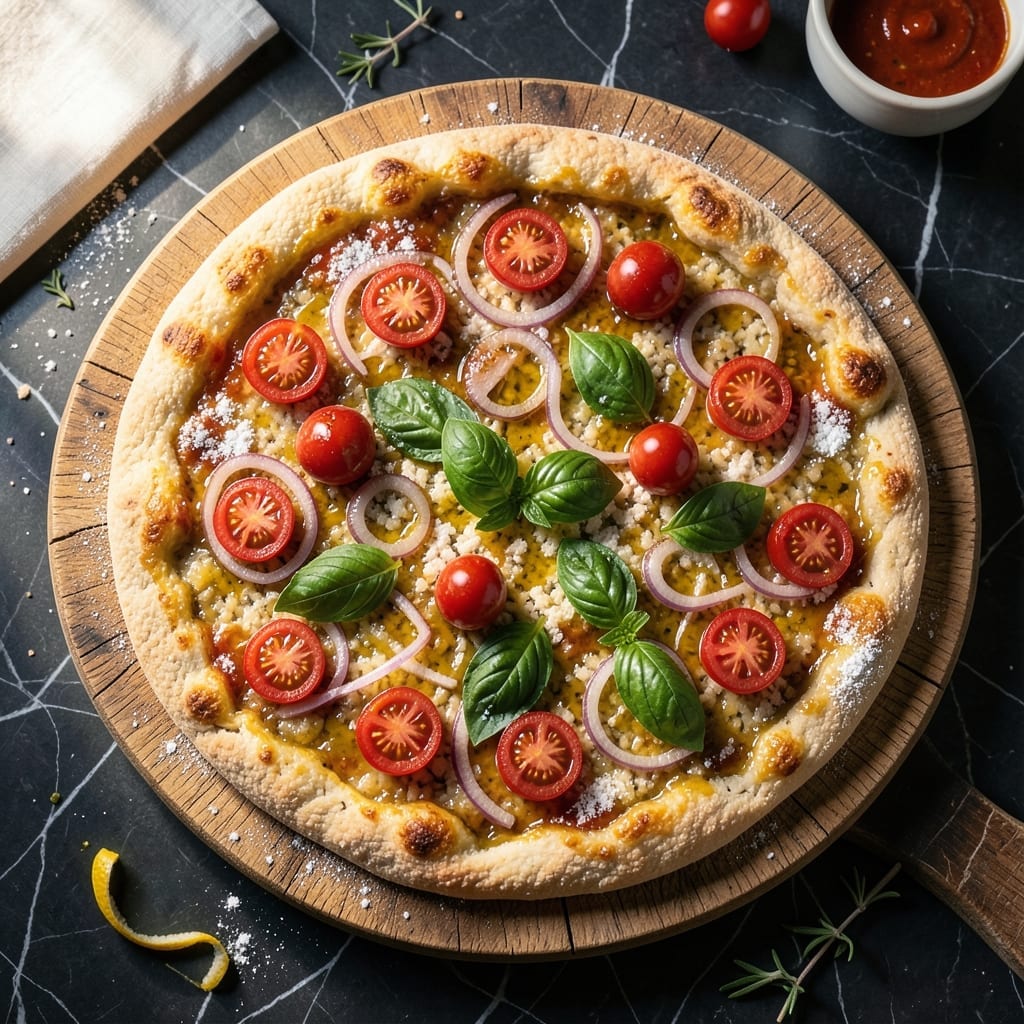
This rice flour pizza crust delivers a crispy base that rivals traditional versions, without compromising on texture or flavor.
With a simple mixture of rice flour, water, and a touch of xanthan gum for structure, you’ll achieve a golden, sturdy crust that holds toppings beautifully. Perfect for those avoiding gluten but unwilling to sacrifice quality.
Ingredients for Gluten Free Pizza Crust Recipe Rice Flour
Pantry staples and a few specialty items for that perfect crispy base.
| Ingredient | Amount | Notes |
|---|---|---|
| White Rice Flour 🌾 | 2 cups | Finely milled for best texture |
| Water 💧 | 1 ¼ cups | Warm, about 110°F |
| Xanthan Gum 🧪 | 1 tsp | Essential for structure and elasticity |
| Olive Oil 🫒 | 2 tbsp | Extra-virgin for richness |
| Active Dry Yeast 🍞 | 2 ¼ tsp | One packet, proofed in warm water |
| Granulated Sugar 🍚 | 1 tsp | Feeds the yeast for rising |
| Salt 🧂 | 1 tsp | Fine sea salt preferred |
| Apple Cider Vinegar 🍏 | 1 tbsp | Enhances crispiness and flavor |
| Italian Seasoning 🌿 | 1 tsp | Dried blend of herbs |
| Garlic Powder 🧄 | ½ tsp | For savory depth |
| Onion Powder 🧅 | ½ tsp | Balances the herb blend |
[recipe_ingredient_scaler]
The rice flour is non-negotiable here—Bob’s Red Mill white rice flour is my go-to (the grainy stuff won’t work). Xanthan gum is the magic ingredient for structure, and it’s worth hunting down at Whole Foods or a natural foods store (or just order it online). Yeast should be fresh—check the expiration date. I always buy mine in bulk from Costco and store it in the freezer to keep it potent.
No xanthan gum? Psyllium husk powder at the same amount works as a sub, though the texture will be slightly different. Out of rice flour? Sorghum flour can work in a pinch, but the crust won’t be as crispy. The apple cider vinegar might seem odd, but don’t skip it—it’s key for that golden, crispy finish. If you’re avoiding sugar, a pinch of maple syrup can feed the yeast instead.
The dough keeps in the fridge for 24 hours if you want to prep ahead. Baked crusts freeze beautifully for up to 3 months (just let them cool completely first). Store rice flour in an airtight container to keep it fresh—it’ll last 6-12 months that way.
Why You’ll Love This Recipe
- No-Fuss Mixing: I just dump the rice flour, yeast, and xanthan gum in a bowl—no fancy tools, no waiting for dough to rise for hours.
- Crisp Yet Tender: That olive oil in the crust gives it this satisfying crunch on the edges while staying soft inside, just like my favorite pizzeria.
- Weeknight Rescue: I’ve used this for quick dinners, kids’ parties, and even as a flatbread base when I’m out of ideas.
- Budget Stretch: A bag of rice flour and a little yeast make two crusts for the price of one store-bought gluten-free option.
Step-by-Step Instructions for Gluten Free Pizza Crust
Master the technique for a crispy crust that rivals any traditional pizza base.
Step 1: Activate the Yeast Mixture
In a small bowl, combine the 1.25 cups warm water with the 1 tsp granulated sugar and all 2.25 tsp active dry yeast. Stir gently and let it sit undisturbed for 5-7 minutes until the mixture becomes frothy and has visibly doubled in volume.
This proofing step is crucial—if the yeast doesn’t bubble, your crust won’t rise properly. The warm water should feel like bathwater, about 110°F. If it’s too hot, you’ll kill the yeast; too cold, and it won’t activate.
Step 2: Combine Dry Ingredients for Structure
In a large mixing bowl, whisk together the 2 cups white rice flour, 1 tsp xanthan gum, 1 tsp salt, 1 tsp Italian seasoning, 0.5 tsp garlic powder, and 0.5 tsp onion powder until evenly distributed. The xanthan gum is non-negotiable here—it replaces the gluten that would normally provide elasticity.
I make a well in the center of the dry ingredients to receive the wet mixture. This helps prevent lumps when you combine everything. The flour should be finely milled for best texture—coarse rice flour can make the crust gritty.
Step 3: Form and Knead the Dough
Pour the proofed yeast mixture and 2 tbsp olive oil into the well of dry ingredients. Add the 1 tbsp apple cider vinegar—this is my secret for extra crispiness. Using a wooden spoon, mix until a shaggy dough forms, then switch to kneading by hand for 3-4 minutes.
The dough will be stickier than traditional pizza dough. Don’t be tempted to add more flour—just keep your hands lightly oiled. You’re aiming for a smooth, slightly tacky dough that holds together when pressed. If it’s too wet, let it rest for 5 minutes and try again.
Step 4: Rest and Shape the Crust
Cover the bowl with a damp towel and let the dough rest in a warm place for 30-45 minutes. It won’t rise dramatically like wheat-based dough, but you should see some puffiness. Meanwhile, preheat your oven to 425°F with a pizza stone or inverted baking sheet inside.
After resting, divide the dough into 4 equal portions for individual pizzas. On a sheet of parchment paper, press each portion into a ¼-inch thick round. Use your fingers to create a slightly thicker edge for the crust. The parchment makes it easy to transfer to the hot stone.
Step 5: Pre-Bake for Maximum Crispiness
Slide the shaped crust (still on parchment) onto the preheated stone and bake for 8-10 minutes until the edges just start to turn light golden brown. This pre-baking step ensures the crust gets crispy before you add toppings.
Remove from the oven and add your sauce and toppings immediately. Return to the oven for another 10-12 minutes until the crust is deep golden brown and crispy to the touch. The vinegar in the dough helps create that perfect snap when you bite into it.
Pro Tips For Making Gluten Free Pizza Crust Recipe Rice Flour
- Preheat the Pan: Heat your pizza pan or stone in the oven for at least 20 minutes at 425°F before adding the crust—this mimics a pizza oven and prevents a soggy bottom.
- Chill the Dough: After mixing, let the dough rest in the fridge for 30 minutes; the xanthan gum binds better when cold, making the crust easier to handle.
- Skip the Overmixing: Mix just until the ingredients come together—overworking the rice flour develops a gummy texture that ruins the crust’s lightness.
- Brush with Oil: Before baking, lightly brush the crust with olive oil to crisp the surface and add flavor—it’s the easiest way to prevent a dry, bland base.
Storing and Reheating This gluten free pizza crust recipe rice flour
Refrigerator Storage
Let your baked crusts cool completely before storing. I place mine in airtight containers with parchment between layers to prevent sticking. They’ll keep in the fridge for 3-4 days without losing crispness. Reheat before topping for best results. ❄️
Freezer Storage
For longer storage, wrap cooled crusts individually in plastic wrap, then place in a freezer bag. Squeeze out excess air to prevent freezer burn. These will stay fresh for up to 3 months at 0°F.
Oven Reheating
Preheat oven to 375°F and place crust directly on the rack. Heat for 5-7 minutes until crisp. Add toppings afterward to prevent sogginess. This method restores the original texture best.
Toaster Oven Method
For single servings, my Breville toaster oven works perfectly. Reheat at 350°F for 4-5 minutes. Watch closely—rice flour crusts can go from crisp to overdone quickly. 🔥
Microwave Revival
Place crust on a microwave-safe plate with a damp paper towel on top. Heat on 50% power for 30-45 seconds. Finish in a toaster oven for 2 minutes to regain crispness.
Meal Prep Tip
I often make a double batch and freeze half. This way, I always have a gluten-free base ready for quick meals. Just
Nutrition Facts
Frequently Asked Questions
Can I use brown rice flour instead?
Yes, but the texture will differ. Brown rice flour creates a slightly denser, nuttier crust. For best results, use superfine brown rice flour and add 1 extra tablespoon of water to the dough.
Why does my crust crack when rolling?
This usually happens if the dough is too dry. Let it rest for 5-10 minutes to relax the xanthan gum, then try again with lightly oiled hands. Press rather than roll for better results.
How do I make it extra crispy?
Pre-bake at 425°F for 10 minutes before adding toppings. Also, use 1.5 tbsp vinegar instead of 1 tbsp in the dough. Bake directly on a preheated pizza stone.
Can I make this without yeast?
Yes, but the crust will be flatter. Replace yeast with 1 tsp baking powder and 1/2 tsp baking soda. Skip the proofing step and bake immediately after shaping.

Trained in classic French technique but raised on slow-cooked ribs and spicy rubs, she blends culinary skill with smoke and soul.
- Octopus Recipe Pan Fried: Crispy Edges With Tender Bites - October 3, 2026
- Recipe For Fried Pork Chops In An Iron Skillet: Crispy Crust With Juicy Centers - October 3, 2026
- Recipe for Fully Cooked Spiral Ham: Sweet Glaze and Effortless Elegance - October 3, 2026