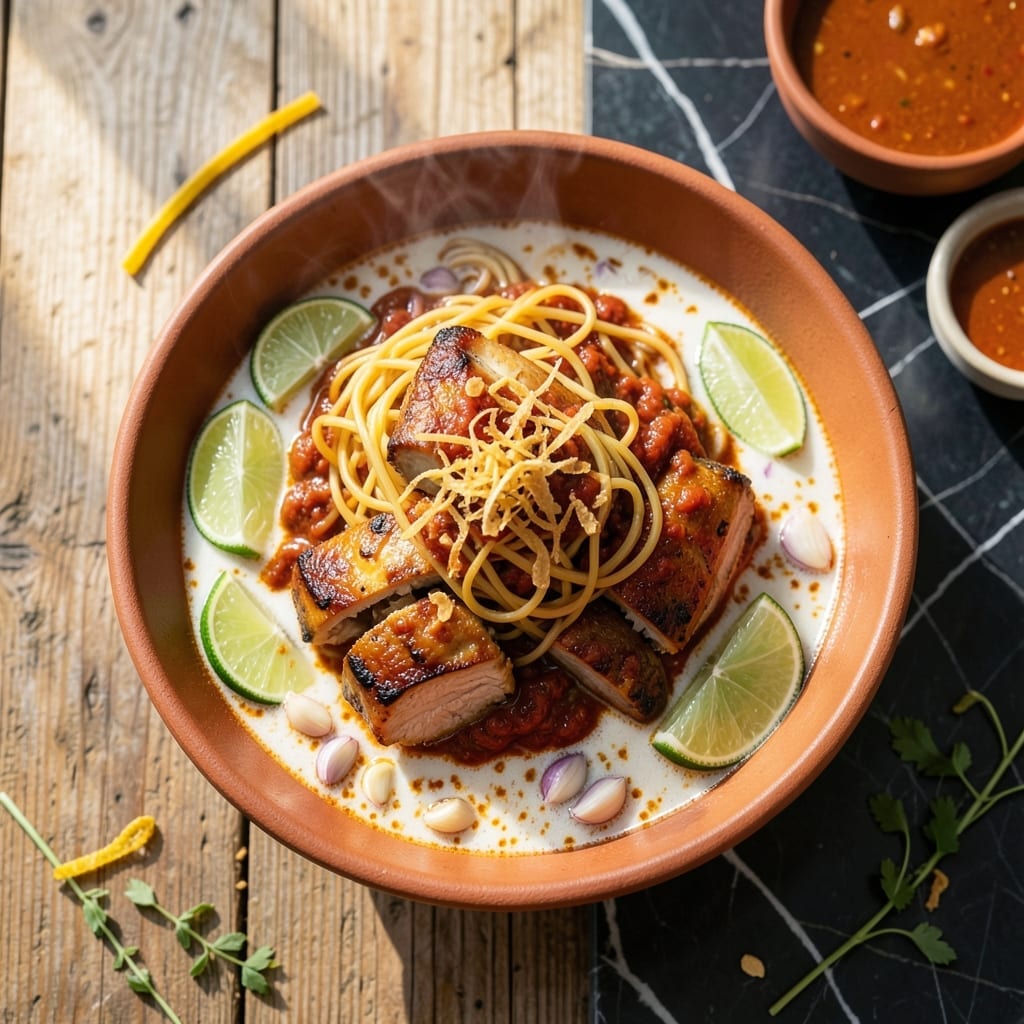
Northern Thai cuisine comes alive in this authentic khao soi, a dish that balances rich coconut curry with tender noodles. The red curry paste forms the flavor foundation, creating a complex broth that’s both creamy and aromatic.
I developed this recipe after years of testing to capture the true essence of Chiang Mai street food. The combination of crispy and soft egg noodles, protein, and fresh garnishes creates a symphony of textures.
You’ll achieve restaurant-quality results with this foolproof method. The curry paste infuses every bite with traditional Thai flavors, while the coconut milk adds a velvety finish.
This creation brings the vibrant street food experience to your kitchen. The first taste will transport you straight to Northern Thailand.
Ingredients for Khao Soi Recipe Red Curry Paste
Rich coconut milk and fragrant red curry paste build the soul of this Northern Thai classic.
| Ingredient | Amount | Notes |
|---|---|---|
| Red Curry Paste 🌶️ | ½ cup | Thai variety preferred |
| Coconut Milk 🥥 | 2 cups | Full-fat for creaminess |
| Egg Noodles 🍜 | 8 oz | Fresh or dried works |
| Chicken Thighs 🍗 | 1 lb | Boneless, skinless preferred |
| Shallots 🧅 | 2 whole | Thinly sliced for texture |
| Garlic Cloves 🧄 | 4 cloves | Minced for depth |
| Ginger Root 🌿 | 1 tbsp | Freshly grated for zing |
| Turmeric Powder 🟡 | 1 tsp | Ground, for color |
| Fish Sauce 🐟 | 2 tbsp | Thai brand recommended |
| Palm Sugar 🍚 | 1 tbsp | Or substitute brown sugar |
| Lime Juice 🍈 | 2 tbsp | Freshly squeezed for brightness |
| Fresh Cilantro 🌿 | ½ cup | Chopped, for garnish |
| Green Onions 🧅 | ½ cup | Sliced, for topping |
| Chili Oil 🌶️ | 1 tbsp | Optional, for heat |
| Vegetable Oil 🫒 | 2 tbsp | For frying noodles |
[recipe_ingredient_scaler]
The red curry paste is non-negotiable here. Maesri or Thai Kitchen brands are widely available at Whole Foods or Asian markets. Look for a deep red color and oil separation at the top—signs of quality. Coconut milk matters too—full-fat cans (not light) from Chaokoh or Native Forest give the creamiest broth. The egg noodles should be fresh if possible, but dried works in a pinch.
No chicken? Tofu or shrimp are traditional swaps. Out of shallots? Red onion at half the amount gets you close. Fish sauce is key for umami, but soy sauce in a 1:1 swap works if needed. Palm sugar can be tricky to find—brown sugar is an easy stand-in (the flavor difference is minimal). The lime juice can be bottled, but fresh tastes brighter.
This keeps 3-4 days in the fridge—broth thickens as it cools, so thin with water when reheating. Freeze portions for up to 3 months (noodles get mushy, so cook those fresh). Garnishes like cilantro and green onions are best added fresh each time.
Why You’ll Love This Recipe
- One Pot Magic: I dump everything in a single pot—coconut milk, red curry paste, chicken thighs—and let it simmer while I boil the noodles.
- Flavor Bomb: The curry paste and coconut milk create this rich, creamy base that soaks into the egg noodles. Honestly, I could drink the broth straight.
- Weeknight Lifesaver: Between us, this is my go-to when I need dinner on the table fast but still want something that feels special.
- Budget Stretcher: Chicken thighs stay juicy and cheap, and the noodles bulk it up so one batch feeds my family for two meals.
Step-by-Step Instructions for Northern Thai Coconut Curry Noodles
Here’s the method I’ve perfected for this comforting, aromatic dish.
Step 1: Sear and Cook the Chicken
Heat 2 tbsp vegetable oil in a large pot over medium-high heat. Add the 1 lb chicken thighs and cook for 5-6 minutes until golden brown on both sides and cooked through. You want a nice sear to lock in juices.
Remove the chicken and set aside. In the same pot, add the 2 whole shallots, 4 cloves garlic cloves, and 1 tbsp ginger root. Sauté for 2-3 minutes until fragrant and the shallots soften. This builds the flavor base for the curry.
Step 2: Build the Curry Base
Stir in the 0.5 cup red curry paste and 1 tsp turmeric powder into the pot. Cook for 1-2 minutes, stirring constantly, until the mixture becomes deeply aromatic and the oil starts to separate slightly at the edges.
Pour in the 2 cups coconut milk, stirring to combine. Bring to a gentle simmer. This is where the magic happens—the coconut milk mellows the curry paste while the spices infuse the liquid with complex flavors.
Step 3: Finish the Curry and Cook the Noodles
Return the chicken to the pot. Stir in the 2 tbsp fish sauce and 1 tbsp palm sugar. Simmer for 10-12 minutes until the chicken is tender and the flavors meld together. Taste and adjust seasoning if needed.
While the curry simmers, cook the 8 oz egg noodles according to package instructions until al dente. Drain and set aside. The noodles should be slightly firm as they’ll soften further when combined with the hot curry.
Step 4: Assemble and Garnish
Divide the cooked egg noodles among serving bowls. Ladle the hot curry over the noodles, ensuring each bowl gets plenty of chicken and sauce. The noodles should be generously coated with the rich, creamy curry.
Finish each bowl with a drizzle of 1 tbsp chili oil, a squeeze of 2 tbsp lime juice, and a generous sprinkle of 0.5 cup fresh cilantro and 0.5 cup green onions. Serve immediately while hot—the contrast of cool garnishes with the steaming curry is part of the experience.
Pro Tips For Making Khao Soi Recipe Red Curry Paste
- Bloom the Paste: Cook the red curry paste in oil for 2-3 minutes until fragrant before adding coconut milk—I learned this the hard way after my first few batches tasted flat and raw.
- Use Full-Fat Coconut: Skip the light coconut milk; the fat in full-fat carries the curry paste flavors and gives khao soi its signature richness.
- Don’t Overcook Noodles: Boil egg noodles just until al dente, then finish them in the hot curry broth for 1-2 minutes to soak up flavor without turning mushy.
- Shred Chicken Hot: Pull the chicken thighs straight from the curry to shred—they’ll absorb more sauce, and you won’t lose moisture waiting for them to cool.
Perfect Pairings for These Flavors
Thai Beverage Pairings
Thai iced tea is my top choice—its sweet, creamy orange flavor cuts through the rich coconut broth beautifully. I make mine with Ceylon tea and condensed milk for authenticity. The cold temperature refreshes your palate between bites. 💛
Crisp White Wines
A chilled Riesling from Washington state offers bright acidity that balances the curry’s creaminess. Look for Chateau Ste. Michelle—their off-dry version has just enough sweetness to complement the spice. Avoid oaky whites that compete with the flavors.
Light Beer Options
Singha or Chang beer—the Thai classics—are perfect here. Their crisp, slightly sweet profile cleanses your palate. For craft beer lovers, a German pilsner like St. Pauli Girl works wonderfully. I always keep a few bottles chilled for Thai nights.
Fresh Side Salads
A simple cucumber salad with rice vinegar and a touch of sugar provides cooling contrast. I use Persian cucumbers from the Portland farmers market for their thin skin and sweet flavor. The crunch is a nice textural break from the creamy noodles.
Pickled Vegetables
Quick-pickled radishes or carrots add a tangy crunch that cuts through the richness. I make mine with rice vinegar, 1 tsp sugar, and ½ tsp salt—they’re ready in 30 minutes. The pink color from radishes looks beautiful on the table.
These pairings turn your meal into a full Northern Thai experience, just like the street food stalls in Chiang Mai. 🌟
Nutrition Facts
Frequently Asked Questions
Can I use green curry paste instead?
You can, but the flavor profile differs. Green paste is brighter and more herbal, while red gives the traditional depth. Stick with red for authentic taste.
How do I make it vegetarian?
Swap chicken for tofu or mushrooms. Use vegetable broth and ensure your curry paste is fish-free. The coconut milk and noodles remain the same.
Why did my curry separate?
This happens if boiled too vigorously. Keep it at a gentle simmer and stir occasionally. If it splits, whisk in a splash of hot water to bring it back together.
Can I make this ahead?
Yes! Prepare the curry up to 2 days ahead. Store noodles separately to prevent mushiness. Reheat gently and assemble just before serving.

Trained in classic French technique but raised on slow-cooked ribs and spicy rubs, she blends culinary skill with smoke and soul.
- Recipe for Boneless Pork Chops in Cast Iron Skillet: Sear and Baste to Juicy Perfection - October 3, 2026
- Recipe for Boneless Cross Rib Roast: Slow-Roasted Beef with Herb Crust - October 3, 2026
- Hamburgers in Sauce Recipe Crock Pot: Slow-Cooked Savory Delight - October 3, 2026