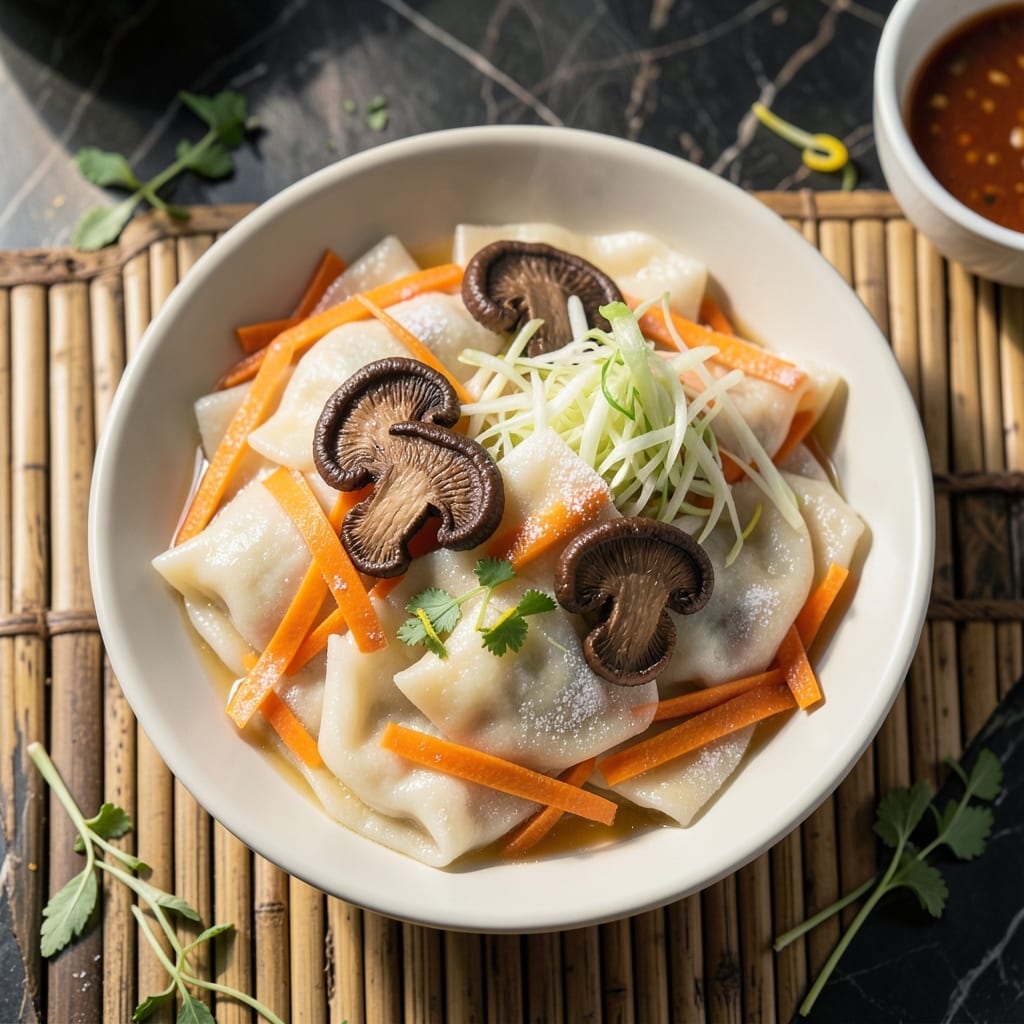
Achieving authentic Chinese dumplings with that signature chewy texture starts with the right foundation. Glutinous rice flour creates the perfect elastic wrapper that stretches without tearing.
This traditional method delivers dumplings with a satisfying bite and delicate structure. The flour’s unique properties ensure your fillings stay perfectly enclosed during cooking.
Ingredients for Glutinous Rice Flour Recipe Chinese
These traditional ingredients create authentic dumplings with perfect chewy texture and delicate structure.
| Ingredient | Amount | Notes |
|---|---|---|
| Glutinous Rice Flour 🌾 | 2 cups | Also called sweet rice flour |
| Tapioca Starch 🌿 | ¼ cup | For added elasticity |
| Warm Water 💧 | ¾ cup | Adjusted as needed for consistency |
| Napa Cabbage 🥬 | 2 cups | Finely shredded, for filling |
| Carrots 🥕 | 1 whole | Julienned, for filling |
| Shiitake Mushrooms 🍄 | ½ cup | Diced, rehydrated if dried |
| Tofu 🧈 | 8 oz | Firm, pressed and crumbled |
| Green Onions 🧅 | 4 whole | Thinly sliced, for filling |
| Fresh Ginger 🌿 | 1 tbsp | Finely grated, for filling |
| Soy Sauce 🫒 | 2 tbsp | Low-sodium preferred, for filling |
| Sesame Oil 🫒 | 1 tsp | Toasted, for filling flavor |
| Rice Vinegar 🍶 | 1 tbsp | For filling acidity balance |
| Salt 🧂 | ½ tsp | Divided for dough and filling |
| White Pepper 🌶️ | ¼ tsp | For authentic flavor profile |
| Neutral Oil 🫒 | 1 tbsp | For pan-frying dumplings |
[recipe_ingredient_scaler]
The glutinous rice flour is non-negotiable for authentic texture—look for Bob’s Red Mill or Mochiko brands at Whole Foods or Asian markets. Tapioca starch adds elasticity, but cornstarch in a pinch works too. For the filling, Napa cabbage and shiitake mushrooms are traditional; find them fresh at most Asian grocery stores or in the produce section of larger markets.
No Napa cabbage? Regular green cabbage works (just salt and drain well first). Cremini mushrooms can replace shiitake. For protein, tempeh or seitan hold up better than tofu if you prefer chewier filling. The soy sauce should be low-sodium to control seasoning—Tamari for gluten-free. Sesame oil is essential for authenticity; Kadoya is a reliable brand.
Store unopened glutinous rice flour in a cool, dark place for up to 12 months. Once opened, transfer to an airtight container—it keeps well for 6 months. The filling can be prepped 1 day ahead and refrigerated. Dumplings freeze beautifully for up to 3 months; cook from frozen, adding a few extra minutes to steaming time.
Why You’ll Love This Recipe
- One Bowl Wonder: I just mix the glutinous rice flour and tapioca starch with warm water—no fancy tools, no mess.
- Chewy & Fresh: That sticky, chewy texture with crisp napa cabbage and sweet carrots? I can’t get enough.
- Feeds a Crowd: I make a big batch for dim sum weekends and everyone dives in—even the picky eaters.
- Stretches for Days: Leftovers reheat beautifully, so I pack them for lunch all week without breaking the bank.
Step-by-Step Instructions for Chinese Glutinous Rice Flour Dumplings
Master the technique for achieving that signature chewy texture with these authentic preparation steps.
Step 1: Prepare the Dough with Proper Hydration
In a large mixing bowl, combine the 2 cups Glutinous Rice Flour and 0.25 cup Tapioca Starch. I whisk these together first to ensure even distribution of the tapioca starch, which adds the necessary elasticity to the dough.
Gradually pour in the 0.75 cup Warm Water while stirring with chopsticks or a wooden spoon. The water should be warm to activate the starches properly. You’ll notice the mixture transforming from a dry powder to a shaggy dough that begins to come together.
The dough is ready when it forms a cohesive mass that pulls away from the sides of the bowl. If it feels too dry, add warm water 1 teaspoon at a time until it reaches the proper consistency. Cover with a damp towel and let rest for 15-20 minutes.
Step 2: Create the Vegetable and Tofu Filling
In a large bowl, combine the 2 cups Napa Cabbage, 1 whole Carrots (julienned), 0.5 cup Shiitake Mushrooms, and 8 oz Tofu (pressed and crumbled). I like to press the tofu between paper towels for 15 minutes to remove excess moisture before crumbling.
Add the 4 whole Green Onions (thinly sliced), 1 tbsp Fresh Ginger (finely grated), 2 tbsp Soy Sauce, 1 tsp Sesame Oil, 1 tbsp Rice Vinegar, 0.25 tsp White Pepper, and 0.25 tsp Salt. Mix thoroughly to distribute all the flavors evenly throughout the filling.
The filling should be moist but not watery. If it seems too wet, add a small amount of additional tofu to absorb the excess liquid. Let the filling sit for 10 minutes to allow the flavors to meld together.
Step 3: Shape and Fill the Dumplings
Divide the rested dough into 4 equal portions and roll each into a log about 1 inch in diameter. Cut each log into 8-10 pieces, then roll each piece into a ball. Flatten each ball in your palm and use a rolling pin to create thin circles, about 3 inches in diameter.
Place a generous 1 tablespoon of filling in the center of each wrapper. To fold, pleat the edges while pinching them together, working your way around the dumpling in a semicircular motion. The pleats should be evenly spaced for both visual appeal and to ensure a tight seal that prevents filling from leaking during cooking.
As you work, keep the unused dough and shaped dumplings covered with a damp towel to prevent them from drying out. This is especially important with glutinous rice flour dough, which can become brittle if exposed to air for too long.
Step 4: Cook the Dumplings to Perfection
Heat the 1 tbsp Neutral Oil in a large non-stick skillet over medium-high heat. Arrange the dumplings in a single layer, not touching each other. Cook for 2-3 minutes until the bottoms are golden brown and crisp.
Carefully add ½ cup water to the pan and immediately cover with a tight-fitting lid. Reduce the heat to medium and let steam for 8-10 minutes until the water has evaporated and the dumpling wrappers are translucent and fully cooked through.
Remove the lid and continue cooking for another 1-2 minutes to crisp the bottoms again. Serve immediately with the browned side up, ensuring each dumpling has that characteristic crispy bottom and tender, chewy wrapper.
Pro Tips For Making Glutinous Rice Flour Recipe Chinese
- Steam the Dough Longer: I learned this the hard way—glutinous rice flour dough needs a solid 15-20 minutes of steaming to lose that raw, starchy taste. Anything less and your dumplings will taste like undercooked paste.
- Salt the Cabbage First: Sounds weird, but it works: toss your shredded napa cabbage with ½ teaspoon of salt and let it sit for 10 minutes before mixing. Drains excess water so your fillings stay crisp, not soggy.
- Skip Cold Water: Warm water is non-negotiable for the dough—cold water makes it lumpy and hard to knead. Aim for about 110°F, like warm bathwater, for smooth, elastic results.
- Grate Your Carrots: After burning three batches of chunky carrots in the filling, I finally figured out: fine grating guarantees even cooking and a consistent texture in every bite. No one wants a crunchy surprise.
Regional Styles of These Flavors
Northern Chinese Jiaozi
In the north, dumplings are often larger with thicker wrappers. I use 1.5 cups glutinous rice flour to 0.5 cup tapioca starch ratio for extra chew. The filling includes more cabbage and less tofu for heartier texture. These are typically boiled rather than pan-fried. 🗺️
Southern Chinese Shumai
Southern versions are smaller, open-faced dumplings. I roll the dough to 2-inch circles and pleat just the top edge. The filling gets extra shiitake mushrooms and 1 tbsp rice vinegar for tang. These are steamed in bamboo baskets for 12-15 minutes.
Sichuan Spicy Wontons
For heat lovers, I add 1 tsp chili oil and 0.5 tsp Sichuan peppercorns to the filling. The wrappers are thinner—rolled to 1/8 inch—and boiled in spiced broth. Serve with extra chili oil drizzled on top.
Cantonese Har Gow
These translucent dumplings use 1 cup glutinous rice flour to 0.75 cup tapioca starch for maximum elasticity. I steam them on cabbage leaves to prevent sticking. The filling stays classic with Napa cabbage and green onions.
Shanghai Soup Dumplings
For xiaolongbao, I make a gelled broth center with 1 cup vegetable stock and 1 tsp agar-agar. The wrappers are rolled paper-thin. These require precise pleating to hold the soup inside during steaming. 💪
Nutrition Facts
Frequently Asked Questions
Can I substitute regular rice flour?
No, regular rice flour lacks the sticky properties needed. Glutinous rice flour is essential for that chewy texture.
How do I prevent the dough from cracking?
Keep it covered with a damp towel while working. If it dries out, knead in a few drops of warm water.
Can I freeze the dumplings before cooking?
Yes! Place uncooked dumplings on a tray, freeze solid, then transfer to a bag. Cook from frozen, adding 2-3 minutes to steaming time.
What if my filling is too wet?
Add more crumbled tofu or let it sit in a strainer for 10 minutes to drain excess liquid.

Trained in classic French technique but raised on slow-cooked ribs and spicy rubs, she blends culinary skill with smoke and soul.
- Recipe for Boneless Pork Chops in Cast Iron Skillet: Sear and Baste to Juicy Perfection - October 3, 2026
- Recipe for Boneless Cross Rib Roast: Slow-Roasted Beef with Herb Crust - October 3, 2026
- Hamburgers in Sauce Recipe Crock Pot: Slow-Cooked Savory Delight - October 3, 2026