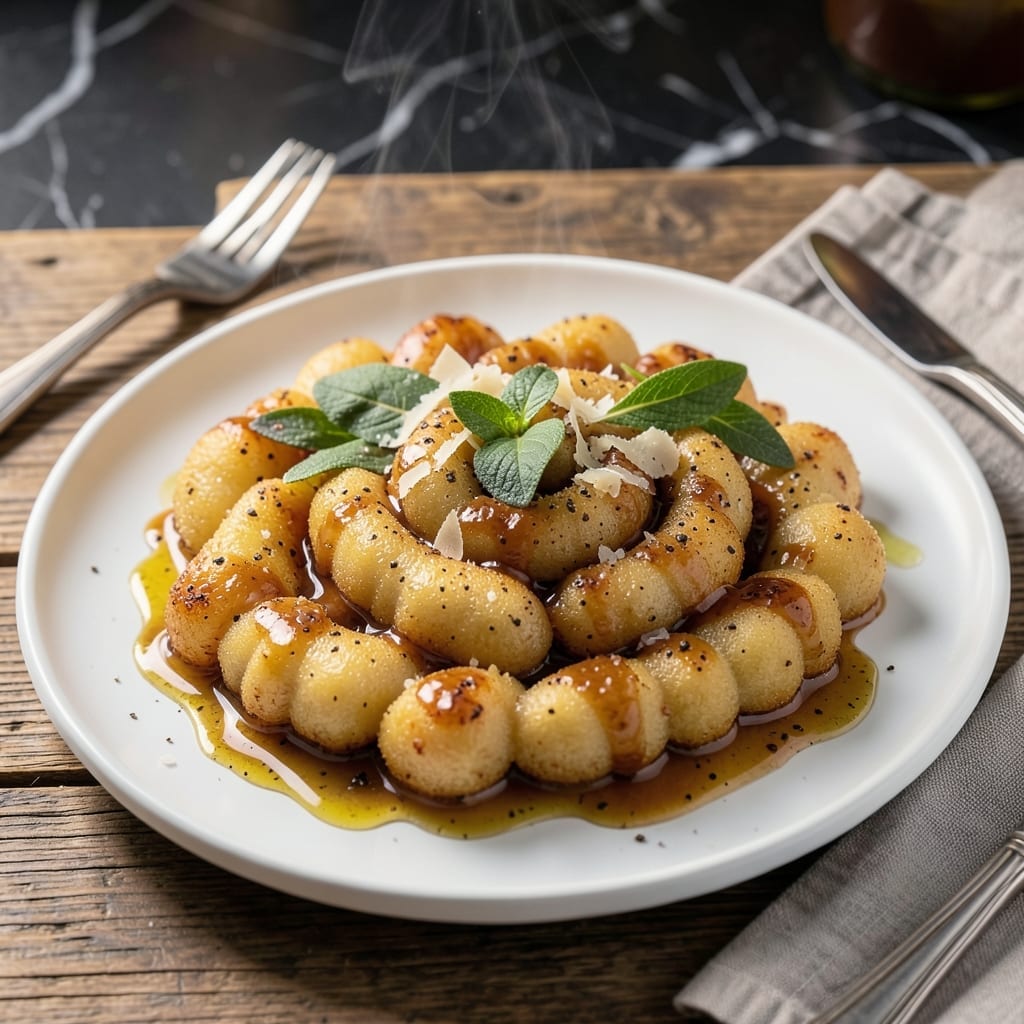
There’s a science to perfect gnocchi, and russet potatoes are the foundation for achieving that pillowy soft texture. I learned this working under a chef in Charleston who insisted on this specific variety for its low moisture content.
The process begins with baking, not boiling, the potatoes to prevent excess water from making the dough gummy. When mashed while still warm, they create a light, airy base that results in dumplings with just the right bite.
Each piece should be gently shaped with a fork to create ridges that catch sauce beautifully. When cooked, they transform into delicate, rustic charmers that melt in your mouth.
Serve these with simple brown butter and sage for a dish that feels both comforting and elegant. The texture is what makes them unforgettable.
Ingredients for Gnocchi Recipe Russet Potatoes
Russet potatoes and a handful of pantry staples make these pillowy dumplings a reality.
| Ingredient | Amount | Notes |
|---|---|---|
| Russet Potatoes 🥔 | 2 lb | Baked, not boiled, for low moisture |
| All-Purpose Flour 🌾 | 1 ½ cups | Plus extra for dusting |
| Large Egg 🥚 | 1 whole | Room temperature, lightly beaten |
| Fine Sea Salt 🧂 | 1 tsp | Adjust to taste |
| Freshly Ground Black Pepper 🌶️ | ¼ tsp | For seasoning dough |
| Fresh Sage Leaves 🌿 | ¼ cup | Chopped, for brown butter |
| Unsalted Butter 🧈 | ½ cup | For brown butter sauce |
| Parmesan Cheese 🧀 | ½ cup | Freshly grated, for serving |
| Olive Oil 🫒 | 1 tbsp | For cooking gnocchi |
| Nutmeg 🌰 | 0.125 tsp | Freshly grated for depth |
[recipe_ingredient_scaler]
The russets are non-negotiable here. Look for firm, dry potatoes with no green spots at the grocery store—Whole Foods or your local farmers market usually have the best selection. Baking them whole in their skins keeps moisture out, which is key for that light, airy texture. I learned this trick from a chef in Charleston who swore by it (and made the best gnocchi I’ve ever had).
No fresh sage? Dried sage at half the amount works, but fresh has that bright, herbal pop. Out of Parmesan? Pecorino Romano adds a sharper kick. If you’re avoiding dairy, nutritional yeast gives a cheesy flavor without the cheese. The egg helps bind, but you can skip it and add a bit more flour if needed (just don’t overwork the dough).
Fresh gnocchi are best cooked right away, but you can freeze them on a tray first (so they don’t stick) and store in bags for up to 2 months. Cook from frozen—no thawing needed. Leftover brown butter? Drizzle it on literally anything (trust me on this one).
Why You’ll Love This Recipe
- Minimal Ingredients: I love that it only needs russet potatoes, flour, an egg, and basic seasoning—no fancy pantry items.
- Pillowy Perfection: The russets make these gnocchi light yet tender, with just the right chew from the egg and flour.
- Freezer Friendly: I double the batch and freeze half for lazy nights—boil straight from frozen and they’re just as good.
- Budget Stretcher: A 5-pound bag of russets and a cup of flour feeds four for pennies, and honestly, it tastes like a restaurant dish.
Step-by-Step Instructions for Gnocchi with Russet Potatoes
These simple steps transform humble ingredients into melt-in-your-mouth dumplings with rustic charm.
Step 1: Bake and Rice the Russet Potatoes
Preheat your oven to 400°F. Pierce the 2 lb Russet Potatoes all over with a fork and bake directly on the oven rack for 45-60 minutes until fork-tender. Baking, not boiling, keeps the moisture low for fluffier gnocchi.
When they’re cool enough to handle, cut them in half and scoop out the flesh. Press it through a potato ricer or fine mesh sieve onto a clean surface. Let the riced potatoes cool completely—they must be room temperature before mixing to prevent a gummy texture.
Step 2: Form the Gnocchi Dough
On your work surface, spread out the riced potatoes and sprinkle with the 1 tsp Fine Sea Salt, 0.125 tsp Nutmeg, and 0.25 tsp Freshly Ground Black Pepper. Create a well in the center and add the 1 whole Large Egg and 1.5 cups All-Purpose Flour.
Gently mix everything together with your hands, kneading just until a soft dough forms—overworking develops gluten and makes tough gnocchi. The dough should feel slightly sticky but hold together when pressed. If it’s too sticky, dust with a bit more flour from your reserved supply.
Step 3: Shape and Cut the Dumplings
Divide the dough into 4 equal portions and roll each into a ¾-inch thick rope. Cut each rope into 1-inch pieces. You can leave them as-is or roll each piece over a fork to create ridges that will hold sauce better.
Place the shaped gnocchi on a floured baking sheet, making sure they don’t touch each other to prevent sticking. At this point, you can cook them immediately or freeze for up to 1 month if making ahead.
Step 4: Cook the Gnocchi and Make Brown Butter Sage Sauce
Bring a large pot of salted water to a boil. Add the gnocchi and cook for 2-3 minutes until they float to the surface. Remove with a slotted spoon and set aside.
In a large skillet, melt the 0.5 cup Unsalted Butter over medium heat. Add the 0.25 cup Fresh Sage Leaves and cook for 3-4 minutes until the butter turns golden brown and the sage becomes crisp. The butter should have a nutty aroma and the sage should be deep green and slightly crisp.
Step 5: Finish and Serve
Add the cooked gnocchi to the brown butter sage sauce and toss gently to coat. Drizzle with the 1 tbsp Olive Oil and cook for 1-2 minutes until the gnocchi are lightly golden in spots.
Transfer to serving plates and top generously with the 0.5 cup Parmesan Cheese. Serve immediately while hot—the gnocchi should be pillowy soft on the inside with a slight bite on the outside, perfectly complementing the rich, aromatic brown butter sage sauce.
Pro Tips For Making Gnocchi Recipe Russet Potatoes
- Bake the Potatoes: Skip boiling and bake your russets at 400°F until fork-tender—this keeps the starch dry and prevents gummy gnocchi. I learned this the hard way after too many dense, chewy batches from wet potatoes.
- Rice While Hot: Push the baked potatoes through a ricer while they’re still hot, then spread them on a tray to cool for 5 minutes. This prevents the dough from turning gluey as it sits.
- Less Flour, More Patience: Add flour gradually—start with 1 cup for 2 lbs of potatoes—and only enough until the dough just holds together. Overdo it and you’ll end up with tough, heavy gnocchi instead of light, pillowy ones.
- Test One First: Drop a single gnocchi in boiling water before shaping the whole batch. If it falls apart, knead in a bit more flour; if it’s dense, work the dough less next time. Saves you from ruining the entire pot.
Best Sauces and Condiments for This gnocchi recipe russet potatoes
Classic Brown Butter Sage
The traditional pairing is brown butter with fresh sage—it’s what I use at home. Melt ½ cup unsalted butter over medium heat until nutty and golden, then add ¼ cup chopped sage leaves. The crispy sage adds texture while the butter coats every ridge.
Rich Tomato Basil
For a heartier option, simmer 2 cups San Marzano tomatoes with 3 minced garlic cloves and ½ cup fresh basil. The acidity cuts through the richness beautifully. David, my taste-tester, always requests this version. 🌿
Creamy Gorgonzola
Melt ½ cup heavy cream with 1 cup crumbled Gorgonzola for a decadent sauce. The sharp cheese contrasts with the soft gnocchi perfectly. I add a pinch of nutmeg to complement the potatoes.
Light Lemon Garlic
Zest 1 lemon and juice ½ lemon, then combine with 3 tbsp olive oil and 2 minced garlic cloves. This bright, fresh sauce lets the gnocchi shine. It’s my go-to for summer.
Pesto Perfection
Blend 2 cups fresh basil, ¼ cup pine nuts, and ½ cup Parmesan with ⅓ cup olive oil. The herby pesto clings to the ridges beautifully. I use Central Market pine nuts—they’re always fresh. 💛
Nutrition Facts
Frequently Asked Questions
Why bake the potatoes instead of boiling?
Baking keeps moisture content low, which is key for light, fluffy gnocchi. Boiling adds water to the potatoes, making the dough gummy. The 400°F oven method gives you the perfect dry texture.
Can I make these without a potato ricer?
A ricer gives the smoothest texture, but a fine mesh sieve works too. Avoid a food processor—it makes the potatoes gluey. Push the flesh through with a spoon for best results.
How do I know when they’re done cooking?
They’ll float to the surface in 2-3 minutes when ready. Let them cook for 30 seconds after floating, then remove with a slotted spoon. Overcooking makes them mushy.
Can I freeze gnocchi for later use?
Yes! Freeze uncooked gnocchi on a tray first, then transfer to bags for up to 2 months. Cook from frozen—no thawing needed. This prevents sticking and maintains texture.

Trained in classic French technique but raised on slow-cooked ribs and spicy rubs, she blends culinary skill with smoke and soul.
- Recipe for Boneless Pork Chops in Cast Iron Skillet: Sear and Baste to Juicy Perfection - October 3, 2026
- Recipe for Boneless Cross Rib Roast: Slow-Roasted Beef with Herb Crust - October 3, 2026
- Hamburgers in Sauce Recipe Crock Pot: Slow-Cooked Savory Delight - October 3, 2026