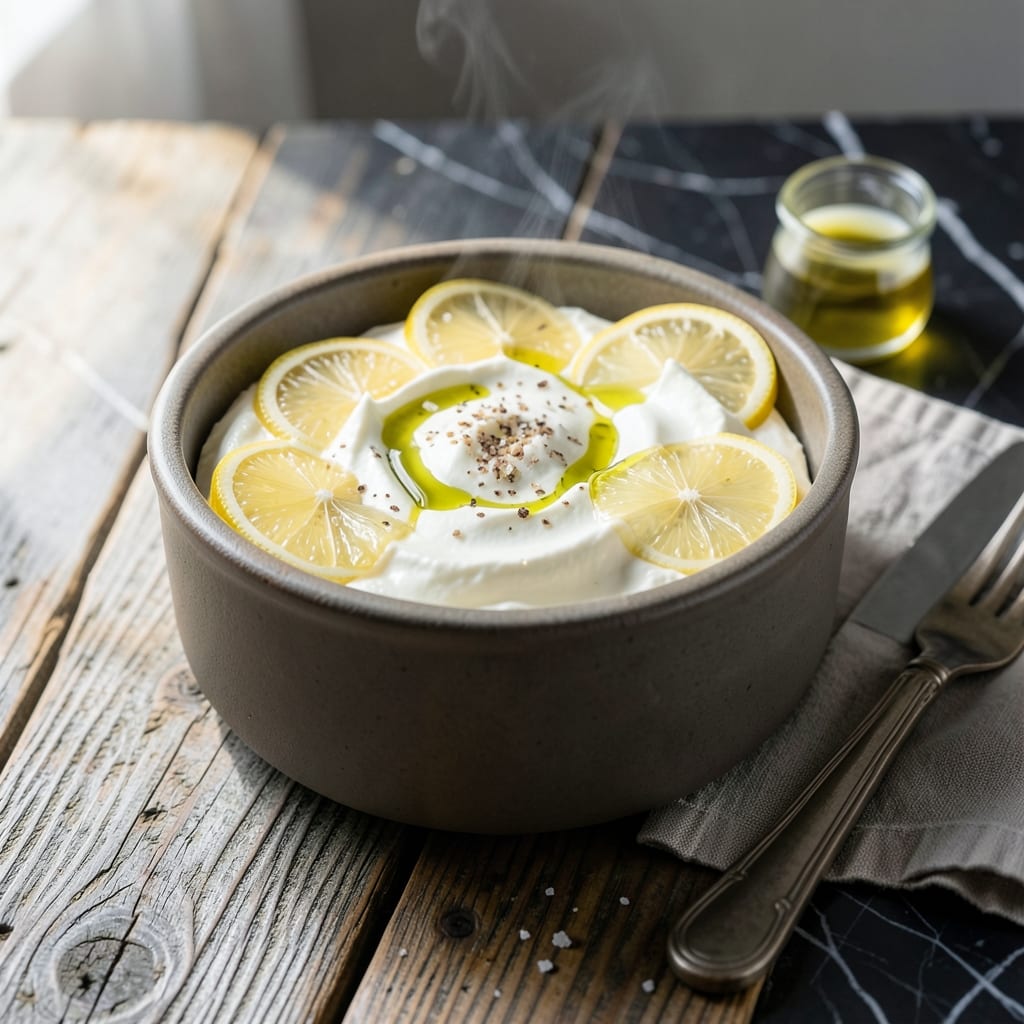
Making goat cream cheese at home delivers a fresh, tangy spread that store-bought versions simply can’t match. I developed this recipe after tasting artisanal versions at local markets and realizing how much better homemade could be.
The process transforms fresh goat milk into a smooth, spreadable cheese with minimal equipment. Culturing the milk with mesophilic starter creates that signature tang, while proper draining ensures the perfect creamy texture.
What results is a versatile cheese base ready for sweet or savory applications. The clean, bright flavor works beautifully with herbs, honey, or simply on fresh bread.
This method produces consistent results every time, with a texture between soft and firm that holds its shape when sliced but spreads easily.
Ingredients for Goat Cream Cheese
Fresh goat milk and simple culturing agents create this artisanal spread with bright tangy flavor.
| Ingredient | Amount | Notes |
|---|---|---|
| Fresh Goat Milk 🥛 | 1 cup | Raw or pasteurized, high quality |
| Mesophilic Starter Culture 🧫 | 0.125 tsp | For culturing milk |
| Sea Salt 🧂 | ½ tsp | Fine grain preferred |
| Lemon Juice 🍋 | 1 tbsp | Freshly squeezed for tang |
| Rennet 🧪 | ¼ tsp | Vegetarian rennet required |
| Heavy Cream 🥛 | ¼ cup | For creaminess, optional |
| Chives 🌿 | 2 tbsp | Finely chopped for flavor |
| Dill 🌿 | 1 tbsp | Fresh, chopped finely |
[recipe_ingredient_scaler]
Sourcing high-quality fresh goat milk is essential—look for local dairy farms or specialty grocers like Whole Foods. The mesophilic starter culture can be found at home brew shops or online retailers specializing in cheese-making supplies. For vegetarian rennet, brands like New England Cheesemaking offer reliable options that ensure proper coagulation without animal-derived enzymes.
No fresh goat milk? Pasteurized goat milk from the store works fine (avoid ultra-pasteurized though). For the culture, plain yogurt with live cultures can substitute in a pinch, though results may vary. The cream is optional but adds richness—skip it for a lighter texture. Herbs like thyme or basil can replace chives or dill if preferred.
Store the finished cheese in an airtight container in the fridge for up to 1 week. For longer storage, freeze in portions for up to 3 months. The flavor deepens slightly with age, making it even more versatile for both sweet and savory uses.
Why You’ll Love This Recipe
- Minimal Steps: I just heat the milk, add the culture, and let it do its thing—no fancy equipment.
- Tangy Perfection: That fresh goat milk gives it a bright, creamy tang the store-bought stuff can’t touch.
- Spreads Everywhere: Honestly, it’s my secret for bagels, dips, or even stuffing mushrooms.
- Stretches for Days: One batch lasts me a week in the fridge, and it’s way cheaper than buying it pre-made.
Step-by-Step Instructions for Goat Cream Cheese
Master the culturing process with precision and patience for a spread with ideal texture and tang.
Step 1: Heat and Culture the Milk
Pour the 1 cup Fresh Goat Milk into a clean stainless steel pot. Heat it slowly over low heat until it reaches 86°F—this is the optimal temperature for culturing. Use a dairy thermometer for accuracy; overheating will kill the beneficial bacteria.
Once at temperature, remove from heat and sprinkle the 0.125 tsp Mesophilic Starter Culture over the surface. Let it hydrate for 2 minutes, then stir gently with a clean spoon until fully dissolved. Cover and maintain at 86°F for 12 hours to allow the cultures to develop.
Step 2: Add Rennet and Set the Curd
After the culturing period, warm the milk to 88°F if it has cooled. Stir in the 0.25 tsp Rennet diluted in 2 tablespoons of cool water. Use a gentle, figure-eight motion for 30 seconds to distribute evenly without breaking the forming curds.
Cover and let it rest undisturbed for 6-8 hours at room temperature, or until the curd has set firmly—it should resemble a soft custard with a clean break when tested with a knife. Avoid vibrations or movement during this time, as it can disrupt the curd formation.
Step 3: Drain and Season the Curds
Line a colander with butter muslin or cheesecloth and place it over a bowl. Gently ladle the curds into the cloth, allowing the whey to drain naturally for 1 hour. Do not press or squeeze the curds; this preserves the creamy texture.
Once drained, transfer the curds to a bowl. Stir in the 1 tbsp Lemon Juice, 0.5 tsp Sea Salt, and 0.25 cup Heavy Cream until smooth and well combined. The mixture should be thick but spreadable. Taste and adjust salt if needed.
Step 4: Incorporate Herbs and Chill
Fold in the 2 tbsp Chives and 1 tbsp Dill gently to avoid overmixing. These herbs add a fresh, aromatic finish to the cheese. Ensure they are evenly distributed for consistent flavor in every bite.
Transfer the mixture to a clean container, cover, and refrigerate for at least 4 hours (overnight is ideal). This chilling period allows the flavors to meld and the texture to firm up. The finished cheese will be tangy, creamy, and ready to spread on toast or use in dips.
Pro Tips For Making Goat Cream Cheese
- Heat Milk Slowly: Warm the goat milk to exactly 86°F before adding the culture—any hotter kills the bacteria, and colder means it won’t set properly. I learned this the hard way after a few failed batches.
- Use Fresh Rennet: Old rennet loses potency, so check the expiration date and store it in the fridge. After wasting milk on weak sets, I now buy small batches and use them within a month.
- Drain Thoroughly: Let the curds hang in cheesecloth for at least 12 hours to remove all the whey. Sounds tedious, but skipping this leaves your cheese watery and bland.
- Add Salt Last: Mix in the sea salt only after the cheese has fully drained and cooled. Adding it earlier can interfere with the curd formation—I was skeptical until I tried it.
Serving Suggestions for This Dish
Spreadable Appetizers
Serve this cheese as a dip with crudités like cucumber, carrot sticks, or bell pepper strips. I love pairing it with warm pita bread or crackers for scooping. The tangy flavor cuts through the richness of the cream.
Breakfast Delight
Spread it on toasted sourdough or bagels with a drizzle of honey and a sprinkle of black pepper. For a protein boost, add smoked salmon or a poached egg on top. This became my go-to weekend brunch after testing it with my Sunday roast crowd. 💛
Salad Enhancer
Use it as a creamy base for salad dressings by thinning with 2 tbsp olive oil and 1 tbsp vinegar. It also works beautifully dolloped on top of roasted beet salads or mixed into potato salad for extra tang.
Pasta Partner
Toss 1 cup of this cheese with hot pasta, reserved pasta water, and fresh herbs for a quick, creamy sauce. It pairs especially well with whole wheat penne and sun-dried tomatoes. Honestly, it’s a game-changer for weeknight dinners.
Dessert Twist
Mix with powdered sugar and vanilla for a sweet spread on croissants or biscuits. Alternatively, swirl it into cheesecake batter for a tangy, goat cheese twist. I test this with my farmer’s market berries every summer. ✨
Nutrition Facts
Frequently Asked Questions
Can I use store-bought goat milk?
Yes, pasteurized goat milk works well, but avoid ultra-pasteurized as it won’t culture properly. Raw milk gives the best flavor but requires extra hygiene precautions. Always check the label for pasteurization method.
What if my curds don’t set?
This usually happens if the milk was too cold or old. Try again with fresh milk and ensure it reaches 88°F before adding rennet. Give it the full 8 hours—patience is key with cheese-making.
How do I adjust the tanginess?
For more tang, extend the culturing time to 18-24 hours. For milder flavor, reduce to 8-10 hours. The lemon juice also adds tang, so adjust that to taste.
Can I skip the heavy cream?
The cream adds richness, but omitting it yields a lighter, slightly firmer cheese. Just reduce draining time to 30 minutes to retain creaminess.

Trained in classic French technique but raised on slow-cooked ribs and spicy rubs, she blends culinary skill with smoke and soul.
- Recipe for Boneless Pork Chops in Cast Iron Skillet: Sear and Baste to Juicy Perfection - October 3, 2026
- Recipe for Boneless Cross Rib Roast: Slow-Roasted Beef with Herb Crust - October 3, 2026
- Hamburgers in Sauce Recipe Crock Pot: Slow-Cooked Savory Delight - October 3, 2026