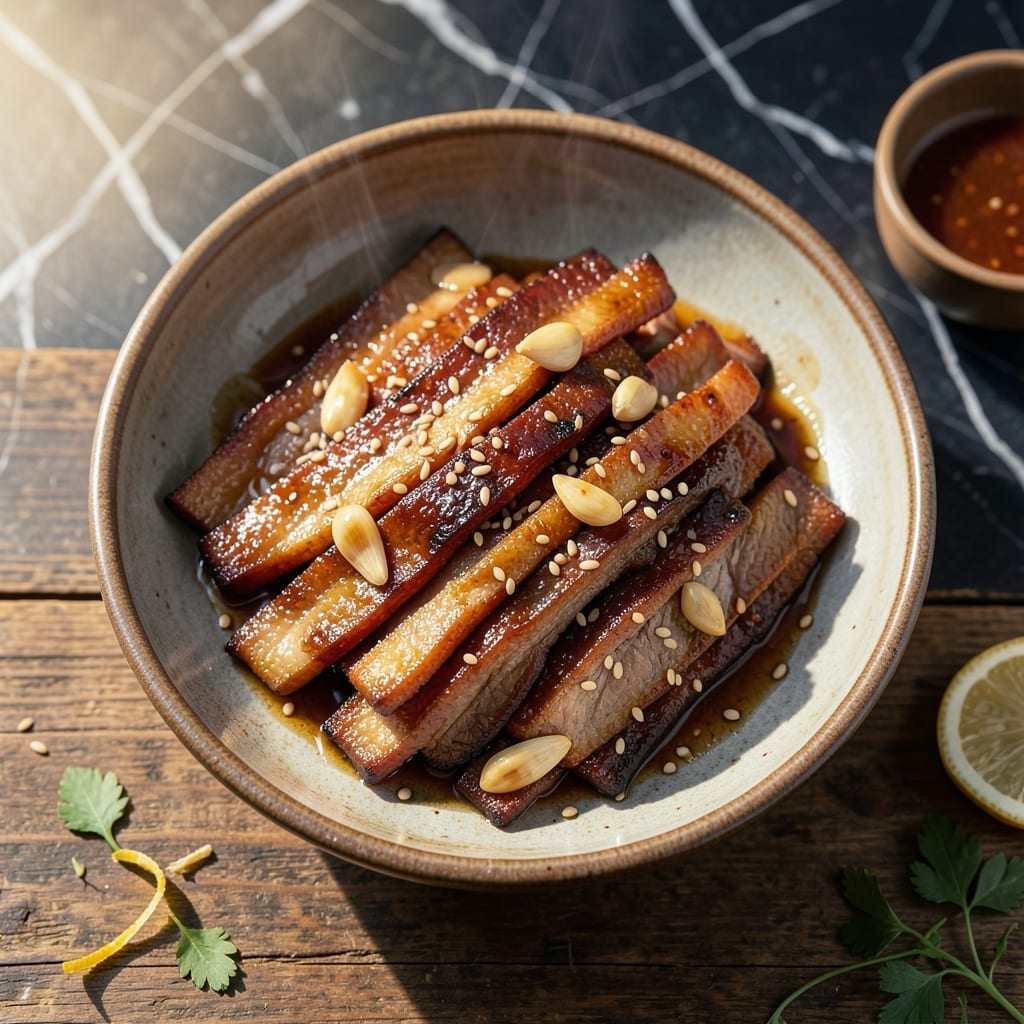
This recipe transforms thin pork slices into sweet and savory jerky with authentic Korean barbecue flavors. The marinade combines soy sauce, brown sugar, and garlic for a perfect balance.
After marinating, the meat dries into tender, caramelized strips with a slightly chewy texture. This method delivers restaurant-quality results with simple ingredients and precise technique.
Ingredients for Golden Island Korean Barbecue Recipe Pork Jerky
Thin pork slices marinate in a bold blend of soy, sugar, and spices. Simple ingredients, big flavor.
| Ingredient | Amount | Notes |
|---|---|---|
| Pork Shoulder 🥩 | 1 ½ lb | Thinly sliced against grain |
| Soy Sauce 🫒 | ½ cup | Low-sodium preferred |
| Brown Sugar 🍚 | ⅓ cup | Packed, light or dark |
| Garlic Cloves 🧄 | 6 cloves | Minced finely |
| Sesame Oil 🫒 | 1 tbsp | Toasted for depth |
| Rice Vinegar 💧 | 2 tbsp | Balances sweetness |
| Gochujang 🌶️ | 2 tbsp | Korean chili paste |
| Fresh Ginger 🌿 | 1 tbsp | Grated or minced |
| Black Pepper 🌶️ | 1 tsp | Freshly ground preferred |
| Sesame Seeds 🌾 | 1 tbsp | Toasted for garnish |
| Green Onions 🧅 | 3 whole | Thinly sliced for topping |
| Red Pepper Flakes 🌶️ | ½ tsp | Adjust for heat preference |
[recipe_ingredient_scaler]
The pork shoulder is non-negotiable here. Look for well-marbled cuts at Korean markets or your butcher—ask them to slice it thinly against the grain for you. This cut stays tender during drying. Costco also carries pre-sliced pork for bulgogi that works perfectly. Avoid lean cuts like tenderloin—they’ll turn out dry and tough.
No gochujang? Sriracha mixed with a teaspoon of miso gets you in the ballpark (not identical but close). Brown sugar can be swapped for coconut sugar one-for-one. If you’re avoiding gluten, tamari instead of soy sauce. The rice vinegar is key for balance—apple cider vinegar works too but has a sharper bite. Fresh ginger is ideal, but ground ginger at a quarter of the amount is fine.
Marinated pork keeps 2-3 days in the fridge before drying. The finished jerky stores 2 weeks at room temperature in airtight containers, or 3 months frozen. Slice extra pork and freeze it raw for later batches—thaw in the fridge overnight before marinating.
Why You’ll Love This Recipe
- Minimal Effort: I just mix pork shoulder with soy sauce, brown sugar, and garlic, then let the oven do the work.
- Sweet-Savory Magic: The brown sugar caramelizes with the soy and garlic for that sticky, umami-packed bite.
- Snack or Meal: I pack it for lunch, serve it at parties, or eat it straight from the batch—no judgment.
- Budget Stretcher: Pork shoulder is cheap, and this recipe turns it into something I’d pay premium for at a store.
Step-by-Step Instructions for Sweet and Savory Korean Pork Jerky
Master the marinade timing and drying process for perfectly textured jerky with balanced flavors.
Step 1: Slice and Prepare the Pork Shoulder
Begin by partially freezing the 1.5 lb Pork Shoulder for 30-45 minutes to firm it up for easier slicing. Using a sharp knife, cut the meat against the grain into ¼-inch thick strips. This cross-grain slicing ensures the jerky remains tender after drying.
As you work, trim away any large chunks of fat or connective tissue—these won’t dry properly and can cause the jerky to spoil faster. I prefer strips that are 1-2 inches wide for even drying and easy handling. Place the sliced pork in a large bowl and set aside while you prepare the marinade.
Step 2: Create the Korean-Inspired Marinade
In a separate bowl, whisk together the 0.5 cup Soy Sauce, 0.33 cup Brown Sugar, minced 6 cloves Garlic Cloves, 1 tbsp Sesame Oil, 2 tbsp Rice Vinegar, 2 tbsp Gochujang, 1 tbsp Fresh Ginger, and 1 tsp Black Pepper until the brown sugar fully dissolves. The mixture should be thick but pourable, with a deep reddish-brown hue from the gochujang.
Pour this marinade over the sliced pork shoulder, ensuring each strip is thoroughly coated. I use my hands for this step—massage the marinade into the meat for 2-3 minutes to maximize flavor penetration. Cover the bowl and refrigerate for at least 4 hours, though I recommend 8-12 hours for the most flavorful result.
Step 3: Dry the Jerky to Perfection
After marinating, drain the pork strips in a colander, reserving the marinade for basting if desired. Pat the strips dry with paper towels—this helps them dry faster and prevents sticking. Arrange the strips on dehydrator trays or oven racks, ensuring they don’t touch each other.
For dehydrator use, set to 160°F and dry for 4-6 hours, rotating trays halfway through. For oven drying, preheat to the lowest setting (ideally 170°F or less) and prop the door open slightly with a wooden spoon for airflow. The jerky is done when it’s dry to the touch but still pliable—it should bend without snapping but not feel moist.
Step 4: Finish and Store the Jerky
Once dried, transfer the jerky to a wire rack and let it cool completely at room temperature for 30 minutes. This cooling period allows any residual moisture to evaporate, ensuring proper storage.
For serving, sprinkle with 1 tbsp Sesame Seeds and thinly sliced 3 whole Green Onions for freshness and crunch. Add a pinch of 0.5 tsp Red Pepper Flakes if you desire extra heat. Store the completely cooled jerky in an airtight container with a paper towel to absorb any moisture. It will keep at room temperature for 1 week or in the refrigerator for 2-3 weeks.
Pro Tips For Making Golden Island Korean Barbecue Recipe Pork Jerky
- Slice Against the Grain: Cut the pork shoulder into thin strips against the grain for a more tender jerky—this makes it easier to chew and helps the marinade penetrate deeper.
- Marinate Overnight: Let the pork sit in the soy sauce, brown sugar, and garlic mixture for at least 12 hours. I learned this the hard way—skipping it leaves the jerky tough and underseasoned.
- Pat Dry Before Drying: After marinating, blot the pork strips with a paper towel to remove excess moisture. This prevents steaming instead of drying and gives you that perfect chewy texture.
- Low and Slow Drying: Use the lowest oven setting (around 175°F) and prop the door open slightly. After burning my first batch at high heat, I now know slow drying keeps the jerky from turning brittle.
Storing and Reheating Leftovers
Room Temperature Storage
Once completely cooled, store this jerky in an airtight container with a paper towel to absorb moisture. It stays fresh at room temp for up to 1 week. I use Mason jars for visibility and freshness. 💡
Refrigerator Storage
For longer keeping, refrigerate in the same airtight container setup. The jerky maintains quality for 2-3 weeks in the fridge. The flavors actually deepen over time as the marinade continues to work its magic.
Freezer Storage
For bulk batches, freeze in ziplock freezer bags with parchment between layers to prevent sticking. It keeps for up to 3 months without texture loss. I portion into 1-cup servings for easy grab-and-go snacks. ❄️
Rehydrating for Cooking
To use in stir-fries or soups, soak in warm water for 15 minutes to soften. The jerky plumps up beautifully and adds intense umami to dishes. This technique works especially well for stews.
Reviving Dry Jerky
If pieces become too dry, place them in a sealed container with a slice of apple or bread overnight. The moisture from these helps restore chewiness without making it soggy. I learned this trick at local BBQ competitions.
Travel Storage
For road trips or hikes, vacuum-seal portions for compact, mess-free transport. The vacuum process extends shelf life by removing oxygen. I always pack some for my coastal motorcycle rides—perfect protein boost. 🏍️
Nutrition Facts
Frequently Asked Questions
Can I use a different cut of pork?
Pork shoulder works best, but pork loin can substitute if sliced thinly. Avoid lean cuts like tenderloin as they dry out. Always slice against the grain for tenderness.
How do I adjust the spice level?
Reduce or omit the gochujang and red pepper flakes for milder flavor. Add extra 1 tsp of chili paste or ½ tsp cayenne for more heat. Taste the marinade before adding pork.
Can I make this without a dehydrator?
Yes! Use your oven at its lowest setting (170°F or below) with the door slightly open. Dry for 4-6 hours, checking frequently to prevent over-drying.
Why does my jerky turn out tough?
This usually happens from slicing with the grain or drying too long. Slice against the grain and stop drying when strips bend but don’t snap. Over-drying removes too much moisture.

Trained in classic French technique but raised on slow-cooked ribs and spicy rubs, she blends culinary skill with smoke and soul.
- Recipe for Boneless Pork Chops in Cast Iron Skillet: Sear and Baste to Juicy Perfection - October 3, 2026
- Recipe for Boneless Cross Rib Roast: Slow-Roasted Beef with Herb Crust - October 3, 2026
- Hamburgers in Sauce Recipe Crock Pot: Slow-Cooked Savory Delight - October 3, 2026