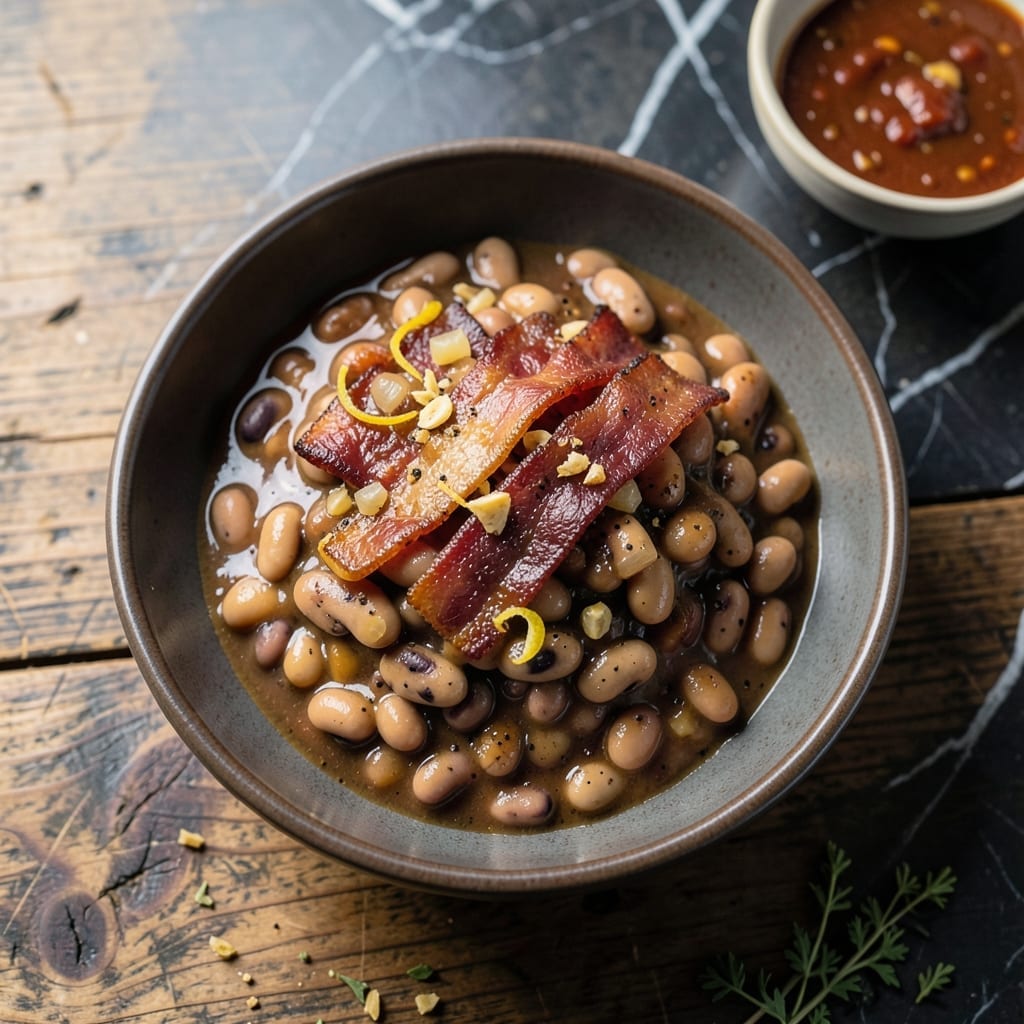
Getting my first whiff of hickory smoke at a family cookout still brings me back. This dish captures that Texas BBQ tradition with smoky depth and sweet molasses richness.
Slow cooking transforms simple beans into a restaurant-quality side. Bacon and smoked paprika build layers of flavor that complement any barbecue spread.
Ingredients for Texas Barbecue Beans
Simple pantry ingredients bring Texas BBQ tradition to your kitchen table with smoky, sweet depth.
| Ingredient | Amount | Notes |
|---|---|---|
| Dried Navy Beans 🫘 | 1 lb | Rinsed and picked over |
| Thick-Cut Bacon 🥓 | ½ lb | Chopped into 1-inch pieces |
| Yellow Onion 🧅 | 1 whole | Medium, finely diced |
| Garlic Cloves 🧄 | 4 cloves | Minced for depth |
| Molasses 🍯 | ½ cup | Unsulphured for clean flavor |
| Ketchup 🍅 | ¾ cup | High-quality preferred |
| Apple Cider Vinegar 🍏 | 2 tbsp | For tangy balance |
| Dijon Mustard 🟡 | 1 tbsp | Smooth, not whole grain |
| Smoked Paprika 🌶️ | 1 tbsp | Essential for smoky depth |
| Light Brown Sugar 🍚 | ¼ cup | Packed for sweetness |
| Chicken Stock 🥣 | 2 cups | Low-sodium preferred |
| Tomato Paste 🍅 | 2 tbsp | For richness and body |
| Kosher Salt 🧂 | 1 ½ tsp | Diamond Crystal preferred |
| Ground Black Pepper 🌶️ | 1 tsp | Freshly ground for best flavor |
[recipe_ingredient_scaler]
The bacon makes this dish. Thick-cut from the butcher (not pre-diced) renders better fat and holds its shape. Hormel or Wright’s brands are reliable if you’re grabbing from the grocery store. For the beans, navy or pinto both work—just avoid canned. Dried beans soak up the smoky flavor infinitely better. Look for unsulphured molasses (like Grandma’s brand) for a cleaner, less bitter sweetness.
No thick-cut bacon? Regular bacon in a pinch—just chop it yourself. Out of molasses? Honey or dark corn syrup at a 1:1 ratio works, though the flavor shifts slightly. Smoked paprika is non-negotiable—regular paprika won’t give that BBQ depth. If you’re avoiding pork, smoked turkey bacon or tempeh bacon can substitute (but the flavor won’t be the same). Chicken stock can be swapped for vegetable stock if needed.
These beans taste even better the next day once all the flavors meld. Store in an airtight container in the fridge for up to 5 days, or freeze for 3 months. They reheat like a dream—just add a splash of water if they’ve thickened too much.
Why You’ll Love This Recipe
- Set and Forget: I just dump the dried navy beans in the pot with water the night before, and the next day, the bacon and molasses do all the heavy lifting.
- Smoky Sweet Balance: That thick-cut bacon crisping up with the deep richness of molasses hits just right—sweet, smoky, and savory all in one bite.
- Crowd Pleaser: Between us, I’ve served this at backyard BBQs and quiet Sunday suppers, and it disappears faster than I can refill the bowl.
- Budget Stretcher: Honestly, a pound of dried beans and a few slices of bacon feed my family for days, and the leftovers taste even better.
Instructions
Here’s how I make these rich, smoky beans with that perfect sweet-tangy balance every time.
Step 1: Soak and Prep the Beans
Place the 1 lb Dried Navy Beans in a large bowl and cover with cold water by 2 inches. Let them soak overnight at room temperature, or use the quick-soak method: cover with water, bring to a boil for 2 minutes, then remove from heat and let stand for 1 hour.
After soaking, drain and rinse the beans thoroughly. Pick over them to remove any debris or broken pieces. This step ensures even cooking and removes any residual starch that could make the beans gummy. Properly soaked beans will cook more evenly and absorb the smoky flavors better.
Step 2: Render the Bacon and Sauté Aromatics
In a large Dutch oven or heavy pot, cook the 0.5 lb Thick-Cut Bacon over medium heat for 8-10 minutes, stirring occasionally, until crispy and most of the fat has rendered out. Use a slotted spoon to transfer the bacon to a paper towel-lined plate, leaving the fat in the pot.
In the same pot with the bacon fat, add the finely diced Yellow Onion and cook for 5-6 minutes until softened and translucent. Stir in the 4 cloves minced Garlic Cloves and cook for 1 minute until fragrant. This builds the flavor base that defines the dish.
Step 3: Build the Sauce and Simmer
To the pot, add the 2 tbsp Tomato Paste and cook for 1-2 minutes, stirring constantly, until it darkens slightly. This step deepens the umami flavor. Then stir in the 0.5 cup Molasses, 0.75 cup Ketchup, 2 tbsp Apple Cider Vinegar, 1 tbsp Dijon Mustard, 1 tbsp Smoked Paprika, 0.25 cup Light Brown Sugar, 2 cups Chicken Stock, 1.5 tsp Kosher Salt, and 1 tsp Ground Black Pepper.
Add the soaked and drained beans to the pot and stir to combine. Bring the mixture to a boil, then reduce the heat to low. Cover the pot and let it simmer gently for 1.5 to 2 hours, stirring occasionally, until the beans are tender and the sauce has thickened.
Step 4: Finish and Rest for Maximum Flavor
Once the beans are tender, stir the crispy bacon back into the pot. Taste and adjust the seasoning if needed—though with the salt from the bacon and the stock, you likely won’t need much. The sauce should be thick enough to coat the back of a spoon but still have a slight sheen.
Remove the pot from the heat and let the beans rest for 15-20 minutes before serving. This resting period allows the flavors to meld together and the beans to absorb even more of that rich, smoky sauce. The texture should be creamy yet intact, with each bite delivering a perfect balance of sweet, tangy, and smoky notes.
Pro Tips For Making Texas Barbecue Beans
- Soak Overnight: Cover those navy beans in water by at least 2 inches and let them sit for 8-12 hours—I learned this the hard way after ending up with undercooked beans that turned to mush when I tried to rush them.
- Render Bacon First: Cook the thick-cut bacon until it’s crispy, then use that fat to sauté the onion and garlic. Sounds obvious, but I used to skip this and the flavor was noticeably flatter.
- Skip the Salt Early: Wait until the beans are tender before adding salt, or they’ll stay tough no matter how long you simmer them—after ruining a batch, I now hold off until the last 30 minutes.
- Simmer Low and Slow: Keep the heat just high enough to maintain a gentle bubble, not a rolling boil. My first few attempts turned into bean stew because I cranked it too high and blew the texture.
Essential Equipment for This Recipe
Dutch Oven Essentials
For these beans, a heavy 5-7 quart Dutch oven is non-negotiable. I swear by my Le Creuset—its enameled cast iron distributes heat evenly for that slow, steady simmer. The tight-fitting lid traps steam, keeping beans moist during the 1.5-2 hour cook. 🔥
Wooden Spoon Wisdom
A sturdy wooden spoon won’t scratch your pot’s surface while stirring the thick sauce. I keep mine from a coastal foraging trip—it’s seen hundreds of batches. Avoid metal utensils that can damage enameled surfaces or react with acidic ingredients like apple cider vinegar.
Sharp Knife Matters
Dicing 1 yellow onion and chopping 0.5 lb bacon requires a sharp 8-inch chef’s knife. My Wüsthof glides through thick-cut bacon like butter. A dull knife crushes herbs and makes prep dangerous—keep it honed for clean cuts.
Measuring Tools
Precise measurements matter here. I use Pyrex glass measuring cups for the 0.5 cup molasses and 0.75 cup ketchup. For spices, a 1 tbsp measure ensures you get the exact 1 tbsp smoked paprika needed for that signature Texas depth.
Thermometer Check
While not mandatory, an instant-read thermometer helps monitor your pot’s temperature. These beans simmer best at 190-200°F—any hotter and the sauce can scorch. I clip my ThermoWorks probe to the pot edge for constant monitoring.
These tools have never let me down, from backyard cookouts to local BBQ competitions. ✨
Nutrition Facts
Frequently Asked Questions
Can I use canned beans to save time?
Not recommended. Dried beans absorb the smoky flavors much better during the 1.5-2 hour simmer. Canned beans often turn mushy and lack depth.
What if I don’t have smoked paprika?
Substitute with 1/2 tbsp regular paprika plus 1/2 tsp liquid smoke. The flavor won’t be identical, but it’s the closest alternative for that essential smokiness.
How do I store leftovers?
Keep in an airtight container in the fridge for up to 5 days. They reheat beautifully—just add a splash of water if too thick.
Can I make this vegetarian?
Yes! Swap bacon for smoked tempeh and use vegetable stock. The molasses and smoked paprika still deliver deep flavor.

Trained in classic French technique but raised on slow-cooked ribs and spicy rubs, she blends culinary skill with smoke and soul.
- Recipe for Boneless Pork Chops in Cast Iron Skillet: Sear and Baste to Juicy Perfection - October 3, 2026
- Recipe for Boneless Cross Rib Roast: Slow-Roasted Beef with Herb Crust - October 3, 2026
- Hamburgers in Sauce Recipe Crock Pot: Slow-Cooked Savory Delight - October 3, 2026