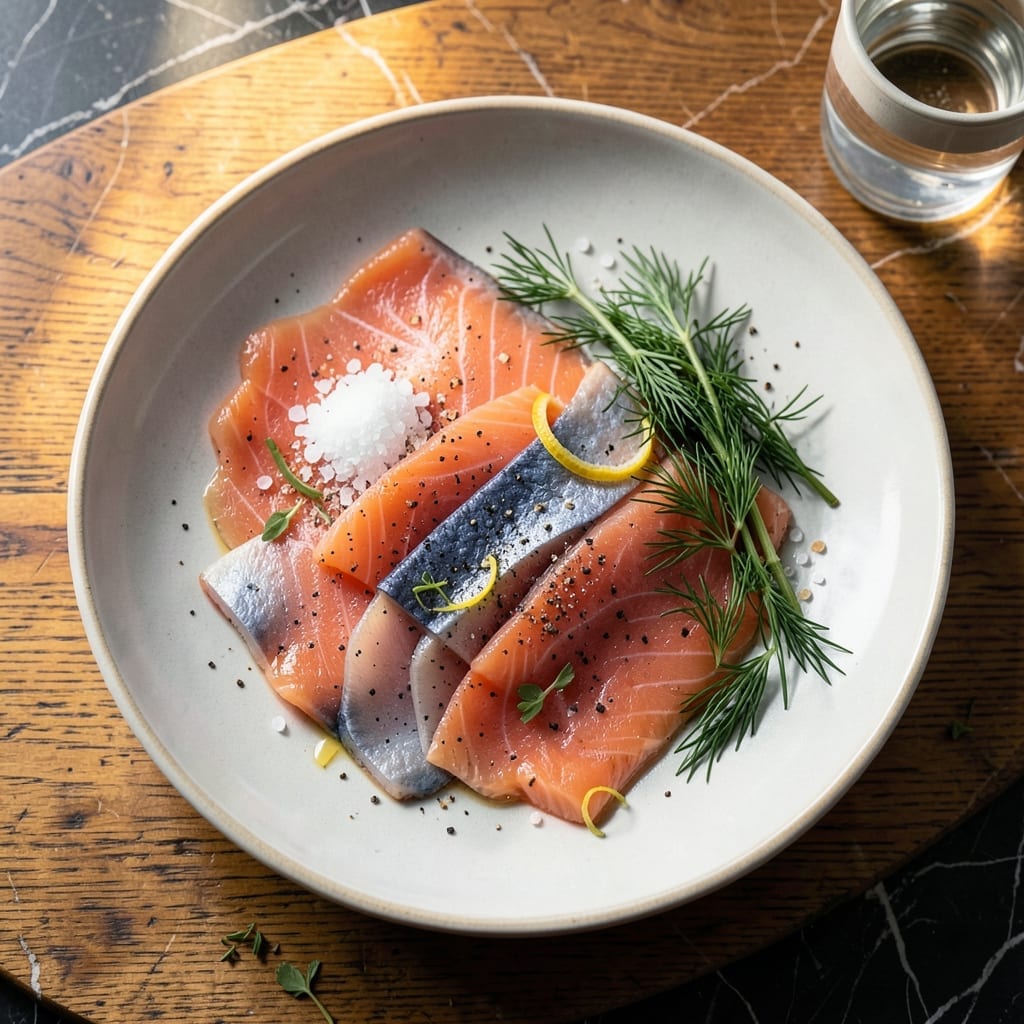
This Nordic-inspired gravlax brings restaurant-quality cured salmon to your home kitchen with minimal effort. The vodka in the cure enhances the salmon’s natural richness while keeping the texture silky smooth.
Fresh dill and a precise balance of salt and sugar transform raw salmon into a delicately flavored dish over 48 hours. The curing process is surprisingly simple, requiring just a few ingredients and some patience.
What emerges is tender, buttery salmon with a vibrant dill aroma and a subtle sweetness. The vodka helps draw out moisture, creating the perfect firm yet melt-in-your-mouth consistency.
Serve thinly sliced on rye bread with mustard sauce or as part of a charcuterie board. This preparation elevates any gathering with its elegant presentation and refined flavor.
Ingredients for Gravlax Recipe Vodka
A handful of high-quality ingredients transform into this elegant Nordic cured salmon dish.
| Ingredient | Amount | Notes |
|---|---|---|
| Salmon Fillet 🐟 | 1 ½ lb | Skin-on, center-cut, sushi-grade |
| Kosher Salt 🧂 | ½ cup | Diamond Crystal preferred |
| Granulated Sugar 🍚 | ⅓ cup | Fine white sugar |
| Fresh Dill 🌿 | 1 cup | Finely chopped, stems removed |
| Vodka 🥃 | ¼ cup | High-quality, unflavored |
| Ground Black Pepper 🌶️ | 1 tsp | Freshly ground preferred |
| Lemon Zest 🍋 | 1 tbsp | From 1 medium lemon |
| Rye Bread 🍞 | 8 slices | For serving, thinly sliced |
| Dijon Mustard 🟡 | ½ cup | For mustard sauce |
| White Wine Vinegar 🍷 | 2 tbsp | For mustard sauce |
[recipe_ingredient_scaler]
The salmon is non-negotiable—sushi-grade, skin-on, center-cut fillet is essential for texture and safety. Whole Foods or high-end seafood counters are your best bet (ask for the freshest catch, ideally previously frozen to kill parasites). Diamond Crystal kosher salt is preferred for its clean flavor and even curing. Avoid iodized salt, which can impart a metallic taste. Fresh dill should be vibrant green with no wilting—farmers markets often have the best selection.
No vodka? White rum or gin can substitute in a pinch, though vodka’s neutral flavor is ideal. Out of fresh dill? Dried dill at one-third the amount works, but fresh is vastly superior. For a citrus variation, swap lemon zest for lime or orange zest. If making the mustard sauce, whole-grain mustard adds nice texture. The sugar can be light brown sugar for deeper flavor, but keep the quantity exact.
The cured salmon keeps in the fridge for 5-7 days, tightly wrapped. Slice only what you need—it dries out once cut. The mustard sauce holds for 1 week refrigerated. For longer storage, freeze the uncut gravlax (up to 3 months), though texture may soften slightly upon thawing.
Why You’ll Love This Recipe
- No Fuss Curing: Honestly, just mix salt, sugar, dill, and a splash of vodka, then let the fridge do the work.
- Bright, Fresh Taste: That first bite of silky salmon with the clean, herby kick of dill and the subtle warmth of vodka? Ridiculously good.
- Impresses Every Time: I serve this at brunch or holiday appetizers, and it feels fancy without the fuss.
- Lasts for Days: One fillet cures into enough gravlax for sandwiches, salads, or snacks all week—no waste, all flavor.
Step-by-Step Instructions for Nordic-Style Cured Salmon with Dill
This traditional curing method transforms fresh salmon into silky, flavorful gravlax with minimal effort.
Step 1: Prepare the Salmon Fillet
Inspect the 1.5 lb salmon fillet and remove any remaining bones with fish pliers or tweezers. I always run my fingers gently over the surface to detect any missed pin bones. Leave the skin on—it protects the flesh during curing and makes slicing easier later.
Rinse the fillet briefly under cold water and pat it completely dry with paper towels. Any moisture will dilute the curing mixture and affect the texture. Place the fillet skin-side down on a large piece of plastic wrap, leaving plenty of overhang on all sides.
Step 2: Apply the Curing Mixture
In a small bowl, combine the 0.5 cup kosher salt, 0.33 cup granulated sugar, 1 tsp ground black pepper, and 1 tbsp lemon zest. The sugar balances the saltiness while the lemon zest adds a bright aroma that complements the salmon beautifully.
Rub this mixture evenly over all surfaces of the salmon, pressing it into the flesh with your hands. Don’t be shy—the fillet should be completely coated. Next, sprinkle the 1 cup fresh dill evenly over the top, again pressing it gently to adhere. Finally, drizzle the 0.25 cup vodka over the entire surface—the alcohol helps draw out moisture while adding a subtle depth to the cure.
Step 3: Wrap and Refrigerate
Bring the edges of the plastic wrap up and over the salmon, then add a second layer of plastic wrap for extra protection. Place the wrapped fillet in a shallow dish—this catches any liquid that’s released during curing.
Set a heavy object (like a cast-iron skillet or a few cans) on top of the salmon to weigh it down. This ensures even contact between the cure and the fish. Refrigerate for 24-48 hours, flipping the fillet every 12 hours to redistribute the curing liquid. The salmon is ready when it feels firm to the touch and has developed a slightly translucent appearance.
Step 4: Rinse and Slice
Unwrap the salmon and gently brush off the excess dill and curing mixture. Rinse the fillet briefly under cold water to remove any remaining cure, then pat it dry with paper towels. This step removes surface salt and prevents the gravlax from being overly salty.
Using a sharp, thin-bladed knife, slice the salmon against the grain into thin, even pieces. The traditional presentation is paper-thin slices, but ⅛-inch thickness works well for serving on the 8 slices rye bread. The texture should be silky and slightly buttery, with a delicate balance of salty, sweet, and herbal notes.
Step 5: Serve with Mustard Sauce
Whisk together the 0.5 cup Dijon mustard and 2 tbsp white wine vinegar until smooth. The tangy sharpness of the mustard sauce cuts through the richness of the salmon perfectly. Serve the gravlax on the rye bread with a small dollop of the sauce, or offer it on the side for dipping.
For the best experience, let the sliced gravlax sit at room temperature for 10-15 minutes before serving. This allows the flavors to develop fully. Garnish with additional fresh dill if desired, and enjoy this elegant dish with its roots in Nordic tradition.
Pro Tips For Making Gravlax Recipe Vodka
- Use skin-on fillet: I learned this the hard way—skinless salmon falls apart during curing. A skin-on center-cut fillet holds its shape and looks stunning when sliced.
- Balance salt and sugar: Stick to a 1:1 ratio of kosher salt to granulated sugar by weight. After ruining a batch with too much salt, I now measure precisely—4 tablespoons each for a 2-pound fillet.
- Don’t skip the vodka: Sounds weird, but it works: 2 tablespoons of vodka in the cure helps draw out moisture faster and adds a subtle clean finish. I was skeptical until I tried it.
- Flip every 12 hours: Make sure to flip the salmon in its cure every 12 hours for even curing. This isn’t the prettiest method, but it’s the tastiest—guarantees no dry spots.
Essential Equipment for Great gravlax recipe vodka
Curing Container
Use a non-reactive container like a glass or ceramic dish at least 9×13 inches. The container must be shallow enough to allow the heavy weight to press evenly across the salmon. I use a Pyrex baking dish that fits perfectly in my fridge. 💡
Plastic Wrap
Invest in heavy-duty plastic wrap—thin varieties can tear during the 48-hour cure. I prefer Reynolds Wrap for its durability. You’ll need enough to double-wrap the entire fillet with generous overhang on all sides.
Weights for Pressing
A cast iron skillet works perfectly as a weight, but a 2-3 lb bag of rice or beans also does the job. The key is even pressure distribution. I’ve even used a clean brick in a pinch, but always place it on a flat surface.
Sharp Knife
For slicing paper-thin pieces, a 10-inch chef’s knife or a long slicing knife is essential. I recommend Wüsthof or Shun brands for their sharpness and control. A dull knife will tear the delicate cured salmon instead of cutting cleanly.
Fish Pliers
Pin bones can be difficult to remove with fingers alone. Fish pliers or tweezers allow you to grip and pull them out cleanly. I keep a dedicated pair in my kitchen drawer just for this purpose. 🔥
Mixing Bowls
A medium mixing bowl for the cure and a small bowl for the mustard sauce are all you need. Stainless steel or glass works best—avoid reactive metals like aluminum. The cure mixture is abrasive, so non-stick bowls can scratch.
Nutrition Facts
Frequently Asked Questions
Why use vodka in the cure?
The vodka helps draw out moisture while preserving the salmon’s delicate texture. It also enhances the absorption of flavors from the salt, sugar, and dill.
Can I use a different alcohol?
Yes, white rum or gin can substitute, though vodka’s neutral flavor is ideal. Avoid darker spirits, as they can overpower the salmon’s natural taste.
How thin should the slices be?
Aim for paper-thin slices, about ⅛-inch thick. A sharp knife is essential—dull blades will tear the delicate cured flesh.
Can I freeze leftover gravlax?
Yes, wrap it tightly in plastic and freeze for up to 3 months. Thaw in the fridge overnight before serving. Texture may soften slightly.

Trained in classic French technique but raised on slow-cooked ribs and spicy rubs, she blends culinary skill with smoke and soul.
- Recipe for Boneless Pork Chops in Cast Iron Skillet: Sear and Baste to Juicy Perfection - October 3, 2026
- Recipe for Boneless Cross Rib Roast: Slow-Roasted Beef with Herb Crust - October 3, 2026
- Hamburgers in Sauce Recipe Crock Pot: Slow-Cooked Savory Delight - October 3, 2026