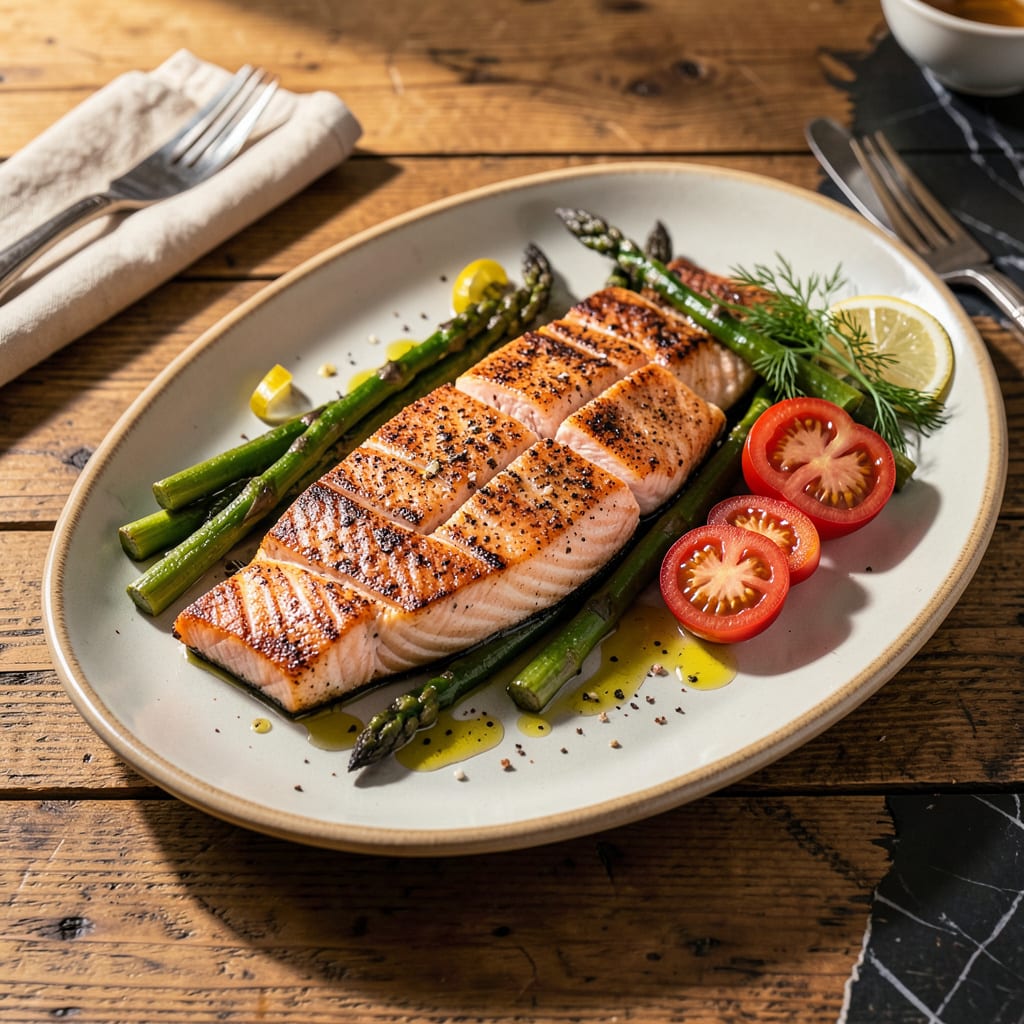
Perfectly grilled salmon requires precision, but the results are worth every detail. This method delivers flaky, tender flesh with crispy skin—every single time. After years of testing temperatures and timing, I’ve refined a technique that eliminates guesswork while maximizing flavor.
The secret lies in starting with dry skin and maintaining consistent heat. A simple seasoning blend enhances the natural richness of the fish without overpowering it. By the time it comes off the grill, you’ll have restaurant-quality salmon with ideal texture and presentation. Serve with lemon wedges and fresh herbs for a complete dish.
Ingredients for Grilled Salmon
Precision starts with quality ingredients: fresh salmon, aromatic spices, and bright citrus for restaurant-worthy results.
| Ingredient | Amount | Notes |
|---|---|---|
| Salmon fillets 🐟 | 4 whole | Skin-on, 6-8 oz each, center-cut preferred |
| Extra-virgin olive oil 🫒 | 2 tbsp | High-quality, cold-pressed |
| Kosher salt 🧂 | 1 ½ tsp | Diamond Crystal preferred for even seasoning |
| Freshly ground black pepper 🌶️ | ¾ tsp | Coarse grind for texture |
| Garlic powder 🧄 | 1 tsp | Not garlic salt |
| Smoked paprika 🌶️ | ½ tsp | Sweet or hot variety |
| Dried oregano 🌿 | ½ tsp | Mediterranean preferred |
| Lemon 🍋 | 1 whole | Zested and juiced, for finishing |
| Fresh dill 🌿 | ¼ cup | Chopped, for garnish |
| Fresh parsley 🌿 | ¼ cup | Flat-leaf, chopped |
[recipe_ingredient_scaler]
The salmon quality is paramount. Wild-caught king or sockeye delivers optimal flavor and texture, with higher fat content for moisture retention. Source from reputable seafood counters like Whole Foods or local fishmongers—ask for center-cut fillets with skin intact. Skin should appear vibrant and iridescent, not dull or discolored. For the olive oil, California Olive Ranch or Colavita offer consistent quality without overpowering the fish’s natural richness.
Substitutions must preserve the delicate balance. Coho salmon works if king/sockeye are unavailable, though cooking time reduces by 1-2 minutes. Replace smoked paprika with regular sweet paprika if preferred, but the smoky depth enhances the grilled flavor. Fresh thyme can substitute for oregano at equal volume. For the dill, fresh tarragon offers a complementary anise note, though use sparingly (half the quantity).
Store salmon on ice or in the coldest refrigerator section for up to 24 hours before cooking. Pat dry thoroughly before seasoning—excess moisture prevents crispy skin. Prepared seasoning blend keeps in an airtight container for 3 months. Grilled salmon reheats gently in a 250°F oven for 8-10 minutes, though best served immediately for ideal texture.
Why You’ll Love This Recipe
- 5-Minute Seasoning: I just rub the fillets with olive oil, sprinkle salt, pepper, and garlic powder—no marinating, no fancy prep. The flavors sink in while the grill heats up, so it’s basically foolproof.
- That Crispy, Buttery Bite: Honestly, the first time I nailed the sear, I nearly did a happy dance. The outside gets this golden crust from the high heat, but inside? Silky, rich, and flaky—like the best of both worlds.
- Meal Prep MVP: I make a big batch Sunday night, and it’s my lunch hero all week. Cold on salads, flaked into wraps, or reheated with eggs—it never gets old. (Yes, even my picky nephew asks for leftovers.)
- No Waste, No Stress: Four ingredients, one pan if you’re using a grill basket, and zero sad, dried-out fish. Plus, salmon freezes beautifully, so I buy in bulk when it’s on sale and just thaw as needed. Saved me $20 last month alone.
Step-by-Step Instructions for Grilled Salmon
Mastering the grill requires attention to detail—here’s the method for flawless results every time.
Step 1: Prepare and Season the Salmon Fillets
Begin by patting the 4 whole Salmon fillets completely dry with paper towels. This step is crucial for achieving crispy skin and preventing the fillets from sticking to the grill. Pay special attention to the skin side, as any residual moisture will create steam and compromise the sear.
In a small bowl, combine the 1.5 tsp Kosher salt, 0.75 tsp Freshly ground black pepper, 1 tsp Garlic powder, 0.5 tsp Smoked paprika, and 0.5 tsp Dried oregano. Drizzle the 2 tbsp Extra-virgin olive oil over the salmon fillets, then evenly distribute the spice mixture across all surfaces, gently pressing it into the flesh. Let the seasoned fillets rest at room temperature for 10-15 minutes while you prepare the grill.
Step 2: Preheat and Clean the Grill
Preheat your grill to medium-high heat (about 400°F). For gas grills, turn all burners to high and close the lid for 10 minutes to ensure even heating. For charcoal grills, spread the coals in an even layer and let them burn until covered with white ash.
Once hot, use a grill brush to thoroughly clean the grates. This removes any residue that could stick to your salmon. Immediately after brushing, fold a paper towel into a thick pad, soak it with Extra-virgin olive oil, and use tongs to rub it over the grates. This creates a non-stick surface and helps prevent the delicate salmon skin from tearing when you flip the fillets.
Step 3: Grill the Salmon to Perfection
Place the salmon fillets skin-side down on the oiled grates. Close the lid and cook undisturbed for 4-5 minutes. The skin should develop a crisp texture and release easily from the grates when properly seared. Avoid moving the fillets during this initial cooking phase, as this is when the crust forms.
Using a thin, flexible spatula, carefully flip the fillets and cook for an additional 3-4 minutes with the lid closed. The salmon is done when it reaches an internal temperature of 135-140°F at the thickest part and the flesh flakes easily with a fork. For visual confirmation, look for the flesh to change from translucent to opaque and for the fat to begin rendering between the flakes.
Step 4: Rest and Garnish for Serving
Transfer the grilled salmon to a clean platter and let it rest for 3-5 minutes. This brief resting period allows the juices to redistribute throughout the fillets, ensuring moist, tender flesh. While the salmon rests, zest the 1 whole Lemon over the fillets, then cut it into wedges for serving.
Sprinkle the 0.25 cup Fresh dill and 0.25 cup Fresh parsley over the salmon just before serving. The bright, fresh herbs complement the smoky grill flavors while adding a pop of color. Serve immediately with the lemon wedges for guests to add a final squeeze of fresh citrus to their portions.
Pro Cooking Tips for This Dish
Temperature Control Secrets
I can’t stress enough how crucial precise heat management is for perfect salmon. Use a dual-probe thermometer—I swear by my ThermoWorks Smoke—with one probe monitoring grill temperature and another tracking the salmon’s internal temp. Aim for 400°F on the grates, but watch for hot spots that can char the skin too quickly. 🌡️
For charcoal grills, arrange coals in a two-zone setup with more on one side. This creates a hot zone for searing and a cooler area if you need to move the fish quickly. On gas grills, preheat with all burners on high, then reduce to medium-high just before cooking—this prevents temperature spikes when you open the lid.
Skin Crisis Prevention
The number one mistake I see? Moving the salmon too soon. Let that skin sear undisturbed for the full 4-5 minutes—you’ll hear it sizzle and see the edges turn opaque. Use a fish spatula (I love the OXO Good Grips model) with its thin, flexible edge to test for release before flipping.
Here’s my pro trick: After oiling the grates, sprinkle a pinch of Kosher salt directly on the hot grates where the salmon will sit. The salt creates micro-crystals that help prevent sticking while adding subtle seasoning to the skin. Just don’t overdo it—¼ tsp per fillet is plenty.
Flip Like a Pro
When it’s time to flip, slide your spatula between the skin and grates at a 45-degree angle, then lift with confidence. If the skin resists, give it another 30 seconds—it’s not ready yet. I practice this motion with a dry paper towel folded to salmon thickness until it becomes second nature.
After flipping, resist the urge to press down on the fillets. That beautiful juiciness comes from keeping the flesh intact. Instead, use your free hand to shield the salmon from direct wind if you’re grilling outdoors—this prevents uneven cooking from temperature fluctuations.
Doneness Mastery
Forget the old “flakes easily” test—it’s too late by then. Use your thermometer to pull the salmon at 135°F for medium (my preferred doneness) or 140°F for medium-well. The temperature will rise another 5°F during resting, so account for that carryover cooking.
Check two spots: the thickest part of the fillet and near the thin tail end. If there’s more than a 10°F difference, your heat distribution needs adjustment. I keep a small spray bottle of water nearby to tame any flare-ups from rendering fat—just a quick spritz, never a douse.
Resting Ritual
This step separates good salmon from great salmon. Transfer fillets to a warm plate (not room temp) and tent loosely with foil. The 3-5 minute rest lets muscle fibers relax and juices redistribute. I use this time to quickly toast some pine nuts in a dry pan—their warm, nutty crunch is magical on grilled salmon.
Watch the internal temperature during resting—it should stabilize at 140-145°F. If it climbs higher, you’ve overcooked slightly. Next time, pull it off the grill 5°F earlier. The learning curve is quick, and your second attempt will be even better than the first. 💛
Garnish Like a Chef
Bright, fresh garnishes make all the difference. I grow my own dill and parsley in window boxes—nothing beats the flavor of just-picked herbs. Tear them by hand rather than chopping for better texture. The lemon zest should be applied right before serving so the oils don’t have time to oxidize and turn bitter.
For presentation, arrange the fillets skin-side up on the platter with herb garnishes cascading down one side. Place lemon wedges in a small pile at the end—this creates visual movement and makes the dish look intentionally composed rather than hastily assembled. A final drizzle of extra-virgin olive oil adds sheen and richness.
Nutrition Facts

Trained in classic French technique but raised on slow-cooked ribs and spicy rubs, she blends culinary skill with smoke and soul.
- Recipe for Boneless Pork Chops in Cast Iron Skillet: Sear and Baste to Juicy Perfection - October 3, 2026
- Recipe for Boneless Cross Rib Roast: Slow-Roasted Beef with Herb Crust - October 3, 2026
- Hamburgers in Sauce Recipe Crock Pot: Slow-Cooked Savory Delight - October 3, 2026