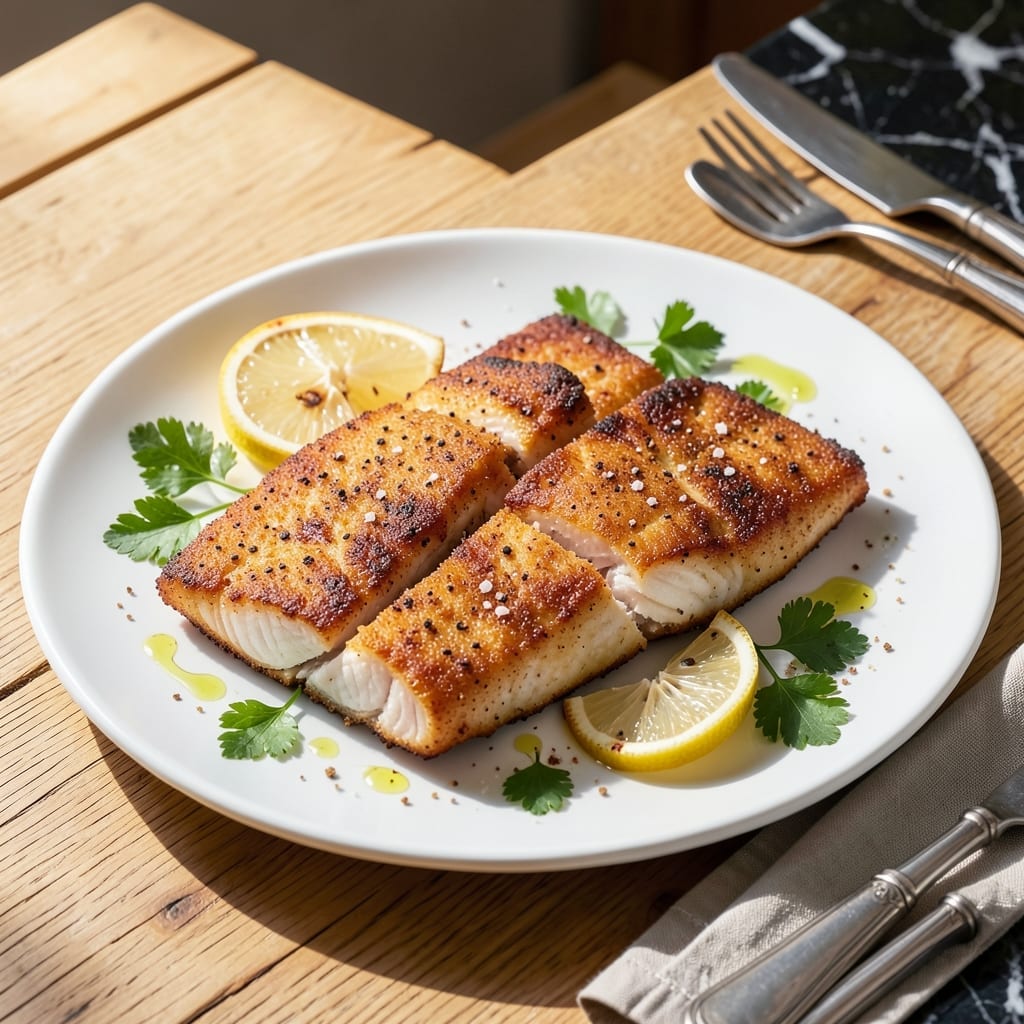
Achieving flaky pan-fried grouper requires precise technique and patience. This method delivers restaurant-quality results at home without complicated steps.
I developed this approach after years of trial and error, learning that high heat and proper timing are crucial. The key is creating a golden crust while keeping the inside moist and tender.
The result is perfectly cooked fish with a crisp exterior and delicate, flaky white meat that separates effortlessly. Each bite offers the ideal balance of texture and flavor.
Serve with simple sides that complement rather than compete with the fish. This dish proves that exceptional seafood doesn’t require professional equipment.
Ingredients for Grouper Fish Recipe Pan Fried
Fresh grouper, a few pantry staples, and careful technique yield that perfect flaky texture.
| Ingredient | Amount | Notes |
|---|---|---|
| Grouper Fillets 🐟 | 1 ½ lb | Skin-on or skinless, about 1-inch thick |
| All-Purpose Flour 🌾 | ½ cup | For light dusting before frying |
| Kosher Salt 🧂 | 1 ½ tsp | Diamond Crystal preferred for even seasoning |
| Freshly Ground Black Pepper 🌶️ | 1 tsp | Coarse grind for texture |
| Garlic Powder 🧄 | 1 tsp | Fine powder for even distribution |
| Paprika 🌶️ | 1 tsp | Sweet or smoked for color |
| Vegetable Oil 🫒 | ¾ cup | High smoke point for frying |
| Unsalted Butter 🧈 | 2 tbsp | For basting while cooking |
| Fresh Lemon 🍋 | 1 whole | For bright finishing acidity |
| Fresh Parsley 🌿 | ¼ cup | Chopped, for garnish |
| Cornstarch 🌾 | 2 tbsp | For extra crispy coating |
[recipe_ingredient_scaler]
The grouper fillets are non-negotiable—source wild-caught from a trusted fishmonger if possible. Look for firm, translucent flesh with no fishy odor. Whole Foods and local seafood markets typically carry high-quality grouper. For the flour, all-purpose is standard, but Wondra (instant blending flour) creates an even lighter coating. The cornstarch is the secret to that restaurant-quality crispness.
No grouper? Cod or halibut work well with the same method. Out of cornstarch? Arrowroot powder at equal amounts substitutes perfectly. For a gluten-free version, rice flour replaces all-purpose one-to-one. The butter can be swapped for ghee if you prefer a higher smoke point. Fresh herbs like thyme or dill can stand in for parsley.
Cook immediately after prepping—grouper doesn’t hold well once seasoned. Leftovers keep for 1-2 days in the fridge, but the texture is best fresh. Reheat gently in a 300°F oven to preserve the crust. Never microwave, as it will turn the fish rubbery.
Why You’ll Love This Recipe
- One Pan Dinner: I love that I only need a skillet, a plate, and 5 ingredients to get this on the table.
- Crispy Garlic Bite: The flour and garlic powder crust gives that perfect crunch with every bite of tender grouper.
- Weeknight Hero: Honestly, it’s my go-to for busy evenings when I need dinner fast but still want it to feel special.
- Budget-Friendly Luxe: Grouper feels fancy, but this simple pan-fry method keeps it affordable without sacrificing flavor.
Step-by-Step Instructions for Pan Fried Grouper
Master this technique and you’ll achieve perfectly flaky fish with a golden, crisp crust every time.
Step 1: Prepare and Season the Grouper Fillets
Pat the 1.5 lb Grouper Fillets completely dry with paper towels. Any moisture will prevent the coating from adhering properly and result in a soggy crust. I always press firmly to remove all surface water.
In a shallow dish, whisk together the 0.5 cup All-Purpose Flour, 1.5 tsp Kosher Salt, 1 tsp Freshly Ground Black Pepper, 1 tsp Garlic Powder, and 1 tsp Paprika. This seasoned flour will create the base layer for your crispy coating. The paprika adds a subtle depth of flavor and beautiful color to the finished dish.
Step 2: Create the Extra-Crispy Coating
Add the 2 tbsp Cornstarch to the flour mixture and whisk until fully incorporated. The cornstarch is the secret to that ultra-crispy texture—it creates a lighter, more delicate crust that shatters with each bite.
Dredge each fillet in the flour-cornstarch mixture, pressing gently to ensure full coverage. Shake off any excess—you want a thin, even coating, not a thick paste. Let the coated fillets rest on a wire rack for 10 minutes to allow the coating to set.
Step 3: Pan-Fry to Golden Perfection
Heat the 0.75 cup Vegetable Oil in a large, heavy skillet over medium-high heat until it shimmers and a pinch of flour sizzles when dropped in. The oil should be about ¼-inch deep in the pan—enough to come halfway up the fillets for even cooking.
Carefully place the fillets in the hot oil, working in batches if necessary to avoid crowding the pan. Cook for 3-4 minutes per side until the coating is deep golden brown and crisp. The fish should release easily from the pan when it’s ready to flip. Add the 2 tbsp Unsalted Butter to the pan during the last 2 minutes of cooking and baste the fillets with the hot butter for extra richness.
Step 4: Finish and Serve Immediately
Transfer the cooked fillets to a paper towel-lined plate to drain any excess oil. While the fish is still hot, squeeze fresh juice from the 1 whole Fresh Lemon over the top. The acidity brightens the rich flavors and cuts through the richness of the fried coating.
Garnish with the 0.25 cup Fresh Parsley, chopped. Serve immediately while the crust is still crisp and the fish is at its flakiest. The ideal serving temperature is just above room temperature, so don’t let it sit too long before serving. Each bite should offer tender, flaky fish encased in that irresistibly crisp, golden crust.
Pro Tips For Making Grouper Fish Recipe Pan Fried
- Heat the Pan First: Crank your skillet to medium-high for at least 3 minutes before adding oil. I learned this the hard way—cold pans make grouper stick and turn the flour coating gummy.
- Pat Fillets Dry: Blot the grouper with paper towels until bone-dry, then season. Sounds tedious, but it’s the only way to get that crisp, golden crust instead of a sad, soggy mess.
- Skip the Overcrowding: Fry in batches if needed—two fillets max in a standard skillet. Steaming from too many pieces turns your carefully floured grouper into a steamed disaster.
- Season the Flour: Mix 1 teaspoon kosher salt, ½ teaspoon black pepper, and ½ teaspoon garlic powder into your flour before dredging. It clings better than sprinkling seasoning on the fish and actually changes the outcome.
Pro Cooking Tips for grouper fish recipe pan fried
Oil Temperature Control
Use a candy thermometer to maintain oil between 350-375°F. I learned the hard way that too-low heat creates greasy fish, while too-high heat burns the coating before the inside cooks. A Lodge cast iron skillet holds temperature best for even cooking. 🌡️
Batch Cooking Strategy
Never crowd the pan—this drops oil temperature and steams the fish. Cook in batches if needed, keeping finished fillets warm in a 200°F oven on a wire rack. I use my grandmother’s trick of lining the rack with paper towels to absorb excess oil.
The Flip Test
Wait until the edges appear golden and the fish releases easily before flipping. If it sticks, it’s not ready. I count 3-4 minutes per side for 1-inch thick fillets, but visual cues matter more than timer.
Butter Basting Technique
Add 2 tbsp butter during the last 2 minutes and tilt the pan to pool it. Spoon continuously over the fish for that restaurant-quality golden finish. I use a silicon basting spoon to avoid burning my fingers.
Resting Time
Let the fish rest 2-3 minutes after cooking. This allows the juices to redistribute. Serve immediately after resting—the crust loses crispness quickly. My grandmother always said “patience tastes better than hunger.”
Crispiness Secret
The cornstarch flour blend creates that shatteringly crisp crust. For extra crunch, double-dredge the fillets. Press firmly to ensure the coating adheres, then shake off excess to prevent gummy texture. 💡
Nutrition Facts
Frequently Asked Questions
What oil works best for pan-frying?
Use oils with a high smoke point like vegetable, canola, or peanut oil. 350-375°F is the ideal temperature range. Avoid olive oil as it burns at high heat.
How do I know when it’s done?
The fish should flake easily with a fork and reach an internal temp of 145°F. The coating turns deep golden brown when ready. Don’t overcrowd the pan to ensure even cooking.
Can I use frozen fillets?
Yes, but thaw completely in the fridge overnight first. Pat extremely dry before coating. Frozen fish releases more moisture, which can make the crust soggy.
Why did my coating fall off?
This usually happens if the fish wasn’t dry before dredging or if you moved it too soon. Let the coating set for 10 minutes before frying and wait until it releases easily from the pan before flipping.

Trained in classic French technique but raised on slow-cooked ribs and spicy rubs, she blends culinary skill with smoke and soul.
- Recipe for Boneless Pork Chops in Cast Iron Skillet: Sear and Baste to Juicy Perfection - October 3, 2026
- Recipe for Boneless Cross Rib Roast: Slow-Roasted Beef with Herb Crust - October 3, 2026
- Hamburgers in Sauce Recipe Crock Pot: Slow-Cooked Savory Delight - October 3, 2026