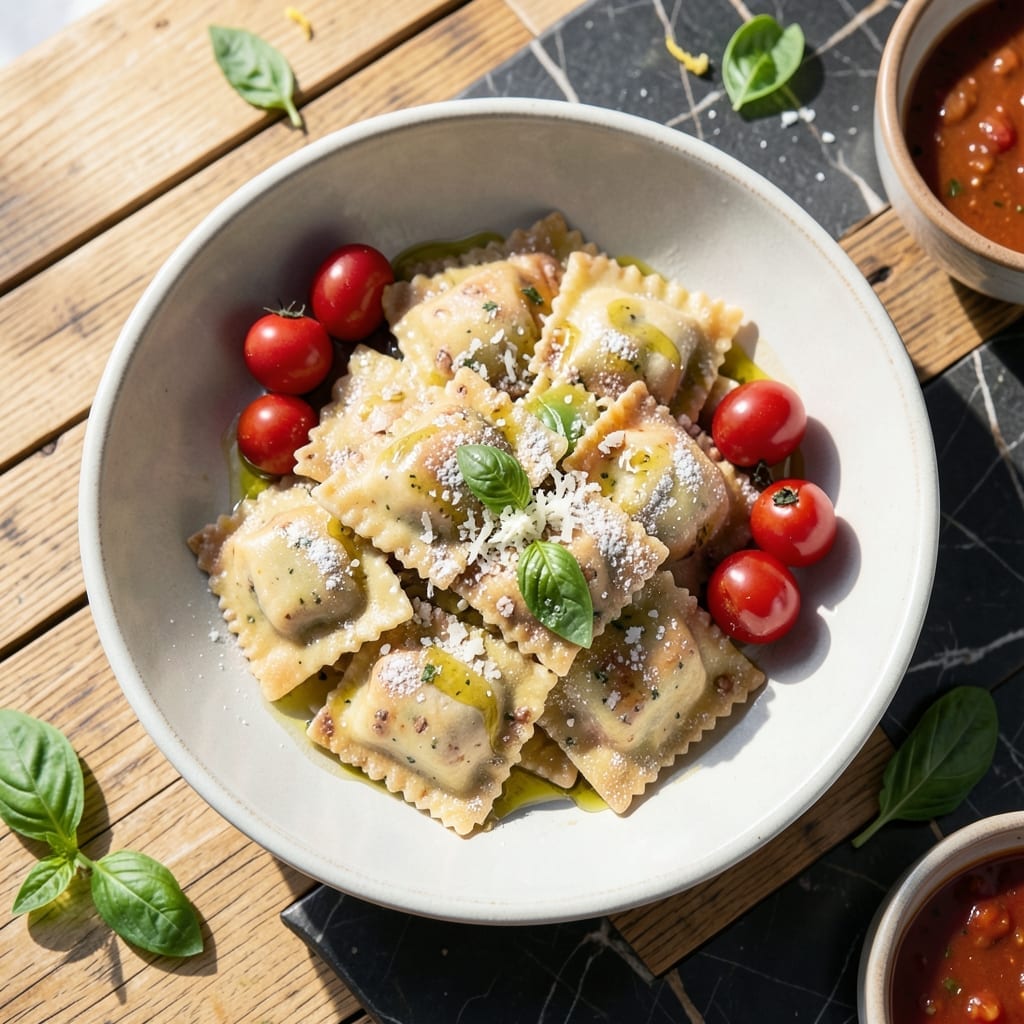
I developed this gluten-free pasta dough after years of testing blends in my small Boston kitchen. The key is a precise ratio of flours that mimics traditional pasta’s elasticity and bite.
This recipe delivers silky ravioli pockets that hold their shape during cooking. The dough rests for 30 minutes, allowing the flours to hydrate fully and develop the right texture.
You’ll achieve restaurant-quality results without the wheat, with a tender yet sturdy dough that rolls thin and seals beautifully. The filling possibilities are endless, from classic ricotta to seasonal vegetables.
The cooking process is simple: boil briefly until the pasta floats, then finish with your favorite sauce. This method ensures perfect texture every time.
Ingredients for Gluten Free Pasta Dough Recipe Ravioli
A precise blend of gluten-free flours and simple fillings creates these restaurant-quality ravioli.
| Ingredient | Amount | Notes |
|---|---|---|
| Gluten-Free All-Purpose Flour Blend 🌾 | 2 cups | Plus extra for dusting surfaces |
| Tapioca Starch 🌾 | ½ cup | Adds elasticity to dough |
| Almond Flour 🌰 | ½ cup | Fine, blanched preferred |
| Xanthan Gum 🧪 | 1 tsp | Essential for structure and binding |
| Large Eggs 🥚 | 3 whole | Room temperature for best results |
| Extra-Virgin Olive Oil 🫒 | 1 tbsp | High quality for flavor depth |
| Salt 🧂 | ½ tsp | Fine sea salt recommended |
| Water 💧 | ¼ cup | Warm, as needed for consistency |
| Ricotta Cheese 🧀 | 1 cup | Whole milk for creaminess |
| Parmesan Cheese 🧀 | ½ cup | Freshly grated from block |
| Fresh Spinach 🥬 | 1 cup | Finely chopped, excess moisture squeezed out |
| Garlic Cloves 🧄 | 2 cloves | Minced for filling |
| Lemon Zest 🍋 | 1 tsp | From one large lemon |
| Nutmeg 🌰 | ¼ tsp | Freshly grated preferred |
[recipe_ingredient_scaler]
The flour blend is everything here. King Arthur or Bob’s Red Mill 1:1 are reliable for gluten-free all-purpose. Tapioca starch (found in the baking aisle at Whole Foods or Target) adds that stretchy quality you miss from wheat. Almond flour should be super fine—Bob’s Red Mill is consistent. Xanthan gum is non-negotiable; skip it and the dough crumbles. I get mine in bulk at Market Basket.
No almond flour? Fine rice flour works but the texture will be slightly different. Egg-free? Flax eggs (1 tbsp ground flax + 3 tbsp water per egg) can substitute, though the dough may be denser. For the filling, cottage cheese instead of ricotta is a budget-friendly swap. No fresh spinach? Frozen works in a pinch (thaw and squeeze out ALL the water).
The dough rests best at room temperature—cover it with a damp towel. Use within 2 hours or refrigerate for 1 day. Ravioli freeze beautifully on a tray before cooking; store in bags for up to 3 months. Filling ingredients keep standard fridge times.
Why You’ll Love This Recipe
- No Fuss Dough: I can mix this in one bowl with just a fork—the xanthan gum and eggs bind it perfectly without kneading.
- Rich Nutty Flavor: The almond flour adds this warm, buttery depth that makes the ravioli taste way more indulgent than store-bought.
- Meal Prep Magic: I roll out a big batch on Sunday, fill with whatever’s in season, and freeze for those I-need-dinner-now nights.
- Budget Stretcher: Honestly, a bag of gluten-free flour and a handful of eggs make enough dough for two meals—cheaper than any gluten-free pasta at the store.
Step-by-Step Instructions for Gluten Free Pasta Dough Ravioli
Here’s my tested method that creates tender, workable dough and perfectly sealed pockets every time.
Step 1: Mix the Dry Ingredients Thoroughly
In a large bowl, whisk together the 2 cups Gluten-Free All-Purpose Flour Blend, 0.5 cup Tapioca Starch, 0.5 cup Almond Flour, 1 tsp Xanthan Gum, and 0.5 tsp Salt until fully combined. I find that whisking for at least 30 seconds ensures the xanthan gum is evenly distributed, which is crucial for proper binding.
The mixture should look uniform with no visible streaks of individual flours. This blend creates the perfect texture for gluten-free pasta—elastic enough to roll thin but sturdy enough to hold fillings without tearing.
Step 2: Create the Dough by Incorporating Wet Ingredients
Make a well in the center of your dry ingredients. Add the 3 whole Large Eggs, 1 tbsp Extra-Virgin Olive Oil, and 0.25 cup Water. Using a fork, gradually incorporate the dry ingredients into the wet, starting from the center and working outward.
Once the mixture becomes too stiff for the fork, switch to kneading with your hands. The dough will feel sticky at first but will come together into a smooth ball after 3-4 minutes of kneading. If it feels too dry, add water 1 teaspoon at a time—but I’ve found the recipe usually needs the full 0.25 cup.
Step 3: Rest the Dough for Optimal Texture
Wrap the dough ball tightly in plastic wrap and let it rest at room temperature for 30 minutes. This resting period allows the flours to fully hydrate and the xanthan gum to activate, which makes the dough much easier to roll out.
After resting, the dough should feel smooth and slightly elastic when pressed. If it’s still crumbly, knead in another 1-2 teaspoons of water and rest for an additional 15 minutes. The dough is ready when it holds together well and doesn’t crack when rolled.
Step 4: Prepare the Spinach and Ricotta Filling
While the dough rests, combine the 1 cup Ricotta Cheese, 0.5 cup Parmesan Cheese, 1 cup Fresh Spinach, 2 cloves Garlic Cloves, 1 tsp Lemon Zest, and 0.25 tsp Nutmeg in a bowl. Mix until all ingredients are thoroughly incorporated and the filling has a uniform, slightly thick consistency.
The spinach should be finely chopped and well-drained to prevent excess moisture from making the filling watery. Taste and adjust seasoning if needed, though the Parmesan typically provides enough saltiness. This filling pairs perfectly with the delicate pasta dough.
Step 5: Roll, Fill, and Shape the Ravioli
Divide the rested dough into 4 equal portions. On a surface dusted with additional gluten-free flour blend, roll one portion into a 1/16-inch thick rectangle. Place 1 teaspoon portions of filling about 2 inches apart on half of the dough.
Brush the uncovered dough with water, then fold it over the filling. Press around each mound to seal, being careful not to trap air pockets. Use a ravioli cutter or knife to separate into individual pieces. Repeat with remaining dough and filling. Cook fresh ravioli in boiling salted water for 3-4 minutes until they float to the surface.
Pro Tips For Making Gluten Free Pasta Dough Recipe Ravioli
- Chill the Dough: After mixing, wrap the dough in plastic and refrigerate for at least 30 minutes—this relaxes the xanthan gum and prevents the ravioli from cracking when you roll it out.
- Dust with Tapioca: Use tapioca starch instead of regular flour to dust your work surface and rolling pin; it keeps the gluten-free dough from sticking without making it gummy.
- Skip Overworking: Knead just until the dough comes together—overmixing develops too much elasticity in the almond flour, making it tough instead of tender.
- Roll Thin but Even: Aim for 1/8-inch thickness when rolling; any thicker and the ravioli won’t cook through, but go too thin and the filling will burst out.
Regional Styles of This Dish
Northern Italian Tradition
In Lombardy, they use buckwheat flour for gluten-free ravioli, creating earthy, nutty pockets. The dough often includes 2 eggs per cup of flour for richness. I tested this in my Boston kitchen with Bob’s Red Mill buckwheat—it needs extra resting time. 💛
Tuscan Herb Style
Tuscany favors herb-infused dough with 1 tbsp fresh rosemary and zest of 1 lemon kneaded into the mix. The filling swaps spinach for chopped kale and adds pine nuts for crunch. This version tastes like a sunlit hillside.
Sicilian Citrus Twist
Sicilian cooks add orange zest and a pinch of saffron to the dough. The filling often includes ricotta salata instead of Parmesan, with blanched almonds for texture. I find the citrus brightens the almond flour base beautifully.
Roman Simplicity
Roman gluten-free ravioli uses just rice flour and tapioca starch, no almond. The filling stays classic: ricotta, Parmesan, and nutmeg. It’s the version my Nonna would’ve made if she’d had these flours in her triple-decker kitchen.
This style proves less can be more with the right technique. 🌟
Nutrition Facts
Frequently Asked Questions
Can I use a pasta machine to roll this dough?
Yes, a pasta machine works perfectly. Start at the widest setting and gradually thin it to #6 or #7. Dust with extra flour to prevent sticking.
Why does my dough keep cracking when rolling?
This usually means it needs more hydration. Knead in 1 teaspoon of warm water at a time until smooth. Also ensure you rested it for the full 30 minutes.
How thin should the dough be for ravioli?
Aim for 1/16-inch thickness—about as thin as a coin. Too thick and the ravioli won’t cook evenly; too thin and it may tear when boiling.
Can I make this dough ahead of time?
Wrap tightly and refrigerate for up to 24 hours. Let it sit at room temperature for 30 minutes before rolling to soften.

Trained in classic French technique but raised on slow-cooked ribs and spicy rubs, she blends culinary skill with smoke and soul.
- Recipe for Boneless Pork Chops in Cast Iron Skillet: Sear and Baste to Juicy Perfection - October 3, 2026
- Recipe for Boneless Cross Rib Roast: Slow-Roasted Beef with Herb Crust - October 3, 2026
- Hamburgers in Sauce Recipe Crock Pot: Slow-Cooked Savory Delight - October 3, 2026