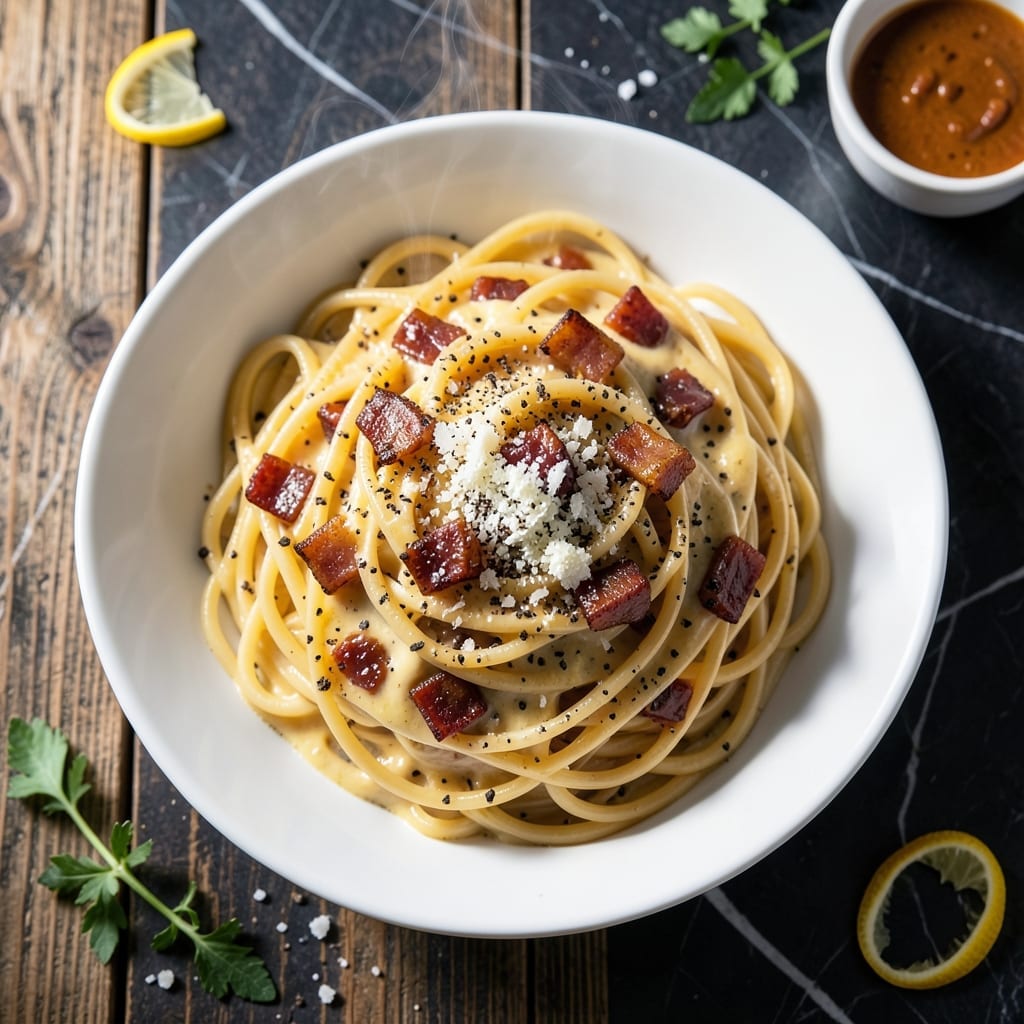
This recipe brings the true taste of Rome to your kitchen with a traditional approach to carbonara.
I’ve refined this method to highlight the rich, cured flavor of guanciale, the authentic Italian pork cheek that defines the dish. No shortcuts—just simple, precise technique.
You’ll create a creamy, velvety sauce by combining eggs, pecorino, and the rendered fat from the guanciale with al dente pasta. The result is bold, savory, and deeply satisfying.
Every bite delivers the balance of salty, fatty, and peppery notes that makes Roman carbonara unforgettable.
Ingredients for Guanciale Recipe Pasta
Authentic Roman flavors start with these traditional Italian ingredients and precise technique.
| Ingredient | Amount | Notes |
|---|---|---|
| Guanciale 🥓 | ½ lb | Diced, cured Italian pork cheek |
| Spaghetti 🍝 | 1 lb | Dried, al dente preferred |
| Large Eggs 🥚 | 4 whole | Room temperature, separated |
| Pecorino Romano Cheese 🧀 | 1 ½ cups | Freshly grated from block |
| Black Pepper 🌶️ | 2 tsp | Freshly cracked, coarse grind |
| Sea Salt 🧂 | 1 tsp | Fine grain, for pasta water |
| Parmesan Cheese 🧀 | ½ cup | Freshly grated, optional addition |
| Garlic Cloves 🧄 | 2 cloves | Lightly crushed, optional |
| Reserved Pasta Water 💧 | ½ cup | Starchy, as needed for sauce |
[recipe_ingredient_scaler]
The guanciale is non-negotiable here. Eataly or specialty Italian markets are your best bet—look for vibrant red color and firm texture. Avoid pancetta as a substitute; it lacks the cured depth that defines carbonara. If you find it pre-diced, even better (saves time). Most butcher shops can special-order it if you call ahead.
No guanciale? Pancetta at double the amount is the closest approximation, though the flavor won’t be identical. Some recipes suggest bacon, but it introduces smoke that overpowers the dish. For the cheese, Pecorino Romano is mandatory—its sharp, salty profile balances the richness. Freshly grated Parmesan can supplement, but don’t skip the Pecorino entirely.
Guanciale keeps in the fridge for 2-3 weeks (vacuum-sealed). The grated cheese freezes beautifully for 3 months. Pasta water’s starch is key—reserve it right before draining. This dish is best served immediately; the sauce thickens as it sits.
Why You’ll Love This Recipe
- One Pot Magic: I toss everything in a single pan—guanciale fries while the pasta cooks, so cleanup is just a quick rinse.
- Umami Bomb: The guanciale’s rich, salty depth pairs with Pecorino’s sharp bite for a flavor that’s honestly hard to beat.
- Crowd Pleaser: My picky nephew and my foodie cousin both ask for seconds. Works for weeknights or when I need to impress.
- Leftovers Win: The flavors deepen overnight, so I make extra. Reheats in minutes for a lunch that tastes even better.
Step-by-Step Instructions for Guanciale Pasta
Authentic Roman technique requires precision—follow these traditional steps for perfect results every time.
Step 1: Render the Guanciale to Crisp Perfection
Heat a large, heavy skillet over medium-low heat—no oil needed. Add the 0.5 lb Guanciale and cook slowly for 8-10 minutes, stirring occasionally, until the fat renders out and the meat turns golden and crispy. The slow rendering prevents burning and builds deep, savory flavor.
Watch for the fat to become translucent and the meat to develop crisp edges. This rendered fat is the foundation of your sauce, so don’t drain it. The guanciale should be uniformly browned with no raw spots. Remove the skillet from heat and set aside to cool slightly while you prepare the remaining components.
Step 2: Prepare the Egg and Cheese Mixture
In a medium bowl, whisk together the 4 whole Large Eggs until smooth and pale. Gradually add the 1.5 cups Pecorino Romano Cheese and 0.5 cup Parmesan Cheese, whisking constantly to prevent clumping. The mixture should be thick, creamy, and uniform in texture.
Season aggressively with the 2 tsp Black Pepper—this is the signature spice in authentic carbonara. The coarse grind adds visual appeal and bursts of peppery flavor. Set this mixture aside at room temperature while you cook the pasta. The eggs must be room temperature to prevent curdling when combined with the hot pasta later.
Step 3: Cook Pasta to Al Dente Perfection
Bring a large pot of water to a rolling boil and add the 1 tsp Sea Salt. Add the 1 lb Spaghetti and cook for 1 minute less than the package’s recommended time for al dente. You want the pasta slightly underdone because it will finish cooking in the sauce.
Reserve 0.5 cup Reserved Pasta Water before draining—the starchy liquid is crucial for creating the creamy sauce. Drain the pasta immediately and add it to the skillet with the rendered guanciale fat. Toss vigorously for 30 seconds to coat every strand in the flavorful fat.
Step 4: Combine Everything Off Heat for Creamy Sauce
Remove the skillet from heat and let it cool for 1 minute. The pan must be off heat to prevent scrambling the eggs. Slowly pour the egg and cheese mixture over the pasta while constantly tossing with tongs. The residual heat from the pasta will gently cook the eggs into a silky sauce.
Add the 2 cloves Garlic Cloves if using, lightly crushed to release their aroma without overpowering the dish. If the sauce appears too thick, add the 0.5 cup Reserved Pasta Water 1 tablespoon at a time until it reaches your desired consistency. The sauce should cling to the pasta with a glossy, creamy coating.
Step 5: Serve Immediately with Final Touches
Transfer the pasta to warmed serving plates immediately—this dish doesn’t wait. Top with additional freshly grated Pecorino Romano and a sprinkle of coarse black pepper. Each bite should deliver rich, salty guanciale, sharp cheese, and silky egg sauce coating every strand of spaghetti.
The sauce should be creamy but not heavy, with visible flecks of black pepper throughout. If the sauce begins to tighten as it cools, toss in a splash of hot pasta water to restore its silky texture. Serve with crusty bread to soak up every last drop of this authentic Roman sauce.
Pro Tips For Making Guanciale Recipe Pasta
- Render Guanciale Slow: Start the guanciale in a cold pan over medium-low heat—this renders the fat evenly without burning the meat. I learned this the hard way after ruining two batches with high heat.
- Use Pasta Water: Save about a cup of the starchy pasta water before draining. It helps emulsify the eggs and cheese into a creamy sauce that clings to the spaghetti.
- Avoid Overcooked Eggs: Temper the eggs with a splash of hot pasta water before mixing them into the pan to prevent scrambling. Sounds weird, but it works.
- Grind Pepper Fresh: Crack the black pepper directly over the dish at the end—pre-ground loses its punch. My grandmother swore by this, and she was right.
Common Mistakes When Making Great guanciale recipe pasta
Overcooking the Guanciale
Cooking guanciale too quickly over high heat burns the fat and makes the meat bitter. I always render it slowly over medium-low heat for 8-10 minutes, stirring occasionally, until golden and crispy. This builds deep, savory flavor without harshness. 🔥
Skipping Room Temperature Eggs
Cold eggs straight from the fridge will curdle when mixed with hot pasta. I take my eggs out 30 minutes before cooking to ensure they’re room temperature. This creates a silky, creamy sauce instead of scrambled eggs in your carbonara.
Draining All the Fat
The rendered fat from guanciale is liquid gold for flavor and sauce base. I never drain it—just leave the crispy bits in the pan. This fat coats the pasta and helps emulsify the egg and cheese mixture into that signature creamy texture.
Adding Eggs to Hot Pan
Pouring eggs into a hot skillet makes scrambled eggs, not carbonara. I always remove the pan from heat and let it cool for 1 minute before adding the egg mixture. The residual heat from the pasta gently cooks the eggs into a velvety sauce.
Using Pre-Shredded Cheese
Pre-shredded cheese contains anti-caking agents that prevent melting. I only use freshly grated Pecorino Romano from a block. The fine, powdery texture melts smoothly into the sauce, creating that authentic Roman richness.
Over-Salting the Pasta Water
Guanciale and Pecorino are already salty, so I use just 1 tsp Sea Salt in the pasta water. Taste as you go—you can always adjust with more cheese or a splash of pasta water if needed. This keeps the dish balanced, not overwhelming. 💡
Nutrition Facts
Frequently Asked Questions
Can I substitute pancetta for guanciale?
Pancetta works in a pinch, but use double the amount. Guanciale has a richer, more complex flavor that defines authentic carbonara.
Why do my eggs scramble in the sauce?
This happens when the pan is too hot. Always remove it from heat for 1 minute before adding eggs, and use room temperature eggs to prevent curdling.
How do I make the sauce creamier?
Add 1 tablespoon of reserved pasta water at a time while tossing. The starch in the water helps emulsify the sauce for a silky texture.
Can I use a different pasta shape?
Spaghetti is traditional, but bucatini or rigatoni work well too. Avoid shapes that won’t hold the sauce properly, like farfalle.

Trained in classic French technique but raised on slow-cooked ribs and spicy rubs, she blends culinary skill with smoke and soul.
- Recipe for Boneless Pork Chops in Cast Iron Skillet: Sear and Baste to Juicy Perfection - October 3, 2026
- Recipe for Boneless Cross Rib Roast: Slow-Roasted Beef with Herb Crust - October 3, 2026
- Hamburgers in Sauce Recipe Crock Pot: Slow-Cooked Savory Delight - October 3, 2026