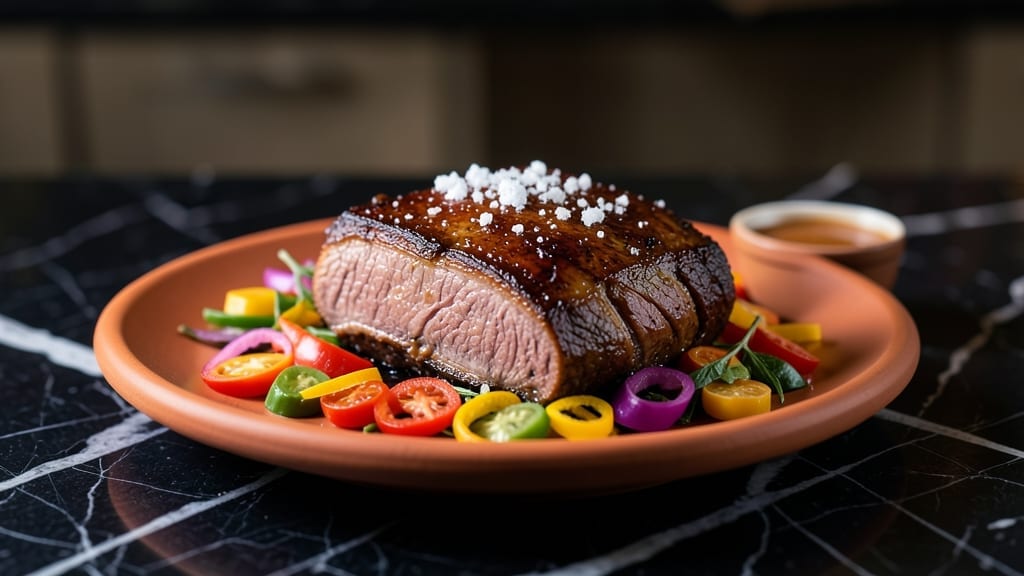
Mastering a Guga Foods brisket recipe transforms a simple cut of meat into a showstopping centerpiece that rivals any competition-style cook. The secret lies in precision—controlling smoke temperature, managing the bark, and letting the rub penetrate deeply for that signature balance of spice and tenderness.
I’ve refined this method over countless hours in the pit, and the results speak for themselves.
This recipe delivers juicy perfection with a dark, flavorful crust that locks in moisture while delivering bold, aromatic notes.
The process begins with a careful trim and a meticulously blended spice rub, then moves to low-and-slow smoking at 225°F until the internal temperature reaches 203°F—where collagen dissolves into velvety richness. Every step is designed to ensure your brisket stays moist, tender, and packed with flavor.
Once you’ve achieved that perfect probe test, the brisket needs time to rest—at least 1.5 hours—before slicing against the grain for clean, bite-sized pieces. The payoff?
A brisket so tender it nearly falls apart, with a crust that’s crisp enough to stand up to a bold barbecue sauce or a simple sprinkle of coarse salt. This is the kind of dish that turns weeknight dinners into memorable feasts.
The beauty of this method extends beyond the brisket itself. Serve it with classic sides like creamy coleslaw, buttery cornbread, or pickled jalapeños to round out the meal. Whether you’re hosting a gathering or treating yourself to a Sunday supper, this recipe delivers restaurant-quality results with a professional touch.
Ingredients for guga foods brisket
Precision-crafted ingredients for competition-style brisket with deep, aromatic bark and velvety tenderness.
| Ingredient | Amount | Notes |
|---|---|---|
| Beef Brisket 🥩 | 6 lb | Whole packer cut, fat cap intact |
| Yellow Mustard 🍯 | ¼ cup | For rub adhesion |
| Coarse Kosher Salt 🧂 | ½ cup | Diamond Crystal preferred |
| Black Peppercorns 🌶️ | 2 tbsp | Freshly cracked preferred |
| Smoked Paprika 🌶️ | ¼ cup | High-quality Spanish smoked |
| Garlic Powder 🧄 | 2 tbsp | Not garlic salt |
| Onion Powder 🧅 | 2 tbsp | Freshly ground preferred |
| Ground Cumin 🌿 | 1 tbsp | Toasted for depth |
| Ground Coriander 🌿 | 1 tbsp | Sweet, not citrusy |
| Cayenne Pepper 🔥 | 1 tsp | Adjust for heat preference |
| Brown Sugar 🍯 | ¼ cup | Light or dark preferred |
| Wood Chips 🌳 | 4 cups | Hickory or oak preferred |
| Apple Juice 🍎 | 1 cup | For spritzing during cook |
| Barbecue Sauce 🍯 | 1 cup | For finishing glaze |
| Coarse Sea Salt 🧂 | 2 tbsp | For final crust |
[recipe_ingredient_scaler]
The brisket is the foundation, so prioritize quality. Packer-cut briskets from trusted suppliers like Snake River Farms or your local butcher shop yield superior results—look for thick fat caps and vibrant red color. The wood chips should be 100% natural, no additives, and hickory or oak are the gold standard for brisket. For the rub, Diamond Crystal kosher saltSpanish smoked paprika delivers authentic depth. Toast your spices gently in a dry skillet before blending to enhance their aromatic profiles.
No yellow mustard on hand? Olive oil or melted butter work equally well for rub adhesion, though mustard provides a slight tang. Substitute white pepper for black if you prefer a milder finish, but the cracked peppercorns here are essential for that signature bite. For the wood chips, cherry or pecan add sweetness but require careful balancing with hickory. The brown sugar in the rub caramelizes during smoking, contributing to the bark’s complexity—don’t skip it. If you’re short on time, pre-made rubs from brands like Barbecue University can suffice, though custom blending yields superior results.
Store prepped briskets in the fridge for up to 24 hours before smoking, allowing the rub to fully penetrate. Wood chips can be soaked in water for 30 minutes before use to prevent flare-ups, then stored in the fridge for 1 week. Leftover bark can be crumbled and frozen for up to 3 months—perfect for seasoning future batches. The finished brisket should be wrapped tightly in butcher paper and rested at room temperature for 1.5 hours before slicing to preserve juices. For optimal results, serve within 3 days of cooking, though it reheats beautifully when wrapped in foil.
Why You’ll Love This Recipe
- No-Fuss Mastery: I’ll be honest—I used to dread brisket prep, but this recipe turns it into a “set it and forget it” kind of deal. The dry-brine with ½ cup coarse kosher salt and ¼ cup yellow mustard means no last-minute chopping or fussy prep. Just coat, refrigerate, and let the magic happen while you nap or watch TV.
- Smoky-Sweet Payoff: That ¼ cup smoked paprika and 2 tbsp garlic powder combo? Chef’s kiss. The low-and-slow smoke at 225°F with hickory or oak wood chips gives it that deep, woodsy richness, while the ¼ cup brown sugar in the rub keeps it from being too savory. The final spritz of apple juice and butcher paper wrap? It’s like a spa treatment for your meat—creamy inside, crispy outside.
- Leftovers That Win Friends: Honestly, this brisket is that good that leftovers become the highlight. Slice it against the grain, and you’ve got sandwiches, tacos, or even a hearty breakfast hash the next morning. The barbecue sauce glaze and coarse sea salt finish make it versatile enough for game day or lazy Sunday—no extra effort, just deliciousness.
- Budget-Friendly Powerhouse: A 6 lb brisket might sound pricey, but this recipe stretches it into multiple meals without sacrificing flavor. The toasted cumin and sweet coriander in the rub add complexity for pennies, and the apple juice spritzes keep costs low while keeping the bark perfect. Feeds a crowd, satisfies picky eaters, and won’t break the bank.
Step-by-step instructions for smoked brisket
Mastering this technique guarantees a brisket with deep flavor, perfect bark, and melt-in-your-mouth tenderness.
Prepare the Brisket and Rub
Begin by trimming the fat cap of the 6 lb beef brisket to about ¼-inch thickness using a sharp boning knife. This ensures even cooking while preserving moisture. Pat the entire surface dry with paper towels—moisture is the enemy of a proper bark.
In a medium bowl, combine the ½ cup coarse kosher salt, 2 tbsp freshly cracked black peppercorns, ¼ cup smoked paprika, 2 tbsp garlic powder, 2 tbsp onion powder, 1 tbsp ground cumin, 1 tbsp ground coriander, 1 tsp cayenne pepper, and ¼ cup brown sugar. Mix thoroughly to create a uniform spice blend. Add the ¼ cup yellow mustard to the dry rub and stir until fully incorporated—this helps the rub adhere to the meat.
Generously coat the brisket with the rub, pressing it firmly into every crevice. Place the seasoned brisket on a wire rack set over a baking sheet and refrigerate uncovered for 12 hours or up to 24 hours. This dry-brining process enhances flavor penetration and creates that coveted crust.
Smoke the Brisket Low and Slow
Preheat your smoker to 225°F using the 4 cups of wood chips (hickory or oak preferred). Allow the smoker to stabilize for at least 30 minutes before adding the brisket—this ensures consistent temperature control throughout the cook.
Place the brisket fat-side up on the smoker grates. Maintain a steady 225°F temperature, resisting the urge to open the smoker frequently. Every time you peek, you lose heat and moisture. Instead, use a remote thermometer to monitor internal temperature.
After 4 hours of smoking, begin spritzing the brisket every 30 minutes with the 1 cup apple juice. This keeps the surface moist and prevents a dry bark from forming too early. Continue smoking until the internal temperature reaches 165°F—this typically takes 8-10 hours total, depending on your smoker’s efficiency.
Apply the Wrap and Finish
Once the brisket reaches 165°F, it will enter “the stall”—a period where the internal temperature plateaus as moisture evaporates. This is where the 1 cup barbecue sauce comes into play. Remove the brisket from the smoker and wrap it tightly in butcher paper, adding a thin layer of the barbecue sauce to the surface. Return it to the smoker and continue cooking until the internal temperature reaches 203°F—this ensures fork-tender meat.
During the final hour, spritz the brisket again with apple juice every 30 minutes to maintain moisture. The butcher paper wrap helps retain steam while allowing the bark to develop. This two-stage process—smoke followed by wrap—creates the ideal balance of texture and tenderness.
Rest and Serve
Remove the brisket from the smoker and transfer it to a cutting board. Tent loosely with foil and let it rest for at least 1 hour. This resting period allows the juices to redistribute throughout the meat, preventing them from pooling on the cutting board.
Before slicing, sprinkle the 2 tbsp coarse sea salt evenly over the surface of the brisket. This final touch enhances flavor and creates a subtle crust. Using a sharp carving knife, slice the brisket against the grain into ¼-inch thick pieces. Serve immediately with any accumulated juices from the resting pan.
The result should be a brisket with a deep mahogany bark, a pink smoke ring, and meat that pulls apart effortlessly. Each bite delivers a perfect harmony of smoky, spiced, and sweet flavors—exactly what defines a perfectly smoked brisket.
Pro Tips For Making Guga Foods Brisket
- Crack Those Peppercorns Fresh: I learned this the hard way—pre-ground black pepper loses its punch fast. Take 2 minutes to crush those 2 tbsp peppercorns right before mixing with the rest of the rub. The extra effort makes the smoky-sweet bark taste deeper, like the difference between store-bought and homemade.
- Don’t Rush the Stall: When the brisket hits 165°F and stalls, resist the urge to crank up the heat. That’s when the magic happens—moisture redistributes and collagen breaks down. Wrap it in butcher paper with that 1 cup barbecue sauce like the recipe says, then let it crawl to 203°F. Trust me, skipping this step means tougher meat, no matter how long you smoke it.
- Soak Wood Chips Properly: Soaking those 4 cups of wood chips for 30 minutes before smoking isn’t just about preventing flare-ups—it’s about steady smoke flavor. Use cold water, not hot, and drain well. I used to skip this and ended up with bitter, uneven smoke. Sounds weird, but it works: the chips burn slower and smolder longer for that clean, consistent hickory or oak aroma.
- Salt the Rub Generously: The ½ cup coarse kosher salt isn’t just seasoning—it’s the foundation of that perfect crust. Don’t eyeball it; measure it. And when you press the rub into the brisket, get into those crevices. I used to skimp, and the bark never developed that deep, crackly texture. The recipe’s exact amounts matter here.
Pro cooking tips for great guga foods brisket
Mastering Smoke Control
The 225°F temperature is non-negotiable for brisket success—this is where the magic happens. I use a Traeger Pro 575 with a built-in thermometer, but any quality smoker will work. The key is stability: ±10°F variation is acceptable, but anything wider risks uneven cooking.
For extra precision, add a digital probe thermometer like Thermoworks Smoke to monitor internal temperature without opening the smoker.
Bark Building Secrets
That coveted mahogany bark starts with dry-brining for 12-24 hours—never skip this step. The ¼ cup brown sugar in the rub caramelizes during smoking, creating a sticky, flavorful crust.
After 4 hours of smoking, I switch to apple juice spritzes every 30 minutes to keep the bark moist while preventing it from drying out too soon.
The Stall Strategy
When the brisket hits 165°F, it enters “the stall”—a frustrating plateau where temperature stops rising. This is where butcher paper wrapping becomes your best friend. I apply a thin layer of barbecue sauce before wrapping to add moisture and flavor.
The paper traps steam while allowing the bark to develop, shaving 2-3 hours off your cook time.
Resting Like a Pro
After reaching 203°F, I let the brisket rest for 1.5 hours on a cutting board tented with foil. This isn’t just about juices—it’s about texture. The collagen fully converts during this time, making the meat fork-tender.
I also sprinkle 2 tbsp coarse sea salt on top during resting for that final flavor boost.
Slicing Against the Grain
Use a sharp carving knife like Dexter-Russell 12-inch and slice perpendicular to the muscle fibers in ¼-inch thick slices. The flat and point sections have different grain directions, so rotate your board mid-slice. This technique ensures each bite is tender and easy to chew—no dry, stringy surprises here! 🔥
Nutrition facts
Frequently asked questions
Why does the recipe call for dry-brining the brisket for 12-24 hours?
Dry-brining is essential for developing a perfect bark and deep flavor penetration. The ½ cup kosher salt and ¼ cup brown sugar in the rub draw moisture from the meat’s surface while also enhancing seasoning absorption. This process creates a sticky, flavorful crust that becomes the signature mahogany bark you want. Skipping this step can lead to a bland, dry exterior.
What if my smoker can’t maintain a steady 225°F temperature?
If your smoker struggles with consistency, aim for the closest stable temperature within ±10°F of 225°F. Use a remote thermometer like Thermoworks Smoke to monitor internal temperature without opening the smoker. Consider preheating for 45 minutes to stabilize your setup before adding the brisket. Patience is key—small adjustments over time will help you achieve that perfect low-and-slow cook.
Can I substitute butcher paper with aluminum foil during the wrap stage?
Butcher paper is preferred because it allows the bark to develop while trapping steam. Aluminum foil can create a sweaty, soggy surface that ruins the texture. If you must use foil, poke small ventilation holes to let steam escape. The 1 cup barbecue sauce applied before wrapping helps compensate for any moisture loss, but butcher paper is still the best choice for that ideal balance of moisture and bark.
How do I know when the brisket is done if I don’t have a meat probe?
If you lack a probe, use the “poke test”: gently press a sharp knife into the thickest part of the brisket. When it slides in like butter and the juices run clear, it’s ready. Alternatively, cut into the thickest section—if the meat is pink and tender, it’s done. The internal temperature should reach 203°F, but this method ensures you avoid overcooking.
Can I make the rub ahead of time and store it?
Yes! Mix the dry ingredients—½ cup kosher salt, ¼ cup smoked paprika, and spices—up to a month ahead in an airtight container. Add the ¼ cup yellow mustard just before applying to the brisket to keep it fresh. Store the dry rub in a cool, dark place, and the mustard in the fridge. This saves time and ensures your rub stays potent for future cooks.

Trained in classic French technique but raised on slow-cooked ribs and spicy rubs, she blends culinary skill with smoke and soul.
- Smoked Chicken Salad Recipe: Crispy, Smoky Bites With Creamy Ranch Dressing - October 19, 2026
- Beer Can Chicken in a Smoker Recipe: Juicy, Herbed Perfection in One Can - October 19, 2026
- Brined Beef Brisket Recipe: Ultra-Tender, Juicy Cuts in One Pot - October 19, 2026