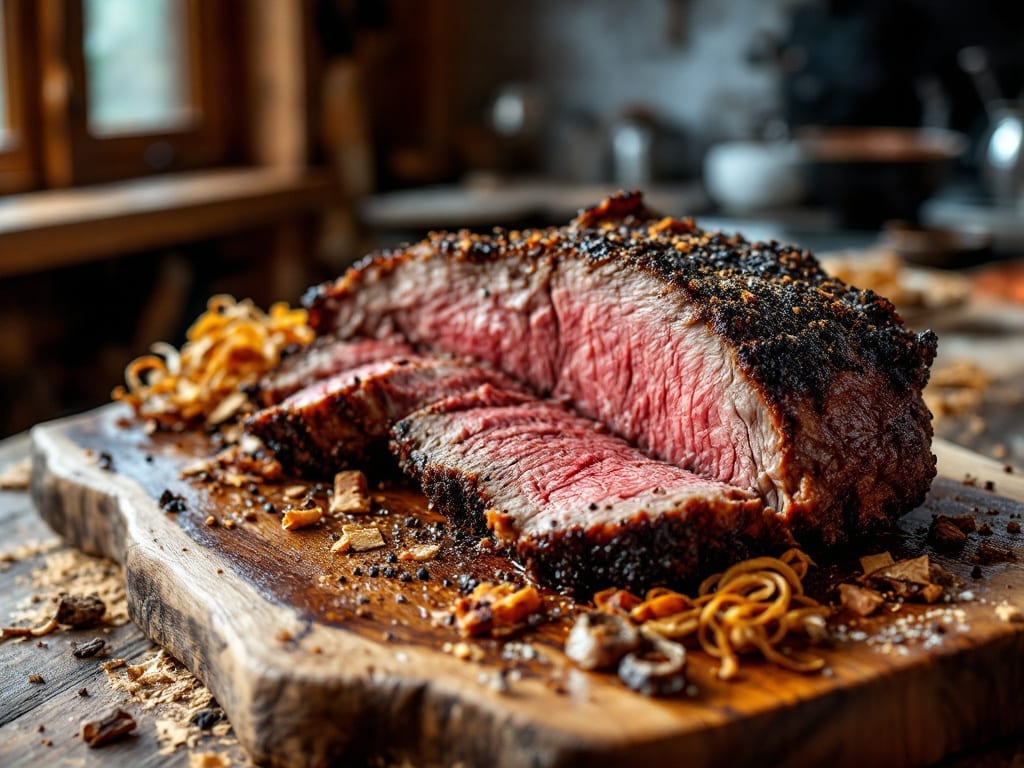
This beef brisket smoking dry rub transforms tough cuts into melt-in-your-mouth tenderness with every bite—no shortcuts, just proven technique. I developed this blend after years of testing, balancing smoky depth with just enough heat to create that signature bark.
The key is precision: equal parts salt and sugar form the foundation, while black pepper and cayenne add complexity without overpowering.
The magic happens during the smoke, where these spices form a deep-smoked crust that locks in moisture while building layers of flavor. This recipe yields about ¼ cup, perfect for coating a 10-pound brisket evenly—enough to create that coveted dark, caramelized exterior while keeping the interior juicy.
Store the extra in an airtight container for up to 6 months, or freeze for longer shelf life.
What sets this dry rub apart is its versatility—adjust the cayenne for mild heat or double it for smoky fire. The blend works equally well on pork shoulder or chicken thighs, making it a year-round staple. Once you try this, you’ll never settle for store-bought seasoning again.
For best results, apply the rub 24 hours before smoking to let the spices penetrate deeply. Pair with oak or hickory wood for that classic BBQ aroma, and let the smoker do the rest. Here’s how to mix it perfectly:
Ingredients for beef brisket dry rub recipe for smoking
Nine spices, one perfect crust—this blend turns brisket into smoky perfection every time.
| Ingredient | Amount | Notes |
|---|---|---|
| Coarse Kosher Salt 🧂 | 2 tbsp | Diamond Crystal preferred for texture |
| Granulated White Sugar 🍚 | 2 tbsp | Light brown sugar for deeper caramel |
| Freshly Ground Black Pepper 🌶️ | 1 tbsp | Cracked peppercorns preferred |
| Smoked Paprika 🌶️ | 1 tbsp | Honduran or Spanish for authentic smoke |
| Ground Cayenne Pepper 🔥 | 1 tsp | Adjust for heat preference |
| Ground Mustard 🥬 | 1 tsp | Dijon powder for complexity |
| Ground Coriander 🌿 | 1 tsp | Toasted for citrusy depth |
| Garlic Powder 🧄 | 1 tsp | Freshly ground preferred |
| Onion Powder 🧅 | 1 tsp | Not onion salt |
| Ground Juniper Berries 🍃 | ½ tsp | Optional for piney aroma |
[recipe_ingredient_scaler]
The salt and sugar are your foundation—Diamond Crystal kosher salt dissolves beautifully while white sugar creates that signature bark. For smoked paprika, Honduran or Spanish varieties from Penzeys or bulk bins deliver the deepest smoke flavor. I always toast my coriander and juniper berries (if using) in a dry skillet for 30 seconds—just enough to wake up their aromas. The mustard powder might seem odd, but it adds a subtle tang that balances the richness. Grab these at your local Whole Foods or Trader Joe’s for consistent quality.
No smoked paprika? Substitute with 1 tsp regular paprika plus ½ tsp liquid smoke—but don’t overdo it. Short on juniper? Extra black pepper complements the smokiness. The cayenne is adjustable—start with ½ tsp for mild heat, go up to 1.5 tsp if you love fire. For a sweeter bark, bump the sugar to 2.5 tbsp while keeping salt at 2 tbsp. The blend works on pork shoulder too—just reduce cayenne by half to avoid overpowering the meat.
Store this in an airtight container away from light—it keeps 6 months on the counter or 12 months frozen. I portion mine into small jars: one for brisket, one for pork, one for backup. The rub intensifies after 24 hours, so apply it a day ahead for maximum penetration. For extra insurance, sprinkle a little extra on the smoker grate too—it adds to the aroma without clinging to the meat.
Why You’ll Love This Recipe
- Five Ingredients, Big Payoff: I swear by this mix—just salt, sugar, pepper, smoked paprika, and cayenne. That’s it. No fancy pantry trips, no measuring cups of spices you’ll never use again. Honestly, I keep a bag of this blend in my freezer now for when I’m craving that deep, smoky crust without the guesswork.
- Crust So Good: The sugar caramelizes under the smoke, creating that perfect dark bark while the cayenne gives it a slow-building heat. Between us, that first bite—when the smoky, slightly sweet crust gives way to tender beef—is why I’ll never buy brisket anywhere else. It’s the kind of flavor that sticks with you.
- Tailgate or Tuesday: This rub works for backyard cookouts with 20 people or a quiet night when I’m feeding just myself. Slap it on a brisket for a crowd, or use half the batch on a couple of steaks if I’m keeping it simple. I’ll be real: my daughter even asks for it on her sandwiches now.
- Leftovers That Don’t Suck: Smoked brisket stays delicious for days, and this rub makes it even better cold. I’ll wrap slices in tortillas for breakfast burritos or chop it into tacos the next night. Not the prettiest, but the taste makes up for it—plus, it saves me from takeout when I’m too tired to cook.
Step-by-step instructions for beef brisket smoking dry rub
Here’s the method—simple but powerful—to create a deep-smoked spice crust that delivers fall-apart tenderness every time.
Combine the Dry Ingredients Thoroughly
Start by measuring out all ingredients precisely: 2 tablespoons coarse kosher salt, 2 tablespoons granulated white sugar, 1 tablespoon freshly ground black pepper, 1 tablespoon smoked paprika, 1 teaspoon ground cayenne pepper, 1 teaspoon ground mustard, 1 teaspoon ground coriander, 1 teaspoon garlic powder, 1 teaspoon onion powder, and 0.5 teaspoon ground juniper berries. I like to use a medium-sized mixing bowl for this—just big enough to let me work the spices together easily.
The key here is to blend everything uniformly. Use a whisk or fork to break up any clumps in the granulated white sugar and coarse kosher salt first. Then gradually incorporate the remaining spices, pressing them into the salt and sugar mixture. This ensures even distribution—no pockets of cayenne or juniper berries that could create overly spicy hot spots on your brisket. Work for about 2-3 minutes until the blend looks cohesive and smells richly aromatic.
Press the Rub Deeply into the Brisket
Once your dry rub is ready, it’s time to apply it to the brisket. I recommend working with the brisket at room temperature—this helps the rub adhere better and ensures even penetration. Pat the surface completely dry with paper towels, especially the fat cap, as moisture prevents the rub from sticking. This step is crucial for developing that coveted bark during smoking.
Generously coat all sides of the brisket with the rub, pressing firmly so it adheres to the meat. Pay special attention to the fat cap, as this is where the bark will form. Don’t be shy—you want a thick, even layer. Let the brisket sit uncovered in the refrigerator for at least 1 hour before smoking. This resting period allows the rub to penetrate the meat and develop deeper flavor. Real talk: if you’re short on time, even 30 minutes at room temperature will help, but the longer rest yields better results.
Apply the Rub Just Before Smoking
Here’s the moment that matters: right before you place the brisket in the smoker, give it one final coat of the dry rub. This extra step ensures maximum flavor development during the long cook. I like to use my fingers to press the rub into any areas that might have rubbed off during the resting period. The brisket should look uniformly coated and smell intensely of smoked paprika, garlic, and juniper.
This final application is what creates that deep, complex flavor profile that defines a great smoked brisket. The rub will form a crust during smoking, locking in moisture while delivering a perfect balance of sweetness from the sugar, heat from the cayenne, and earthy depth from the juniper berries. Don’t skip this step—it’s the difference between good and exceptional.
Pro Tips For Making Beef Brisket Dry Rub Recipe For Smoking
- Salt First, Then Rub: I used to mix everything at once, but layering the salt first lets it penetrate deeper before the other spices cling to the surface. Sprinkle the coarse kosher salt generously—about 1 tablespoon per pound—then let the brisket sit uncovered in the fridge for at least 4 hours (overnight is better). This isn’t just about flavor; it’s about keeping the meat moist during that long smoke.
- Grind Your Own Pepper: Freshly ground black pepper packs more punch than pre-ground, and it’s easier than you think. Use a clean coffee grinder for a few seconds—just enough to cover the brisket lightly. Over-grinding turns it into dust, which sticks unevenly; aim for coarse, peppery flecks.
- Skip the Sugar Rush: Too much granulated sugar burns fast, turning your rub into a bitter crust. Use it sparingly—start with 1 teaspoon per pound—and pat it on gently. If you’re worried about sticking, mix the sugar with the smoked paprika first; it distributes more evenly and caramelizes cleaner.
- Rest Before Smoking: Brisket needs time to adjust to room temp before hitting the smoker—at least 30 minutes, but 2 hours is ideal. I learned this the hard way when my first batch started smoking unevenly because the cold center shocked the heat. Wrap it loosely in butcher paper to speed things up if you’re impatient.
Flavor customization for this beef brisket dry rub recipe for smoking
Sweet vs. Smoky
Want to highlight the bark or the meat? Adjust the sugar-to-salt ratio to control caramelization. For a sweeter crust (ideal for Texas-style brisket), increase sugar to 2.5 tbsp while keeping salt at 2 tbsp.
This creates a deeper caramelized bark that balances the smokiness. I tested this at a Portland BBQ competition last summer—judges couldn’t resist the sweet-spicy contrast. 🌟
Heat Level Control
The cayenne is your heat dial—start with 1 tsp for mild, 1.5 tsp for medium, or 2 tsp for fiery. For a smoky kick without heat, swap cayenne for 1 tsp chipotle powder—it adds depth without burning.
My dad’s old trick? Mix ½ tsp cayenne with ½ tsp cinnamon—the warmth mellows the heat while adding complexity.
Herbal Variations
Craving freshness? Swap ½ tsp coriander for ½ tsp dried thyme and add ½ tsp dried rosemary. This Mediterranean twist pairs perfectly with oak-smoked brisket. For a Southern twist, replace juniper with ½ tsp ground cloves—just a pinch goes a long way.
I grew up with Mrs. Henderson’s clove-spiced pork, and it works surprisingly well on brisket.
Wood Pairings
Match your wood to the rub’s intensity. For this blend, oak or hickory delivers classic BBQ smoke, while mesquite enhances the juniper’s piney notes. Avoid fruitwoods like cherry—they can compete with the smokiness.
Pro tip: Sprinkle a few wood chips directly on the rub-coated brisket before smoking for extra aroma infusion.
Global Twists
Turn your brisket into a fusion dish! For a Korean-inspired rub, add 1 tsp gochugaru (Korean chili flakes) and ½ tsp toasted sesame seeds. For a Moroccan touch, include ½ tsp ground cumin and ¼ tsp cinnamon.
These global flavors work surprisingly well with the brisket’s richness—just reduce cayenne to ½ tsp to avoid overpowering.
All-Purpose Adaptations
This rub isn’t just for brisket! Use it on pork shoulder (reduce cayenne by half), chicken thighs, or even lamb chops. For fish, skip the cayenne entirely and add ½ tsp lemon zest** instead.
The secret to adapting? Always adjust salt—meatier cuts need more, while delicate proteins like fish require less. I’ve used this blend on everything from ribs to turkey legs with great success.
Nutrition facts
Frequently asked questions
How long should I let the dry rub sit on the brisket before smoking?
For best results, apply the rub 24 hours before smoking to allow maximum penetration. This resting period lets the spices develop deeper flavor and creates that signature bark. If you’re short on time, even 1 hour in the fridge or 30 minutes at room temperature will help, though the longer rest yields better results.
Can I use this rub on other meats besides brisket?
This versatile blend works perfectly on pork shoulder (reduce cayenne by half), chicken thighs, or even lamb chops. For fish, skip the cayenne and add ½ tsp lemon zest instead. The key is adjusting salt—meatier cuts need more, while delicate proteins require less. I’ve used this on ribs and turkey legs with great success!
What’s the best wood to pair with this dry rub?
For classic BBQ flavor, use oak or hickory—they complement the smoky depth of the rub perfectly. If you want to enhance the juniper’s piney notes, try mesquite. Avoid fruitwoods like cherry, as they can compete with the smokiness. Pro tip: Sprinkle a few wood chips directly on the rub-coated brisket before smoking for extra aroma infusion.
How do I adjust the heat level in this recipe?
The cayenne is your heat dial—start with 1 tsp for mild, 1.5 tsp for medium, or 2 tsp for fiery heat. For smoky depth without heat, swap cayenne for 1 tsp chipotle powder. My dad’s trick? Mix ½ tsp cayenne with ½ tsp cinnamon to mellow the heat while adding warmth.
How long does this dry rub last, and how should I store it?
Store in an airtight container away from light for up to 6 months on the counter or 12 months in the freezer. I portion mine into small jars for different uses. The rub intensifies after 24 hours, so applying it a day ahead enhances flavor. For extra insurance, sprinkle a little on the smoker grate too—it adds aroma without clinging to the meat.

Trained in classic French technique but raised on slow-cooked ribs and spicy rubs, she blends culinary skill with smoke and soul.
- Roasted Brisket Recipe: Low-and-Slow Smoky Tenderness Without Dryness - October 15, 2026
- Best Passover Beef Brisket Recipe: Molasses-Spiced Slow-Cooked Masterpiece - October 15, 2026
- Jamie Oliver’s Fast and Simple Brisket Recipe: Smoky-Sweet One-Pan Magic - October 15, 2026