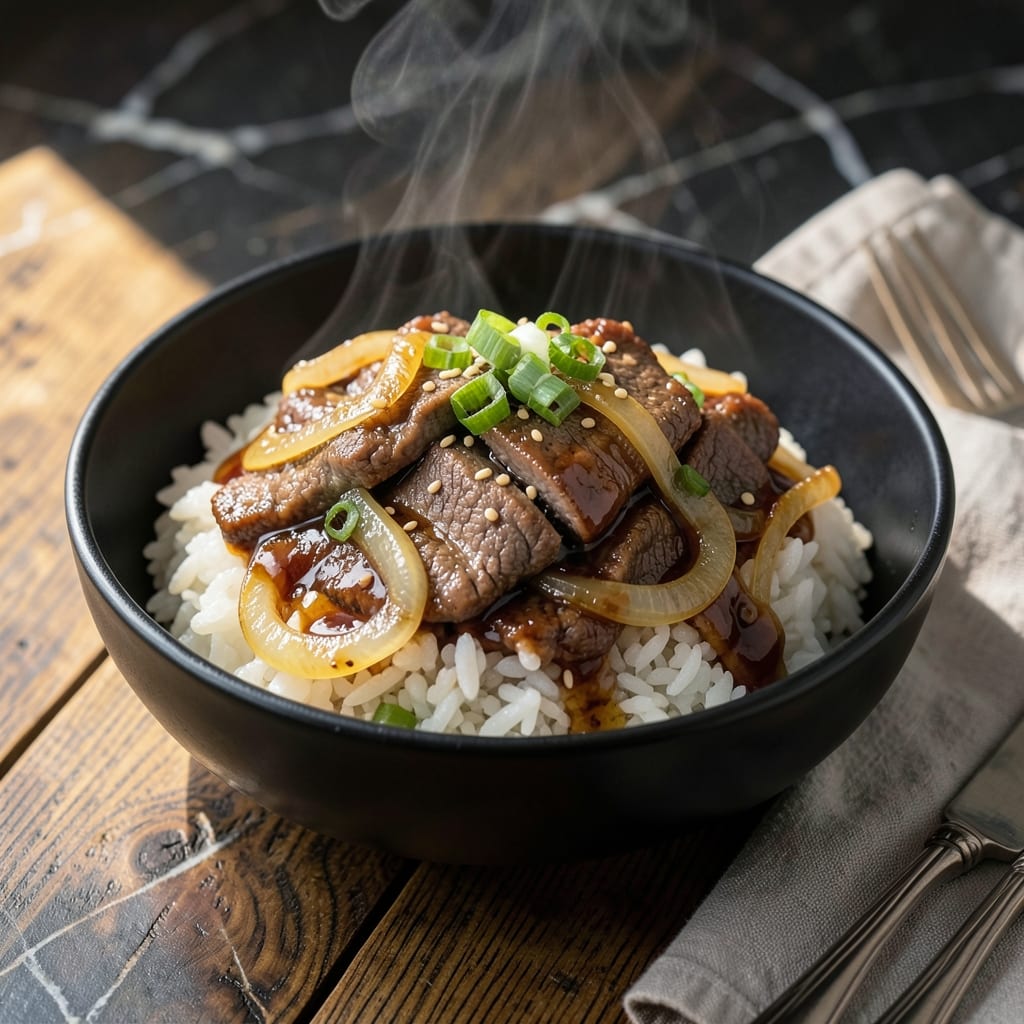
This Instant Pot version of the classic Japanese beef bowl delivers restaurant-quality results with minimal effort. I developed this adaptation to bring authentic flavors to busy weeknights.
The pressure cooker transforms tough beef into tender, flavorful strips in minutes, while onions absorb the savory-sweet sauce. Traditional gyudon relies on slow simmering—here, we achieve the same depth in 20 minutes.
You’ll love how the beef becomes silky, the onions melt into the sauce, and the broth reduces to a glossy finish. Serve over steamed rice for a comforting, complete meal.
Perfect for home cooks seeking authentic taste without the wait. This method respects tradition while embracing modern convenience.
Ingredients for Gyudon Recipe Instant Pot
Thin beef, sweet onions, and umami-rich sauces create this savory Japanese bowl.
| Ingredient | Amount | Notes |
|---|---|---|
| Thinly Sliced Beef 🥩 | 1 ½ lb | Ribeye or chuck preferred |
| Yellow Onions 🧅 | 2 whole | Thinly sliced, large |
| Soy Sauce 🫒 | ½ cup | Low-sodium recommended |
| Mirin 🍶 | ¼ cup | Sweet cooking rice wine |
| Sake 🍶 | ¼ cup | Dry Japanese rice wine |
| Granulated Sugar 🍚 | 2 tbsp | Balances savory flavors |
| Dashi Stock 🍲 | 1 cup | Japanese soup stock |
| Fresh Ginger 🌿 | 1 tbsp | Grated or minced |
| Garlic Cloves 🧄 | 3 cloves | Minced finely |
| Green Onions 🧅 | ½ cup | Thinly sliced for garnish |
| Steamed White Rice 🍚 | 4 cups | Cooked, for serving |
| Neutral Cooking Oil 🫒 | 1 tbsp | For sautéing beef |
| Sesame Seeds 🌰 | 1 tsp | Toasted, for garnish |
[recipe_ingredient_scaler]
The beef is key here. Ribeye or chuck work best—avoid lean cuts like sirloin that dry out. Asian markets often carry pre-sliced beef for sukiyaki or shabu-shabu, which saves prep time. For dashi stock, look for instant granules at Whole Foods or H Mart (or make your own with kombu and bonito flakes). Mirin and sake are in the same aisle—avoid cooking wine labeled ‘for cooking only.’
No mirin? 1 tbsp sugar plus 1 tbsp water per tablespoon of mirin works in a pinch. Sake can be swapped with dry white wine. For a gluten-free version, use tamari instead of soy sauce. The sugar can be reduced to 1 tbsp if you prefer less sweetness. Fresh ginger is non-negotiable though—ground ginger just doesn’t deliver the same zing.
Leftovers keep beautifully for 3-4 days in the fridge. The flavors deepen overnight, so it tastes even better the next day. Freeze for up to 2 months (without garnishes). Reheat gently with a splash of water to loosen the sauce.
Why You’ll Love This Recipe
- One-Pot Wonder: I toss in the beef, onions, and sauce, then let the Instant Pot do the work—minimal cleanup, maximum flavor.
- Umami Bomb: The soy, mirin, and sake blend into this rich, savory-sweet sauce that soaks into every bite of beef.
- Weeknight Savior: Honestly, it’s ready faster than takeout and tastes way better.
- Budget Stretcher: A little thinly sliced beef goes a long way, and leftovers reheat beautifully for lunch.
Step-by-Step Instructions for Savory Beef Bowl
Here’s how I achieve perfect texture and flavor in this quick, comforting dish.
Step 1: Sauté Aromatics and Beef
Set your Instant Pot to the Sauté function on normal heat. Add the 1 tbsp neutral cooking oil and swirl to coat the bottom. When hot, add the 1.5 lb thinly sliced beef and cook for 2-3 minutes until no longer pink, breaking it up with a wooden spoon as it cooks.
Push the beef to one side and add the 2 whole yellow onions, 1 tbsp fresh ginger, and 3 cloves garlic cloves. Sauté for another 2 minutes until the onions soften slightly and become translucent at the edges. The beef should be evenly browned and the onions just beginning to release their aroma.
Step 2: Deglaze and Add Liquids
Pour in the 0.25 cup sake and scrape the bottom of the pot with a wooden spoon to release all the browned bits. This deglazing step ensures maximum flavor in your final dish. Let the sake simmer for 1 minute until the liquid reduces slightly.
Add the 0.5 cup soy sauce, 0.25 cup mirin, 2 tbsp granulated sugar, and 1 cup dashi stock. Stir well to combine all the ingredients and dissolve the sugar. The liquid should be a rich amber color with the onions and beef evenly distributed throughout.
Step 3: Pressure Cook to Perfection
Secure the lid on your Instant Pot and set the valve to Sealing. Cook on high pressure for 5 minutes. The pot will take about 10 minutes to come to pressure before the timer begins. This short cooking time allows the beef to become tender while absorbing all the flavors of the sauce.
When the cooking time is complete, let the pressure release naturally for 5 minutes, then quick-release any remaining pressure. The beef should be tender and the onions soft, with the sauce slightly thickened. Open the lid carefully, tilting it away from you to avoid the steam.
Step 4: Finish and Serve
Give everything a good stir and taste for seasoning. The sauce should be well-balanced between sweet and savory. If needed, adjust with a touch more soy sauce for saltiness or mirin for sweetness.
Divide the 4 cups steamed white rice among serving bowls. Ladle the beef and onion mixture over the rice, making sure each portion gets plenty of sauce. Garnish with 0.5 cup green onions and 1 tsp sesame seeds for a fresh finish and added texture. Serve immediately while hot.
Pro Tips For Making Gyudon Recipe Instant Pot
- Sear Beef First: I learned this the hard way—searing the thinly sliced beef in the Instant Pot on “Sauté” mode for 2-3 minutes before pressure cooking locks in flavor and prevents a mushy texture.
- Slice Onions Thin: Sounds tedious, but thinly sliced yellow onions (about 1/8-inch thick) melt into the sauce better and distribute evenly through each bite.
- Deglaze Completely: After browning the beef, pour in 1/4 cup sake or water and scrape the bottom hard—those browned bits are pure umami, and skipping this risks a burn notice.
- Use Cold Beef: My grandmother swore by this: take the beef straight from the fridge to the pot. Cold meat releases less moisture, so your gyudon won’t turn into a watery mess.
Wine and Beer Pairings for This Dish
Japanese Beer Pairings
I love serving this with a crisp Asahi Super Dry or Sapporo—their clean, light profiles cut through the richness while complementing the umami flavors. The carbonation refreshes your palate between bites of the savory beef. 🍺
Sake Recommendations
A chilled junmai ginjo sake, like Gekkeikan Horin, enhances the dish’s Japanese roots. Its fruity notes balance the sweet-savory sauce beautifully. Serve in small ceramic cups to maintain tradition.
White Wine Options
For wine lovers, try a Pinot Grigio from California—its citrus undermines the dish’s richness. Riesling works too, especially off-dry styles that echo the mirin’s sweetness. Keep it lightly chilled. 🍷
Red Wine Choices
If you prefer red, go for a light-bodied Pinot Noir with bright acidity. Avoid heavy tannic wines like Cabernet—they’ll clash with the soy sauce. A slightly chilled Beaujolais also pairs nicely.
Non-Alcoholic Pairings
For non-drinkers, green tea (hot or iced) is traditional and cuts through the dish’s richness. Sparkling water with lemon also works well to cleanse your palate between bites.
Nutrition Facts
Frequently Asked Questions
Can I use a different cut of beef?
Ribeye or chuck work best for their marbling. Avoid lean cuts like sirloin as they can become tough. Pre-sliced sukiyaki beef from Asian markets saves prep time.
What if I don’t have dashi stock?
Use 1 cup beef or chicken broth plus 1 tsp soy sauce as a substitute. Instant dashi granules dissolved in hot water work too.
How do I prevent the sauce from being too sweet?
Reduce sugar to 1 tbsp or add an extra splash of soy sauce. Balance is key—taste and adjust to your preference.
Can I make this ahead of time?
Flavors deepen overnight. Store in an airtight container for up to 3-4 days in the fridge. Reheat gently with a splash of water.

Trained in classic French technique but raised on slow-cooked ribs and spicy rubs, she blends culinary skill with smoke and soul.
- Recipe for Boneless Pork Chops in Cast Iron Skillet: Sear and Baste to Juicy Perfection - October 3, 2026
- Recipe for Boneless Cross Rib Roast: Slow-Roasted Beef with Herb Crust - October 3, 2026
- Hamburgers in Sauce Recipe Crock Pot: Slow-Cooked Savory Delight - October 3, 2026