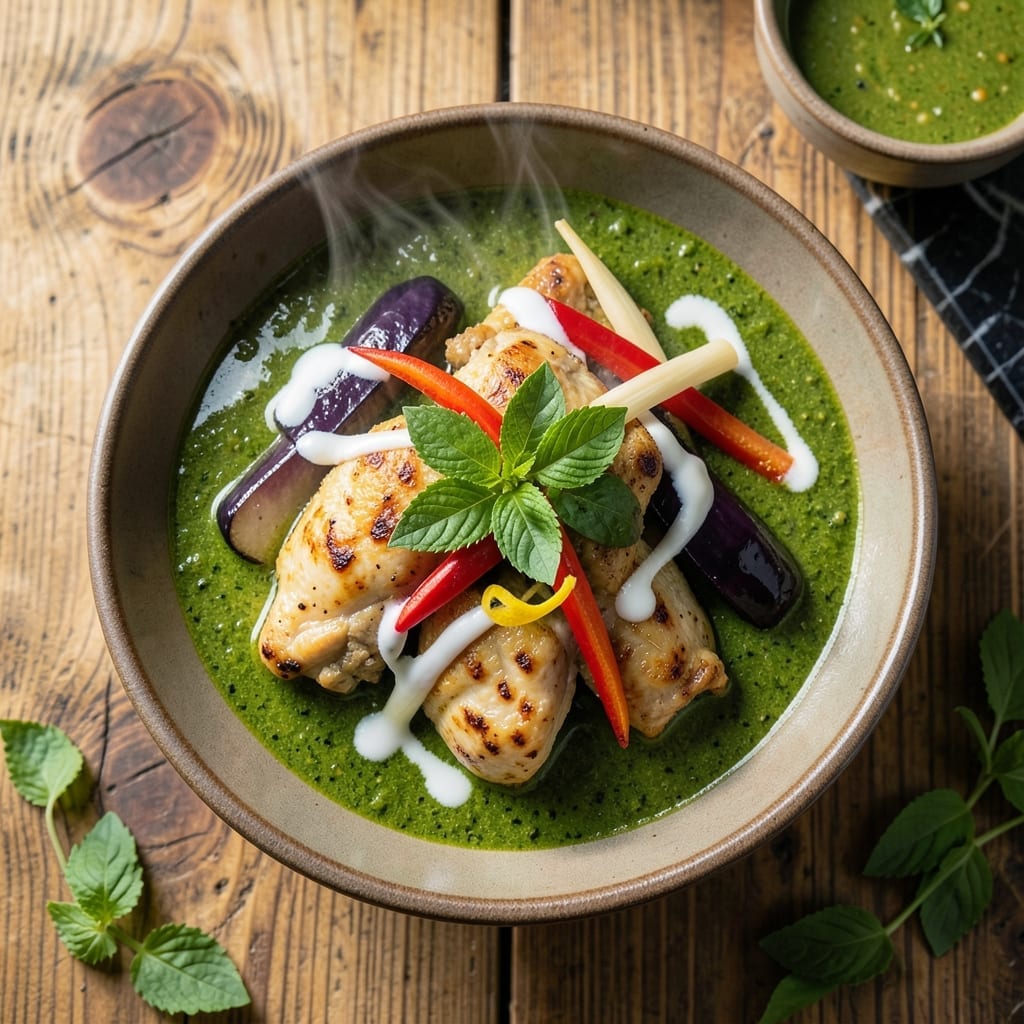
There’s something deeply satisfying about creating an authentic-tasting green curry at home with store-bought paste as your foundation. This dish delivers creamy, aromatic results without the complexity of making curry paste from scratch.
I developed this method by testing different paste brands in my small Boston kitchen, focusing on achieving restaurant-quality flavor balance. The coconut milk creates the signature velvety texture, while fresh herbs add bright notes that elevate each bite.
The process is straightforward: bloom the paste in coconut milk, add your protein and vegetables, then simmer until everything absorbs those complex Thai flavors. You’ll end up with a fragrant, creamy curry that tastes like it took hours to prepare.
Perfect for weeknight dinners when you want impressive results with minimal effort. The paste does most of the work, while you control the final outcome.
Ingredients for Green Curry Recipe Using Paste
Store-bought paste meets fresh coconut milk and herbs for this aromatic, velvety dish.
| Ingredient | Amount | Notes |
|---|---|---|
| Green Curry Paste 🌶️ | 3 tbsp | Store-bought Thai variety preferred |
| Full-Fat Coconut Milk 🥥 | 2 cans | 13.5 oz cans, well-shaken |
| Boneless Skinless Chicken Thighs 🍗 | 1 ½ lb | Cut into 1-inch pieces |
| Japanese Eggplant 🍆 | 2 whole | Sliced into rounds |
| Red Bell Pepper 🌶️ | 1 whole | Thinly sliced into strips |
| Bamboo Shoots 🌿 | ½ cup | Canned, drained and rinsed |
| Thai Basil Leaves 🌿 | ½ cup | Fresh, loosely packed |
| Fish Sauce 🐟 | 1 ½ tbsp | Thai variety recommended |
| Palm Sugar 🍯 | 1 tbsp | Or substitute brown sugar |
| Fresh Lime Juice 🍈 | 1 tbsp | About 1 lime |
| Fresh Kaffir Lime Leaves 🍃 | 6 pieces | Torn, optional but recommended |
| Vegetable Oil 🫒 | 1 tbsp | Neutral-flavored for sautéing |
| Kosher Salt 🧂 | 1 tsp | Adjust to taste |
[recipe_ingredient_scaler]
The curry paste is non-negotiable here. Maesri or Thai Kitchen are my go-tos from the international aisle at Market Basket or Whole Foods—avoid anything labeled ‘curry powder’ instead of ‘paste.’ Full-fat coconut milk is key for that restaurant-quality creaminess (light versions separate and thin out). For the chicken, thighs stay juicier than breasts during the simmer. Grab them skin-on if you want extra flavor, just remove the skin before cooking.
No chicken? Shrimp or tofu work beautifully—just adjust cooking time (shrimp takes 3-4 minutes, tofu just needs to absorb the flavors). Out of Thai basil? Regular basil plus a little mint gets you close. Missing kaffir lime leaves? Lime zest plus a bay leaf in a pinch. Fish sauce is irreplaceable for umami, but soy sauce or tamari works if you’re vegetarian (use half the amount).
This actually improves overnight as the flavors meld. Keeps 4-5 days in the fridge, freezes beautifully for 3 months. I like to freeze in portions so I can pull out exactly what I need. Just thaw and reheat gently—don’t boil or the coconut milk might separate (worth the extra minute).
Why You’ll Love This Recipe
- One Pot Wonder: I just dump the paste, coconut milk, and veggies in—no fancy steps, and it still tastes like a restaurant dish.
- Deeply Aromatic: The green curry paste and coconut milk blend into this rich, fragrant sauce that soaks into the chicken and eggplant beautifully.
- Feeds a Crowd: I make a big batch on Sunday and it reheats like a dream for lunches all week.
- Budget Stretcher: Chicken thighs and eggplant keep it affordable, and honestly, it tastes even better the next day.
Step-by-Step Instructions for Thai Green Curry
Build layers of flavor with this foolproof method for rich, aromatic results.
Step 1: Bloom the Curry Paste in Oil
Heat the 1 tablespoon vegetable oil in a large pot over medium heat until it shimmers. Add the 3 tablespoons green curry paste and cook for 1-2 minutes, stirring constantly, until the paste becomes fragrant and slightly darkened.
This step awakens the paste’s spices and herbs, creating the flavor foundation. Press the paste against the bottom of the pot with your spoon to prevent burning. You’ll smell the aromatics intensify—that’s your signal it’s ready for the next step.
Step 2: Build the Coconut Milk Base
Pour in about ¼ cup of the 2 cans full-fat coconut milk (use the thick cream from the top of the cans first) and stir vigorously to dissolve the curry paste completely. The mixture will bubble and thicken slightly as the oil separates from the paste.
Once fully combined, add the remaining coconut milk and bring to a gentle simmer. This gradual approach prevents the coconut milk from curdling. You’re aiming for a smooth, velvety liquid with tiny oil droplets on the surface.
Step 3: Cook the Chicken and Vegetables
Add the 1.5 lb boneless skinless chicken thighs pieces and 1 teaspoon kosher salt. Stir well to coat the chicken in the sauce. Simmer uncovered for 8-10 minutes until the chicken turns opaque and is nearly cooked through.
Next, add the 2 whole Japanese eggplant, 1 whole red bell pepper, and 0.5 cup bamboo shoots. Cook for an additional 5-7 minutes until the vegetables are tender but still hold their shape and the chicken reaches 165°F internally.
Step 4: Season and Finish the Curry
Stir in the 1 tablespoon palm sugar, 1.5 tablespoons fish sauce, and 6 pieces fresh kaffir lime leaves. Simmer for 2 minutes to allow the flavors to meld. The sugar balances the heat, while the fish sauce adds umami depth.
Taste and adjust seasoning if needed. The sauce should be rich and complex, with a perfect balance of spicy, sweet, salty, and sour notes. Remove from heat and stir in the 1 tablespoon fresh lime juice just before serving.
Step 5: Add Fresh Basil and Serve
Gently fold in the 0.5 cup Thai basil leaves and let them wilt in the residual heat for about 30 seconds. The basil adds a bright, aromatic finish that complements the creamy sauce.
Serve immediately over steamed jasmine rice. The curry should have a thick, velvety consistency that clings to the chicken and vegetables. Each bite delivers the creamy coconut base with bursts of fresh basil and tender chicken.
Pro Tips For Making Green Curry Recipe Using Paste
- Bloom the paste: Cook the green curry paste in a bit of coconut milk for 2-3 minutes until fragrant—I learned this the hard way after my first few curries tasted flat and raw.
- Skip the low-fat: Full-fat coconut milk is non-negotiable here; the lower-fat versions separate and won’t give you that rich, velvety sauce.
- Sear the chicken first: Brown the chicken thighs in the pot before adding liquids; this builds depth of flavor and prevents a watery curry.
- Salt the eggplant: Sprinkle the sliced Japanese eggplant with salt and let it sit for 10 minutes, then pat dry—this removes bitterness and helps it soak up the curry sauce.
Perfect Pairings for green curry recipe using paste
Rice Pairings
Steamed jasmine rice is the classic choice—I use 1 cup rice to 1½ cups water ratio for perfect fluffiness. For extra aroma, cook the rice with 1 pandan leaf or a splash of coconut milk. 🌟
No-Rice Alternatives
For lower carbs, serve over cauliflower rice or shirataki noodles. I’ve tested both in my Boston kitchen, and they soak up the sauce beautifully while keeping the dish light.
Fresh Garnishes
Top each bowl with extra Thai basil, thin lime wedges, and sliced red chili for color and heat. A sprinkle of crushed peanuts adds crunch that contrasts the creamy sauce.
Wine Pairings
A crisp Riesling or Gewürztraminer complements the spice and coconut. I prefer a slightly off-dry Moscato from Italy—its honeyed notes balance the heat. 🍷
Beer Options
Thai beers like Singha or Chang are traditional choices. For craft options, a wheat beer or IPA with citrus notes works well to cut through the richness.
Side Dishes
A simple cucumber salad with rice vinegar and chopped peanuts refreshes the palate. Or try stir-fried greens like bok choy for a complete Thai-inspired meal.
Nutrition Facts
Frequently Asked Questions
How do I adjust the spice level?
Start with 2 tablespoons paste for milder heat. For more fire, use the full 3 tablespoons or add 1 sliced Thai chili. Balance with extra coconut milk to cool it down.
Can I make this ahead of time?
The flavors deepen overnight. Store in an airtight container for up to 5 days in the fridge or freeze for 3 months. Reheat gently to avoid separating the coconut milk.
What if my coconut milk separates?
Don’t panic! Just whisk vigorously before adding to the pot. If it separates while cooking, lower the heat and stir continuously until smooth. Full-fat brands like Thai Kitchen resist splitting best.
Can I use a different protein?
Yes! Swap chicken for shrimp (cook 3-4 minutes) or tofu (add with veggies). For beef, use thin slices and simmer 10-12 minutes until tender.

Trained in classic French technique but raised on slow-cooked ribs and spicy rubs, she blends culinary skill with smoke and soul.
- Recipe for Boneless Pork Chops in Cast Iron Skillet: Sear and Baste to Juicy Perfection - October 3, 2026
- Recipe for Boneless Cross Rib Roast: Slow-Roasted Beef with Herb Crust - October 3, 2026
- Hamburgers in Sauce Recipe Crock Pot: Slow-Cooked Savory Delight - October 3, 2026