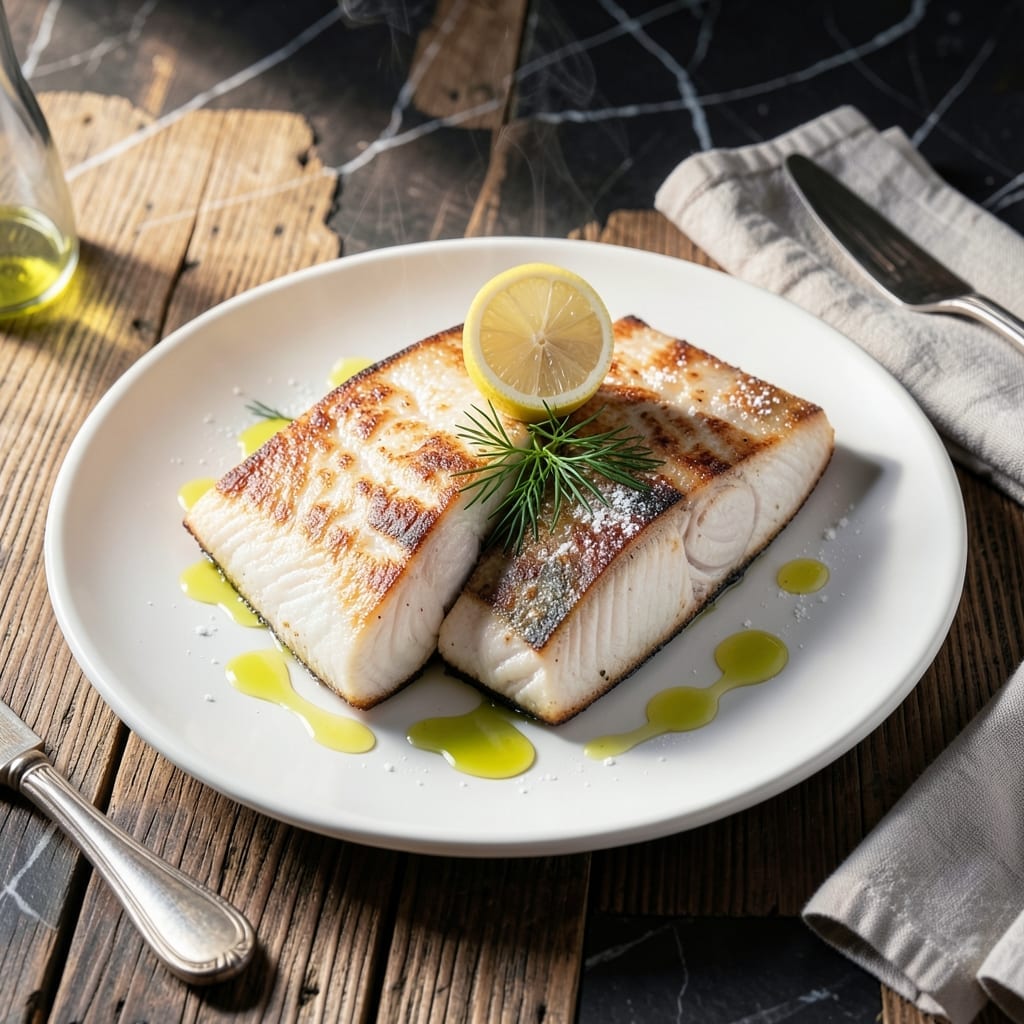
Mastering pan-fried halibut at home delivers restaurant-quality results with minimal effort. The key is achieving crisp skin while maintaining tender, flaky flesh inside.
I developed this technique after years of trial and error, focusing on proper heat control and timing. The skin becomes shatteringly crispy, while the flesh stays moist and buttery, creating the perfect textural contrast.
With just a few simple ingredients and a hot pan, you can create a dish that rivals any seafood restaurant. The method works consistently, whether you’re cooking for two or a crowd.
This pan-fried halibut makes an elegant main course that’s surprisingly straightforward. Serve with lemon wedges and fresh herbs for a complete meal.
Ingredients for Halibut Fish Recipe Pan Fried
Skin-on halibut fillets plus pantry staples deliver restaurant-quality results at home.
| Ingredient | Amount | Notes |
|---|---|---|
| Halibut Fillets 🐟 | 1 ½ lb | Skin-on, about 1-inch thick |
| Kosher Salt 🧂 | 1 ½ tsp | Diamond Crystal preferred |
| Freshly Ground Black Pepper 🌶️ | ½ tsp | Coarse grind for texture |
| All-Purpose Flour 🌾 | ¼ cup | For dredging fillets |
| High-Smoke-Point Oil 🫒 | 3 tbsp | Avocado or grapeseed oil |
| Unsalted Butter 🧈 | 2 tbsp | For basting fillets |
| Fresh Garlic Cloves 🧄 | 2 cloves | Minced for aroma |
| Fresh Thyme Sprigs 🌿 | 4 sprigs | Stems removed, chopped |
| Lemon 🍋 | 1 whole | Zested and juiced |
| Fresh Parsley 🌿 | ¼ cup | Chopped, for garnish |
| Fresh Dill 🌿 | 2 tbsp | Chopped, for finishing |
| Olive Oil 🫒 | 1 tbsp | For finishing herbs |
[recipe_ingredient_scaler]
The halibut quality is non-negotiable for this dish. Wild-caught Alaskan halibut from Whole Foods or a trusted seafood counter ensures optimal texture and flavor. Look for fillets with skin that appears moist and iridescent, not dried out or discolored. The thickness should be uniform—about 1-inch—to ensure even cooking. Freshness is key; the fish should smell like the ocean, not fishy.
No halibut available? Cod or haddock make excellent substitutes with similar flaky texture. For a more affordable option, tilapia or mahi-mahi work but may require adjusted cooking times. Ensure all substitutions are skin-on for proper crisping. If avoiding dairy, swap the butter for vegan butter or additional oil.
Store fresh halibut in the coldest part of your refrigerator for up to 2 days. For longer storage, freeze fillets wrapped tightly in plastic and foil for up to 3 months. Thaw overnight in the refrigerator before cooking for best results.
Why You’ll Love This Recipe
- One Pan Magic: I just season, dredge, and fry—no fancy techniques, and cleanup’s a breeze with just one pan.
- Crispy Perfection: That golden flour crust with tender halibut inside? Honestly, it’s the simplest way to get restaurant-quality flavor at home.
- Weeknight Hero: I’ve served this for quick dinners and even date nights—it’s unfussy but feels special.
- Budget-Friendly Luxe: Halibut feels like a splurge, but a little goes a long way, and the ingredients are all pantry basics.
Step-by-Step Instructions for Pan Fried Halibut
Here’s the method for achieving restaurant-quality results at home.
Step 1: Season and Dredge the Halibut Fillets
Pat the 1.5 lb Halibut Fillets completely dry with paper towels—this is crucial for achieving crisp skin. Season both sides evenly with 1.5 tsp Kosher Salt and 0.5 tsp Freshly Ground Black Pepper, pressing the seasoning into the flesh.
Dredge each fillet lightly in 0.25 cup All-Purpose Flour, shaking off any excess. The flour creates a delicate crust that locks in moisture and ensures even browning. Let the dredged fillets rest for 5 minutes while you heat the pan.
Step 2: Sear the Fillets in High-Smoke-Point Oil
Heat 3 tbsp High-Smoke-Point Oil in a large skillet over medium-high heat until it shimmers but doesn’t smoke. Place the fillets in the pan skin-side down first, pressing gently with a fish spatula for 10 seconds to prevent curling.
Cook undisturbed for 4-5 minutes until the skin is deep golden brown and crisp. The edges should appear opaque and the bottom two-thirds of each fillet should turn from translucent to white. Resist the urge to move the fillets—they’ll release naturally when ready.
Step 3: Flip and Baste with Aromatic Butter
Carefully flip the fillets and immediately reduce heat to medium. Add 2 tbsp Unsalted Butter, 2 cloves Fresh Garlic Cloves (minced), and 4 sprigs Fresh Thyme Sprigs (chopped) to the pan.
Tilt the skillet slightly and spoon the foaming butter over the fillets continuously for 2-3 minutes until the internal temperature reaches 145°F. The butter will turn a light hazelnut brown and smell nutty—this is the perfect moment to remove the pan from heat.
Step 4: Finish with Bright Citrus and Fresh Herbs
Transfer the fillets to a serving plate. Zest 1 whole Lemon over the fish, then squeeze 1 tbsp of its juice evenly across the fillets. The acidity cuts through the richness of the butter.
In a small bowl, toss 0.25 cup Fresh Parsley and 2 tbsp Fresh Dill (both chopped) with 1 tbsp Olive Oil. Spoon this herb mixture over the fillets just before serving. The residual heat will gently wilt the herbs, releasing their aromas.
Pro Tips For Making Halibut Fish Recipe Pan Fried
- Pat Dry Thoroughly: Halibut releases a lot of moisture—blot the fillets with paper towels until they’re bone-dry, or the flour won’t stick and you’ll end up steaming instead of frying.
- Heat the Pan First: Get that oil shimmering hot before adding the fish—about 375°F if you’re using a thermometer. I learned this the hard way after too many pale, soggy fillets.
- Skip the Overcrowding: Cook in batches if needed. Crowding the pan drops the temperature fast, and halibut turns rubbery if it sits in cooling oil.
- Rest Before Serving: Give the fish 3-4 minutes on a warm plate after frying—it keeps the juices inside instead of all over your cutting board.
Best Sauces and Condiments for This Recipe
Lemon Butter Sauce
Melt 4 tbsp unsalted butter in a small saucepan over low heat, then whisk in 2 tbsp fresh lemon juice and 1 tsp lemon zest. Add 1 minced garlic clove and 1 tbsp chopped dill for a bright, aromatic finish. Drizzle over fillets just before serving. 💛
Garlic Herb Pan Sauce
After cooking the halibut, pour out excess oil but leave the browned bits. Add 2 tbsp minced shallots and sauté for 1 minute, then deglaze with ¼ cup dry white wine. Finish with 2 tbsp cold butter and 1 tbsp chopped thyme for a rich, savory sauce.
Tartar Sauce
Mix ½ cup mayonnaise with 1 tbsp capers, 1 tbsp finely chopped cornichons, and 1 tsp Dijon mustard. Stir in 1 tbsp chopped parsley and 1 tsp lemon juice for a classic pairing. Serve chilled alongside the crispy halibut.
Salsa Verde
Blend 1 cup parsley, ¼ cup capers, 2 anchovy fillets, and 1 garlic clove in a food processor. Slowly add ½ cup olive oil until smooth. The briny, herby flavor cuts through the richness beautifully.
Spicy Aioli
Whisk ½ cup mayonnaise with 1 tbsp sriracha and 1 tsp smoked paprika. Add 1 minced garlic clove and 1 tbsp lime juice for a creamy, spicy kick. Perfect for dipping or drizzling. 🔥
Nutrition Facts
Frequently Asked Questions
What’s the best oil for pan frying halibut?
Use a high-smoke-point oil like avocado or grapeseed to prevent burning. These handle medium-high heat without breaking down or imparting off-flavors.
How do I know when the halibut is done?
Check the internal temperature with a meat thermometer—it should read 145°F. The flesh will also turn opaque and flake easily with a fork.
Can I skip the flour dredging?
Dredging helps create a crisp crust and prevents sticking. Without it, the skin may not brown evenly, and you risk the fillets falling apart.
Why did my halibut stick to the pan?
This usually means the pan wasn’t hot enough or you moved the fillets too soon. Heat the oil until it shimmers, then wait 10 seconds after adding the fish before touching it.

Trained in classic French technique but raised on slow-cooked ribs and spicy rubs, she blends culinary skill with smoke and soul.
- Roasted Brisket Recipe: Low-and-Slow Smoky Tenderness Without Dryness - October 15, 2026
- Best Passover Beef Brisket Recipe: Molasses-Spiced Slow-Cooked Masterpiece - October 15, 2026
- Jamie Oliver’s Fast and Simple Brisket Recipe: Smoky-Sweet One-Pan Magic - October 15, 2026