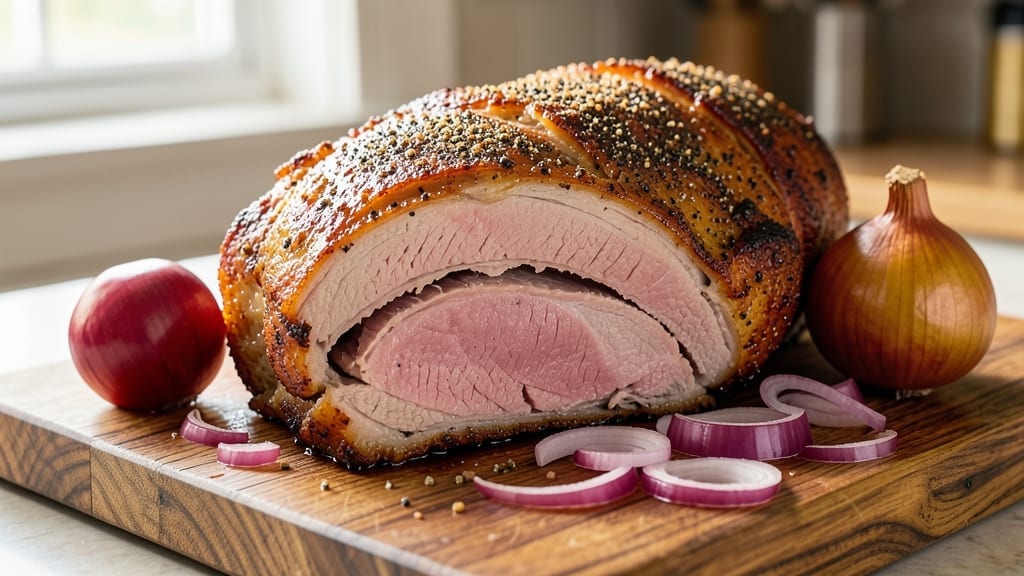
This roasted brisket recipe delivers that legendary Texas-style tenderness without the smoker—just your home oven and a precise method I perfected after years of testing.
The secret lies in slow roasting at a controlled temperature, where collagen breaks down into rich, juicy flavors while the exterior develops a deep, caramelized crust.
My first attempt at brisket in Nana Mae’s diner kitchen taught me patience pays off, and this version keeps the meat moist through every bite.
What sets this apart is the two-stage cooking process: starting with a high-heat sear for flavor development, then shifting to low-and-slow roasting at 225°F for hours until the internal temperature reaches 203°F.
The rub—just salt, pepper, garlic powder, and smoked paprika—lets the meat’s natural richness shine without masking its depth. David’s first taste test confirmed it: the texture is fork-tender, the bark is crisp, and there’s not a dry bite in sight.
By the time you slice against the grain, you’ll have brisket that rivals any competition-style cut—smoky, rich, and packed with flavor. The key is letting it rest for 30 minutes before serving, allowing juices to redistribute.
This method works equally well on a grill or in a Dutch oven, making it versatile for any cookout or holiday feast.
Pair with classic sides like creamy coleslaw, buttery cornbread, or roasted sweet potatoes to complete the meal. The brisket’s natural sweetness makes it perfect for sandwiches the next day too. Here’s how to achieve that restaurant-quality result at home—every time.
Ingredients for roasted brisket
Six pounds of brisket and five simple ingredients transform into Texas-style perfection.
| Ingredient | Amount | Notes |
|---|---|---|
| Whole Brisket 🥩 | 6 lb | Packer cut, fat cap intact |
| Kosher Salt 🧂 | 2 tbsp | Diamond Crystal preferred |
| Freshly Ground Black Pepper 🌶️ | 1 ½ tbsp | Coarse grind preferred |
| Garlic Powder 🧄 | 2 tsp | Freshly ground preferred |
| Smoked Paprika 🌶️ | 1 ½ tbsp | High-quality for depth |
| Yellow Onion 🧅 | 1 whole | Yellow or red, sliced |
| Fresh Garlic Cloves 🧄 | 6 cloves | Peeled, roughly chopped |
| Extra-Virgin Olive Oil 🫒 | 2 tbsp | For searing, high quality |
| Beef Broth 💧 | 1 cup | Low-sodium preferred |
| Apple Cider Vinegar 🍎 | 2 tbsp | For tenderizing |
| Fresh Rosemary 🌿 | 2 sprigs | For aroma, optional |
| Fresh Thyme 🌿 | 2 sprigs | For aroma, optional |
[recipe_ingredient_scaler]
The brisket is non-negotiable—packer cut with intact fat cap is key for moisture. Costco or local butchers usually carry this whole; ask for the flat cut if available. Look for vibrant color and good marbling. I always buy a little extra—David’s favorite—because it freezes beautifully. The fat cap acts as a natural barrier against drying out during the long roast. If your butcher doesn’t have it pre-trimmed, leave the silver skin on too—it keeps the meat juicy. For the spices, Penzeys smoked paprika has the best depth, but McCormick works in a pinch.
No fresh rosemary? Dried works at half the amount, but fresh has that piney aroma that pairs perfectly. Short on garlic powder? Fresh garlic cloves roasted with the onion make a great substitute—just toss them in the pan after searing. The apple cider vinegar might seem odd, but it tenderizes the meat during the low-and-slow phase. Trader Joe’s has a great organic version if you want to skip the store brand. For the beef broth, low-sodium is crucial—you don’t want to over-salt the meat. If you’re making this ahead, prep the rub and aromatics the night before so you can start cooking first thing in the morning.
Brisket reheats beautifully—15 minutes at 275°F wrapped in foil is perfect. The leftovers keep for 5 days in the fridge or 3 months frozen. I portion the slices into quart-size freezer bags for easy sandwiches later. The fat cap makes it ideal for reheating—just slice off a piece and warm it up. For serving, let the brisket rest 30 minutes before slicing—this is where the magic happens as the juices redistribute. Trust me on this: no one wants dry brisket.
Why You’ll Love This Recipe
- One-Pan Magic: I swear by this—just salt, pepper, and a sprinkle of garlic powder on a whole brisket, then roast. No basting, no fuss, no extra pots. The oven does all the work while I sip my coffee.
- Smoky Depth Without Effort: That smoked paprika? It turns a simple cut into something rich and complex. The crust gets crispy, the inside stays tender, and honestly, it’s the kind of flavor that makes you want to eat it straight from the pan.
- Weeknight Hero: Between us, this is my go-to for game day, lazy Sundays, or when I’m too tired to cook. Serve it with mashed potatoes or a crusty loaf, and suddenly you’ve got a meal that feels like a restaurant dish—no stress.
- Budget-Friendly Feast: A whole brisket feeds a crowd for half the cost of pre-made roasts. Leftovers? Even better. Shred it for tacos, sandwiches, or reheat slices—it’s the kind of meal that keeps giving long after dinner’s over.
Step-by-step instructions for roasted brisket
Here’s the method: low-and-slow roasting that guarantees tender, juicy brisket every time.
Prepare and Season the Brisket
Start by removing the brisket from the refrigerator and letting it sit at room temperature for 30 minutes. This ensures even cooking throughout. While it warms, trim any excess fat from the surface, leaving about ¼ inch of fat cap intact—this protects the meat during roasting.
In a small bowl, combine the 2 tablespoons kosher salt, 1.5 tablespoons freshly ground black pepper, 2 teaspoons garlic powder, and 1.5 tablespoons smoked paprika. Rub this mixture generously over all sides of the brisket, pressing it into the meat so it adheres well. The spices should form a visible crust on the surface.
Real talk: Don’t skip the rubbing step. The spices penetrate the meat during the long cook, creating depth of flavor that dry rubs alone can’t match. This is where the magic begins.
Sear and Build Flavor Base
Preheat your oven to 300°F. Heat a large Dutch oven or heavy roasting pan over medium-high heat until hot. Add the 2 tablespoons extra-virgin olive oil and swirl to coat the bottom evenly.
Place the brisket fat-side down in the pan and sear for 8-10 minutes until the fat renders and the bottom develops a deep golden-brown crust. Flip the brisket and sear the other side for another 8-10 minutes. This step creates the foundational flavor and texture that sets this roasted method apart from simple oven cooking.
Here’s the thing—don’t rush the searing. You’ll know it’s ready when the brisket releases easily from the pan and the fat shimmers. If it sticks, add a splash of water and scrape up the browned bits—they’re packed with flavor.
Create the Roasting Liquid and Slice the Onion
Remove the brisket from the pan and set it aside. In the same pan, add the 1 whole yellow onion sliced into ¼-inch thick rounds, the 6 cloves fresh garlic roughly chopped, the 2 sprigs fresh rosemary and 2 sprigs fresh thyme (leaves stripped from stems), and the 2 tablespoons apple cider vinegar. Sauté for 3-4 minutes until the onion softens and becomes fragrant.
Pour in the 1 cup beef broth and scrape up any browned bits from the bottom of the pan. Bring to a gentle simmer and let it reduce by about half, which should take 5-7 minutes. This aromatic liquid will infuse the brisket with even more flavor during the roast.
I know it seems like a small step, but this reduction creates a flavorful bath that keeps the meat moist. The vinegar also helps tenderize the meat further during the long cook.
Roast Low and Slow
Return the brisket to the Dutch oven, fat-side up, and pour the reduced onion mixture over the top. Cover the pan tightly with a lid or foil. Place in the preheated 300°F oven and roast for 3-4 hours.
Here’s where patience pays off: The low temperature breaks down collagen in the meat, transforming it into gelatin that keeps the brisket moist and tender. Check the internal temperature after 3 hours—it should be around 160°F at this point. If it’s not, continue roasting for another 30-60 minutes.
Your oven might run hot, so start checking at the 20-minute mark before the estimated time. The brisket is done when it reaches 195-203°F internally and is fork-tender with no resistance. This is the “probe-tender” stage where the meat practically falls apart.
Rest and Slice
Remove the brisket from the oven and transfer it to a cutting board. Tent loosely with foil and let it rest for at least 30 minutes (I prefer 1 hour if possible). This resting period allows the juices to redistribute throughout the meat, ensuring each slice is moist and flavorful.
While it rests, slice the brisket against the grain into ¼-inch thick slices. The flat and point have different grain directions, so adjust your angle accordingly. Serve immediately with the pan juices spooned over the top. The brisket should be rich, smoky, and tender enough to pull apart with a gentle tug.
Don’t skip the resting—this is the moment that matters. The brisket will stay warm while the juices settle, and you’ll end up with slices that are perfectly tender and packed with flavor.
Pro Tips For Making Roasted Brisket
- Trim the Fat First: A whole brisket’s fat cap acts like insulation—roast it uncovered, and you’ll end up with grease-soaked meat instead of a crispy crust. Use kitchen shears to trim about ¼-inch off the thickest parts before seasoning. (Yes, even if you’re tempted to skip it—this is the thing that matters most for browning.)
- Salt Like It’s 1920: Kosher salt isn’t just for flavor—it’s for texture. Generously coat the brisket and the fat cap with salt at least 12 hours ahead (overnight works best). The salt breaks down proteins, ensuring a better crust and juicier interior. I learned this the hard way after dry-roasting a brisket that tasted bland no matter how long I cooked it.
- Start Hot, Finish Slow: Don’t let the oven creep up to temperature while your brisket sits there waiting. Preheat to 425°F, then roast the brisket uncovered for the first 30 minutes to sear the exterior. After that, drop to 300°F—this two-stage approach guarantees a caramelized crust without overcooking the inside. (Your future self will thank you when you slice into perfect doneness.)
- Skip the Crowding: If you’re roasting on a sheet pan, resist the urge to stack or overlap briskets. They need airflow to crisp, not a steam bath. Space them at least 1 inch apart, and if your pan is crowded, roast in batches. I was skeptical until I tried it—now I never go back to the “tight fit” method.
Best sauces and condiments for this roasted brisket
Classic BBQ Sauce
My go-to for brisket is a tangy, smoky Texas-style BBQ sauce that complements the deep flavors without overpowering.
I blend ½ cup ketchup, ¼ cup apple cider vinegar, 2 tbsp brown sugar, 1 tbsp smoked paprika, 1 tsp garlic powder, and ½ tsp cayenne pepper.
Simmer for 10 minutes until thickened, then brush on the brisket during the last 30 minutes of roasting. The acidity cuts through the richness beautifully. 🍯
Creamy Horseradish Sauce
For a bold kick, try a horseradish cream sauce that adds a sharp, refreshing contrast. Mix ½ cup sour cream, 2 tbsp prepared horseradish, 1 tbsp Dijon mustard, and 1 tsp Worcestershire sauce.
Thin with a splash of beef broth if needed. Serve on the side or drizzle over sliced brisket for a restaurant-worthy touch. This sauce is a game-changer for brisket sandwiches too.
Spiced Peach Glaze
Sweet and smoky go hand-in-hand with brisket. My peach glaze combines ½ cup peach preserves, 2 tbsp apple cider vinegar, 1 tbsp honey, and ½ tsp cinnamon.
Simmer for 5 minutes until smooth, then brush on during the last 20 minutes of roasting. The caramelized peaches add a fruity depth that pairs perfectly with the rich meat. 🍑
Garlic Butter Baste
A simple yet luxurious option is garlic butter basting. Melt 4 tbsp unsalted butter with 3 minced garlic cloves and 1 tbsp fresh rosemary, then brush over the brisket every 30 minutes during the roast.
The aroma alone makes this worth it. For extra richness, finish with a sprinkle of flaky sea salt right before serving. This method keeps the brisket moist while adding a luxurious finish.
Smoky Chipotle Aioli
For a creamy, smoky dip or topping, whip ½ cup mayonnaise, 1 tbsp chipotle pepper in adobo, 1 tsp lime juice, and ½ tsp smoked paprika. Adjust the chipotle to taste—this pairs especially well with the brisket’s natural smokiness.
Serve alongside or drizzle over sliced brisket for a bold, creamy contrast. The heat level is mild but noticeable, making it a crowd-pleaser.
Classic Onion Gravy
No brisket meal is complete without gravy. Sauté 1 cup diced onions in 2 tbsp butter until caramelized, then deglaze with 2 tbsp beef broth. Stir in 2 tbsp all-purpose flour to make a roux, then gradually whisk in 2 cups more beef broth until smooth.
Simmer for 5 minutes until thickened. This gravy soaks up beautifully when poured over sliced brisket, turning every bite into a decadent experience. 🥄
Nutrition facts
Frequently asked questions
Can I use a different cut of beef instead of brisket?
While brisket is ideal for this method, you can adapt it for other tough cuts like chuck roast or short ribs. The low-and-slow principle applies, but adjust cooking times—chuck roast typically needs 4-5 hours at 275°F. For pork, try pork shoulder with similar techniques, but reduce the target temperature to 195-200°F. The key is patience with collagen-rich cuts.
How do I know when the brisket is done without a meat thermometer?
If you don’t have a thermometer, look for these signs: The brisket should pull apart easily with two forks, and the juices should run clear. The bark (crust) should be deep brown and crispy, while the internal color transitions from pink to light gray. For extra confidence, press your finger gently—if it leaves a deep indentation, it’s likely done. This method takes practice, so start checking after 3 hours.
Can I make this brisket in a slow cooker?
Yes! Sear the brisket first in a skillet, then transfer it to your slow cooker with the reduced onion mixture. Cook on low for 8-10 hours or high for 5-6 hours until tender. The texture will be slightly different (more shreddable), but still delicious. For best results, use a 6-quart slow cooker and add ½ cup beef broth halfway through if needed to prevent drying.
Why did my brisket turn out dry?
Dry brisket usually happens from one of three mistakes: overcooking (past 203°F), skipping the rest, or not leaving enough fat. Always let it rest 30+ minutes before slicing, and keep the fat cap intact. If it’s still dry, try wrapping the brisket in foil during the last 1-2 hours of cooking to trap moisture. The low-and-slow method should yield fork-tender results—don’t rush it!
How far ahead can I prep this recipe?
You can prep everything 2 days ahead! Mix the rub and chop aromatics in advance. Store the brisket (unseasoned) in the fridge, then season and cook as directed. For leftovers, slice and freeze portions in quart-size bags for up to 3 months. Reheat in a 300°F oven for 15 minutes wrapped in foil. The flavors actually improve overnight!

Trained in classic French technique but raised on slow-cooked ribs and spicy rubs, she blends culinary skill with smoke and soul.
- Roasted Brisket Recipe: Low-and-Slow Smoky Tenderness Without Dryness - October 15, 2026
- Best Passover Beef Brisket Recipe: Molasses-Spiced Slow-Cooked Masterpiece - October 15, 2026
- Jamie Oliver’s Fast and Simple Brisket Recipe: Smoky-Sweet One-Pan Magic - October 15, 2026