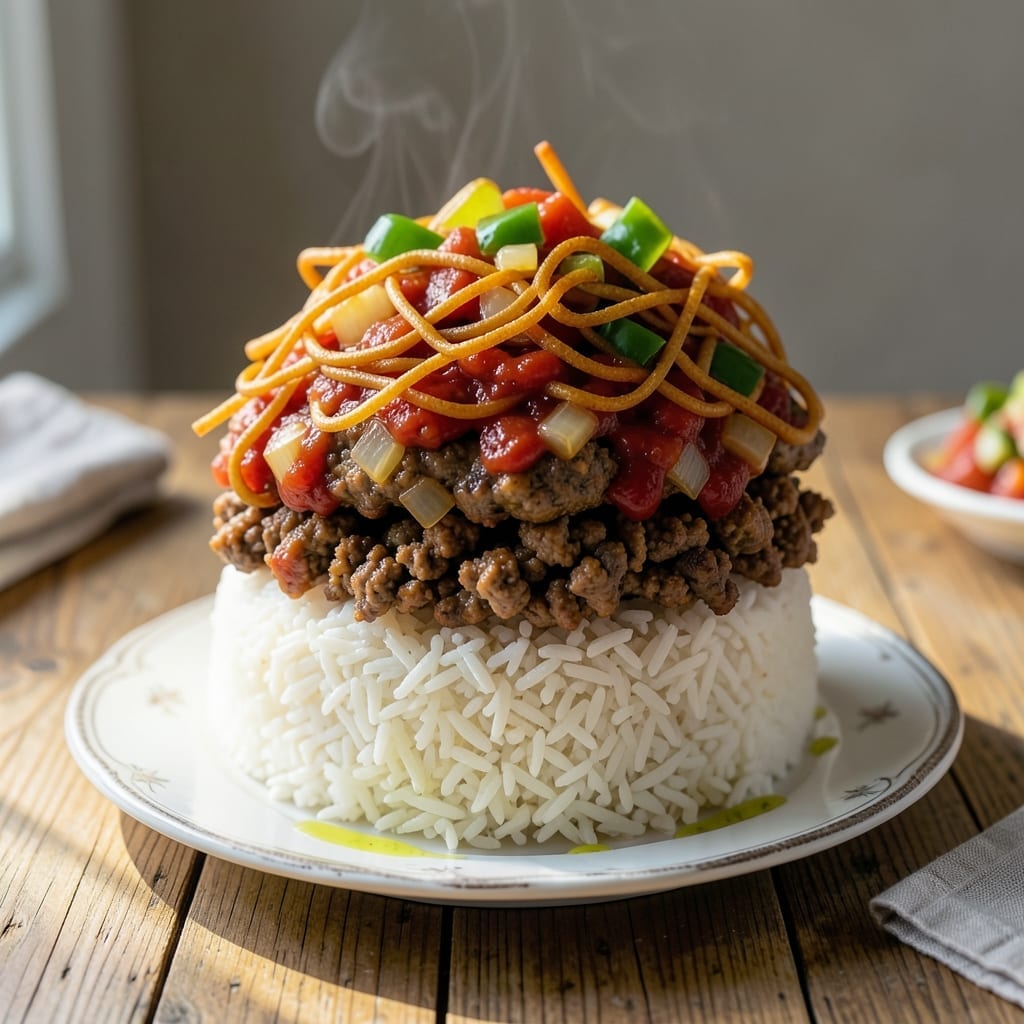
This skillet dish revives a midwestern classic with a satisfying twist. The combination of crispy noodles, tender rice, and savory sauce creates a texture contrast that’s hard to resist.
I developed this version after testing multiple ratios to achieve the perfect balance. The rice absorbs the rich flavors while maintaining its individual grains, and the noodles crisp up beautifully under the broiler.
What you get is a hearty, one-pan meal that’s both comforting and visually impressive. The layers of texture and flavor make it a family favorite in my household.
Serve it straight from the skillet for maximum impact. This dish delivers on its promise of classic appeal with every bite.
Ingredients for Haystack Recipe with Rice
Crispy noodles, tender rice, and savory beef come together in this one-pan classic.
| Ingredient | Amount | Notes |
|---|---|---|
| Chow Mein Noodles 🍜 | 3 cups | Crispy fried, canned variety |
| Long-Grain White Rice 🍚 | 1 ½ cups | Uncooked, rinsed before cooking |
| Ground Beef 🥩 | 1 lb | 80/20 lean-to-fat ratio |
| Yellow Onion 🧅 | 1 whole | Medium, finely diced |
| Green Bell Pepper 🌶️ | 1 whole | Seeds removed, diced |
| Tomato Sauce 🍅 | 1 can | 15 oz can, no salt added |
| Beef Stock 🥫 | 1 ½ cups | Low-sodium preferred |
| Worcestershire Sauce 🫒 | 2 tbsp | Adds umami depth |
| Soy Sauce 🫒 | 1 tbsp | Low-sodium or regular |
| Garlic Cloves 🧄 | 2 cloves | Minced finely |
| Dried Thyme 🌿 | ½ tsp | Crushed between fingers |
| Dried Oregano 🌿 | ½ tsp | Crushed between fingers |
| Salt 🧂 | 1 tsp | Adjust to taste |
| Black Pepper 🌶️ | ½ tsp | Freshly ground preferred |
| Green Onions 🧅 | ½ cup | Thinly sliced, for garnish |
[recipe_ingredient_scaler]
The chow mein noodles are non-negotiable here—they’re what give this dish its signature crunch. La Choy is the brand I reach for (found in most grocery stores), but any crispy fried noodle works. For the beef, I prefer 80/20 ground chuck for flavor, but leaner works if you drain the fat. The rice should be long-grain white; jasmine or basmati add a nice fragrance (just rinse well first).
No ground beef? Ground turkey or pork swap in fine. Vegetarian? Try crumbled tempeh or lentils for texture. Fresh out of tomato sauce? Crushed tomatoes plus a pinch of sugar gets you close. The Worcestershire gives depth, but A1 or coconut aminos work in a pinch. Skip the soy sauce if using coconut aminos—they’re already salty.
This reheats beautifully in the skillet—add a splash of water to revive. Keeps 4-5 days in the fridge, freezes for 3 months. I make extra noodles on the side for topping (they lose crunch in storage).
Why You’ll Love This Recipe
- One Pot Wonder: I brown the beef, toss in the onions and peppers, then let the rice soak up all the flavor while the chow mein noodles stay crisp on top.
- Crunchy Contrast: That buttery chow mein crunch over the savory beef and rice? I make it just to hear my kids argue over who gets the last bite.
- Feeds the Crew: Between us, this stretches to feed six without breaking the bank—ground beef and rice go a long way.
- Leftovers Rock: Honestly, it tastes even better the next day when the noodles soften just enough but keep their bite.
Step-by-Step Instructions for Haystack With Rice
This classic skillet dish comes together quickly with simple, hands-on steps for a satisfying meal.
Step 1: Cook the Rice
Rinse the 1.5 cups long-grain white rice under cold water until the water runs clear. This removes excess starch and prevents gummy rice. In a medium pot, combine the rice with 3 cups water (double the rice volume) and bring to a boil.
Once boiling, reduce heat to low, cover, and simmer for 15-18 minutes until the liquid is absorbed and the rice is tender. Fluff with a fork and set aside. The rice should be light and separate easily—this forms the hearty base of your haystack.
Step 2: Brown the Ground Beef with Aromatics
In a large skillet over medium-high heat, cook the 1 lb ground beef until it starts to brown, breaking it into small crumbles with a wooden spoon. After 3-4 minutes, add the finely diced yellow onion and diced green bell pepper.
Cook for another 4-5 minutes until the beef is no longer pink and the vegetables soften. Stir in the minced garlic cloves, 1 tsp salt, 0.5 tsp black pepper, 0.5 tsp dried thyme, and 0.5 tsp dried oregano. The aroma will fill your kitchen—this is when you know the flavors are building.
Step 3: Build the Sauce and Combine
Pour in the 1 can tomato sauce, 1.5 cups beef stock, 2 tbsp Worcestershire sauce, and 1 tbsp soy sauce. Stir well and bring to a gentle simmer. Reduce heat to medium and let it cook for 5-7 minutes until the sauce thickens slightly and the flavors meld together.
Add the cooked rice to the skillet and stir to coat everything evenly in the rich, savory sauce. Let it heat through for 2-3 minutes, stirring occasionally. The rice should absorb some of the sauce but still retain its texture.
Step 4: Add the Chow Mein Noodles and Finish
Just before serving, fold in the 3 cups chow mein noodles. I like to reserve a handful to sprinkle on top for extra crunch. Stir gently to combine, ensuring the noodles stay crispy but are warmed through by the hot mixture.
Taste and adjust seasoning if needed. The noodles should add a satisfying crunch against the tender rice and beef. This contrast is what makes this dish so special.
Step 5: Garnish and Serve
Transfer the haystack to a serving dish and top with the reserved chow mein noodles. Sprinkle the 0.5 cup green onions over the top for a pop of freshness and color. The green onions cut through the richness and add a bright finish.
Serve immediately while the noodles are still crispy. Each bite should have a mix of textures—creamy rice, hearty beef, and that signature crunch from the chow mein noodles. Enjoy this classic just as it’s meant to be.
Pro Tips For Making Haystack Recipe With Rice
- Brown the Beef First: Cook the ground beef until deeply browned—about 7-8 minutes—before adding onions and peppers. I learned this the hard way; raw veggies release moisture that steams the beef instead of searing it.
- Rinse the Rice: Give the long-grain white rice a quick rinse under cold water before cooking to remove excess starch. This keeps it fluffy and prevents that gummy texture that ruins a haystack.
- Skip Soggy Noodles: Add the chow mein noodles last, just before serving, so they stay crisp. My first few attempts turned them into limp straws because I mixed them in too early.
- Use Day-Old Rice: Sounds weird, but it works: leftover rice from the fridge holds its shape better in the mix. Fresh rice is too moist and can turn the whole dish into a mushy pile.
Storing and Reheating Leftovers
Refrigerator Storage
Let your haystack cool for no more than 2 hours before transferring to airtight containers. I use glass Pyrex with snap-on lids from New Seasons Market. Store at 40°F or below for up to 4 days. The flavors meld beautifully overnight. ❄️
Freezer Storage
This dish freezes well for up to 3 months without significant quality loss. I recommend flat freezer bags (quart or gallon size) because they stack efficiently. Leave 1 inch of headspace for expansion and squeeze out excess air to prevent freezer burn.
Skillet Reheating
This is my preferred method because it maintains the best texture. Heat over medium-low heat for 8-10 minutes, stirring occasionally. Add a splash of beef stock if it looks dry. The noodles will crisp up again if uncovered for the last 2 minutes. 🔥
Microwave Reheating
For quick lunches, microwave individual portions covered with a damp paper towel. Heat on 70% power for 2-3 minutes, stir, then continue in 1-minute intervals until reaching 165°F. Add extra chow mein noodles on top for fresh crunch.
Noodle Storage Tip
I always make extra noodles on the side for topping when reheating. Store them in a separate container at room temperature to maintain maximum crispiness. Just sprinkle them on top after reheating the base mixture.
Nutrition Facts
Frequently Asked Questions
Can I use instant rice instead?
Yes, but adjust the liquid. Use 1.5 cups water for 1.5 cups instant rice and reduce simmer time to 5-7 minutes. It will be softer but still works.
Why do the noodles get soggy?
They absorb moisture over time. Add them last minute and store extra separately. For leftovers, revive in a skillet with the lid off for 2 minutes.
What can I substitute for beef stock?
Use chicken stock or vegetable broth in equal amounts. For extra depth, add 1 tsp beef bouillon to water. The flavor difference is minimal.
How do I make it vegetarian?
Swap beef for 1 lb crumbled tofu or lentils. Use vegetable stock and add 1 tbsp soy sauce extra for umami. The texture stays great.

Trained in classic French technique but raised on slow-cooked ribs and spicy rubs, she blends culinary skill with smoke and soul.
- Recipe for Boneless Pork Chops in Cast Iron Skillet: Sear and Baste to Juicy Perfection - October 3, 2026
- Recipe for Boneless Cross Rib Roast: Slow-Roasted Beef with Herb Crust - October 3, 2026
- Hamburgers in Sauce Recipe Crock Pot: Slow-Cooked Savory Delight - October 3, 2026