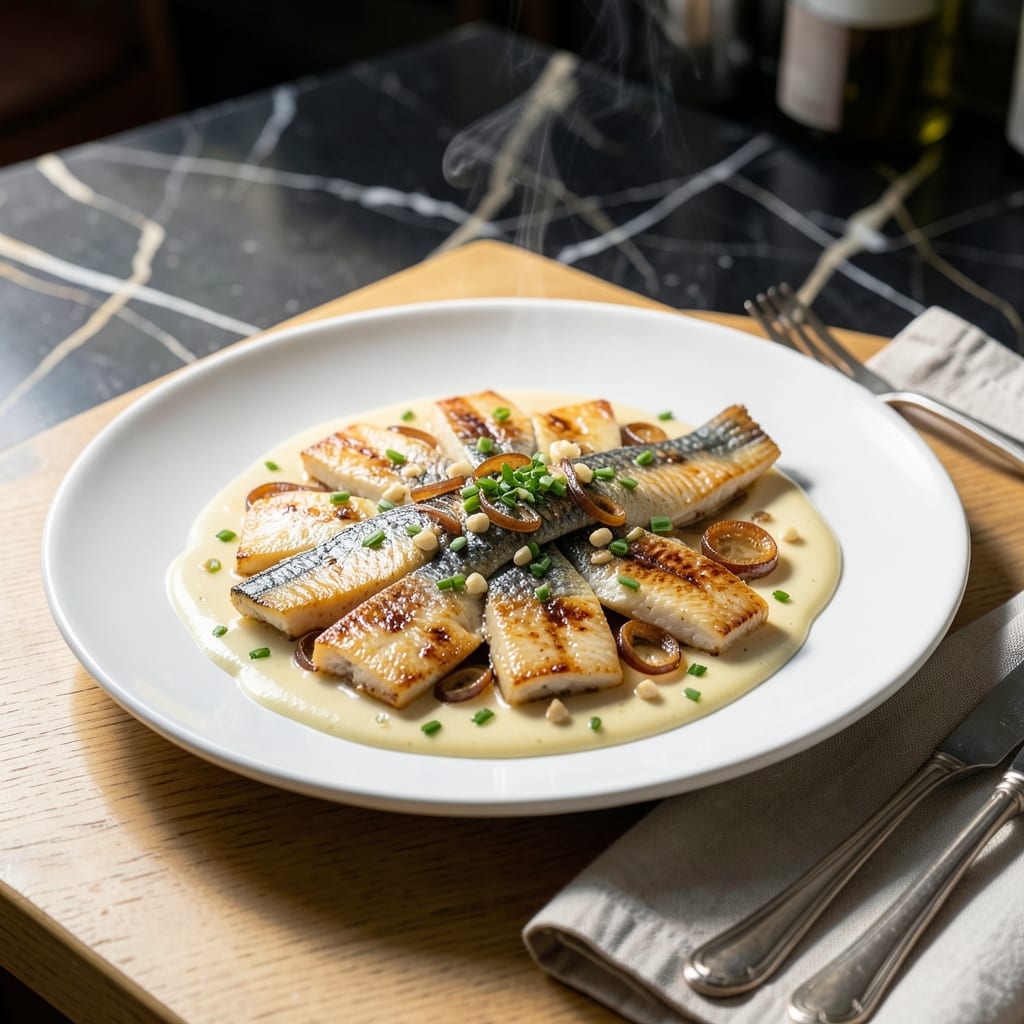
This Scandinavian-inspired dish brings sophistication to your table with minimal effort. The herring’s natural richness pairs beautifully with a tangy wine sauce, creating a balance that’s both elegant and comforting.
I’ve perfected this recipe to highlight the fish’s delicate flavor while letting the sauce shine. The key is using dry white wine for acidity that cuts through the herring’s oiliness without overpowering it.
What emerges is a dish that feels special enough for company yet simple enough for a weeknight. The sauce develops a velvety texture that clings perfectly to each bite of herring.
Serve with crusty bread to soak up every last drop of this restaurant-quality sauce. The presentation alone will impress your guests.
Ingredients for Herring in Wine Sauce
Fresh herring meets a bright wine sauce with just a handful of pantry staples.
| Ingredient | Amount | Notes |
|---|---|---|
| Herring Fillets 🐟 | 1 ½ lb | Fresh or thawed, skin-on |
| Dry White Wine 🍷 | 1 ½ cups | Sauvignon Blanc or Pinot Grigio |
| Shallots 🧅 | 2 whole | Finely minced |
| Garlic Cloves 🧄 | 3 cloves | Minced for depth |
| Unsalted Butter 🧈 | ½ cup | Cold, cubed for emulsion |
| Heavy Cream 🥛 | ½ cup | Full-fat for richness |
| Fresh Dill 🌿 | ¼ cup | Chopped, stems removed |
| Dijon Mustard 🟡 | 1 tbsp | Smooth, no seeds |
| Lemon Juice 🍋 | 2 tbsp | Freshly squeezed |
| Capers 🫒 | 2 tbsp | Drained and rinsed |
| Olive Oil 🫒 | 2 tbsp | For searing herring |
| Kosher Salt 🧂 | 1 tsp | Diamond Crystal preferred |
| White Pepper 🌶️ | ½ tsp | Freshly ground |
| Crusty Bread 🍞 | 1 pieces | For serving, sliced |
[recipe_ingredient_scaler]
The herring is everything here. Look for fresh, skin-on fillets at a quality fishmonger or Whole Foods—avoid pre-frozen if possible. The wine needs to be dry and crisp (Sauvignon Blanc or Pinot Grigio work perfectly) to balance the fish’s richness. For the butter, European-style has a higher fat content, which helps the sauce emulsify beautifully (worth the splurge).
No white wine? Dry vermouth is actually better than most cooking wines. Heavy cream can be swapped for full-fat coconut milk (the flavor difference is minimal). Short on dill? Fresh tarragon or parsley at the same quantity works. The capers add briny depth—if you hate them, chopped green olives are a decent stand-in.
The sauce keeps in the fridge for up to 3 days, but it thickens as it cools. Reheat gently with a splash of wine or water. Leftovers taste even better the next day—don’t skip the bread for soaking up every last drop (trust me on this).
Why You’ll Love This Recipe
- One Pan Wonder: I just throw the herring, shallots, and garlic in with the wine and butter—minimal prep, maximum flavor.
- Restaurant-Quality Taste: The white wine and butter create this silky, rich sauce that makes the herring taste like it came from a fancy bistro.
- Dinner or Appetizer: I serve it as a light main with crusty bread or as a starter for guests—it works both ways.
- Budget Stretcher: Herring is affordable, and a little goes a long way with this sauce. I’ll be real: it’s one of the few dishes that feels luxurious without the price tag.
Step-by-Step Instructions for Herring in Wine Sauce
Here’s the method I’ve perfected for this Scandinavian classic that’s both elegant and approachable.
Step 1: Sear the Herring Fillets
Pat the 1.5 lb herring fillets dry with paper towels and season both sides with 1 tsp kosher salt and 0.5 tsp white pepper. Heat 2 tbsp olive oil in a large, heavy skillet over medium-high heat until shimmering.
Add the herring fillets skin-side down and sear undisturbed for 3-4 minutes until the skin becomes crisp and golden brown. Flip carefully and cook for another 2 minutes until just cooked through. The herring should flake easily when tested with a fork. Transfer to a plate and cover to keep warm.
Step 2: Sauté Aromatics in the Same Pan
Reduce heat to medium and add the 2 whole minced shallots to the same skillet. Cook for 2-3 minutes, stirring frequently, until soft and translucent. Add the 3 minced garlic cloves and cook for 30 seconds until fragrant but not browned.
These aromatics form the flavor foundation of your sauce. Keep the heat moderate to prevent burning—you want to develop sweetness and depth, not bitterness. The pan should still have some of the herring’s rendered oils, which adds another layer of flavor.
Step 3: Deglaze and Build the Wine Sauce
Pour in the 1.5 cups dry white wine and bring to a simmer, scraping up all the browned bits from the bottom of the pan with a wooden spoon. Let the wine reduce by half, about 5-7 minutes.
Once reduced, whisk in the 0.5 cup cold cubed unsalted butter, one piece at a time, allowing each to melt completely before adding the next. This creates a rich, velvety emulsion. Then stir in the 0.5 cup heavy cream, 1 tbsp Dijon mustard, 2 tbsp lemon juice, and 2 tbsp capers.
Step 4: Finish with Fresh Herbs and Serve
Return the herring fillets to the skillet and spoon the sauce over them. Sprinkle with the 0.25 cup chopped fresh dill and let everything simmer together for 2-3 minutes to meld the flavors.
Taste and adjust seasoning if needed. Serve the herring and sauce hot over the 1 pieces crusty bread, which is perfect for soaking up every last bit of the delicious wine sauce. The dill adds a bright, fresh note that complements the rich, wine-infused sauce beautifully.
Pro Tips For Making Herring In Wine Sauce
- Poach Gently: Keep the wine at a bare simmer—anything hotter and the herring turns tough. I learned this the hard way after my first batch came out rubbery.
- Dry the Fillets: Pat the herring fillets completely dry before adding them to the sauce, or the extra moisture will thin out your wine reduction.
- Skip the Salt: Hold off on seasoning until the end, since the herring itself is often salt-cured and the wine will reduce down, concentrating the flavor.
- Use Cold Butter: Whisk in cold, cubed butter at the end for a glossy, emulsified sauce—it looks fancy and coats the fish beautifully.
Troubleshooting This Dish
Sauce Separating
If your wine sauce separates, don’t panic—this is fixable. Remove from heat and whisk vigorously to re-emulsify. If that doesn’t work, add 1 tsp cold water or 1 ice cube while whisking constantly. The temperature shock helps bring the sauce back together. 💡
Herring Overcooking
Herring cooks quickly and can become dry if left too long. If you notice the fillets flaking too much during searing, reduce heat to medium and cook for just 2 minutes per side. The fish will continue cooking slightly off the heat.
Sauce Too Thin
If your sauce hasn’t thickened enough, let it simmer uncovered for an additional 2-3 minutes. For faster results, mix ½ tsp cornstarch with 1 tbsp cold water and whisk into the sauce. Simmer for 1 minute to reach desired consistency.
Sauce Too Thick
If the sauce becomes too thick, thin it with ¼ cup dry white wine or 2 tbsp heavy cream. Add gradually while stirring until you reach the perfect velvety texture. This often happens if you reduce the wine too much initially.
Burnt Aromatics
If shallots or garlic brown too quickly, immediately reduce heat to low and add a splash of wine to deglaze. Scrape up any browned bits to prevent bitterness. Next time, cook aromatics on medium-low heat for more control. 🔥
Lack of Flavor
If the sauce tastes flat, boost with 1 tbsp lemon juice for acidity or ½ tsp Dijon mustard for depth. A pinch of kosher salt can also enhance all flavors. Taste as you go—this dish should have bright, balanced notes.
Nutrition Facts
Frequently Asked Questions
Can I use red wine instead of white?
Stick with dry white wine for best results. Red wine can overpower the herring’s delicate flavor and create a harsh taste. Sauvignon Blanc or Pinot Grigio work perfectly for the bright acidity needed.
Should I remove the skin before cooking?
Keep the skin on for searing—it becomes crispy and adds texture. The skin also helps hold the fillets together during cooking. Remove it before serving if you prefer skinless portions.
How do I prevent the sauce from curdling?
Use cold butter and add it slowly while whisking. Avoid high heat after adding dairy. If it starts to separate, remove from heat and whisk in 1 tsp cold water to re-emulsify.
What’s the best way to serve this?
Serve immediately over crusty bread to soak up the sauce. Garnish with extra fresh dill and a lemon wedge. The dish pairs well with steamed vegetables or a simple green salad.

Trained in classic French technique but raised on slow-cooked ribs and spicy rubs, she blends culinary skill with smoke and soul.
- Meat and Potato Recipe Ideas: Savory Pairings for Hearty Meals - October 3, 2026
- Recipe for Fried Prawns Batter: Ultra-Crispy Golden Shell - October 3, 2026
- Indian Lamb Curry Recipe Pressure Cooker: Fragrant Spices in a Fraction of the Time - October 3, 2026