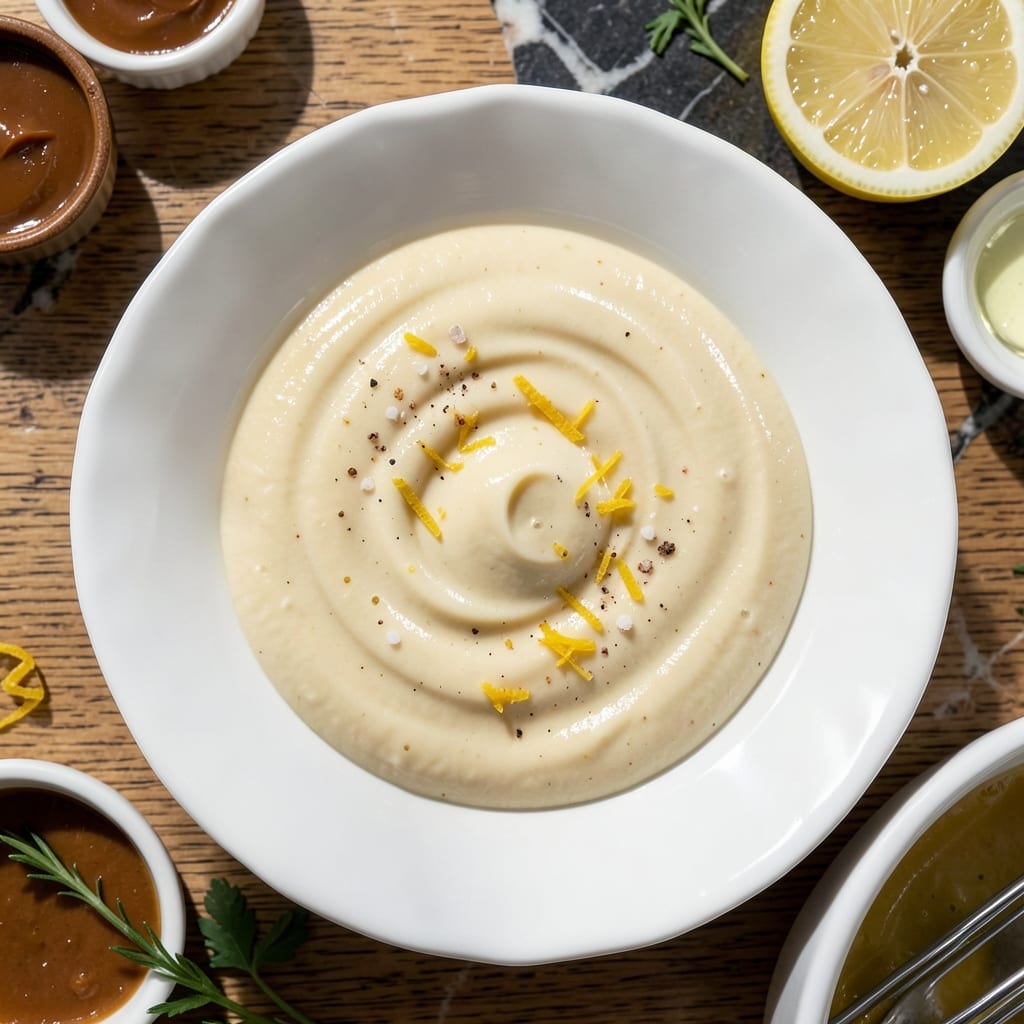
Mastering hollandaise sauce separates good cooks from great ones. This classic French emulsion delivers velvety richness that elevates eggs, vegetables, and seafood alike.
I developed this version after years of test kitchen trials, focusing on the precise temperature control that prevents breaking. The addition of lemon zest brightens the traditional butter-egg base without overwhelming its delicate nature.
The result is a smooth, pale yellow sauce with just enough tang to complement rather than dominate. It requires attention but rewards with professional-quality results every time.
Perfect for brunch classics or elegant dinners, this sauce keeps the focus on technique over shortcuts. The foundation for countless dishes starts here.
Ingredients for Hollandaise Sauce
Eight classic ingredients create this French emulsion with velvety richness and bright finish.
| Ingredient | Amount | Notes |
|---|---|---|
| Unsalted Butter 🧈 | 1 cup | Melted, kept warm |
| Large Egg Yolks 🥚 | 3 whole | Room temperature essential |
| Lemon Juice 🍋 | 2 tbsp | Freshly squeezed preferred |
| Lemon Zest 🍋 | 1 tsp | Finely grated for brightness |
| White Wine Vinegar 💧 | 1 tbsp | Or tarragon vinegar alternative |
| Kosher Salt 🧂 | ¼ tsp | Diamond Crystal preferred |
| Cayenne Pepper 🌶️ | 0.125 tsp | Pinch for subtle heat |
| White Pepper 🧂 | 0.125 tsp | Finely ground for smoothness |
[recipe_ingredient_scaler]
The butter is everything. European-style unsalted has higher fat content (82-85%) for a more stable emulsion. Plugrá or Kerrygold are ideal, but any high-quality unsalted works. Temperature control is critical—keep melted butter at 160-180°F. Egg yolks must be room temperature; cold yolks can cause the sauce to break. The vinegar reduction forms the foundation—use a light-colored vinegar to maintain the pale yellow color.
No white wine vinegar? Tarragon vinegar adds depth, or champagne vinegar for a cleaner taste. Fresh lemon juice is non-negotiable—bottled lacks the vibrancy. For a richer sauce, add a fourth yolk. The cayenne and white pepper can be omitted if you prefer a milder flavor, but they add subtle complexity. If the sauce threatens to break, a splash of ice water (1 tsp at a time) often saves it.
Hollandaise is best used immediately, but it can hold at 140-150°F for up to 1 hour. To revive, whisk in 1 tsp warm water. Store leftovers in the fridge for 2-3 days—reheat gently over a double boiler, whisking constantly. Do not microwave, as it will separate.
Why You’ll Love This Recipe
- Whisk & Done: It comes together in one bowl with just a whisk—no fancy gadgets needed.
- Bright & Buttery: The lemon zest and vinegar cut through the rich butter for that perfect tangy finish.
- Brunch MVP: I drizzle it over eggs, asparagus, even steak when I’m feeling fancy.
- Stretches Far: A small batch makes enough for four Benedicts, and honestly, it keeps in the fridge for two days without losing its silky texture.
Step-by-Step Instructions for Hollandaise Sauce
Master this classic French emulsion with precise technique for a velvety, restaurant-quality result.
Step 1: Prepare the Reduction Base
In a small saucepan, combine the white wine vinegar, 2 tbsp Lemon Juice, 1 tsp Lemon Zest, 0.25 tsp Kosher Salt, 0.125 tsp Cayenne Pepper, and 0.125 tsp White Pepper. Simmer over medium heat until the mixture reduces by half, about 3-4 minutes.
This reduction concentrates the acidity and flavors, ensuring your hollandaise has depth without being overly sharp. Watch for tiny bubbles forming at the edges and a slight syrupy consistency—this indicates the liquid has reduced sufficiently. Remove from heat and let cool slightly before proceeding.
Step 2: Whisk the Egg Yolks to Ribbon Stage
In a heatproof bowl, whisk the 3 whole Large Egg Yolks vigorously until they turn pale yellow and thicken slightly, about 1-2 minutes. The yolks should form ribbons that hold their shape for a few seconds when the whisk is lifted.
This step incorporates air, which stabilizes the emulsion and gives the sauce its signature lightness. Use a bowl large enough to accommodate the 1 cup Unsalted Butter you’ll be adding later. Room temperature yolks are essential—they emulsify more readily than cold ones, preventing curdling.
Step 3: Create the Emulsion Over a Double Boiler
Set the bowl with the whisked yolks over a saucepan of barely simmering water, ensuring the bottom of the bowl doesn’t touch the water. Slowly drizzle in the warm reduction from Step 1 while whisking constantly. This tempering step prevents the yolks from scrambling.
Continue whisking as you begin adding the 1 cup Unsalted Butter in a thin, steady stream. The sauce will start to thicken and lighten in color as the emulsion forms. Maintain low heat—if the sauce gets too hot, it will break. The process should take 5-7 minutes total.
Step 4: Finish and Adjust the Sauce
Once all the butter is incorporated, remove the bowl from the heat. Taste and adjust seasoning if needed, though the reduction should have balanced the flavors. The sauce should be thick enough to coat the back of a spoon but still pourable.
If the hollandaise is too thick, whisk in 1-2 teaspoons of warm water to reach the desired consistency. If it appears thin or broken, place the bowl in an ice bath and whisk vigorously for 30 seconds to re-emulsify. Serve immediately over eggs, vegetables, or fish.
Pro Tips For Making Hollandaise Sauce
- Warm the Butter: Melt the butter until just warm, not hot—I learned this the hard way after scrambling my yolks with sizzling butter. Aim for about 160°F, or test it on your wrist like a baby bottle.
- Strain the Sauce: After blending, push the hollandaise through a fine-mesh sieve to remove any cooked bits of egg. It’s not the prettiest step, but it guarantees a silky finish every time.
- Skip the Cold Eggs: Use room-temperature yolks, or the emulsion will fight you. I was skeptical until I tried it, and now I pull the eggs out 30 minutes before starting.
- Add Acid Slowly: Start with just a teaspoon of lemon juice, then adjust. Sounds weird, but it works—too much acid upfront can break the emulsion, and you’ll be starting over.
Flavor Customization for These Flavors
Herb-Infused Variations
Add 1 tbsp finely chopped fresh tarragon to the reduction for a classic French twist. For a Mediterranean flair, stir in 1 tsp chopped fresh dill and ½ tsp lemon zest at the end. Both herbs complement seafood beautifully without overpowering the delicate emulsion. 🌿
Spicy Kick Options
For heat lovers, increase cayenne pepper to ½ tsp or add ½ tsp smoked paprika to the reduction. A dash of hot sauce (like Tabasco) whisked in at the end adds a Louisiana-inspired touch. Remember, the heat should enhance, not dominate.
Citrus Twists
Swap the lemon for lime juice and zest for a brighter, slightly tropical note that pairs wonderfully with grilled fish. For a more complex profile, use ½ orange juice and ½ lemon juice in the reduction. The citrus oils in the zest make a noticeable difference.
Umami Depth Boosters
A splash of Worcestershire sauce (½ tsp) in the reduction adds savory depth. For a gourmet touch, whisk in 1 tsp Dijon mustard at the end. Both work particularly well with steak or roasted vegetables. I discovered this trick during late-night test kitchen experiments.
Lighter Version
Replace ½ cup butter with ¼ cup Greek yogurt for a tangier, lower-calorie version. Add it off-heat after the emulsion forms to prevent curdling. The texture will be slightly thicker but still velvety. Perfect for weeknight cooking when you want richness without the guilt.
Nutrition Facts
Frequently Asked Questions
Why does my hollandaise break?
It usually breaks from heat that’s too high or adding butter too quickly. Keep the water at a bare simmer and drizzle butter in a thin stream. If it breaks, whisk in 1 tsp ice water to re-emulsify.
Can I make it ahead?
Hollandaise is best fresh but can hold at 140-150°F for 1 hour. For longer storage, refrigerate up to 2-3 days and reheat gently over a double boiler, whisking constantly.
What’s the best butter to use?
Use high-fat European-style unsalted butter like Plugrá or Kerrygold. Their 82-85% fat content creates a more stable emulsion than standard butter.
How do I fix a thin sauce?
Whisk in 1-2 tsp warm water to adjust consistency. If too thin, it may need more whisking to re-emulsify or a brief ice bath to thicken.

Trained in classic French technique but raised on slow-cooked ribs and spicy rubs, she blends culinary skill with smoke and soul.
- Recipe for Boneless Pork Chops in Cast Iron Skillet: Sear and Baste to Juicy Perfection - October 3, 2026
- Recipe for Boneless Cross Rib Roast: Slow-Roasted Beef with Herb Crust - October 3, 2026
- Hamburgers in Sauce Recipe Crock Pot: Slow-Cooked Savory Delight - October 3, 2026