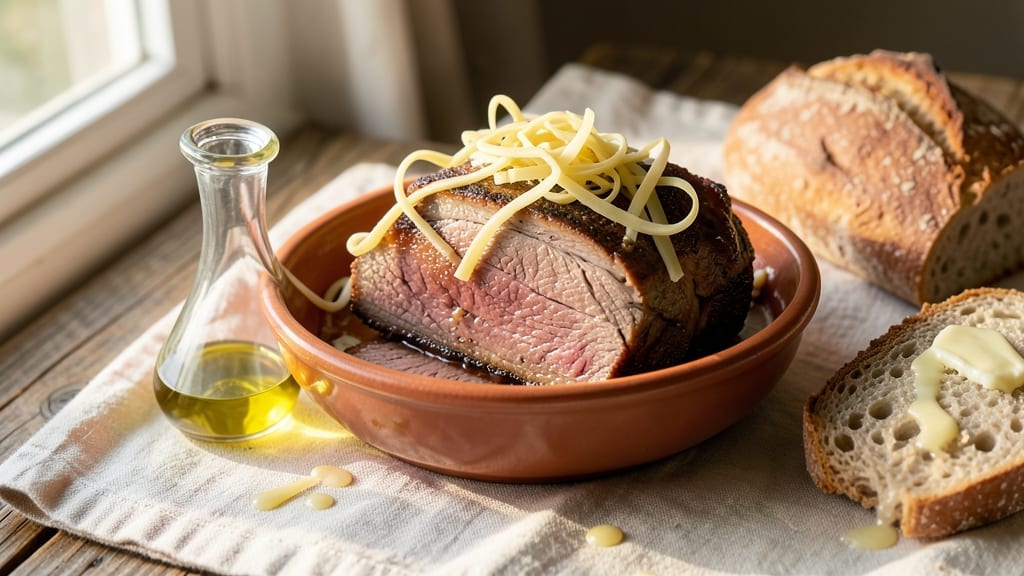
This homemade corned beef brisket recipe transforms tough cuts into melt-in-your-mouth perfection through slow-cooking and careful seasoning. The key lies in the balance of time and technique—where patience meets precision to create a dish that’s both hearty and tender.
I developed this method after years of perfecting slow-cooked meats, drawing from my family’s backyard cookouts where the scent of hickory smoke first taught me the magic of low-and-slow cooking.
The process begins with a flavorful brine that tenderizes the meat while infusing it with aromatic spices—think cloves, mustard, and bay leaves working together for depth. Then, it’s all about time: a long, gentle cook that breaks down the connective tissue until the brisket falls apart effortlessly.
This isn’t just dinner; it’s a centerpiece that commands attention at any table.
By the time you’re ready to serve, you’ll have a brisket with a beautifully spiced crust and juicy, fork-tender meat that pairs perfectly with classic sides like cabbage and potatoes. The crust should be rich and slightly caramelized, while the interior remains moist and richly seasoned.
This is the kind of dish that turns a simple meal into a memorable experience.
Whether you’re hosting a gathering or treating yourself to a special Sunday dinner, this recipe delivers restaurant-quality results with a homemade touch. The secret? Trusting the process and letting the flavors develop fully. Let’s get started on creating your own masterpiece.
Ingredients for homemade corned beef brisket
Slow-cooked perfection starts with these simple, bold ingredients that transform tough meat into melt-in-your-mouth magic.
| Ingredient | Amount | Notes |
|---|---|---|
| Corned Beef Brisket 🥩 | 4 lb | Flat cut, bone-in preferred |
| Coarse Kosher Salt 🧂 | 1 ½ cups | For brining and crust |
| Brown Sugar 🍚 | 1 cup | Packed, for sweetness |
| Yellow Mustard 🍯 | 1 cup | For brine and crust |
| Dried Whole Cloves 🌶️ | 10 whole | For brine aromatics |
| Dried Bay Leaves 🌿 | 6 whole | For depth in brine |
| Dried Allspice Berries 🌶️ | 1 tbsp | For warm spice notes |
| Ground Black Pepper 🌶️ | 2 tbsp | Freshly ground preferred |
| Granulated Garlic 🧄 | 2 tbsp | For brine flavor |
| Granulated Onion 🧅 | 2 tbsp | For brine depth |
| Hickory Wood Chips 🔥 | 1 cup | For smoky flavor |
| Apple Cider Vinegar 🍎 | 1 cup | For tenderizing |
| Unsalted Butter 🧈 | ½ cup | For basting |
[recipe_ingredient_scaler]
The brisket is everything here—bone-in cuts stay juicier than boneless, and Costco or butcher shops often have the best prices for large pieces. Look for good marbling; that fat will render into flavor. I always ask for it pre-cut into 2-inch cubes to save time. If you’re buying whole, freeze it for 24 hours first to make slicing easier. The kosher salt is non-negotiable for the brine—Diamond Crystal dissolves better than table salt and gives a cleaner taste. Skip the iodized stuff.
No apple cider vinegar? White vinegar or lemon juice works in a pinch, but the flavor isn’t quite the same. Want to stretch the brine? Add 1/2 cup beef broth—it keeps everything moist without diluting the spices. Fresh herbs like thyme or rosemary can be added to the brine, but dried versions at half the amount work great too. For the hickory chips, Traeger or Weber brands smoke the most consistently. If you’re short on time, liquid smoke in a pinch—just use 1 tsp and reduce the cooking time by 30 minutes.
The brine keeps for up to 7 days in the fridge, but I recommend using it within 3 days for best results. Once brined, the brisket can be cooked immediately or frozen for up to 3 months. For the best texture, let it come to room temperature before cooking—this ensures even cooking. The leftovers reheat beautifully in the oven at 300°F with a splash of broth to keep it moist. Serve with cabbage and potatoes like your grandma used to—trust me, it’s worth the extra effort.
Why You’ll Love This Recipe
- No-Stress Smoking: Honestly, the hardest part is waiting—this recipe does all the work for you. Just toss that 4 lb brisket in the brine for 24 hours (yes, overnight), then let the smoker handle the rest at 225°F for 8-10 hours. The apple cider vinegar and spices do the heavy lifting while you sleep, so you wake up to a perfectly tender cut.
- Crispy Edge, Creamy Center: That crust? It’s chef’s kiss—dark, crackling, and packed with flavor from the brown sugar and mustard. Meanwhile, the inside stays juicy thanks to the dry brine and hickory smoke. I’ll be real: the first bite always makes me pause because it’s exactly what you need after a long day.
- Leftovers That Shine: This isn’t just for Sunday dinners. I slice half the brisket and freeze it with beef broth to keep it moist—then reheat it for lunches all week. The spices deepen over time, so even day-old slices taste like they were made fresh. Budget-friendly too—4 lbs of brisket feeds a crowd without breaking the bank.
- Weeknight Smoker Hack: You don’t need a smoker for hours—just soak those hickory wood chips and let them do their thing while you prep. The brisket cooks low and slow, but the real magic happens in the resting phase. Slice it against the grain, and suddenly, a complicated-sounding meal becomes my go-to for when I want something hearty but still feel like I earned it.
Step-by-step instructions for homemade corned beef brisket
Here’s how to transform a tough brisket into melt-in-your-mouth perfection with a flavorful crust.
Create the Brine for Maximum Tenderness
In a large non-reactive container, combine the 4 lb corned beef brisket, 1½ cups coarse kosher salt, 1 cup brown sugar, 1 cup yellow mustard, 10 dried whole cloves, 6 dried bay leaves, 1 tbsp dried allspice berries, 2 tbsp ground black pepper, 2 tbsp granulated garlic, 2 tbsp granulated onion, and 1 cup apple cider vinegar. The vinegar helps tenderize the meat while the spices create deep flavor layers.
Use a wooden spoon or your hands to thoroughly coat every surface of the brisket with the mixture, pressing it into crevices. Place the container in the refrigerator uncovered for 24 hours, turning the brisket every 4 hours. This dry brine process ensures the meat stays moist and develops that signature tender texture.
Prepare the Smoker and Cook Low and Slow
Soak the 1 cup hickory wood chips in water for 30 minutes before using. Set up your smoker to maintain a steady 225°F temperature. Place the brined brisket fat-side up in the smoker and add the soaked wood chips. The smoky aroma will begin filling your kitchen almost immediately.
Cook the brisket undisturbed for 8-10 hours until the internal temperature reaches 195-203°F. This low-and-slow approach breaks down connective tissues while allowing the spices to meld into the meat. The bark should be dark and crispy, with a thick layer of rendered fat around the edges.
Baste with Butter for Rich Flavor
Once the brisket reaches 195°F, remove it from the smoker and tent loosely with aluminum foil. Let it rest for 15 minutes while you prepare the basting mixture. In a small saucepan, melt the ½ cup unsalted butter over low heat until it’s fully liquid but not browned.
Brush the melted butter generously over the entire surface of the brisket, including the fat cap. Return the brisket to the smoker and cook for an additional 30-45 minutes until the internal temperature reaches 203°F. This basting step adds incredible richness and helps create that signature tender, juicy texture.
Rest and Slice for Perfect Results
Remove the brisket from the smoker and transfer it to a cutting board. Tent it loosely with aluminum foil and let it rest for at least 1 hour. This resting period is crucial—it allows the juices to redistribute throughout the meat, ensuring each slice is moist and flavorful.
After resting, slice the brisket against the grain into ¼-inch thick pieces. The meat should be fork-tender and pull apart easily. Serve immediately with your favorite sides, savoring the perfect balance of smoky, spiced flavors with that tender, melt-in-your-mouth texture.
Pro Tips For Making Homemade Corned Beef Brisket
- Turn the Brisket: DESCRIPTION:
- Soak Those Wood Chips: DESCRIPTION:
- Don’t Rush the Butter: DESCRIPTION:
- Wait for the Rest: DESCRIPTION:
Best sauces and condiments for this dish
Classic Horseradish Cream
This tangy, creamy sauce cuts through the richness of corned beef perfectly. Mix ½ cup sour cream with 2 tbsp prepared horseradish (like Hellmann’s) and 1 tbsp fresh lemon juice. Thin with 1 tbsp warm water if needed.
I sweeten mine with a pinch of brown sugar to balance the heat—just enough to remind you of the sweet-spicy crust. Drizzle generously over slices for that classic Irish pub vibe. 💛
Sweet & Smoky BBQ Glaze
For a Southern twist, blend ½ cup store-bought BBQ sauce (like Stubb’s) with 1 tbsp apple cider vinegar and 1 tsp smoked paprika. Simmer for 5 minutes until thickened. Brush it on after basting for a sticky, smoky finish.
The vinegar brightens the sweetness while the paprika echoes the hickory smoke. I like to serve it on the side so everyone can control the heat. ✨
Mustard & Honey Drizzle
This simple combo highlights the brisket’s natural flavors. Whisk together ¼ cup whole-grain mustard (like Grey Poupon) with 2 tbsp honey and 1 tsp Dijon mustard. The mustard’s tang complements the brine’s sweetness, while the honey adds a touch of caramelized depth.
I drizzle it over cabbage slaw too—it’s a game-changer for picky eaters. 🍯
Onion Jam Finishing Touch
Make a quick jam by caramelizing 1 sliced yellow onion with 2 tbsp brown sugar and 1 tsp apple cider vinegar over low heat for 20 minutes. Mash it slightly for texture. The jam’s sweetness contrasts beautifully with the brisket’s spiced crust.
I serve it spooned over the top or on the side for dipping. It’s like a cross between a glaze and a condiment—versatile and delicious. 🌟
Pickled Mustard Seeds
For a crunchy, tangy contrast, pickle 2 tbsp whole mustard seeds in ½ cup apple cider vinegar and 1 tbsp brown sugar for 10 minutes. Drain and sprinkle over the brisket just before serving.
The seeds add a peppery bite that cuts through the fat, while the vinegar echoes the brine’s acidity. It’s a simple trick that makes every bite exciting. 🔥
Nutrition facts
Frequently asked questions
Why does the recipe call for a 24-hour brine?
The 24-hour dry brine is key for maximum tenderness and flavor absorption. The apple cider vinegar and spices tenderize the meat while developing that signature crust. Skipping this step can leave your brisket dry or flavorless. Trust the process—it’s what makes this dish legendary!
Can I use a regular oven instead of smoking?
Yes! Transfer the brined brisket to a 325°F oven after basting, covered with foil. Cook until it reaches 203°F, adding ½ cup beef broth to the pan to keep it moist. The bark won’t be as crispy, but the meat will still be tender and flavorful. Just expect a slightly less smoky profile.
What if my brisket isn’t fork-tender after cooking?
Undercooked meat happens! Return it to the smoker or oven and cook until it reaches 203°F internally. If it’s already done, tent it with foil and let it rest for 30-60 minutes—the extra rest time often makes the difference. Patience is everything when cooking brisket!
Can I make the brine ahead of time?
The brine keeps for up to 7 days in the fridge. Just store it in an airtight container and coat the brisket right before cooking. If you’re short on time, you can even freeze the brine mixture for up to 3 months—just thaw it overnight before using.
How do I store leftovers?
Let the brisket cool completely, then store it in an airtight container in the fridge for up to 4 days. Reheat in a 300°F oven with a splash of beef broth to keep it moist. For longer storage, freeze for up to 3 months. Just thaw overnight in the fridge before reheating.

Trained in classic French technique but raised on slow-cooked ribs and spicy rubs, she blends culinary skill with smoke and soul.
- Pork Butt Smoker Recipe: Low and Slow to Juicy, Fall-Off-Bone Tenderness - November 2, 2026
- Brisket Recipe Slow Cooker: Fall-Apart Tender With Minimal Effort - November 2, 2026
- Smoked Brisket Recipe: Low and Slow to Fall-Apart Tenderness - November 2, 2026