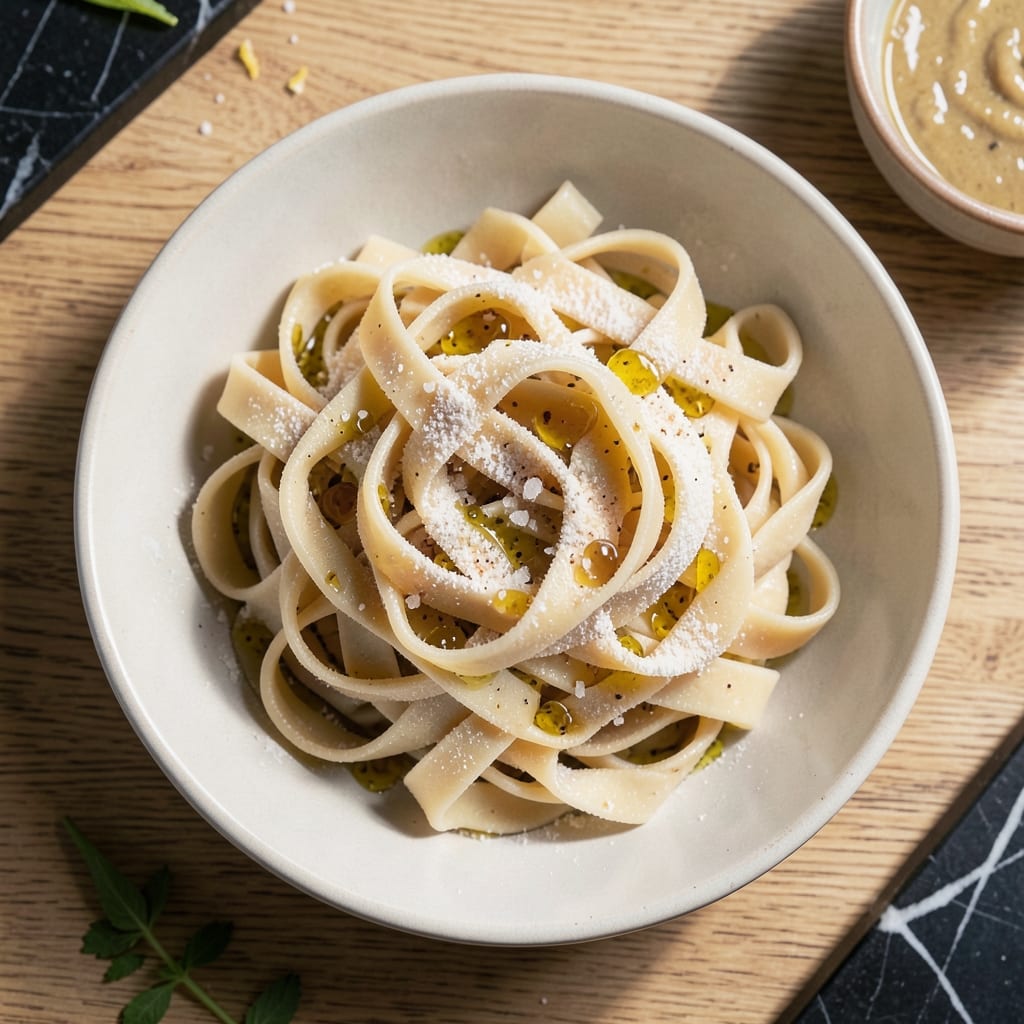
There’s nothing quite like the satisfaction of transforming all-purpose flour into silky, golden pasta ribbons. This proven method delivers restaurant-quality results without specialty equipment or complicated techniques.
Using a stand mixer simplifies the kneading process while maintaining the traditional texture that makes fresh pasta so special. The dough comes together quickly and rests briefly before rolling into perfectly thin sheets.
You’ll achieve tender yet firm pasta that holds sauce beautifully. The simple ingredient list and straightforward process make this approachable for any home cook looking to elevate their pasta game.
Serve with your favorite sauce or enjoy simply dressed with olive oil and herbs. This is homemade pasta done right.
Ingredients for Homemade Pasta Recipe All Purpose Flour
Simple ingredients transform into restaurant-quality pasta with your stand mixer’s help.
| Ingredient | Amount | Notes |
|---|---|---|
| All-Purpose Flour 🌾 | 3 cups | Plus extra for dusting surfaces |
| Large Eggs 🥚 | 4 whole | Room temperature preferred |
| Extra-Virgin Olive Oil 🫒 | 1 tbsp | For dough elasticity and flavor |
| Sea Salt 🧂 | 1 tsp | Fine grain for even distribution |
| Water 💧 | 1 tbsp | Adjust as needed for consistency |
| Semolina Flour 🌾 | ½ cup | For dusting and texture |
| Egg Yolk 🥚 | 1 whole | Optional for richer dough |
[recipe_ingredient_scaler]
The flour is everything here. King Arthur or Gold Medal all-purpose give consistent, silky results (the good stuff, not the bargain bin). Semolina for dusting isn’t mandatory but adds that authentic bite—Bob’s Red Mill is easy to find. Room temperature eggs mix evenly into the dough, so pull them out 30 minutes before starting (worth the extra minute).
No stand mixer? A food processor or hand mixing work too—the kneading just takes more elbow grease. Out of semolina? All-purpose flour works fine for dusting (just use a bit more). The olive oil can be swapped for any neutral oil, but extra-virgin adds depth. Need more dough? Scale up evenly—1 egg per 3/4 cup flour keeps the ratio perfect.
Fresh pasta cooks fast—2-3 minutes in boiling water. Store dough wrapped tightly in plastic for 24 hours in the fridge, or freeze for 1 month. Dust with flour before freezing to prevent sticking (don’t skip this part).
Why You’ll Love This Recipe
- One Bowl Wonder: I just dump flour on the counter, crack in eggs, and let my hands do the rest—no fancy tools needed.
- Rich and Silky: The olive oil and eggs make the dough so tender it melts in your mouth.
- Weeknight Hero: I roll it fresh for date night or toss it with pesto for a quick solo dinner.
- Pantry Friendly: Between us, it costs pennies compared to store-bought and tastes a thousand times better.
Step-by-Step Instructions for Homemade Pasta
Here’s the method I use for silky ribbons with stand mixer ease every time.
Step 1: Combine Dry Ingredients in Stand Mixer
Fit your stand mixer with the dough hook attachment. Add the 3 cups All-Purpose Flour and 1 tsp Sea Salt to the bowl. I like to sift the flour first for the smoothest dough, but it’s not strictly necessary for this recipe.
Mix on low speed for 30 seconds just to combine the salt evenly throughout. You’ll see the flour become slightly aerated. This step ensures your dough will have consistent seasoning in every bite.
Step 2: Incorporate Wet Ingredients Gradually
Create a well in the center of the flour mixture. Add the 4 whole Large Eggs, 1 whole Egg Yolk, 1 tbsp Extra-Virgin Olive Oil, and 1 tbsp Water. I always use room temperature eggs—they incorporate more smoothly into the flour.
Start mixing on low speed until the liquid is mostly absorbed, about 1-2 minutes. Then increase to medium speed and let the dough hook work its magic for 8-10 minutes. You’re looking for a smooth, elastic dough that pulls away from the sides of the bowl cleanly.
Step 3: Knead to Perfect Elasticity
If after 10 minutes the dough still feels sticky, add All-Purpose Flour 1 tablespoon at a time until it reaches the right consistency. Conversely, if it’s too dry, add Water 1 teaspoon at a time. The dough should feel supple but not tacky to the touch.
I test the dough by poking it with my finger—if it springs back slowly, it’s ready. If it springs back immediately, it needs more kneading. This elastic quality is what gives your pasta that perfect chew.
Step 4: Rest the Dough for Optimal Texture
Shape the dough into a ball, wrap it tightly in plastic wrap, and let it rest at room temperature for 30 minutes. This resting period allows the gluten to relax, making the dough much easier to roll out later.
While waiting, I like to clean my workspace and dust it lightly with some of the 0.5 cup Semolina Flour. The semolina’s coarse texture prevents sticking better than regular flour during the rolling process.
Step 5: Roll and Cut into Silky Ribbons
Divide the rested dough into 4 equal portions. Working with one portion at a time (keep the others covered), flatten it slightly with your hands. Set your pasta machine to its widest setting and feed the dough through.
Fold the dough in half like a book and repeat the process 2-3 times on the widest setting. Then gradually decrease the thickness setting, passing the dough through once at each setting until you reach your desired thickness. For fettuccine or tagliatelle, I stop at setting 5 or 6.
Finally, pass the sheets through the cutting attachment. Dust the cut pasta lightly with more Semolina Flour to prevent sticking. Cook immediately in boiling salted water for 2-3 minutes until al dente, or let dry on a floured surface for up to 2 hours before cooking.
Pro Tips For Making Homemade Pasta Recipe All Purpose Flour
- Knead Longer: Work the dough for at least 8-10 minutes by hand—it’ll start rough but turns silky. I learned this the hard way after my first three batches crumbled when rolled.
- Rest the Dough: Wrap it in plastic and let it sit at room temp for 30 minutes. Sounds weird, but it works: the gluten relaxes, making rolling way easier.
- Skip the Extra Flour: Dust lightly when rolling, but resist the urge to add too much—it makes the pasta dry and tough. A light touch is all you need.
- Use Room-Temp Eggs: Pull your eggs out an hour before starting. My grandmother swore by this, and she was right: they incorporate better into the flour.
Dietary Considerations for homemade pasta recipe all purpose flour
Gluten-Free Adaptation
For a gluten-free version, replace the All-Purpose Flour with a 1:1 gluten-free flour blend. I’ve tested King Arthur’s Measure for Measure with great success. The texture will be slightly different but still delicious. Add 1 extra egg to help bind the dough properly.
Egg-Free Version
To make this without eggs, swap the 4 Large Eggs and 1 Egg Yolk for 1 cup warm water and 2 tbsp olive oil. The dough will be softer, so handle it gently. I learned this trick from my Nonna’s old cookbook—it works in a pinch! 💪
Vegan Modification
Use the egg-free method above and ensure your flour isn’t processed with animal products. Bob’s Red Mill all-purpose is a safe bet. The dough may need 1-2 tbsp extra water for the right consistency. Vegan pasta holds sauce just as beautifully.
Whole Wheat Option
Substitute up to 50% whole wheat flour for a nuttier flavor and added fiber. I recommend White Whole Wheat Flour for a milder taste. The dough will be slightly denser, so roll it thinner than usual for the best texture.
Lower-Carb Alternative
Replace 1 cup All-Purpose Flour with almond flour for a lower-carb option. The dough will be more delicate, so work quickly and keep it well-floured. Cook it fresh—it doesn’t store as well as traditional pasta.
Salt Adjustments
For those watching sodium, reduce the Sea Salt to ½ tsp or omit it entirely. The pasta will still turn out well, though I find a pinch of salt enhances the flavor of the flour beautifully. 🧂
Nutrition Facts
Frequently Asked Questions
Can I make pasta without a stand mixer?
Yes! A food processor or hand mixing works fine. Kneading by hand takes about 10-12 minutes on a floured surface until smooth. The texture will be just as good with a little extra effort.
Why does my dough keep cracking when rolling?
This usually means the dough is too dry. Let it rest for 5 minutes, then knead in 1 tsp water at a time until pliable. Avoid adding too much flour during rolling.
How thin should I roll the pasta sheets?
For most shapes, aim for 1-2mm thickness. On a pasta machine, setting 5 or 6 works well. Thinner sheets cook faster but can tear more easily.
Can I use bread flour instead of all-purpose?
Yes, but the pasta will be slightly chewier. Reduce the flour by 2-3 tbsp since bread flour absorbs more liquid. The higher protein creates a firmer bite.

Trained in classic French technique but raised on slow-cooked ribs and spicy rubs, she blends culinary skill with smoke and soul.
- Recipe for Boneless Pork Chops in Cast Iron Skillet: Sear and Baste to Juicy Perfection - October 3, 2026
- Recipe for Boneless Cross Rib Roast: Slow-Roasted Beef with Herb Crust - October 3, 2026
- Hamburgers in Sauce Recipe Crock Pot: Slow-Cooked Savory Delight - October 3, 2026