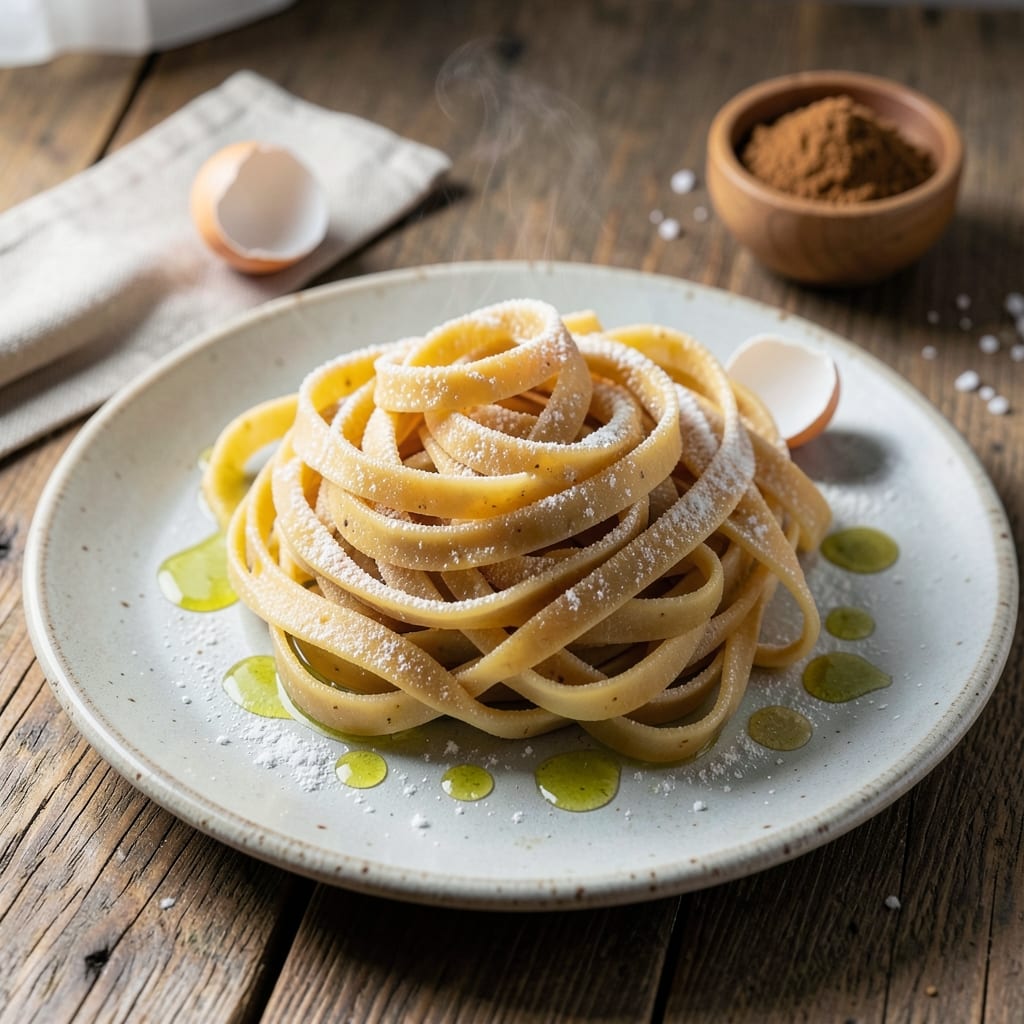
There’s an unmatched satisfaction in rolling out fresh pasta dough, knowing you’re creating something truly special from scratch. This technique delivers authentic Italian texture and flavor that store-bought simply can’t match.
My approach focuses on semolina flour, which gives the pasta its signature rustic bite and golden hue. The dough comes together quickly with just a few ingredients, then rests to develop the perfect elasticity for rolling and cutting.
What emerges is pasta with a firm, satisfying chew that holds sauce beautifully. The semolina creates tiny ridges that catch every bit of your favorite sauce, transforming a simple dish into something extraordinary.
This homemade version will change how you think about pasta night forever.
Ingredients for Homemade Pasta Recipe Semolina
Semolina and eggs create that authentic Italian texture you crave. Simple, quality ingredients only.
| Ingredient | Amount | Notes |
|---|---|---|
| Semolina Flour 🌾 | 2 cups | Fine grind for smooth dough |
| All-Purpose Flour 🌾 | 1 cup | For elasticity balance |
| Large Eggs 🥚 | 3 whole | Room temperature preferred |
| Extra-Virgin Olive Oil 🫒 | 1 tbsp | For dough tenderness |
| Sea Salt 🧂 | ½ tsp | Fine grain for even distribution |
| Water 💧 | ¼ cup | As needed for consistency |
| Durum Wheat Semolina 🌾 | ½ cup | Optional for extra texture |
[recipe_ingredient_scaler]
The semolina is non-negotiable here—look for fine-grind at Italian markets or bulk bins. I grab mine from Eataly when I can (their selection is unbeatable), but Bob’s Red Mill at the regular grocery store works perfectly. The all-purpose flour balances the semolina’s grit—King Arthur if you want to splurge, but any brand works. Room temperature eggs incorporate better (I just set mine in warm water for 5 minutes).
No semolina? All-purpose flour alone works but loses that signature bite. Want richer dough? Add an extra egg yolk. The olive oil can be any good quality—California Olive Ranch is my go-to. If your dough feels dry, add water 1 tsp at a time. Skip the salt if you’re watching sodium—it’s mostly for flavor development anyway.
Fresh pasta doesn’t keep long—2 days max in the fridge (tossed with a bit of flour). Freeze for 1 month on a tray first, then transfer to bags. Always cook from frozen—no thawing needed. The dough itself can rest 30 minutes to 2 hours at room temp before rolling.
Why You’ll Love This Recipe
- No Rolling Required: I just mix, knead, and rest—no fancy pasta machine needed.
- Rich Semolina Bite: The semolina gives it that perfect chewy texture with a nutty depth eggs alone can’t match.
- Freezer Friendly: I double the batch and freeze half for lazy nights when fresh pasta cravings hit.
- Pantry Staples Only: Between us, these are all ingredients I already keep on hand, so no last-minute grocery runs.
Step-by-Step Instructions for Homemade Pasta Semolina
Here’s the method I’ve perfected for creating authentic Italian pasta with that signature rustic bite.
Step 1: Form the Well and Add Wet Ingredients
On a clean work surface, I mound the 2 cups Semolina Flour and 1 cup All-Purpose Flour together, then create a deep well in the center. This traditional method gives me complete control over the dough’s texture. I crack the 3 whole Large Eggs directly into the well, then add the 1 tbsp Extra-Virgin Olive Oil and 0.5 tsp Sea Salt.
The well should be wide enough to hold all the eggs without spilling over. I’ve found that using room temperature eggs helps them incorporate more evenly into the flour. This step is where the magic begins—you’ll start to see the authentic Italian texture developing as you work.
Step 2: Gradually Incorporate the Flours
Using a fork, I begin whisking the eggs in a circular motion, gradually pulling in the flour from the inner rim of the well. The mixture will start thick and paste-like, then become more dough-like as you incorporate more flour. I continue this process until the dough is too stiff to mix with a fork.
At this point, I switch to using my hands. The dough should feel slightly sticky but manageable. If it’s too dry, I add the 0.25 cup Water a tablespoon at a time. For extra texture, I’ll also work in the 0.5 cup Durum Wheat Semolina at this stage. The key is to add just enough liquid to bring the dough together without making it too wet.
Step 3: Knead to Develop the Gluten
Once the dough comes together, I begin kneading it vigorously on the floured surface. I use the heel of my hand to push the dough away, then fold it back over itself, turning it a quarter turn each time. This process develops the gluten that gives pasta its chewy texture and structure.
I knead for 8-10 minutes until the dough becomes smooth and elastic. It should spring back when pressed lightly with a finger. If the dough feels too stiff, I add a tiny bit more water; if it’s too sticky, I work in a bit more flour. The finished dough should be firm but pliable, with a slightly grainy texture from the semolina.
Step 4: Rest and Roll Out the Dough
I wrap the dough in plastic wrap and let it rest at room temperature for 30 minutes. This resting period allows the gluten to relax, making the dough much easier to roll out thinly. During this time, the flour fully hydrates, which is crucial for achieving the right texture in the final pasta.
After resting, I divide the dough into 4 portions (since this recipe serves 4) and roll each out using a pasta machine or rolling pin. I aim for sheets about 1/16-inch thick—thin enough to see my hand through when held up to the light, but thick enough to maintain that rustic bite. The semolina gives the dough a beautiful pale yellow color and slightly gritty texture that’s characteristic of authentic Italian pasta.
I cut the sheets into my desired shape—tagliatelle, fettuccine, or pappardelle all work beautifully with this dough. The pasta is now ready to cook immediately or can be dried for later use.
Pro Tips For Making Homemade Pasta Recipe Semolina
- Knead Longer: I learned this the hard way—semolina dough needs a solid 8-10 minutes of kneading to develop that elastic texture. Stop too soon and your pasta will crumble when rolled.
- Use Room-Temp Eggs: Sounds weird, but it works: pull your eggs out 30 minutes before mixing. Cold eggs make the dough seize up, and you’ll fight it the whole way.
- Skip All Semolina: Resist the urge to go 100% semolina—it’s too coarse. A 50/50 split with all-purpose flour gives the right bite without turning your dough into sand.
- Rest the Dough: After kneading, wrap it tight and let it sit for at least 20 minutes. I skip this when I’m lazy, but the pasta is noticeably easier to roll and cuts cleaner when I don’t.
Troubleshooting This Dish
Dough Too Dry
If your dough feels crumbly and won’t come together, add warm water 1 tsp at a time while kneading. Semolina absorbs liquid differently than all-purpose flour, so patience pays off. I’ve saved many batches this way during dry winter months. 💧
Dough Too Sticky
When the dough clings to your hands, work in extra semolina flour 1 tbsp at a time. Avoid over-flouring—this dough should feel slightly tacky. A light dusting of all-purpose flour on your work surface helps prevent sticking during kneading.
Cracking While Rolling
If the dough cracks as you roll it out, it likely needs more rest. Wrap it in plastic and let it sit for another 15-20 minutes. Semolina dough benefits from extra hydration time to relax the gluten fully.
Uneven Thickness
For consistent sheets, fold the dough in thirds like a letter before each pass through the pasta machine. This ensures even thickness. If rolling by hand, use a rolling pin and rotate the dough frequently. I aim for 1/16-inch thickness for most shapes.
Pasta Sticks Together
After cutting, toss the strands with a bit of semolina flour to prevent clumping. Spread them out on a floured surface or hang them on a drying rack. Fresh pasta cooks quickly, so keep portions separate until ready to boil. 💡
Dull, Gray Color
If your pasta lacks that golden hue, check your semolina flour—older flour loses its vibrant color. I always use fine-grind semolina for the best results. Adding an extra egg yolk can also deepen the color naturally.
Nutrition Facts
Frequently Asked Questions
Can I make this without a pasta machine?
A rolling pin works perfectly. Roll the dough as thin as possible, about 1/16-inch thick, then cut into desired shapes. It takes more effort but yields the same delicious results.
Why does my dough crack when rolling?
This usually means the gluten needs more time to relax. Let the dough rest for another 15-20 minutes wrapped in plastic before trying again. Semolina dough often needs extra hydration time.
Can I use only all-purpose flour?
Yes, but it will lack that signature bite. The semolina gives the authentic texture and golden color. If you must substitute, add an extra egg yolk for richness.
How long can I store fresh pasta?
In the fridge, it keeps for 2 days in an airtight container with a dusting of flour. For longer storage, freeze on a tray first, then transfer to bags for up to 1 month.

Trained in classic French technique but raised on slow-cooked ribs and spicy rubs, she blends culinary skill with smoke and soul.
- Recipe for Boneless Pork Chops in Cast Iron Skillet: Sear and Baste to Juicy Perfection - October 3, 2026
- Recipe for Boneless Cross Rib Roast: Slow-Roasted Beef with Herb Crust - October 3, 2026
- Hamburgers in Sauce Recipe Crock Pot: Slow-Cooked Savory Delight - October 3, 2026