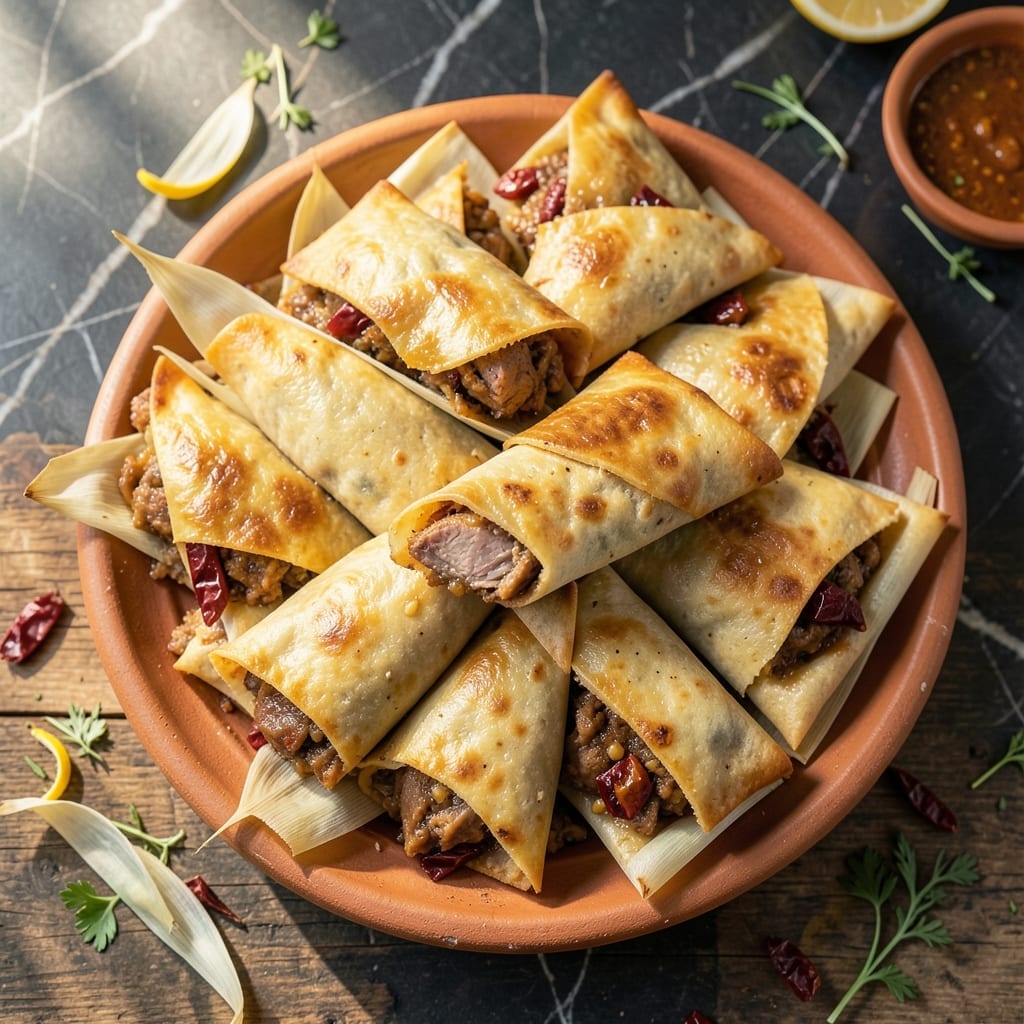
There’s a special satisfaction in making tamales from scratch, especially when the pork filling tastes just like Nonna’s kitchen. This traditional recipe brings generations of flavor to your table without complicated techniques.
The masa dough wraps around tender, seasoned pork, creating that perfect balance of textures we all love. I’ve tested this method in my own small kitchen to ensure it works for home cooks everywhere.
What emerges from the steamer is a dish that feels both homemade and authentically traditional. The pork becomes fall-apart tender, while the masa develops a delicate, slightly sweet flavor.
Serve these at gatherings or freeze for later—they reheat beautifully. Here’s how to make them right the first time.
Ingredients for Homemade Tamales Recipe Pork
Traditional flavors meet your kitchen with these masa-wrapped pork tamales ingredients.
| Ingredient | Amount | Notes |
|---|---|---|
| Pork Shoulder 🥩 | 2 lb | Boneless, cut into chunks |
| Masa Harina 🌾 | 4 cups | Corn flour for tamales |
| Lard 🧈 | 1 ½ cups | For authentic masa texture |
| Chicken Broth 💧 | 3 cups | Low-sodium preferred |
| Dried Corn Husks 🌽 | 20 pieces | Soaked in warm water |
| Garlic Cloves 🧄 | 6 cloves | Minced for filling |
| Ground Cumin 🌿 | 2 tsp | Toasted for depth |
| Dried Oregano 🍃 | 2 tsp | Mexican oregano ideal |
| Chili Powder 🌶️ | 1 tbsp | Adjust for heat preference |
| Salt 🧂 | 2 tsp | Divided for dough and filling |
| Onion 🧅 | 1 whole | Yellow or white, diced |
| Baking Powder 🧂 | 2 tsp | For masa lift |
| Dried Guajillo Chiles 🌶️ | 4 whole | Stems and seeds removed |
| Tomato Paste 🍅 | 2 tbsp | For filling depth |
[recipe_ingredient_scaler]
The pork shoulder is non-negotiable here. Look for well-marbled pieces at your butcher or Costco for the best texture—it slow-cooks into that fall-apart tenderness Nonna’s kitchen is famous for. The masa harina Maseca is the gold standard (found in the Latin foods aisle). Dried corn husks might take a quick online order if your local store doesn’t stock them (try MexGrocer.com).
No lard? Vegetable shortening works in a pinch, but expect a slightly different texture. Swap pork for chicken thighs with the same seasoning—just as delicious. If guajillo chiles are hard to find, ancho chiles at equal quantity bring similar sweetness. The tomato paste can be from a can (use the rest in another recipe) or those handy squeeze tubes. Fresh garlic is best, but jarred minced in a pinch.
Tamales freeze like a dream—steam from frozen, adding 10-15 minutes. Wrap cooled tamales in plastic, then foil for up to 3 months. The filling keeps 5 days in the fridge if you want to prep ahead. Soak husks overnight (or at least 2 hours) for pliability.
Why You’ll Love This Recipe
- One Pan Process: I soak the corn husks while the pork simmers, and everything comes together in stages—no frantic multitasking.
- Holiday Hero: I make a double batch for Christmas Eve and freeze half—my family expects them every year.
- Budget Stretcher: Pork shoulder is cheap, and this recipe feeds a crowd for pennies per serving. Honestly, it’s my most cost-effective party dish.
Step-by-Step Instructions for Pork Tamales
Here’s the traditional method I use for making authentic tamales with perfect texture every time.
Step 1: Prepare the Corn Husks and Pork Filling
Begin by soaking the 20 pieces dried corn husks in warm water for at least 1 hour until pliable. Meanwhile, dice the 1 whole onion and mince the 6 cloves garlic cloves.
In a pot, combine the 2 lb pork shoulder, 4 whole dried guajillo chiles, 2 tbsp tomato paste, 1 tbsp chili powder, 2 tsp ground cumin, 2 tsp dried oregano, and 1 tsp salt. Cover with water and simmer for 2-3 hours until the pork is fork-tender. Shred the pork and reserve the cooking liquid.
Step 2: Make the Masa Dough
In a large bowl, beat the 1.5 cups lard until fluffy, then gradually add the 4 cups masa harina, 2 tsp baking powder, and remaining 1 tsp salt. Mix until crumbly.
Slowly pour in 3 cups chicken broth, a little at a time, until the dough resembles thick cake batter. The texture should hold its shape when pressed—if too dry, add more broth from the pork cooking liquid. Let it rest for 30 minutes to hydrate fully.
Step 3: Assemble the Tamales
Drain the dried corn husks and pat dry. Lay a husk flat, spoon about ¼ cup of masa dough onto the center, and spread it into a thin rectangle, leaving a border at the top and bottom.
Add a line of shredded pork filling down the middle, then fold the sides of the husk inward and roll it up tightly. Fold the bottom up to seal. Repeat with remaining husks, dough, and filling.
Step 4: Steam to Perfection
Arrange the tamales upright in a steamer basket, open-side up. Pour water into the pot below, ensuring it doesn’t touch the tamales. Cover with a damp towel and lid, then steam over medium heat for 1 to 1.5 hours.
Check the water level periodically, adding more as needed. The tamales are done when the masa pulls away from the husk and feels firm to the touch. Let them rest for 10 minutes before serving.
Pro Tips For Making Homemade Tamales Recipe Pork
- Soak Husks Overnight: Cover dried corn husks with very hot water and weigh them down with a plate—I learned this the hard way after mine kept cracking during assembly.
- Render Lard Slowly: Melt the lard on low heat until just liquid, about 8-10 minutes; high heat makes it separate and ruins the masa texture.
- Test Masa Float: Drop a small ball of masa in water—if it floats, it’s ready to spread; if it sinks, beat in more lard or broth until light.
- Steam Evenly: Fill the pot with 1-2 inches of water and rotate tamales halfway through; I used to skip this and ended up with dry tops and soggy bottoms.
Health Benefits of This Dish
Protein Powerhouse
The pork in this dish provides a significant 40 grams of protein per serving, supporting muscle repair and growth. I appreciate how it keeps me full for hours, making it perfect for busy days in my Boston kitchen. 💪
Iron Richness
Pork shoulder is packed with heme iron, which your body absorbs more easily than plant-based iron. A 3-ounce serving delivers about 15% of your daily iron needs, helping prevent fatigue and boost energy levels.
B Vitamin Boost
This recipe is loaded with B vitamins, especially B12 and B6, from the pork. These nutrients are vital for brain function and metabolism. I notice I feel more energized after enjoying these tamales.
Healthy Fats
The lard in the masa provides monounsaturated fats, which support heart health when consumed in moderation. Combined with the pork’s natural fats, this dish offers a balanced energy source.
Fiber from Masa
Masa harina adds a small but meaningful amount of fiber to your meal. While not as high as whole grains, every bit helps with digestion. I love how it complements the pork’s richness.
Each serving contributes about 2 grams of fiber, aiding in digestive health. 🥗
Nutrition Facts
Frequently Asked Questions
How long should I soak the corn husks?
Soak the husks for at least 1 hour in warm water, or overnight for best results. They need to be pliable to prevent tearing when wrapping.
Can I use chicken instead of pork?
Swap pork shoulder for chicken thighs with the same seasoning. Simmer for 1-1.5 hours until tender. The flavor will be lighter but just as delicious.
How do I know when tamales are done?
The masa will pull away from the husk and feel firm to the touch. Steam for at least 1 hour, then check by opening one. If the dough sticks, steam for 15-20 minutes more.
Why did my masa turn out dry?
This usually means the dough wasn’t hydrated enough. Add more broth gradually until it reaches a thick, spreadable consistency like cake batter. Let it rest for 30 minutes before using.

Trained in classic French technique but raised on slow-cooked ribs and spicy rubs, she blends culinary skill with smoke and soul.
- Recipe for Boneless Pork Chops in Cast Iron Skillet: Sear and Baste to Juicy Perfection - October 3, 2026
- Recipe for Boneless Cross Rib Roast: Slow-Roasted Beef with Herb Crust - October 3, 2026
- Hamburgers in Sauce Recipe Crock Pot: Slow-Cooked Savory Delight - October 3, 2026