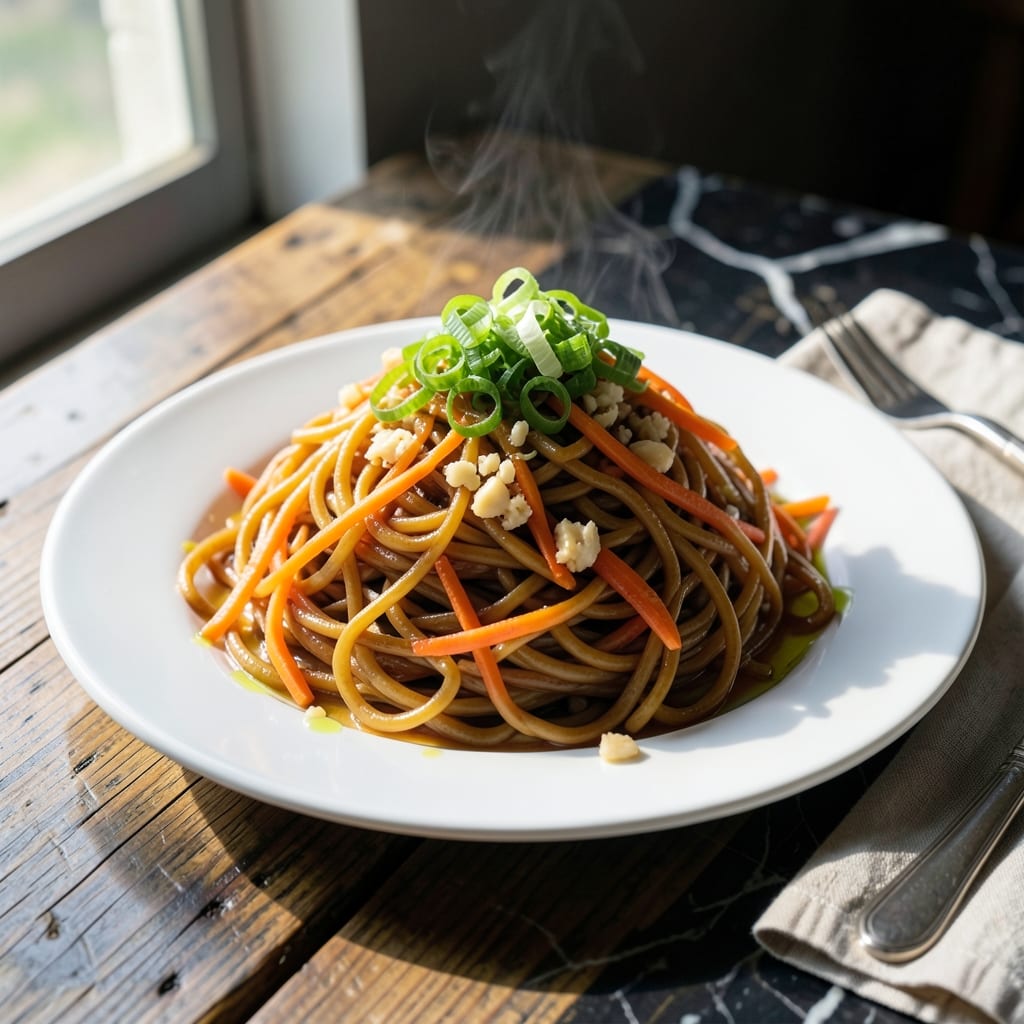
I’ve spent years perfecting the technique for achieving perfect wok-tossed noodles at home. This dish requires high heat, precise timing, and the right noodle texture to capture authentic Hong Kong street food flavor.
The secret lies in par-cooking the noodles before stir-frying, which ensures they maintain their chewy bite through the intense wok work. A well-seasoned wok and proper oil temperature make all the difference in achieving that signature smoky wok hei aroma.
What emerges is a plate of glossy, springy noodles coated in a light, savory sauce with just the right amount of charred bits. The chewy texture and balanced flavors make this dish irresistibly satisfying.
Serve immediately while hot, as the noodles continue to absorb flavors even after plating. Here’s how to make them right.
Ingredients for Hong Kong Noodles
Quality ingredients deliver that authentic wok-tossed noodle experience with springy texture and smoky depth.
| Ingredient | Amount | Notes |
|---|---|---|
| Dried Egg Noodles 🍜 | 12 oz | Par-cooked al dente |
| Vegetable Oil 🫒 | ½ cup | High smoke point, divided |
| Garlic Cloves 🧄 | 6 cloves | Minced finely |
| Fresh Ginger 🌿 | 2 tbsp | Peeled and minced |
| Green Onions 🧅 | 4 whole | Cut into 2-inch pieces |
| Carrots 🥕 | 2 whole | Julienned thinly |
| Shiitake Mushrooms 🍄 | 8 oz | Fresh or rehydrated |
| Bean Sprouts 🌱 | 2 cups | Rinsed and drained |
| Light Soy Sauce 💧 | 3 tbsp | Low-sodium preferred |
| Dark Soy Sauce 💧 | 1 tbsp | For color and depth |
| Oyster Sauce 🍚 | 2 tbsp | Vegetarian if needed |
| Sesame Oil 🫒 | 1 tsp | Toasted variety |
| White Pepper 🧂 | ½ tsp | Ground for aroma |
| Sugar 🍚 | 1 tsp | Balances the sauce |
| Shaoxing Wine 🍶 | 2 tbsp | Or dry sherry |
[recipe_ingredient_scaler]
The noodles are non-negotiable—look for dried egg noodles in Asian markets or the international aisle at Whole Foods. Fresh noodles can turn mushy under high heat. For the mushrooms, shiitake provides the meaty texture essential for this dish. A well-seasoned carbon steel wok is ideal, but a heavy cast-iron skillet works too. The vegetable oil must handle high heat—peanut or avocado oil are solid alternatives.
No Shaoxing wine? Dry sherry works at a 1:1 ratio. For a vegetarian version, swap oyster sauce for vegetarian oyster sauce or hoisin. Out of bean sprouts? Thinly sliced cabbage adds a similar crunch. The soy sauces matter—Pearl River Bridge or Kikkoman are reliable brands. If you can’t find light and dark, use all-purpose soy sauce and add a pinch of brown sugar for depth.
Cook the noodles and prep all ingredients before heating the wok—this moves fast. Store leftovers in an airtight container for up to 3 days. Reheat in a skillet with a splash of water to restore the texture. Freezing isn’t recommended—the noodles lose their chew.
Why You’ll Love This Recipe
- One Pot Wonder: I love that everything cooks in a single pan—just toss the noodles with garlic, ginger, and oil, and dinner’s halfway done.
- Umami Bomb: That first bite with crispy garlic and fresh ginger hitting the noodles? Ridiculously good, every time.
- Weeknight Hero: Between us, this is my Tuesday night lifesaver—fast, filling, and the kids actually eat the green onions.
- Budget Stretcher: Dried egg noodles and a handful of aromatics feed four for under ten bucks. Honestly, it doesn’t get more practical.
Step-by-Step Instructions for Hong Kong Noodles
Master the wok-tossing technique for restaurant-quality results at home with precision.
Step 1: Par-Cook and Prepare the Noodles
Bring a large pot of water to a rolling boil. Add the 12 oz dried egg noodles and cook for 1-2 minutes less than package directions until just al dente. They’ll finish cooking in the wok.
Drain immediately and rinse under cold water to stop the cooking process. Toss with 1 tablespoon vegetable oil to prevent sticking. This step ensures the noodles stay chewy and don’t turn mushy when stir-fried.
Step 2: Stir-Fry the Aromatics and Vegetables
Heat 3 tablespoons vegetable oil in a wok or large skillet over high heat until shimmering. Add the 6 cloves minced garlic and 2 tbsp minced fresh ginger, stir-frying for 30 seconds until fragrant but not browned.
Add the 2 julienned carrots, 8 oz shiitake mushrooms, and 4 green onions cut into 2-inch pieces. Stir-fry for 3-4 minutes until the vegetables are tender-crisp and the mushrooms release their moisture. The wok should be hot enough to produce a light sizzle.
Step 3: Combine and Season the Dish
Add the par-cooked noodles to the wok along with the 2 cups rinsed bean sprouts. Drizzle the 3 tbsp light soy sauce, 1 tbsp dark soy sauce, 2 tbsp oyster sauce, 1 tsp sugar, and 0.5 tsp white pepper over the top.
Toss everything together with tongs for 2-3 minutes until the noodles are evenly coated and heated through. The sauce should cling to the noodles without pooling at the bottom of the wok.
Step 4: Finish and Serve
Create a well in the center of the wok and add the 2 tbsp Shaoxing wine. Let it sizzle for 10 seconds before tossing again. Drizzle with 1 tsp sesame oil and give it one final toss to distribute evenly.
The noodles should be glossy and lightly caramelized in spots. Transfer to a serving platter immediately while hot. Each strand should have a perfect balance of chewy texture and rich, savory-sweet flavor from the sauce.
Pro Tips For Making Hong Kong Noodles
- Pre-Soak the Noodles: Drop the dried egg noodles in hot water for 10-15 minutes before cooking—I learned this the hard way after ending up with unevenly cooked batches.
- Sear Aromatics Fast: Keep the heat high when cooking garlic and ginger, about 30 seconds max, or they’ll turn bitter. I burned my first few attempts by walking away.
- Skip the Overcrowding: Cook the noodles in batches if needed—steam builds up fast and turns them soggy. My grandmother swore by this, and she was right.
- Use Fresh Ginger: Sounds obvious, but old ginger loses its punch. Grate it just before adding—about 1 tablespoon per 2 servings—and the flavor actually changes the outcome.
Serving Suggestions for This Dish
Family-Style Plating
Transfer the hot noodles to a large, shallow platter to showcase their glossy sheen. I use a white ceramic dish to highlight the caramelized bits and vibrant colors of the vegetables. Arrange the noodles in a loose pile rather than a tight mound for that authentic Hong Kong street food look. 💛
Individual Servings
For a more refined presentation, twirl portions of noodles with tongs into small, neat nests on individual plates. This technique works especially well for dinner parties. I like to use warm, shallow bowls to maintain the heat and make the dish feel more intentional.
Garnish for Impact
Sprinkle thinly sliced green onions and a drizzle of extra sesame oil over the top just before serving. The green adds a pop of color, while the sesame oil enhances the aroma. A pinch of crushed red pepper flakes adds subtle heat for those who enjoy a little kick.
Side Pairings
Serve with simple sides that complement rather than compete. A light cucumber salad with rice vinegar and sesame seeds cuts through the richness. I also love pairing this with steamed bok choy or blanched Chinese broccoli for a classic Cantonese meal.
Sauce on the Side
Offer extra sauces for customization at the table. A small dish of chili oil or hoisin sauce lets guests adjust flavors to their preference. This is especially thoughtful when serving a crowd with varied tastes.
Timing Tip
Serve immediately after cooking for the best texture and aroma. The noodles continue to absorb flavors as they sit, so I recommend plating as soon as the final toss is complete. Reheating can make them slightly softer, but they’ll still taste delicious. ⚡
Nutrition Facts
Frequently Asked Questions
What kind of noodles work best?
Use dried egg noodles for authentic texture. Fresh noodles can turn mushy under high heat. Par-cook them 1-2 minutes less than package directions for perfect chew.
Can I make this without a wok?
Yes! A heavy cast-iron skillet works well. Just ensure it’s very hot before adding ingredients. The key is maintaining high heat throughout cooking.
How do I fix soggy noodles?
Undercook them slightly in the boiling step and use high heat when stir-frying. If they still turn soggy, spread them on a tray to dry before serving.
What can I substitute for Shaoxing wine?
Dry sherry is the best substitute at a 1:1 ratio. In a pinch, use a splash of water with a pinch of sugar, though the flavor won’t be as complex.

Trained in classic French technique but raised on slow-cooked ribs and spicy rubs, she blends culinary skill with smoke and soul.
- Recipe for Boneless Pork Chops in Cast Iron Skillet: Sear and Baste to Juicy Perfection - October 3, 2026
- Recipe for Boneless Cross Rib Roast: Slow-Roasted Beef with Herb Crust - October 3, 2026
- Hamburgers in Sauce Recipe Crock Pot: Slow-Cooked Savory Delight - October 3, 2026