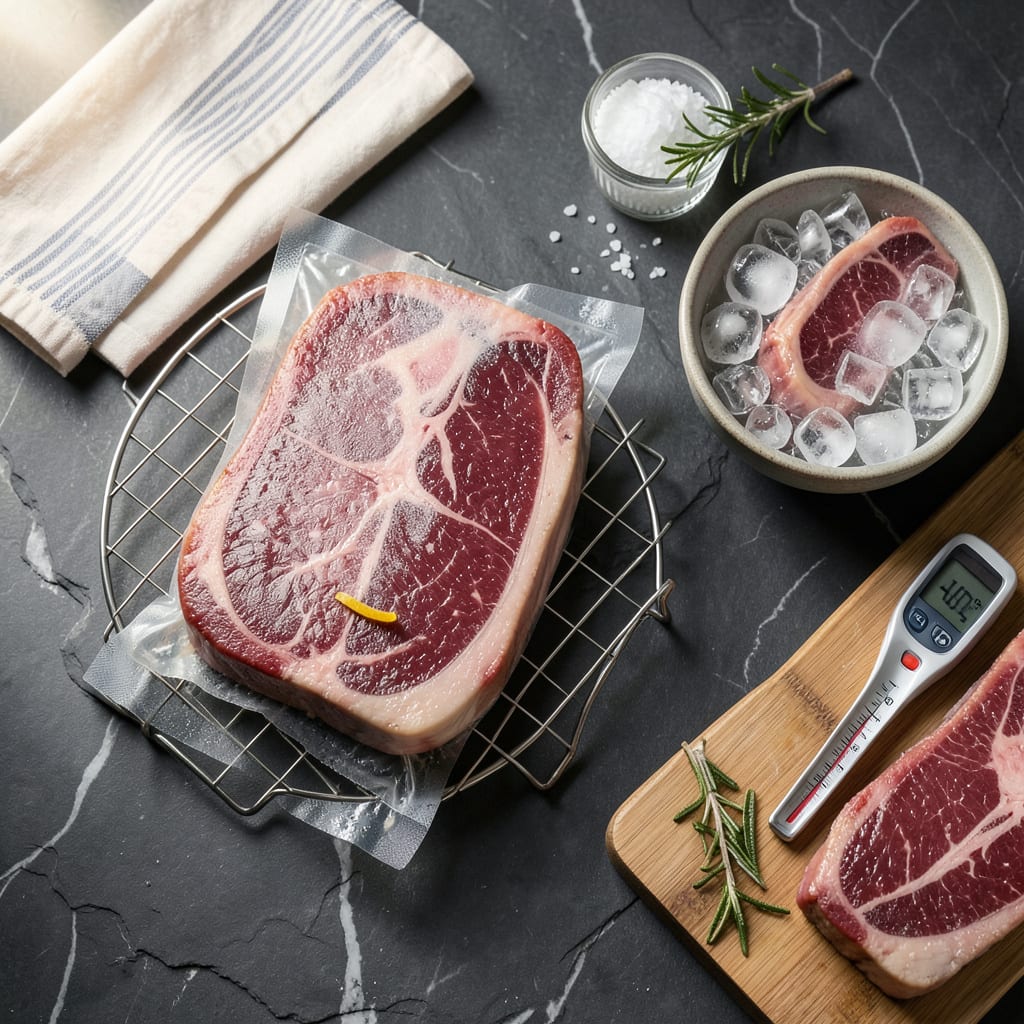
Nothing ruins a perfect steak faster than improper thawing. I’ve seen too many good cuts turn dry or develop that unappetizing gray band from hasty defrosting. Here’s the thing—how you thaw your steak directly impacts its juiciness and flavor when it hits the pan or grill. The difference between a perfectly thawed steak and one that’s been rushed is night and day.
Food safety comes first, which means avoiding the temperature danger zone where bacteria thrive. The refrigerator method is my go-to for overnight thawing because it maintains consistent, safe temperatures while preserving texture. Cold water works in a pinch (about 30 minutes for a 1-inch steak), but you’ve got to change the water every 10 minutes. Microwave thawing? Only if you’re cooking immediately after—otherwise you risk partial cooking and uneven texture.
Here’s where it gets interesting—the slower you thaw, the better your steak retains its natural juices. Rapid thawing causes cell damage that leads to moisture loss during cooking. I learned this the hard way after ruining a beautiful ribeye by microwaving it. Now I plan ahead, letting the steak thaw gradually in the fridge for that ideal juicy, tender result every time.
Once your steak is properly thawed, you’re ready for the main event. I always pat it completely dry before seasoning—this ensures a perfect sear. For next-level results, try our Perfect Pan-Seared Steak Recipe after mastering this thawing method. The difference in quality will make you wonder why you ever rushed the process.
📚 In This Guide
- What You’ll Need
- Instructions
- Tips and Common Mistakes
What Youll Need
- ● Steak: 1 or more cuts (any thickness, but note that thicker steaks require more defrosting time).
- ● Refrigerator: Standard kitchen fridge (for slow, safe defrosting).
- ● Cold water: Enough to submerge the steak in a leak-proof bag (if using the water method).
- ● Sealable plastic bag: 1 (if defrosting in water to prevent moisture exposure).
- ● Large bowl or sink: 1 (for water method).
- ● Microwave: Standard kitchen microwave (for quick defrosting, if needed).
- ● Microwave-safe plate: 1 (if using microwave method).
- ● Paper towels: 2-3 sheets (to pat dry the steak after defrosting).
- ○ Kitchen thermometer (optional): 1 (to check internal temperature for safety).
- ● Timer: 1 (to track defrosting time accurately).
Step-by-Step Instructions for Defrosting Steak
You’re about to master the safest, most effective ways to defrost steak while keeping it perfectly juicy and delicious.
Plan Ahead for Refrigerator Defrosting (Best Method)
For the absolute best results, transfer your steak from the freezer to the refrigerator while it’s still in its original packaging. Place it on a plate or tray to catch any potential drips—this prevents cross-contamination and keeps your fridge clean.
This slow, controlled method takes about 12-24 hours depending on thickness, but it’s worth the wait. The refrigerator maintains a consistent 40°F or below, which is the safest temperature range for defrosting. You’ll know it’s ready when the steak feels pliable throughout and no ice crystals remain.
Here’s the thing—this method preserves the steak’s cellular structure better than any other, meaning you’ll retain more natural juices when you cook it. I always use this technique when I have time to plan ahead, as it gives the most tender, evenly defrosted results.
Use the Cold Water Bath for Faster Defrosting
When you’re short on time, fill a large bowl with cold water—never warm or hot. Place your vacuum-sealed steak in the water, making sure it’s completely submerged. If your steak isn’t vacuum-sealed, put it in a leak-proof plastic bag first and seal tightly.
Change the water every 30 minutes to maintain the cold temperature. This method typically takes 1-3 hours depending on the steak’s thickness. You’ll feel the steak become flexible when it’s fully defrosted—press gently to check for any remaining icy spots.
I know it seems weird to change the water so often, but this is crucial. The water absorbs heat from the steak as it defrosts, so refreshing it keeps the process moving efficiently while maintaining food safety. Never use warm water, as this can promote bacterial growth on the surface.
Microwave Defrosting for Immediate Cooking (Last Resort)
If you’re in a real time crunch, you can use the microwave’s defrost setting—but this should be your last option. Remove all packaging and place the steak on a microwave-safe plate. Use the defrost function based on weight, typically 6-8 minutes per pound.
Here’s what I do: stop the microwave every 2 minutes to flip the steak and separate any thawed portions. This prevents partial cooking and ensures even defrosting. The steak is ready when it’s pliable but still cool to the touch throughout.
Real talk: microwave defrosting can start cooking the edges of your steak, which affects texture. If you use this method, cook the steak immediately after defrosting to prevent any partially cooked areas from becoming unsafe. I only recommend this when you’re planning to cook the steak right away.
Cook Immediately After Defrosting for Best Results
No matter which method you use, cook your steak within 1-2 hours of defrosting for optimal safety and quality. Pat the steak completely dry with paper towels before cooking—this ensures a perfect sear and prevents steaming.
You’ll notice that properly defrosted steak has a uniform color throughout and feels consistently firm but yielding when pressed. If you detect any icy spots, continue defrosting before cooking—uneven defrosting leads to uneven cooking.
This is the moment that matters: your defrosting method directly impacts your final result. Refrigerator-defrosted steaks will have the best texture, while quick-defrosted steaks may benefit from a slightly lower cooking temperature to compensate for any surface warming during the process.
Tips and Common Mistakes for Perfectly Defrosted Steak
Here’s what I’ve learned from years of defrosting steaks—these small details make a huge difference in texture and safety.
Temperature Control: The refrigerator method’s 12-24 hours at 40°F or below isn’t just about safety—it’s about quality. This slow thaw preserves the steak’s cellular structure, meaning more juices stay locked inside when you cook it. I’ve tested this against faster methods, and refrigerator-defrosted steaks consistently have better texture and flavor retention.
Water Bath Technique: When using the cold water method, don’t skip changing the water every 30 minutes. I know it feels tedious, but here’s why it matters: as the water absorbs heat from the steak, it warms up and slows the defrosting process. Fresh cold water maintains the ideal temperature differential that speeds up thawing while keeping the steak safely out of the danger zone.
Microwave Strategy: If you must use the microwave, those 2-minute intervals are everything! Stopping to flip and separate thawed portions prevents the edges from starting to cook while the center remains frozen. I’ve ruined more than one steak by trying to rush this process—trust me, the extra minute you spend checking makes all the difference in even defrosting.
Post-Defrost Handling: That 1-2 hour window after defrosting isn’t arbitrary—it’s your safety net. Bacteria multiply rapidly at room temperature, and since defrosting can bring the steak’s surface temperature up, you want to cook it before bacteria have a chance to proliferate. This is especially crucial for thicker cuts that might still have cooler centers.
Pro Tips for How Defrost Steak
- Here’s what I’ve learned from years of defrosting steaks—these small details make a huge difference in texture and sa…
- Temperature Control: The refrigerator method’s 12-24 hours at 40°F or below isn’t just about safety—it’s about qualit…
- Water Bath Technique: When using the cold water method, don’t skip changing the water every 30 minutes. I know it fee…
Frequently Asked Questions
How long does it take to defrost steak in the fridge?
Defrosting steak in the fridge is the safest method but takes the longest. Plan for 12–24 hours per inch of thickness. For example, a 1-inch-thick steak may take 12–24 hours, while a thicker cut (2+ inches) could need up to 48 hours. Keep it in its original packaging or a sealed container to avoid cross-contamination.
Can I defrost steak in warm water?
No—never use warm or hot water! This promotes bacterial growth and can partially cook the outer layers, ruining texture. Instead, use the cold water method: Seal the steak in a leak-proof bag and submerge it in cold tap water, changing the water every 30 minutes. A 1-inch steak thaws in 1–2 hours.
Is it safe to cook steak from frozen?
Yes, but it requires adjustments! Frozen steak needs 50% longer cooking time and works best for thin cuts (½–¾ inch) or slow-cooked dishes like stews. For grilling or searing, defrost first for even cooking and better browning. Avoid this method for premium cuts like ribeye or filet.
Why does my defrosted steak smell funny?
A slight metallic or sour odor can mean spoilage—toss it! Safe steak should smell neutral or slightly meaty. If defrosted in the fridge, it’s safe for 3–5 days; if using cold water or microwave, cook immediately. When in doubt, don’t risk it.
What’s the fastest way to defrost steak without a microwave?
The cold water method is your best bet! Seal the steak in a bag, submerge it in cold water, and change the water every 30 minutes. A 1-inch steak thaws in 1–2 hours. For faster results, flatten the bag to increase surface area. Avoid hot water or leaving it at room temperature.
Defrosting steak the right way keeps it juicy, safe, and ready for the grill or pan! 🥩 Whether you choose the fridge, cold water, or microwave, timing and temperature are key to avoiding bacteria and dry meat. Now that your steak is perfectly thawed, fire up that grill or heat your skillet—it’s time to cook it to mouthwatering perfection! For foolproof results, check out our steak cooking guide next.

Trained in classic French technique but raised on slow-cooked ribs and spicy rubs, she blends culinary skill with smoke and soul.
- Recipe for Boneless Pork Chops in Cast Iron Skillet: Sear and Baste to Juicy Perfection - October 3, 2026
- Recipe for Boneless Cross Rib Roast: Slow-Roasted Beef with Herb Crust - October 3, 2026
- Hamburgers in Sauce Recipe Crock Pot: Slow-Cooked Savory Delight - October 3, 2026