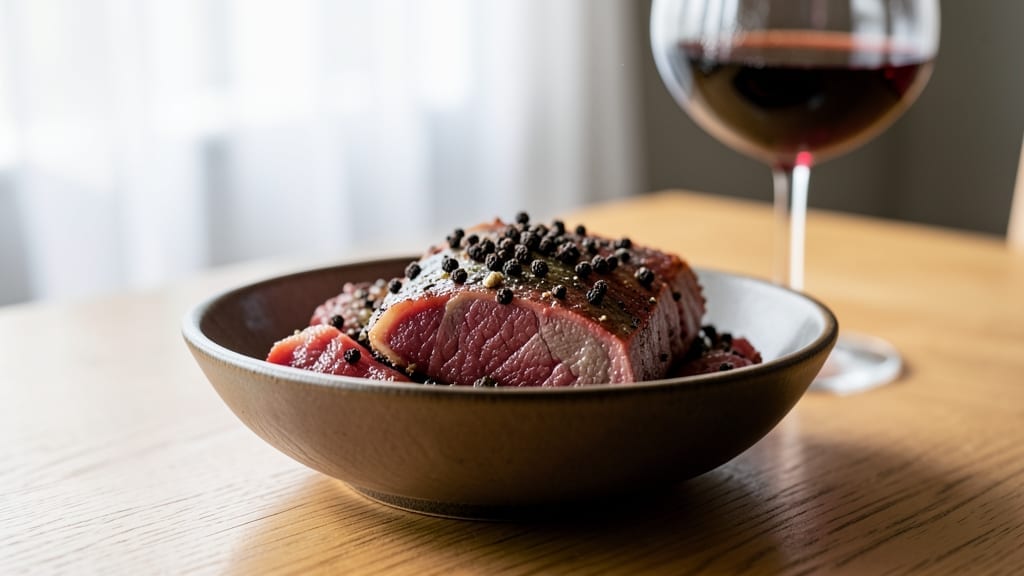
Brisket can safely sit out at room temperature for no more than 2 hours before cooking, according to USDA guidelines. Exceeding this time risks bacterial growth, especially in temperatures above 90°F, where the safe window drops to just 1 hour.
When you’re prepping brisket for a big meal, the clock starts ticking the moment it leaves the fridge. 🔥 Thick cuts like brisket hold heat longer, creating the perfect breeding ground for bacteria like Salmonella and E. coli, which can double every 20 minutes in the 40°F–140°F danger zone.
High humidity or warm kitchen air only speeds up spoilage, so if your home’s above 70°F, treat that brisket like it’s already in the danger zone.
My Nonna always swore by keeping meat cold until the last possible minute—she’d prep everything in the fridge, even if it meant extra time.
For brisket, that means planning ahead: if you’re thawing a 5-pound cut, budget 24 hours in the fridge per 5 lbs. When in doubt, I reach for a cooler with ice—it buys me extra time while keeping the meat safe. And if you accidentally leave it out too long?
When in doubt, toss it. Better safe than sorry when it comes to food safety.
💡 In This Article
- Bacterial Risks in Uncooked Brisket Left Out
- Safe Brisket Prep and Storage Alternatives
Bacterial risks in uncooked brisket left out
Here’s what’s actually happening when you leave brisket out: bacteria like Salmonella and E. coli thrive in the 40°F–140°F danger zone, where they multiply rapidly. A 5-pound brisket has a surface area of about 1,200 square inches—plenty of real estate for bacterial colonies to form.
At 70°F, these pathogens can double every 20 minutes, turning a harmless piece of meat into a potential health risk within hours. 🔥
The thick, dense muscle structure of brisket makes it especially vulnerable. Unlike thin cuts like chicken breasts, brisket retains heat longer due to its 3-4 inch thickness and high fat content (about 15-20% fat), which insulates the center.
This means the outer layer may appear safe while the interior remains in the danger zone for extended periods. High humidity—common in kitchens or outdoor grilling environments—speeds up bacterial growth by creating a moist environment where pathogens spread more easily.
What most people don’t realize is how temperature fluctuations accelerate spoilage. If your kitchen hits 80°F during prep, the safe window shrinks to just 1 hour. The USDA’s 2-hour rule accounts for average room temperatures (68°F), but real-world conditions often exceed this.
For example, a summer day in Texas with 95°F heat reduces the safe time to 1 hour or less, making outdoor prep particularly risky without proper cooling measures.
Brisket’s high moisture content (about 65-70%) also plays a role. Moisture on the surface creates a perfect medium for bacterial films to form, similar to how condensation on a cold drink glass encourages mold growth.
This is why brisket left uncovered on a countertop spoils faster than when stored in an airtight container, even if both are at room temperature. The container limits oxygen exposure, slowing bacterial activity.
Consider this comparison: a 1-inch thick chicken breast cools 3 times faster than brisket because of its smaller mass. That’s why thin cuts can sometimes sit out safely for slightly longer—though the USDA guidelines still apply universally.
For brisket, the thick cut means you’re essentially dealing with a slow-cooling time bomb once it leaves the fridge. 💫
Humidity levels above 60% can cut the safe time nearly in half. In a humid climate or during summer months, the relative humidity might reach 70-80%, creating ideal conditions for bacteria like Listeria to flourish.
This is why professional chefs and food safety experts emphasize keeping brisket cold until the absolute last moment before cooking—especially in environments where temperature and humidity are unpredictable.
The science behind this involves bacterial growth rates measured in what’s called the “D-value” (decimal reduction time). For E. coli, the D-value at 77°F is about 20 minutes, meaning each 20-minute interval at this temperature reduces the safe bacterial count by 90%.
At 90°F, this drops to just 10 minutes. That’s why the USDA’s time limits exist—they’re based on worst-case scenarios where bacteria multiply at their fastest rates. For brisket lovers, this means planning ahead isn’t just practical; it’s a matter of food safety. ✨

Trained in classic French technique but raised on slow-cooked ribs and spicy rubs, she blends culinary skill with smoke and soul.
- Smoked Brisket Recipe: Low and Slow to Fall-Apart Tenderness - November 2, 2026
- Smoked Turkey Breast Recipe: Juicy Pink Center With Crispy Skin Every Time - November 2, 2026
- Leftover Smoked Pulled Pork Chili Recipe: Rustic Flavor Revival in One Pot - November 2, 2026