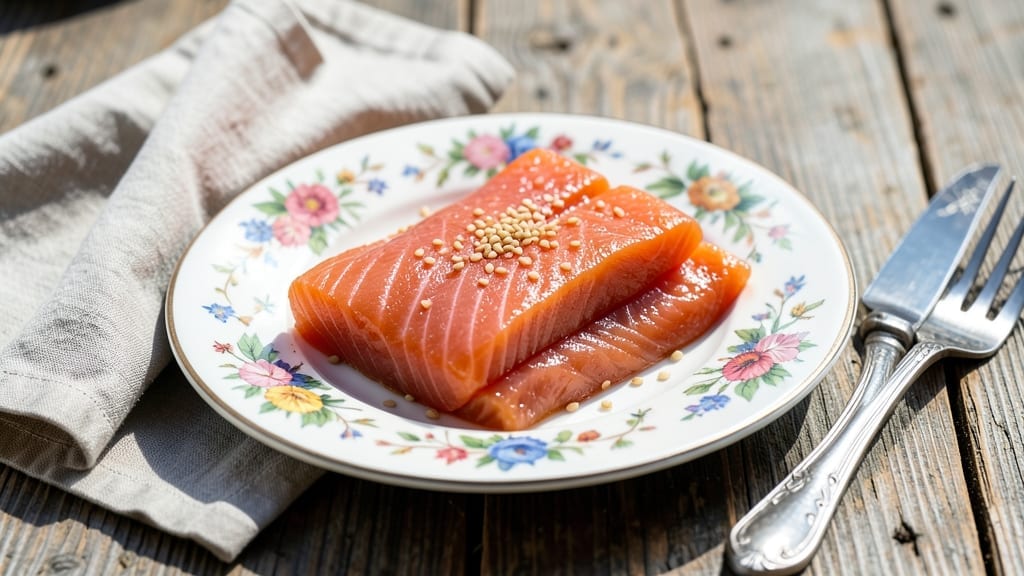
Smoked salmon lasts 1 to 2 weeks in the refrigerator when vacuum-sealed or stored in an airtight container, while unopened packaged smoked salmon typically keeps for 2 to 3 months. For maximum freshness, freeze it for up to 2 months before consumption.
The curing process plays a huge role in how long smoked salmon stays fresh—hot-smoked varieties last longer due to higher heat penetration, while cold-smoked types require more careful handling.
My Nonna always emphasized that fat content and moisture levels also matter: leaner cuts spoil faster, and excess condensation in packaging accelerates bacterial growth. 🔥 That’s why I double-check storage conditions, especially when dealing with delicate cold-smoked salmon that needs that extra protection.
Temperature consistency is key—even a few degrees difference can shorten shelf life dramatically. I’ve learned the hard way that leaving smoked salmon in the fridge door’s warmer zone (where temps fluctuate) ruins it faster than proper storage at 35-40°F.
For longer storage, I always wrap it tightly in wax paper followed by aluminum foil before vacuum-sealing, which creates a barrier against air and moisture that keeps it fresher for weeks.
💡 In This Article
- Factors Affecting Smoked Salmon Shelf Life
- Best Storage Methods to Extend Smoked Salmon Freshness
Factors affecting smoked salmon shelf life
The curing process is the foundation of smoked salmon’s shelf life. Hot-smoked salmon undergoes temperatures of 165°F or higher, which fully cooks the fish and kills most bacteria, extending freshness to 3-4 months when properly packaged.
Cold-smoked salmon, however, stays below 104°F, preserving delicate flavors but requiring refrigeration to prevent spoilage—this is why it typically lasts only 1-2 weeks unless vacuum-sealed. The difference lies in how heat penetrates the flesh and denatures proteins, creating a more stable product. 🔥
Fat content plays a crucial role too. Smoked salmon contains about 10-15% fat, which acts as a natural preservative by creating an environment less hospitable to bacteria. However, higher fat levels can also accelerate oxidation if not properly stored, leading to rancidity over time.
Moisture control is equally vital—excess condensation in packaging creates a breeding ground for spoilage bacteria, while proper drying during smoking removes surface moisture that could otherwise promote microbial growth. That’s why commercial producers often use 10-20% salt or sugar solutions during curing to draw out moisture and inhibit bacterial activity.
Preservatives like nitrates or sugar further extend shelf life by slowing oxidation and bacterial growth. For instance, sugar-cured salmon (like lox) can last 2 weeks unopened due to osmotic pressure from the curing process, while nitrate-cured varieties may keep for 3 months or more.
The key factor here is how these compounds interact with the fish’s natural enzymes and proteins to create a more stable product. Temperature fluctuations are the silent shelf-life killer—even a 5°F rise above 35°F can double bacterial growth rates, turning a 2-week product into a 1-week one. 💫
Texture changes also signal spoilage. Fresh smoked salmon has a firm yet tender bite, but as it ages, proteins break down and the flesh becomes mushy or slimy. The fat layer should remain opaque and firm—if it turns yellowish or greasy, that’s a sign of oxidation.
Aroma is another critical indicator: while fresh smoked salmon has a clean, smoky scent, spoiled fish develops an ammonia-like or sour odor. These sensory cues are your best tools for determining when smoked salmon has passed its prime, regardless of storage method.
Consider these key factors when evaluating smoked salmon’s longevity:
- Curing method: Hot-smoked lasts months; cold-smoked needs refrigeration
- Fat content: 10-15% fat preserves flavor but requires proper storage
- Moisture control: Proper drying during smoking prevents bacterial growth
- Preservatives: Salt, sugar, or nitrates extend shelf life significantly
- Temperature stability: Fluctuations accelerate spoilage dramatically
What most people don’t realize is how packaging interacts with these factors. Vacuum-sealed smoked salmon creates an anaerobic environment that slows oxidation and bacterial growth, while improper packaging (like leaving it in the original styrofoam tray) exposes it to air and moisture, cutting shelf life in half.
That’s why I always transfer it to an airtight container or vacuum-seal it immediately after purchase—this simple step can add 1-2 extra weeks of freshness. ✨
The science behind smoked salmon preservation is fascinating when you think about it. The curing process essentially puts the fish into a state of suspended animation, where natural enzymes are slowed down while beneficial bacteria are eliminated.
This is why properly stored smoked salmon can maintain its quality for weeks or even months—it’s not just about stopping bacteria, but creating conditions where the fish remains as close to its fresh state as possible. 🌟

Trained in classic French technique but raised on slow-cooked ribs and spicy rubs, she blends culinary skill with smoke and soul.
- Smoked Brisket Recipe: Low and Slow to Fall-Apart Tenderness - November 2, 2026
- Smoked Turkey Breast Recipe: Juicy Pink Center With Crispy Skin Every Time - November 2, 2026
- Leftover Smoked Pulled Pork Chili Recipe: Rustic Flavor Revival in One Pot - November 2, 2026